

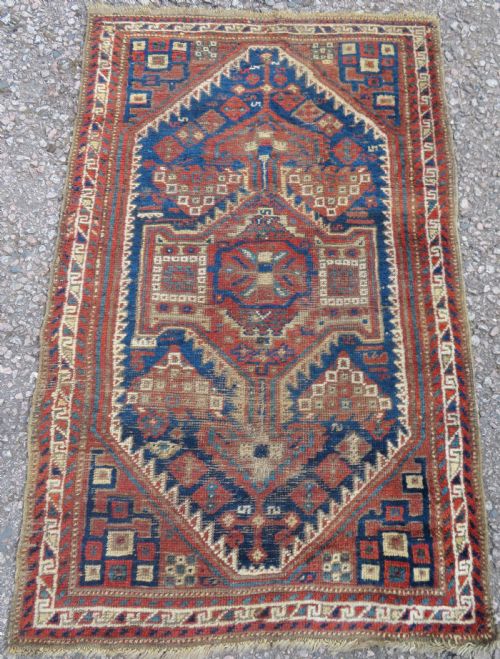
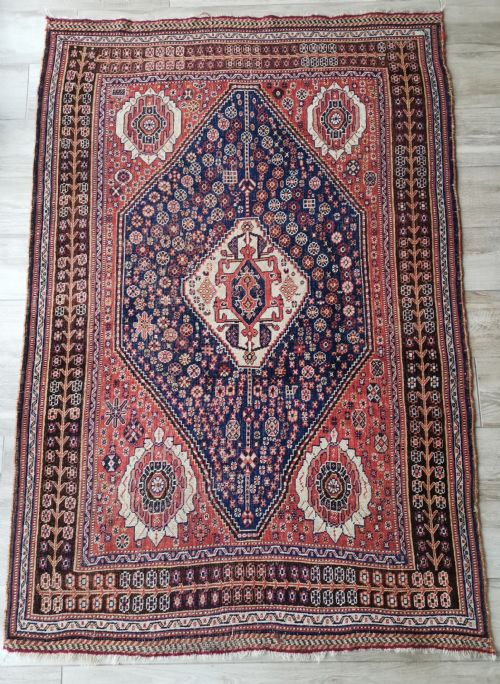
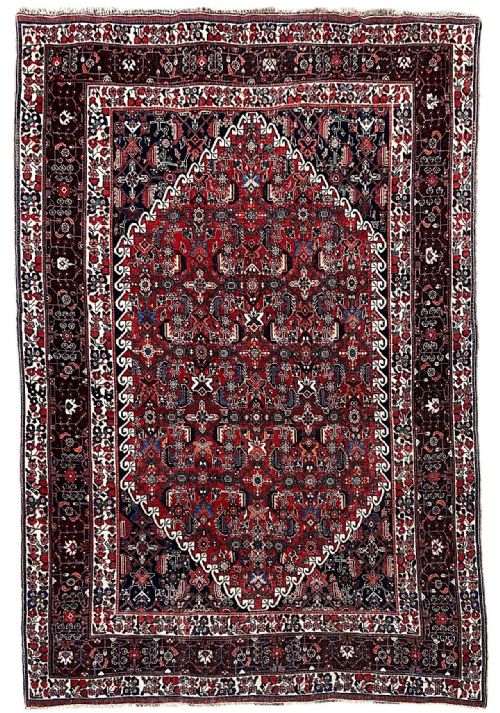
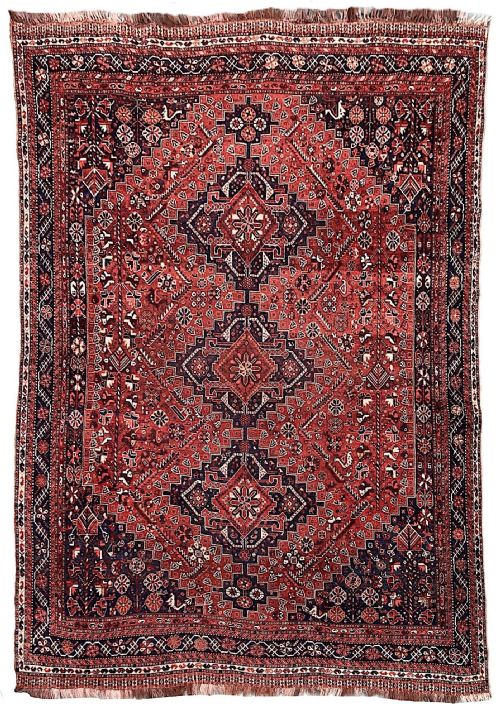


Antique Persian Shiraz Rug
An antique persian shiraz rug brings the rich hand-woven artistry of South West Persia into a room through deep tribal designs and rich natural dyes.
Antique Persian Shiraz Rug
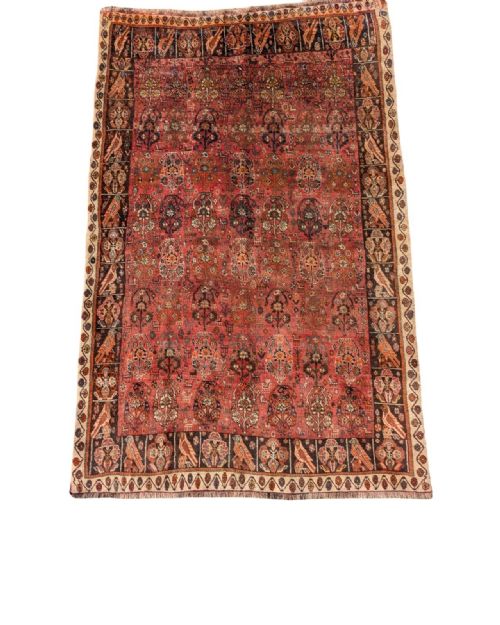
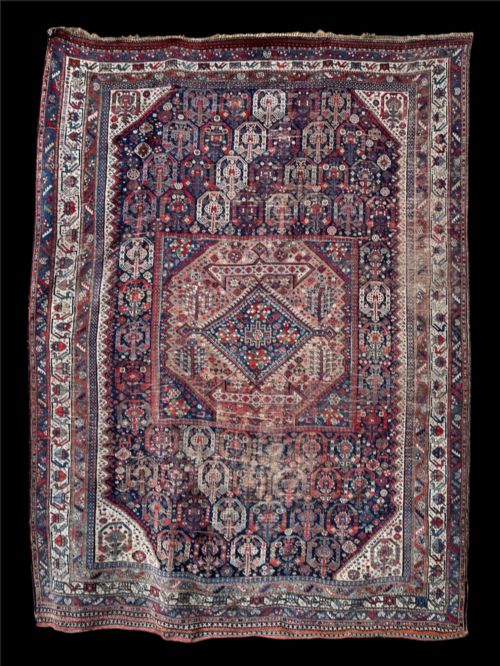
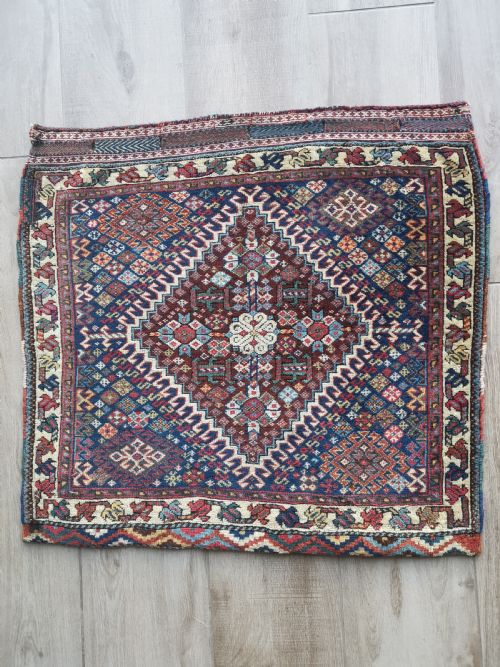
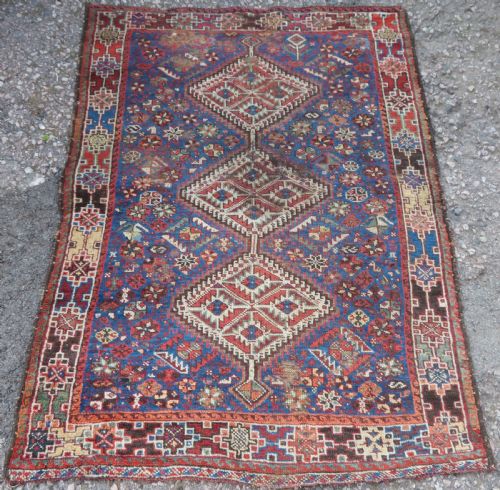
When searching for an antique persian shiraz rug, buyers encounter a distinct group of tribal and nomadic textiles originating from the wider Shiraz region of South West Persia. The examples on this page span from the nineteenth century into the early decades of the twentieth century, encompassing smaller area rugs, larger carpets, and functional pieces like bagfaces and saddlebags.
The weaving tradition in this region is closely tied to confederacies such as the Qashqai and Khamseh, whose makers produced geometric and medallion compositions. These textiles reflect nomadic origins through their wool foundations and traditional motifs, which include centre medallions and stylized birds.
Village and nomadic pieces dominate the selections, demonstrating varied formats from square proportions to long runners. The historical span covers works woven across several decades, showing continuity in regional tribal aesthetics.
Materials and construction
The construction of these textiles relies fundamentally on wool used for both the pile and the foundation threads, occasionally paired with cotton structures in later village workshop pieces. Hand weaving forms the core technique, creating durable flatweaves and knotted pile surfaces designed for practical daily use.
Colour comes from natural dyes applied to the hand-spun wool, yielding deep tones that mellow gradually over time. The interaction between these dyestuffs and the wool fibres produces the characteristic visual depth found across these South West Persian textiles.
The inventory includes functional forms such as saddlebags and bagfaces alongside room-sized carpets and area rugs.
Factors of distinction
Quality in these tribal rugs rests on the density of the knotting and the precision of the hand-woven structure, which dictates how sharply the geometric patterns are defined. Finer examples display greater intricacy in the medallions and border details, requiring significant skill from the weaver.
The vibrancy and depth of the natural dyes play a major role in establishing the visual standing of a piece, alongside the overall integrity of the wool pile. Uniformity in the weave and minimal structural distortion separate superior examples from standard utilitarian pieces.
The Antique Persian Shiraz Rug Glossary
- Khamseh
- A confederation of five distinct tribes in South West Persia known for producing distinctive dark-ground carpets and rugs.
- Qashqai
- A major nomadic tribal group in Iran celebrated for finely knotted wool rugs featuring bold geometric medallions and animal motifs.
- Bagface
- The decorative front portion of a nomadic storage bag, woven as a small rug and often preserved as an independent textile.
- Medallion
- A central ornamental design motif placed in the field of a rug, frequently rendered in geometric or stepped forms.
- Natural dye
- Colouring matter derived from plants, insects, or minerals used to dye wool before the widespread adoption of synthetic alternatives.
- Saddlebag
- A paired utilitarian carrier woven in one piece for transport on animals, featuring flatwoven backs and pile-woven faces.
Antique Persian Shiraz Rug: Frequently Asked Questions
What is an antique persian shiraz rug?
It is a hand-knotted wool textile made by nomadic or village weavers in the Shiraz region of South West Persia during the nineteenth or early twentieth century.
These pieces typically feature geometric motifs, centre medallions, and rich natural dyes derived from local plant and mineral sources.
How were these rugs used originally?
Nomadic families utilised them as floor coverings, sleeping mats, and decorative partitions within tents, as well as durable saddlebags for travel.
Their sturdy wool construction and dense pile were designed to withstand the rigours of a mobile lifestyle across South West Persia.
How do I care for an antique wool rug?
Gentle vacuuming without a rotating brush helps remove dirt from the wool pile while protecting the hand-woven structure of the rug.
Professional cleaning suited for antique textiles should be employed periodically to maintain the integrity of the natural dyes and fibres.
How can I tell Qashqai and Khamseh rugs apart?
Qashqai pieces often display brighter colour palettes with finely worked geometric medallions and stylized peacock or bird motifs throughout the field.
Khamseh weavings frequently incorporate darker indigo grounds and tighter, repeating geometric patterns reflecting their multi-tribal heritage.