




Antique Pen Tray Stand
An antique pen tray stand holds writing implements and ink, bringing order and historic craftsmanship to a desk.
Antique Pen Tray Stand
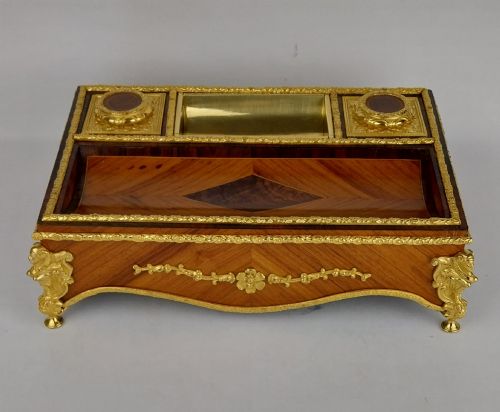
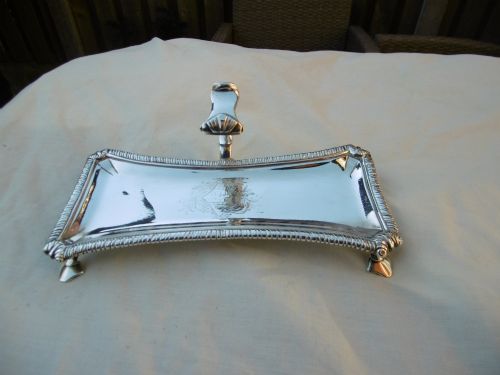
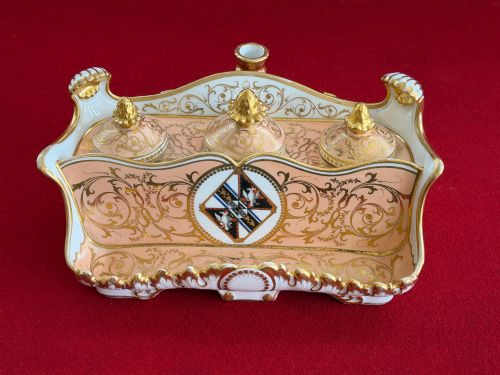
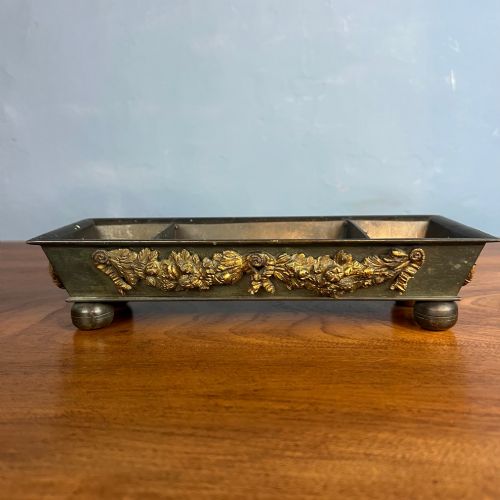
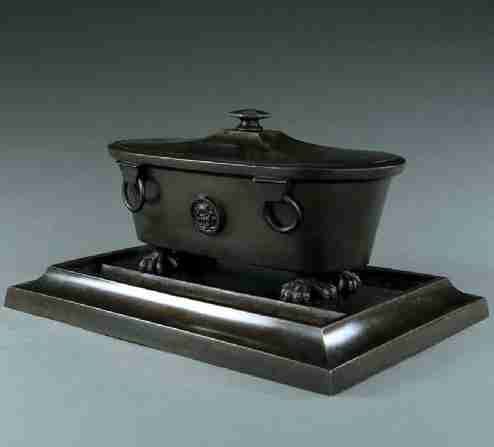
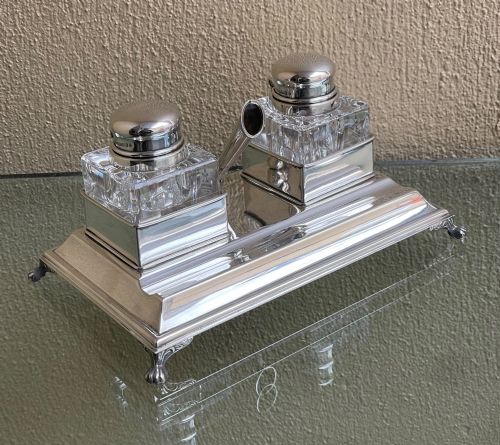
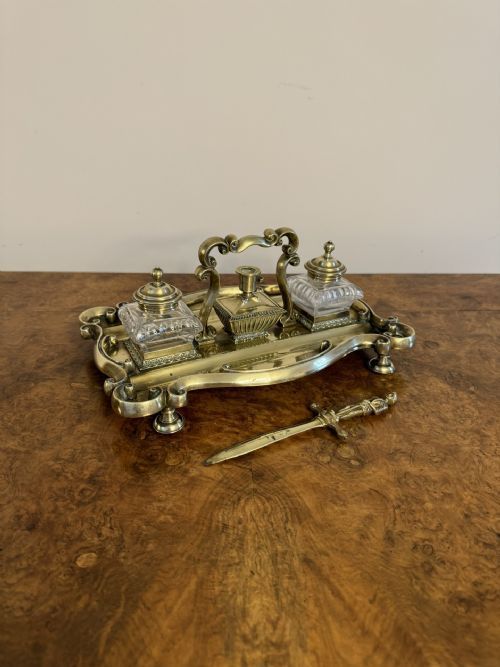
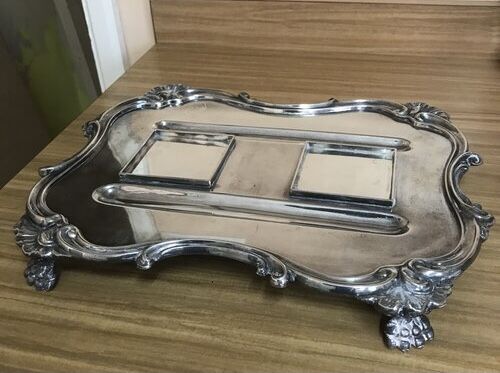
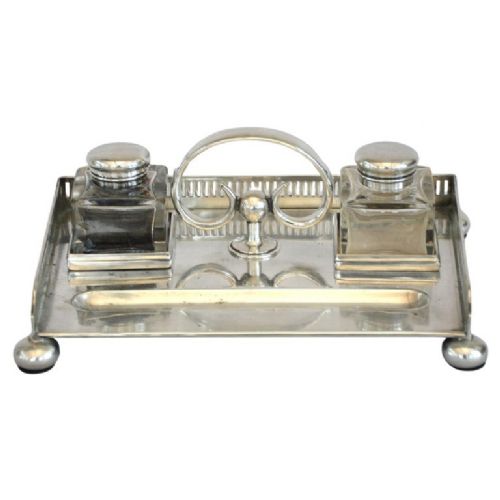
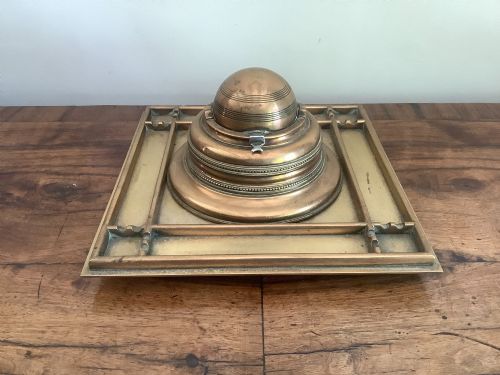
An antique pen tray stand organises writing tools, commonly incorporating inkwells, pen rests, and compartments for daily desk use. These pieces appear across periods from George III through to the Edwardian era, taking the form of inkstands, desk tidies, and snuffer trays. Buyers encounter varied configurations, ranging from simple wooden trays to elaborate multi-piece sets with mounted glass and metal containers.
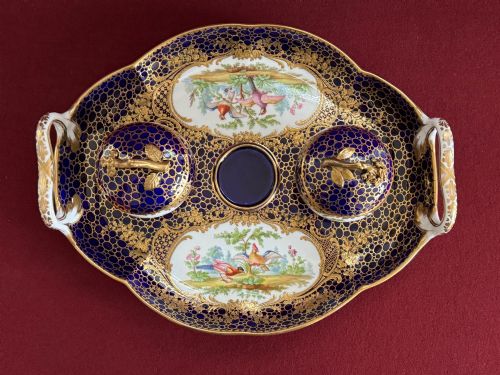
Materials span exotic timbers like coromandel, mahogany, and rosewood, alongside sterling silver, brass, porcelain, and papier-mâché. Stylistic influences extend from neoclassical bronze and ormolu mounts to Dutch Delft faience and organic Art Nouveau copper work. The selection reflects the changing interior fashions of the nineteenth and early twentieth centuries, retaining utility within a decorative desk accessory.
How They Were Made
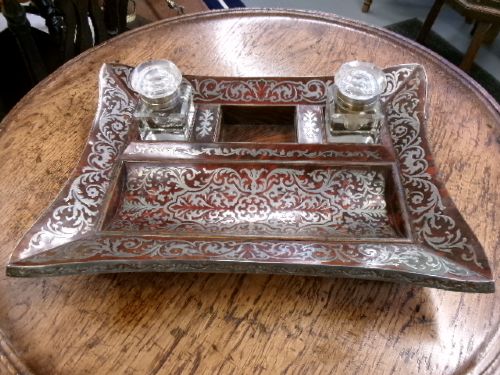
Cabinetmakers constructed wooden stands using dense tropical hardwoods, frequently embellishing surfaces with mother-of-pearl inlay, brass stringing, tortoiseshell, or Boulle work. Metal components involved casting in bronze, brass, and ormolu, or applying silver plate and solid sterling silver with hallmarks. Glass and porcelain elements required specialised blowing, cutting, and hand-painting techniques before integration into the desk stand mounts.
Makers combined these diverse materials using mechanical fixings, screw mounts, and precise joinery to secure inkwells and pen rests to the base tray. Surface finishing ranged from hand-polished timber veneers to patinated bronzes and champlevé enamel work. This multi-material construction demanded coordination between metalworkers, glassblowers, and wood craftsmen.
Antique Pen Tray Stand Retail Price Guide 2026
Typical asking prices for pen tray stand among the pieces listed under this phrase on Sellingantiques today, from the lower quarter to the upper quarter. They describe what is for sale here now, not the wider market.
Periods represented on the page range from the 18th Century through to the Edwardian era and mid 20th Century.
What Varies in Quality
The standard of an antique pen tray stand depends upon the refinement of its materials and the precision of its assembly. Superior examples feature heavy gauge silver, finely cast ormolu mounts, or intricate marquetry set into dense hardwoods like coromandel rather than simpler secondary woods. The integration of matching components, such as original cut-glass inkwells with fitted silver collars, elevates the overall execution.
Artisanal detail separates ordinary desk accessories from exceptional survivals, visible in hand-painted porcelain panels, meticulous chasing on bronze, or sculptural wood carvings like those in Black Forest pieces. The presence of authentic maker marks and legible hallmarks adds documented pedigree to the physical craftsmanship. Conversely, replacement inkwells or poorly aligned mounts indicate a lower grade of preservation and assembly.
John Cafe·Chamberlain Worcester·Minton·Walker And Hall·Harrods·Peter and Anne Bateman·Robert Garrard·Rupert Favell·James Cartland and Sons
The Antique Pen Tray Stand Glossary
- Inkstand
- A portable desk tray holding one or more inkwells, sanders, and pen rests. These desk accessories served as the central writing station on nineteenth-century desks.
- Ormolu
- Gilt-bronze decorative mounts applied to furniture and desk stands. The technique involves coating bronze objects in a mercury-gold amalgam and firing.
- Boulle work
- A form of marquetry utilising brass and tortoiseshell inlaid in contrasting patterns. Named after French cabinetmaker André-Charles Boulle, it appears on luxury nineteenth-century desk tidies.
- Champlevé
- An enamelling technique where troughs are dug into a metal surface and filled with vitreous paste before firing. This method decorates nineteenth-century French desk stands.
- Snuffer tray
- A shallow tray originally designed to hold candle snuffers, often repurposed as an elegant pen tray on antique desks.
Antique Pen Tray Stand: Frequently Asked Questions
How were desk stands used?
They sat on writing tables and desks to provide a stable, organised station for correspondence and document signing.
Users dipped quill or steel-nib pens into the attached inkwells while resting pens across the integrated channels.
How do I style one at home?
Place an antique pen tray stand on a wooden writing desk, console table, or bookshelf as a decorative focal point.
They function well holding modern pens, spectacles, or small desk stationery while displaying historical character.
How can I tell the period?
Examine the materials, construction methods, and any hallmarks or stamps present on the metal or porcelain mounts.
Georgian and Regency pieces often feature clean neoclassical lines, whereas Victorian examples tend toward ornate brass and heavy hardwoods.