


Antique Pembroke Table Drawer
These pieces of antique pembroke table drawer furniture combine drop leaves with integrated storage, offering compact versatility for period interiors.
Antique Pembroke Table Drawer
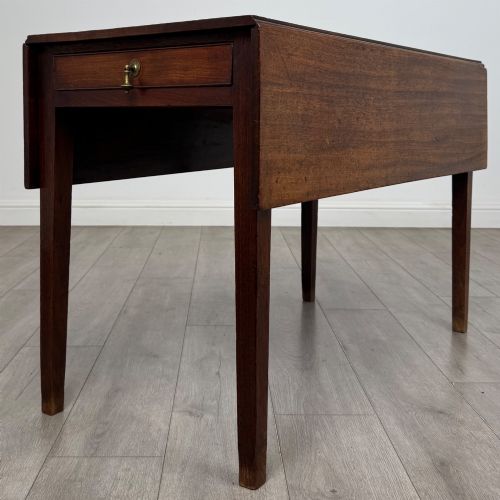
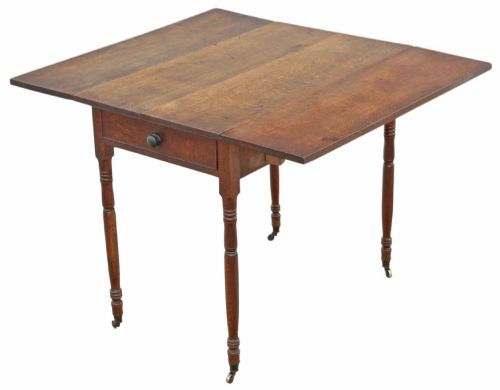
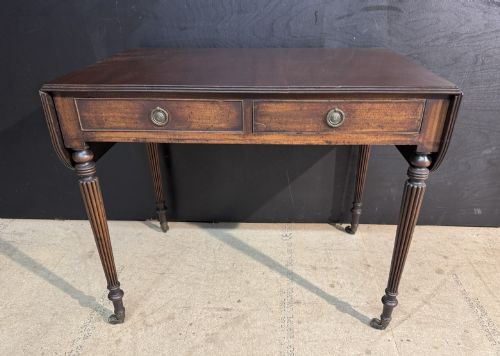
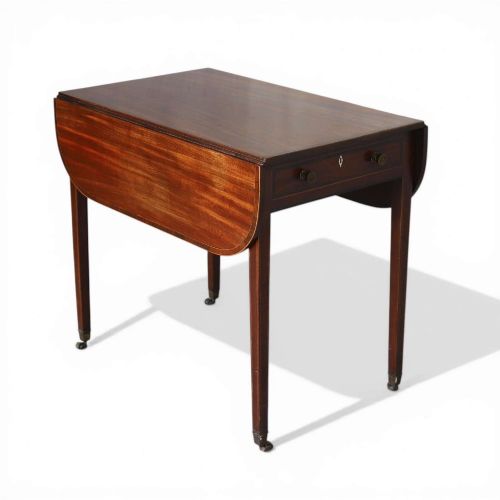
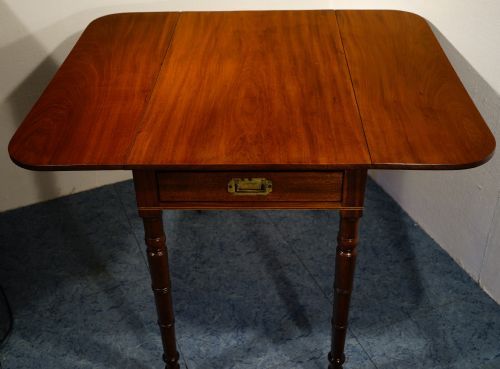
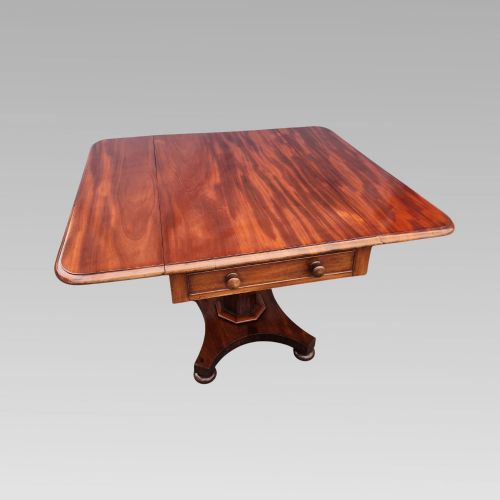
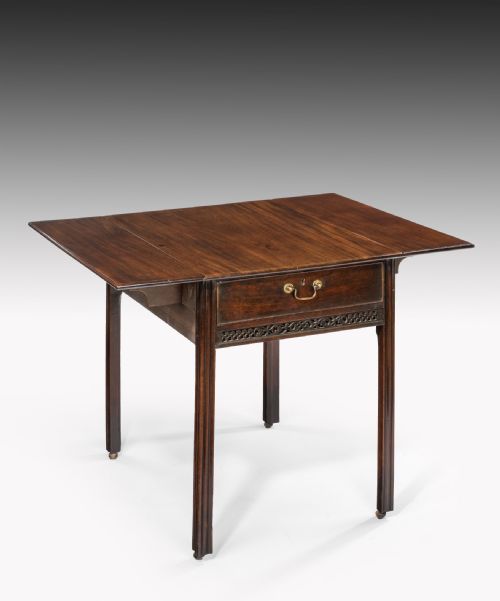
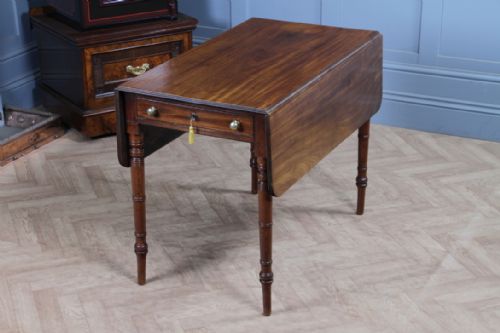
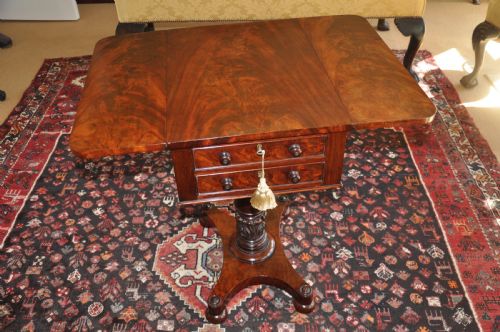
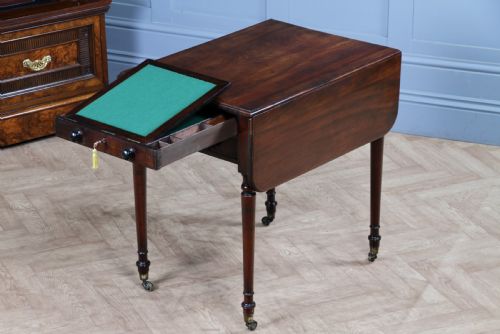
An antique pembroke table drawer combines folding drop leaves with a concealed or fitted compartment set beneath the top. You will most frequently encounter mahogany examples spanning the Georgian, Regency and Victorian periods.
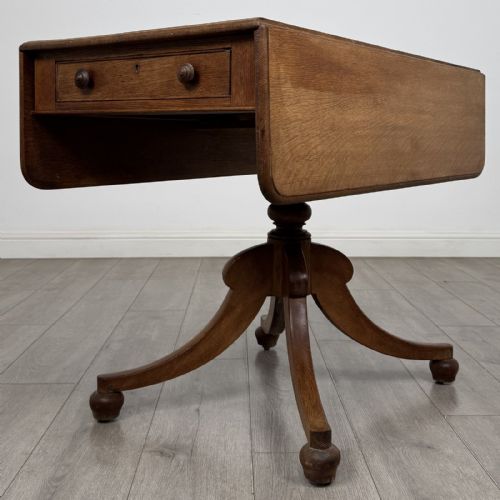
The selection here encompasses various iterations, from compact worktables to dining and occasional pieces. Makers utilised timbers such as satinwood, rosewood, oak and burr walnut alongside the dominant mahogany.
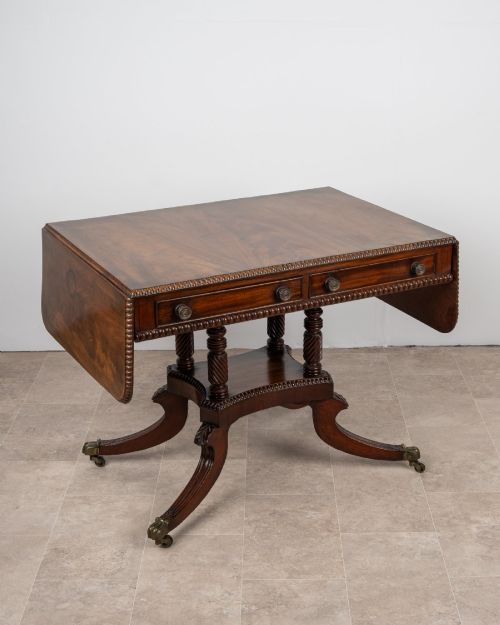
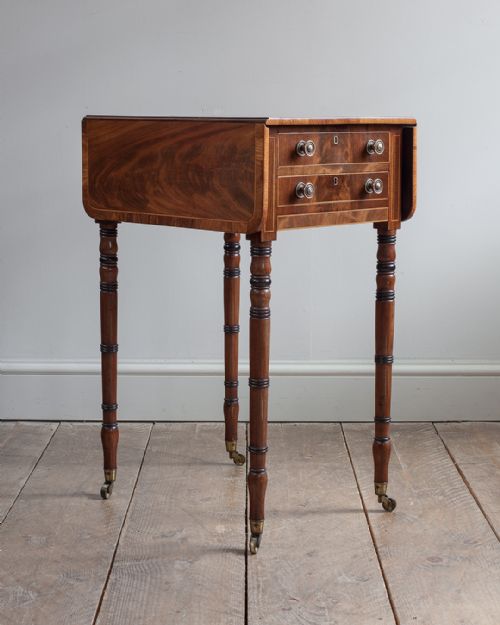
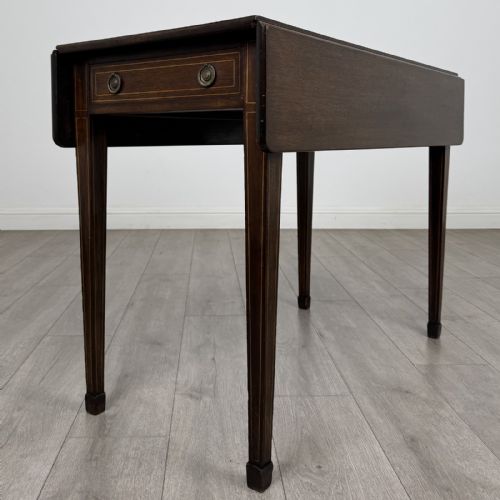
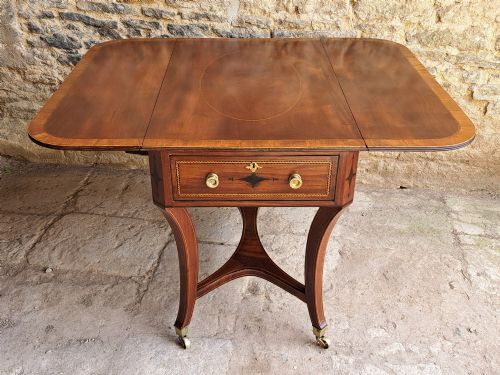
Forms range from pedestal bases to square-leg side tables incorporating single or twin drawers. Many retain period brass hardware and key mechanisms intended for writing or storage.
Materials and construction methods
Cabinetmakers constructed these tables using solid hardwoods and carefully cut veneers laid over secondary timbers. Partridge wood cross-banding and marquetry details frequently adorn the more decorative surfaces.
Drop leaves rely on hinged wooden flaps supported by pivoting swing brackets known as rule joints or fly brackets. Dovetail joints secure the internal drawer boxes, ensuring structural durability through centuries of use.
Antique Pembroke Table Drawer Retail Price Guide 2026
Typical asking prices for pembroke table drawer among the pieces listed under this phrase on Sellingantiques today, from the lower quarter to the upper quarter. They describe what is for sale here now, not the wider market.
Listings demonstrate that mahogany remains the predominant timber across Georgian, Regency and Victorian pembroke tables.
Assessing quality in construction and detail
Quality rests upon the selection of timber figures, such as highly grained burr walnut or figured Cuban mahogany. Superior examples feature crisp inlay work, such as satinwood banding and precise marquetry.
The integration of the drawer mechanism and original brass hardware distinguishes finer pieces. Solid secondary woods within the drawer linings and smooth operation of the drop leaves indicate superior workshop practices.
Andrew Thomson & Sons
The Antique Pembroke Table Drawer Glossary
- Pembroke table
- A small drop-leaf table with hinged flaps on either side and one or more drawers. It gained popularity during the 18th century for its adaptable surface area.
- Drop leaf
- A hinged section of a table top that folds down to save space or lifts up to extend the surface. These flaps are supported by hinged wooden brackets.
- Cross-banding
- A decorative border of veneer laid around the perimeter of a table top or drawer front so that the grain runs perpendicular to the main panel.
- Rule joint
- A rounded moulding joint used on drop-leaf tables where the leaf meets the fixed top. It conceals the gap and strengthens the hinge line.
- Marquetry
- The art of applying decorative veneer pieces in geometric or pictorial patterns onto a wooden surface. Craftsmen used various contrasting timbers to achieve this effect.
Antique Pembroke Table Drawer: Frequently Asked Questions
How do I date an antique pembroke table?
Dating relies upon timber choice, leg style and construction methods visible in the frame and drawer. Georgian examples often feature straight or tapered legs, whilst Regency pieces introduce pedestal bases and brass paw castors.
Secondary woods and drawer dovetailing also provide chronological clues. Later Victorian and Edwardian iterations frequently incorporate machine-sawn components and different veneer thicknesses.
Were pembroke tables used for writing?
Many pembroke tables functioned as compact writing desks or worktables, particularly those fitted with compartmentalised drawers. Some surviving examples retain dedicated writing slides or inkwell fittings inside the primary drawer.
Their movable nature allowed owners to place them near windows or fireplaces. The drop leaves provided enough space for correspondence without dominating the room.
What is the difference between a pembroke and a sofa table?
Pembroke tables typically feature square or rectangular tops with two drop leaves and shorter proportions. Sofa tables are traditionally longer and narrower, designed to sit directly behind a sofa.
Sofa tables also frequently incorporate trestle or pedestal supports rather than four distinct legs. Both forms utilise drop leaves, but their original placement within a room differed.