
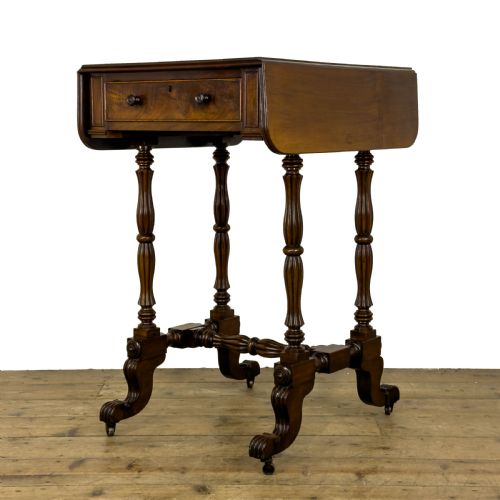
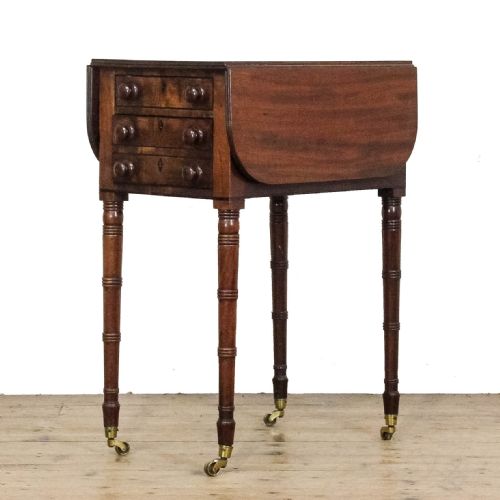


Antique Pembroke Sewing Table
An antique pembroke sewing table brings clever drop-leaf proportions and fitted storage together for versatile everyday use.
Antique Pembroke Sewing Table
An antique pembroke sewing table combines folding drop leaves with a fitted drawer designed for needlework and small domestic tasks. These pieces appear most frequently in mahogany and rosewood across Georgian, Regency, and Victorian periods.
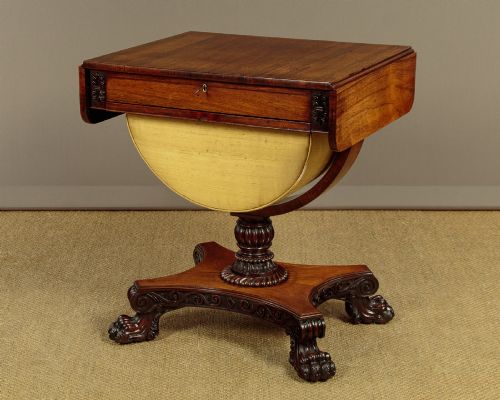
Makers constructed these tables with clever interior compartments and hanging silk or fabric bags beneath the drawer for textiles. The drop leaves allow the surface to expand when needed and drop down to save space against a wall.
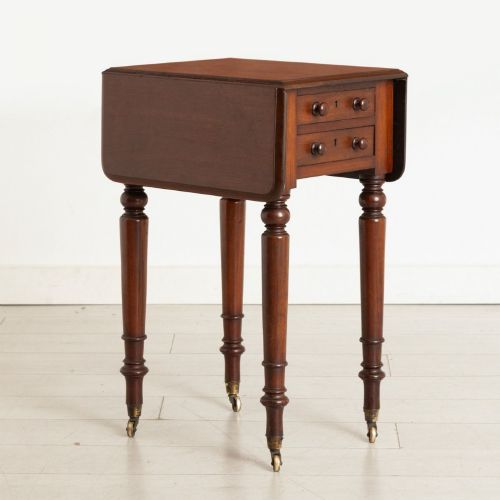
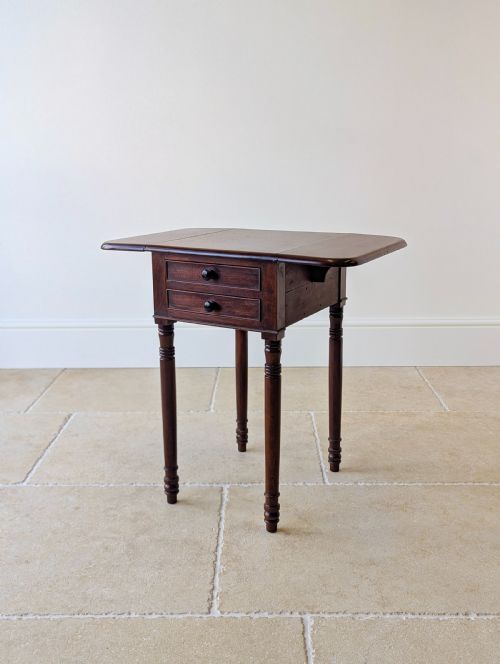
Examples on this page span the late eighteenth century through the mid-nineteenth century, including George III, Regency, William IV, and Victorian variations. Formats range from pedestal bases with quadruped legs to slender side tables.
What separates the best from the rest
Quality rests on the crispness of the cabinetwork, particularly around the boxwood inlay, drawer dovetailing, and turnings on pedestal or leg supports. Finer pieces display carefully selected timber veneers with matching grain patterns across the leaves and drawer fronts.
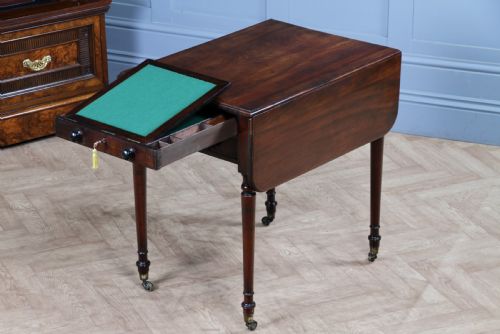
The sophistication of the internal fittings defines the upper tier of these tables. Elaborate compartmentalised drawers for sewing implements, integrated writing surfaces, and intact silk or fabric work bags indicate superior workshop production.
The selection spans George III, Regency, William IV, and Victorian periods, covering the late eighteenth and nineteenth centuries.
Gillows
The Antique Pembroke Sewing Table Glossary
- Pembroke table
- A small occasional table featuring two hinged drop leaves on opposite sides. This form dates back to the eighteenth century and serves varied domestic functions.
- Work table
- A specialised piece of furniture containing drawers and compartments for sewing and needlework. These tables often feature an attached fabric bag below.
- Drop leaf
- A hinged flap on a table surface that can be raised to extend the top or lowered when space is limited. Brass hinges typically secure these leaves to the main frame.
- Inlay
- A decorative technique where contrasting materials such as boxwood are inserted into recesses within the primary wood surface. This creates geometric or linear patterns.
- Quadruped legs
- A four-legged support arrangement radiating from a central pedestal column. This structure provides stability for small tables with folding leaves.
Antique Pembroke Sewing Table: Frequently Asked Questions
What is a pembroke sewing table?
A pembroke sewing table is a compact drop-leaf table featuring a fitted drawer for needlework and small items. They were designed to sit beside a chair or against a wall in domestic interiors.
The folding leaves allow the table to expand for use and contract to save space. Interiors often include compartments for threads and pins alongside an under-slung fabric bag.
How do I tell Regency from Victorian tables?
Regency tables typically date from the early nineteenth century and feature clean architectural lines, rosewood or mahogany timbers, and brass inlay. Pedestal bases with quadruped legs are common in this era.
Victorian examples often display heavier proportions, darker mahogany finishes, and more elaborate turnings or scrollwork. Work bags attached beneath the drawer also became more standardised in Victorian iterations.
Where did people use these tables?
These tables stood in drawing rooms, parlours, and sitting rooms where ladies gathered for needlework and correspondence. Their portable nature allowed servants to move them close to a fireside or window.
When the leaves dropped, they functioned as side or lamp tables holding books and decorative objects. The fitted drawer kept sewing tools close at hand without cluttering the surface.
What woods were used?
Mahogany served as the primary timber for the majority of these tables throughout the Georgian, Regency, and Victorian periods. Its rich reddish-brown tone provided a durable and attractive surface.
Rosewood appears frequently on Regency and nineteenth-century examples for its striking dark grain. Cabinetmakers also utilised satinwood for lighter highlights and boxwood for delicate stringing inlay.