
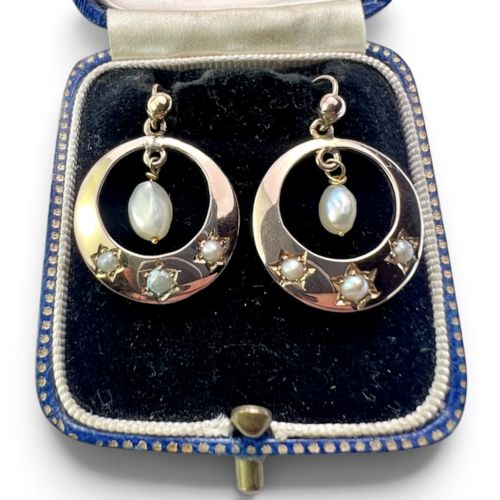
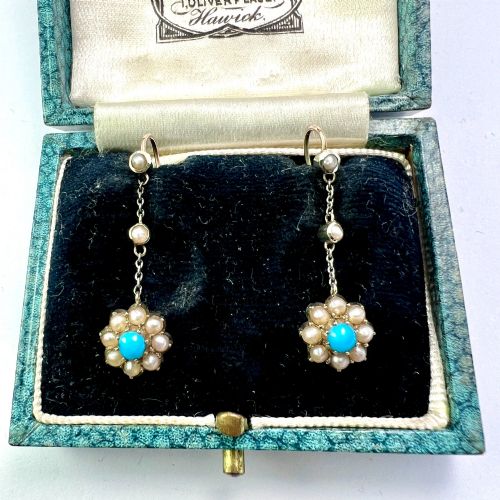
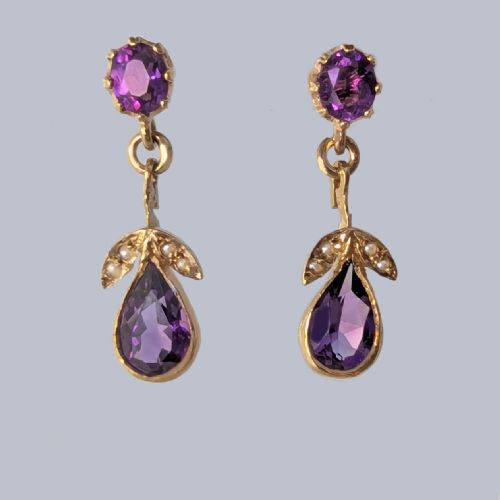
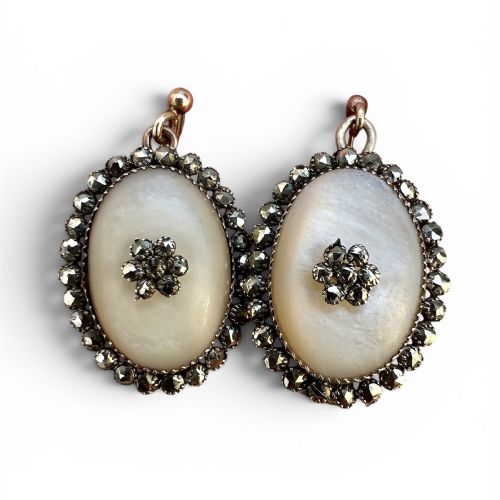


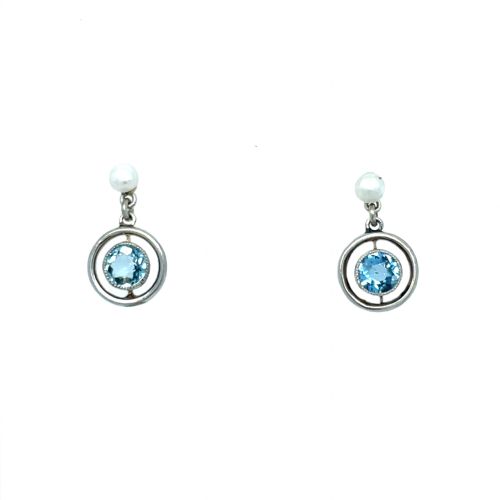


Antique Pearl Drop Earrings
These antique pearl drop earrings combine lustrous pearls with precious metals and diamonds, offering buyers wearable history from the Victorian, Edwardian, and Art Deco eras.
Identifying antique pearl drop earrings
When you search for antique pearl drop earrings, you encounter delicate dangle designs originating from the Georgian period through the 1920s. The selection spans distinct eras including Victorian, Edwardian, Art Nouveau, and Art Deco styles, each bringing specific aesthetic choices to the dangling drop format.
You are most likely to meet Edwardian platinum and gold pairs set with diamonds and natural pearls, alongside Victorian iterations featuring coloured gemstones like amethyst, peridot, and garnet. These drops hang from hooks, dormeuse backs, or posts, moving subtly with the wearer.
The forms range from simple foliate and floral motifs to geometric Art Deco drops and heart shapes. Earring lengths and metal tones vary across the inventory, reflecting the shifting fashions of the nineteenth and early twentieth centuries.
Materials and construction
Makers set pearls into 9ct and 15ct yellow gold, rose gold, 18ct gold, silver, platinum, and combinations of gold and silver. Diamonds, including rose cuts, old rose cuts, Swiss cuts, and old cuts, frequently accompany the pearls alongside accent stones such as enamel, green quartz, aquamarine, ruby, and garnet.
Craftsmen utilised hand-fabricated mounts, foliate silver settings, and delicate chain links to suspend the pearls and gemstones. Many designs integrate structured floral, bow, or geometric metalwork that secures the central pearls and diamond chips.
Retail Price Guide 2026
Typical UK retail prices for pearl drop earrings, calculated from the Sellingantiques database of over a million retail prices indexed since 2003. This retail price guide relies exclusively on Sellingantiques data; no external sources or auction records are used, so the figures do not describe the wider market.
Assessing quality and craftsmanship
The refinement of the metalwork separates standard production from exceptional pieces. Superior examples display intricate, hand-pierced foliate mounts, secure setting of old cut diamonds, and harmonious proportions between the drop length and the ear fitting.
The origin and matching of the pearls heavily influence the calibre of a pair. Natural pearls with consistent lustre and well-matched shapes command greater appreciation than lesser specimens, while integrated original boxes or undamaged enamel work add distinct provenance value.
The Antique Pearl Drop Earrings Glossary
- Natural pearl
- A pearl formed organically in a mollusc without human intervention. These contrast with cultured varieties and appear frequently in early pieces.
- Rose cut
- A historic diamond cut featuring a flat base and a domed crown with triangular facets. This cut gives stones a soft, glowing facet pattern.
- Dormeuse
- A type of secure earring fitting designed originally to be worn comfortably while sleeping. They sit close to the earlobe before the drop begins.
- Foliate
- Ornamentation modelled on leaves and foliage. This style appears extensively in Edwardian silver and gold mounts.
- Seed pearl
- Very small, naturally occurring pearls often used in clusters or strung chains. Victorian and Georgian jewellers utilised them for intricate floral designs.
Frequently Asked Questions
How do I date antique pearl drop earrings?
Dating relies on combining the stylistic clues of the metalwork, such as Edwardian platinum settings or Georgian foil-backs, with the types of gemstones and cut of the diamonds present.
Assay marks and specific fastening types like early wire hooks or dormeuse backs also provide reliable chronological markers.
Are natural pearls common in these earrings?
Many Victorian and Edwardian pieces incorporate natural pearls, especially those originating from earlier nineteenth-century workshops before cultured pearls became widespread.
Documentation or gemological testing often confirms natural origin in finer examples.
Can I wear antique drop earrings daily?
Daily wear is possible with careful handling, though the delicate nature of antique gold, silver mounts, and historic pearl settings requires mindfulness during activities.
Removing them before swimming, sleeping, or exercising helps preserve the integrity of the antique hooks and settings.
What metals were used in Victorian drops?
Victorian jewellers primarily worked in 9ct, 15ct, and 18ct yellow or rose gold, sometimes combining gold with silver settings on the face to make diamonds appear brighter.
Platinum emerged towards the end of the Victorian era and became dominant during the subsequent Edwardian period.