
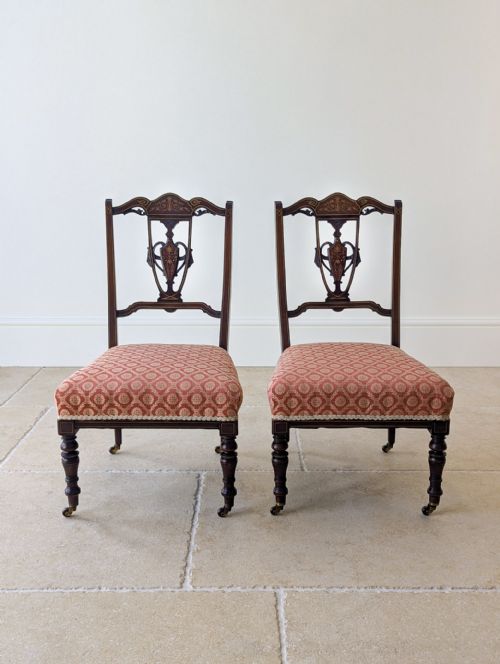


Antique Parlour Chair Pair
An antique parlour chair pair brings refined Victorian and Edwardian seating into a room, offering matched pairs designed for formal reception spaces.
Antique Parlour Chair Pair
When you search for an antique parlour chair pair, you encounter matched seating designed for nineteenth and early twentieth century formal rooms. The listings show these originating primarily across the Victorian and Edwardian eras, alongside pieces from the mid nineteenth century and the early decades of the nineteen hundreds.
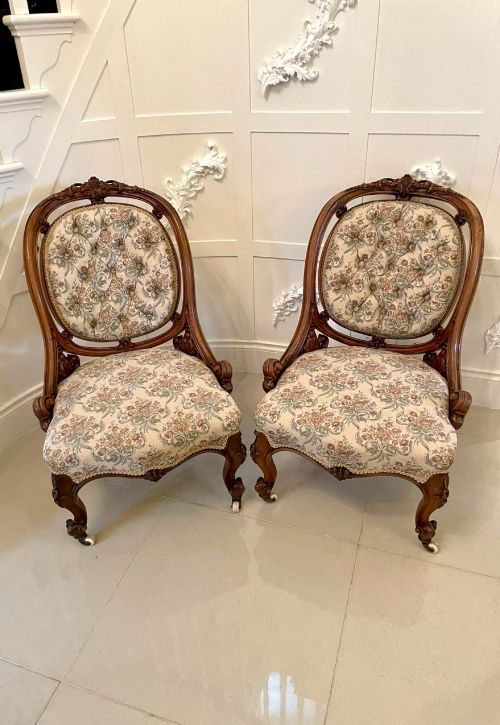
The selection ranges across distinct forms including salon chairs, side chairs, armchairs, and matching his and hers suites. Walnut and mahogany frame many of these pieces, alongside rosewood and giltwood variations.
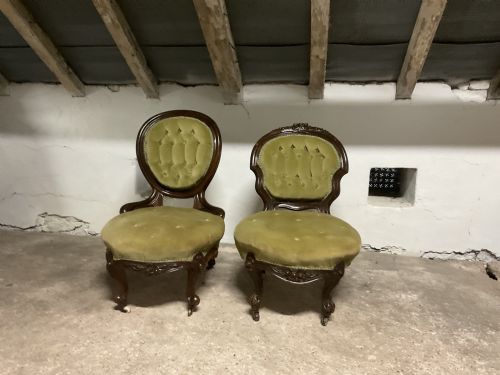
The most common formats on this page are matched pairs of Victorian walnut and mahogany chairs, often featuring carved details or button backs. These items reflect the domestic entertaining spaces for which they were originally built.
Materials and construction
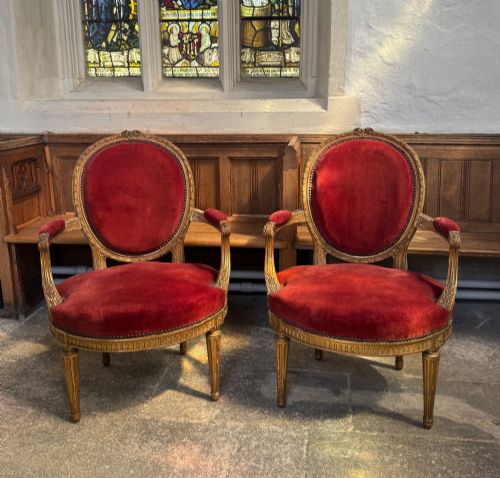
Craftsmen shaped these frames from dense hardwoods like mahogany, walnut, and rosewood, employing traditional joinery to support upright backs and open arms. Giltwood and painted finishes also appear on French revival examples, adding decorative surface detail to carved wooden structures.
Upholstery forms a vital component of the construction, utilising velvet and varied fabrics stretched over padded foundations. Button back techniques secure the cushioning deeply into the frame, providing structured support for the sitter.
His and hers matched pairs ensure that nobody has to argue over who gets the slightly wider seat.
Distinguishing quality across the range
Quality depends heavily on the depth and crispness of the carved details executed on the wooden frames. Superior pieces display intricate hand carving on walnut and mahogany that remains sharp and well defined.
The choice of primary timber and the execution of upholstery dictate the upper tier of the selection. Dense rosewood frames and intact period velvet or specialised upholstery fabric set finer examples apart from standard side chairs.
The Antique Parlour Chair Pair Glossary
- Balloon Back
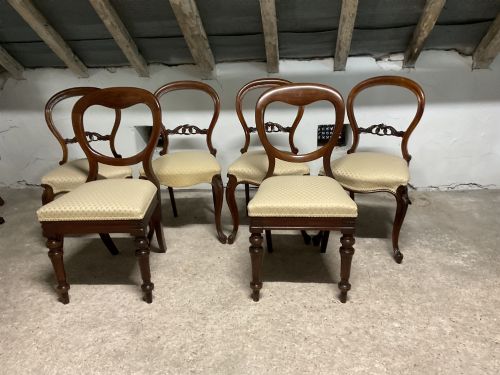
- A rounded, curved wooden chair back shaped like a balloon, popular in Victorian dining and salon seating. This design provides ergonomic support while presenting an elegant silhouette.
- Button Back
- An upholstery technique where buttons are pulled deep into the padding in a diamond pattern. This method secures the internal stuffing and creates a tufted surface.
- Giltwood
- Timber covered with a thin layer of gold leaf or gilt. This finish imparts a brilliant metallic sheen to decorative nineteenth century frames.
- Salon Chair
- A light, decorative chair intended for formal reception rooms. These pieces prioritize aesthetic elegance over heavy domestic use.
Antique Parlour Chair Pair: Frequently Asked Questions
How were parlour chairs used historically?
These chairs were placed in formal reception rooms and parlours to receive guests and host social gatherings. They provided designated seating during afternoon visits and domestic conversations.
Their lighter construction allowed them to be rearranged easily within the room depending on the size of the gathering.
How do I identify a Victorian parlour chair?
Victorian examples frequently display dark hardwoods like walnut or mahogany, often featuring curved balloon backs or carved wooden details. Many incorporate button back upholstery designed for formal interiors.
Stylistic revivals such as Rococo Revival also point directly to the Victorian period.
Can I use antique parlour chairs daily?
These chairs function well in modern interiors when placed in low traffic areas or used as occasional seating. Their lighter frames suit reading corners and bedrooms rather than heavy family lounge use.
Checking the stability of the joints ensures safe everyday enjoyment.
What is the difference between salon and parlour chairs?
Salon chairs generally originate from French inspired or decorative revival styles, often featuring giltwood, painted finishes, or open arms. Parlour chairs tend towards sturdy Victorian walnut or mahogany frames built for domestic reception spaces.
Both categories served formal social functions in the nineteenth century.