
Antique Paraffin Oil Lamp
An antique paraffin oil lamp brings glowing warmth and period charm to a room, offering practical lighting rooted in nineteenth and early twentieth century domestic history.
Antique Paraffin Oil Lamp
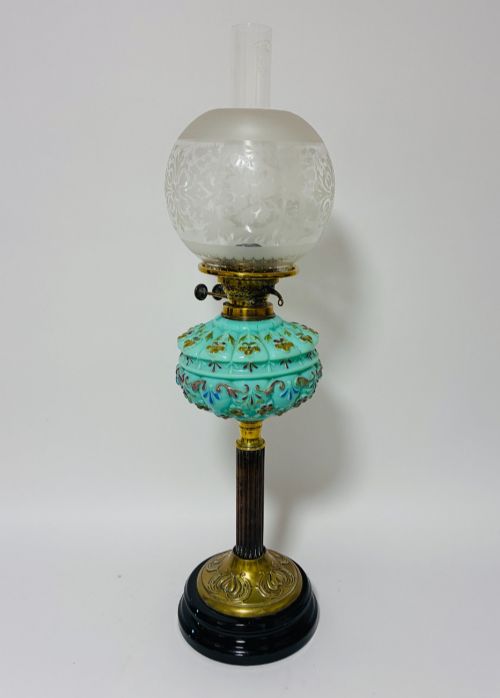
An antique paraffin oil lamp is a functional household light source originating from the nineteenth and early twentieth centuries, spanning the Victorian and Edwardian eras. Buyers searching for an antique paraffin oil lamp will find pieces intended for domestic illumination, often standing on tables or hanging from ceilings.
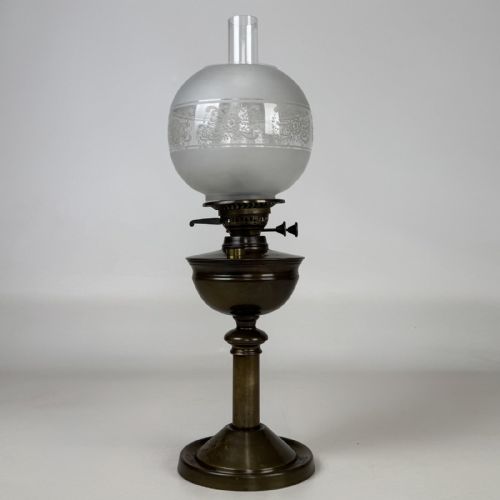
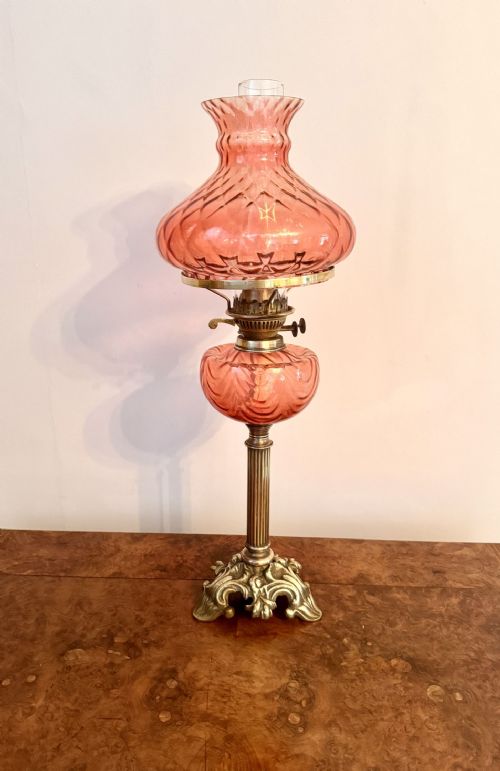
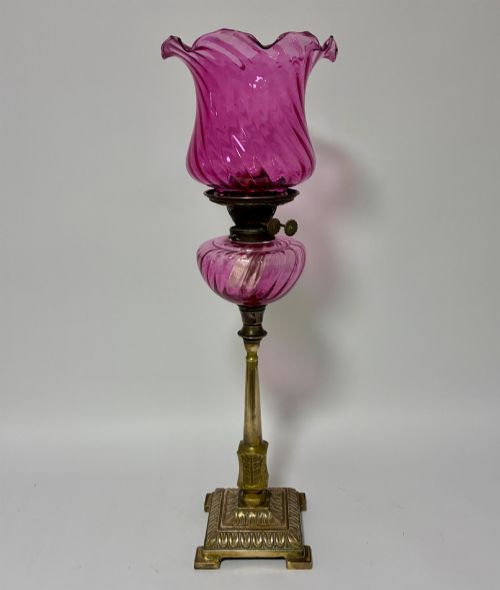
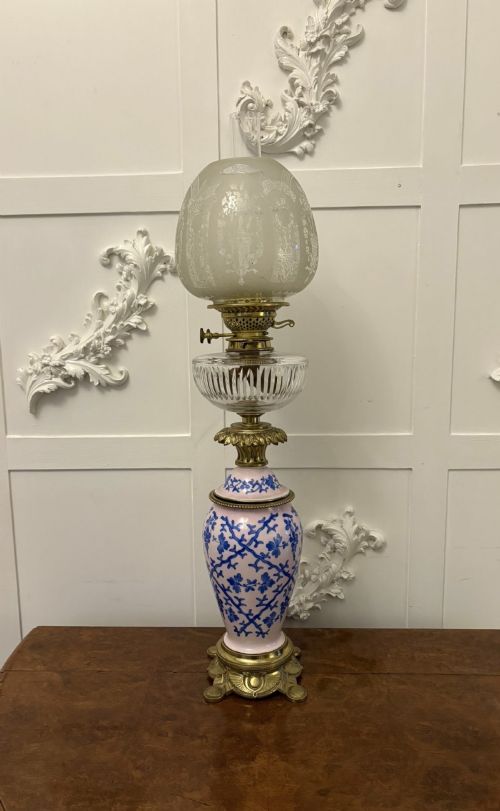
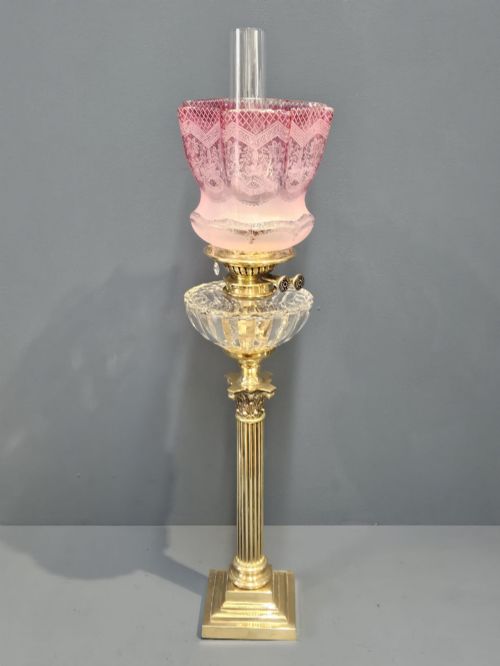
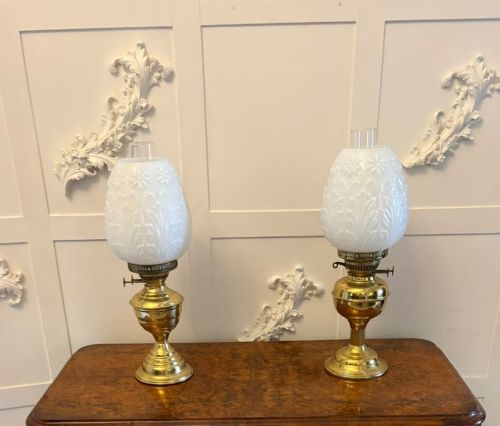
The selections on this page commonly appear as brass columns, porcelain bodies, and glass vessels. Table lamps and distinct lamp shades dominate the forms, frequently paired with burners designed for paraffin oil.
Most examples date from the Victorian period through to the Edwardian era, encompassing diverse influences such as neoclassical revival, art nouveau, and secessionist styles. These lamps reflect the interior lighting technology of homes before widespread electricity.
How They Were Made
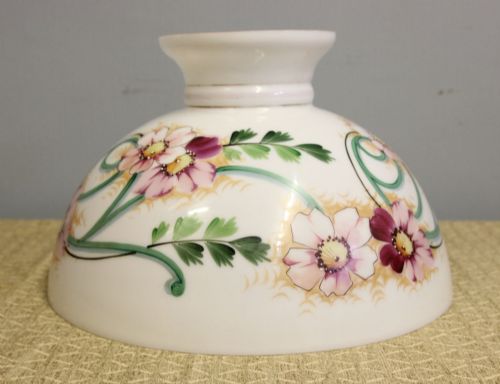
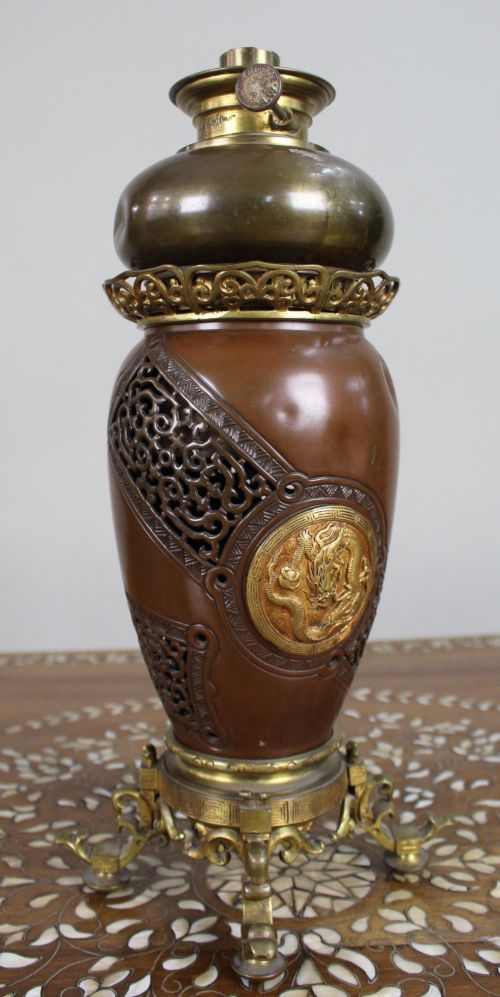
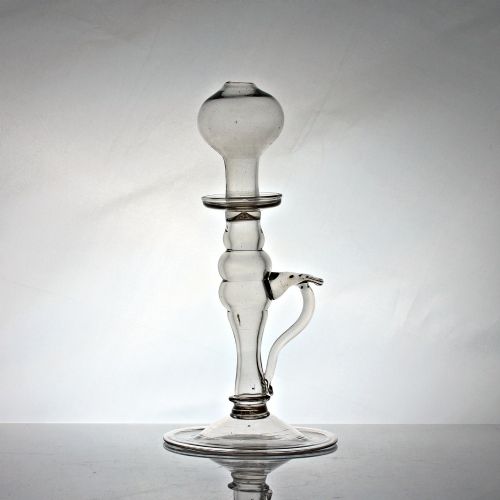
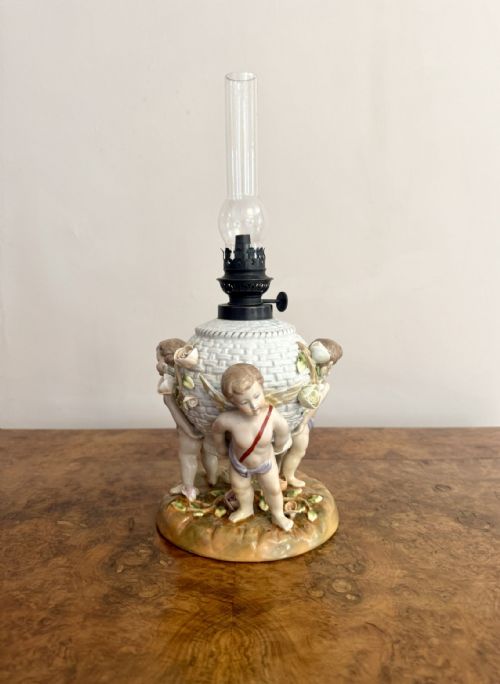
Makers utilised cast brass, blown glass, and moulded porcelain to form the structural bodies and fonts of these lighting fixtures. Metals like copper and bronze also appear alongside applied gilt decoration and hand-painted motifs.
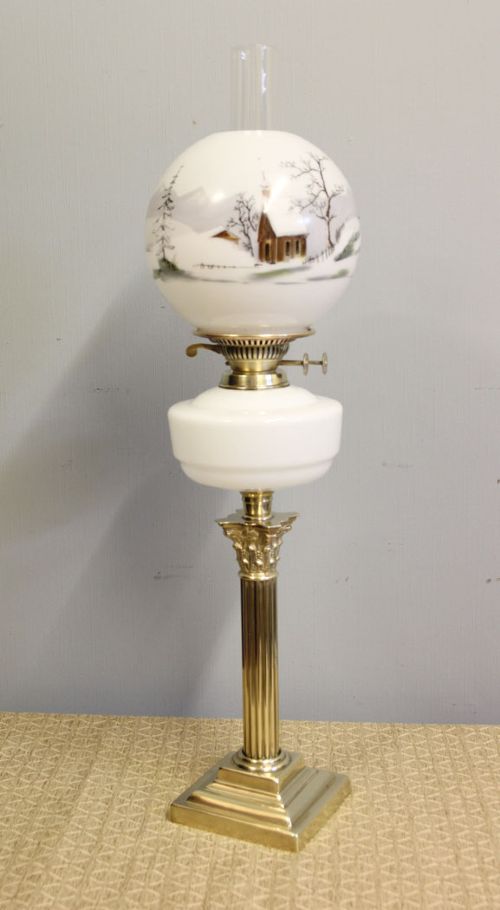
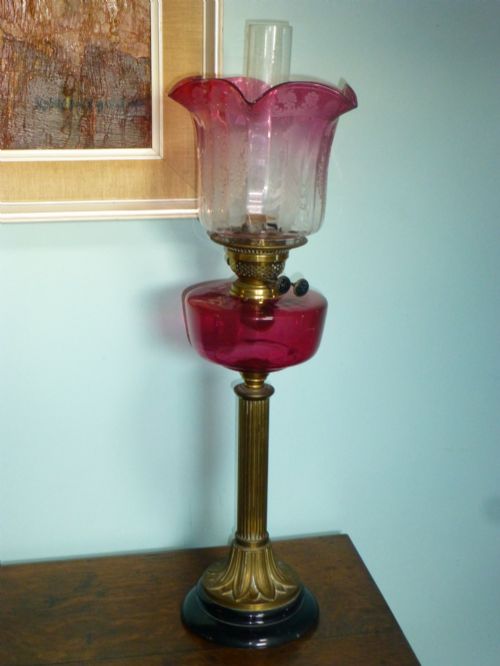
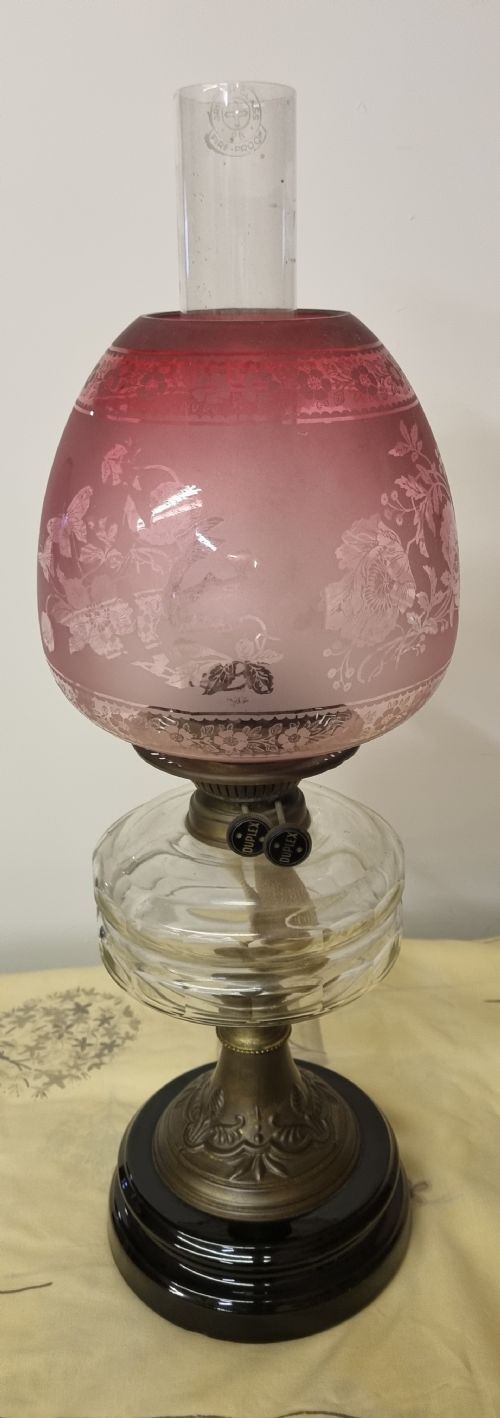
Shades were produced in clear glass, opaline glass, and cranberry glass, often incorporating etched patterns or hand-painted botanical scenes. Burners made of brass were engineered to control the flame using wicks housed within the metal mechanism.
Table lamps and hanging shades dominate the object types seen on this page.
What Varies in Quality
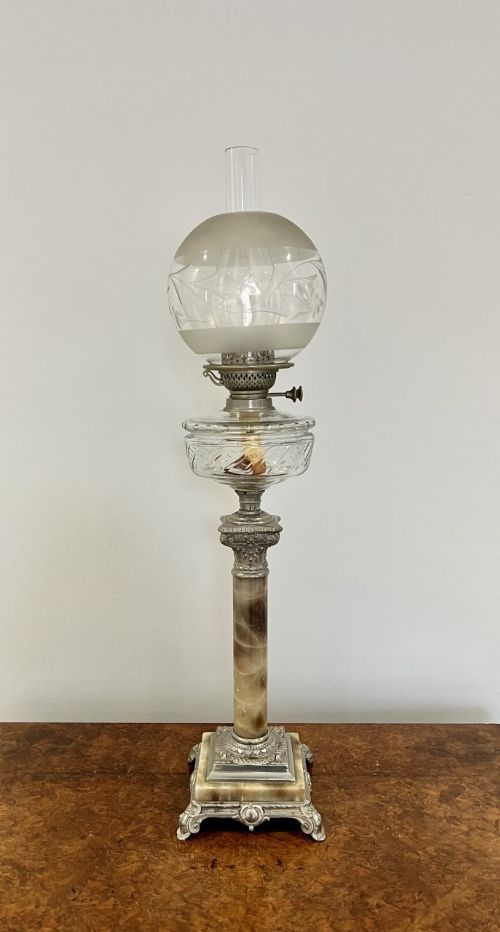
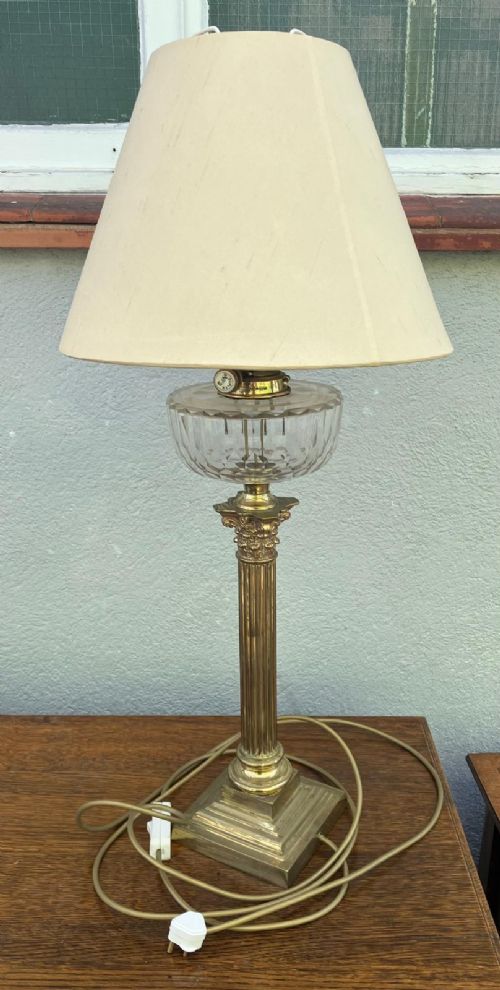
The standard of an antique paraffin oil lamp depends on the weight and refinement of its materials, from heavy cast brass columns to delicate hand-painted porcelain figures. Superior pieces show precision in the casting of architectural details like Corinthian capitals and the clarity of blown cranberry glass shades.
Execution of decorative elements sets the higher tier apart, such as finely etched tulip shades, hand-painted winter scenes, and robust mechanical burner systems by established makers. The integrity of the combined ceramic, glass, and metal components dictates the overall finish of the piece.
Eli Griffiths and Sons·Sitzendorf·Gustave Serrurier Bovy·Wild and Wessel·Hinks and Son
The Antique Paraffin Oil Lamp Glossary
- Duplex burner
- A double-wick mechanism that produces a brighter flame than standard single-wick burners. This type of burner is frequently found on larger nineteenth century table lamps.
- Opaline glass
- A milky, translucent glass popular for lamp shades during the Victorian period. It diffuses light softly across a room.
- Corinthian column
- An architectural column design often emulated in the brass stems of taller Victorian table lamps. It supports the oil font with classical detailing.
- Hinks burner
- A specific nineteenth century mechanical burner system known for its efficiency and widespread use. Pieces bearing this name represent standard engineering of the period.
Antique Paraffin Oil Lamp: Frequently Asked Questions
How do I safely burn paraffin oil in an antique lamp?
Ensure the font is free of cracks and the wick moves smoothly through the brass burner before filling. Use clean paraffin oil and allow the wick to saturate thoroughly before lighting.
Trim the wick flat to maintain an even flame and keep the lamp away from drafts. Extinguish the flame carefully by turning the dial down or using a snuffer.
How were these lamps used in Victorian homes?
These lamps served as primary indoor illumination before electrical lighting became standard in domestic spaces. They were placed on tables, desks, or hung from ceilings to light living rooms and parlours.
Families moved portable table lamps from room to room as needed during evening hours. They required daily trimming of wicks and replenishment of fuel to remain operational.
How do I tell a Victorian lamp from an Edwardian one?
Victorian lamps often feature ornate brass columns, heavy porcelain bodies, and rich cranberry glass shades with etched designs. Neoclassical and botanical motifs dominate this earlier period.
Edwardian examples tend towards simpler lines, sometimes incorporating industrial brass or onyx bases alongside opaline shades. The transition reflects shifting interior design tastes towards cleaner forms around nineteen hundred.
Can I convert an antique oil lamp for electricity?
Many people choose to wire these lamps for modern electrical use to display them safely in contemporary homes. A professional can run a cord through the central column without damaging the original brass or ceramic structure.
Retaining the original burner and font intact preserves the historical integrity of the piece for collectors who prefer non-converted items.