
Antique Padded Ottoman
An antique padded ottoman brings tactile comfort and period presence to a room, offering versatile seating or foot support through centuries of craftsmanship.
Antique Padded Ottoman
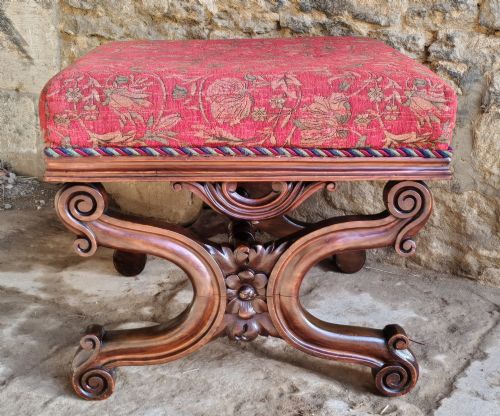
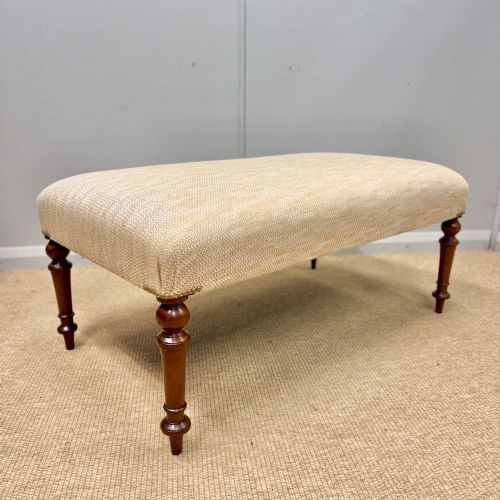
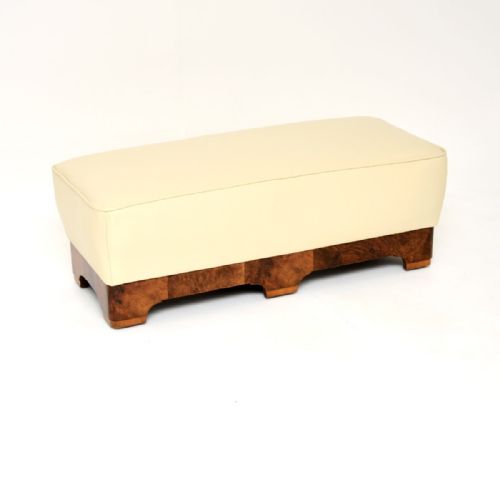
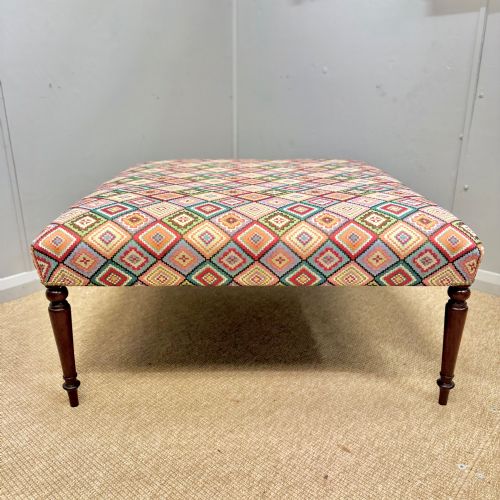
An antique padded ottoman encompasses low seating forms such as footstools, long stools, and window seats originating from the eighteenth, nineteenth, and early twentieth centuries. These pieces appear in diverse styles ranging from Victorian and Edwardian to Georgian and Regency revivals.
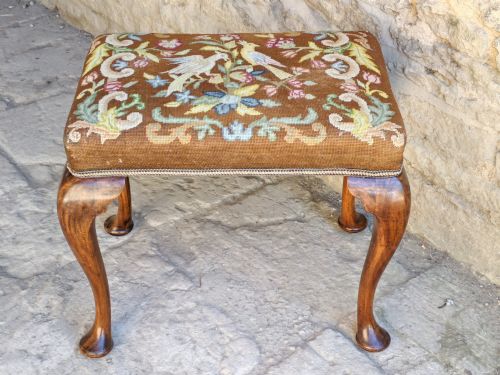
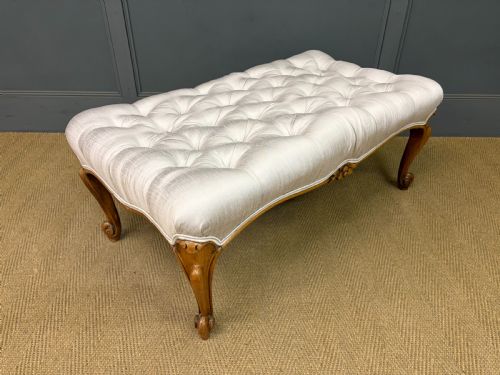
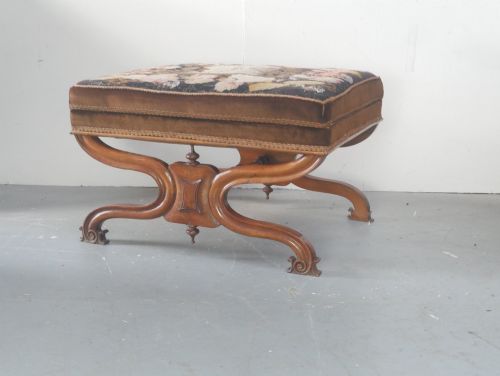
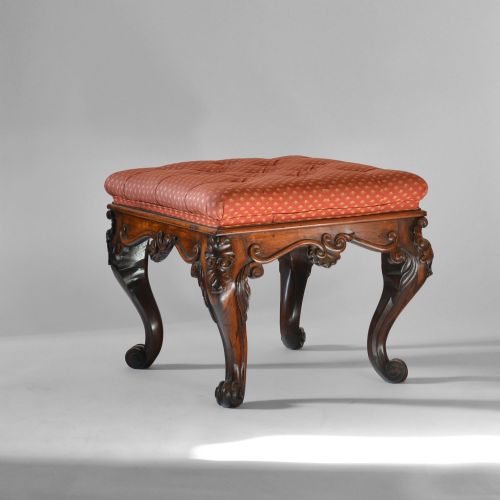
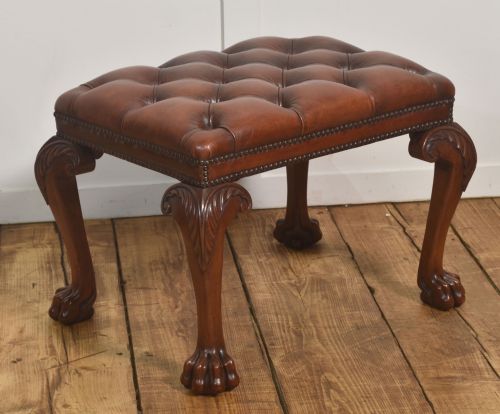
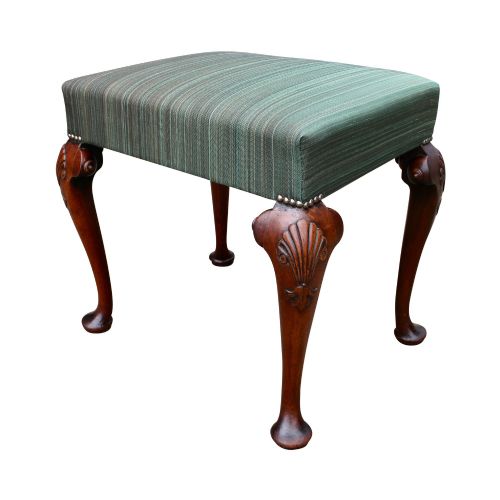
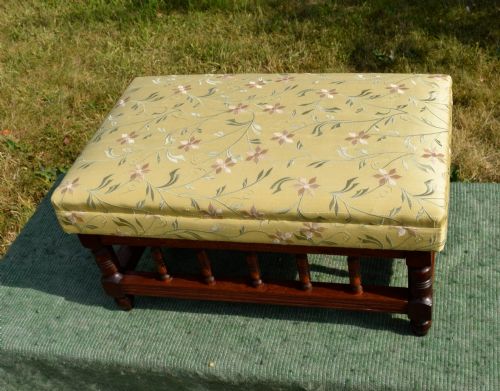
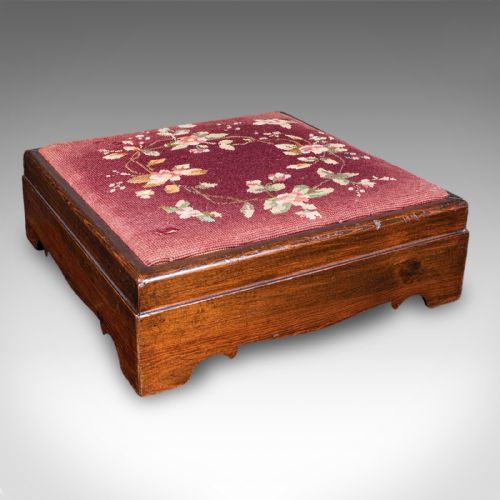
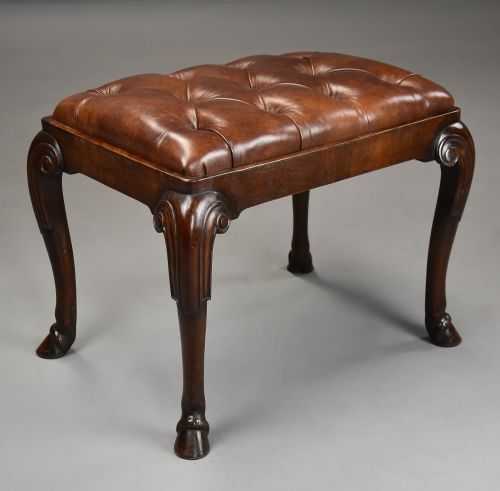
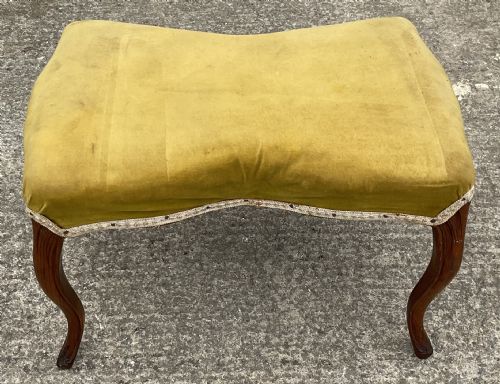
The version most commonly encountered on this page is the Victorian walnut or mahogany stool featuring upholstered padding, often supported on cabriole legs or brass castors. Examples span simple domestic footstools to grander scaled window seats and centre stools covered in textile, tapestry, or leather.
Makers and designers from various European and British traditions shaped these objects, incorporating regional woods like pitch pine, oak, and rosewood alongside specialised joinery. Their functional role as fireside stools, gout stools, or long benches adapted over time to suit drawing rooms and dressing areas.
How they were made
Makers constructed the timber frames of these pieces using dense hardwoods such as mahogany, walnut, and rosewood, joined with traditional techniques to ensure structural longevity under heavy use. Secondary structural timbers like pitch pine and oak also appear frequently in hidden framework elements.
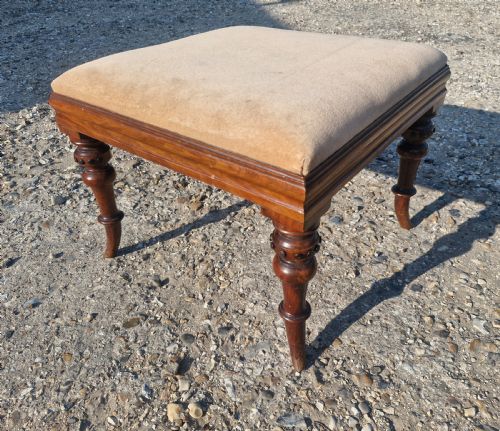
Upholstery involved stuffing textile, leather, or tapestry padding over a webbed or sprung base, secured with tacks and finished with decorative trimming or buttoning. Carved details, giltwood highlights, and turned components like barley-sugar legs or bobbin legs added ornamental refinement to the exposed wooden frames.
Listings feature woods including mahogany, walnut, rosewood, and pitch pine across Victorian, Edwardian, and Georgian periods.
What varies in quality
The integrity of the timber frame and the sophistication of the woodcarving establish the primary tier of craftsmanship, distinguishing plain utility pieces from finely sculpted parlor seating. Superior examples exhibit fluid cabriole legs, crisp mouldings, and choice veneers such as burr maple or oyster walnut.
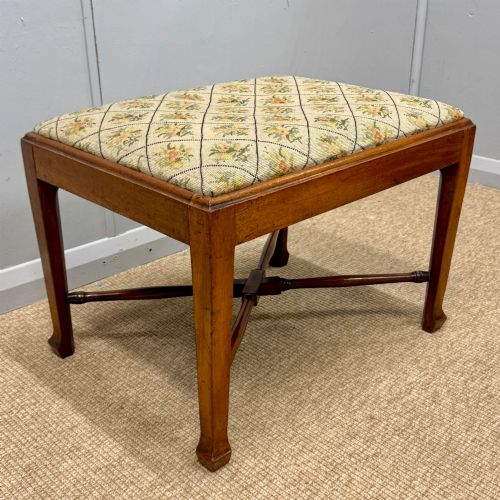
The quality of the upholstery execution and the choice of covering material, whether original fabric, needlework, or high-end textile, greatly influence the piece's overall character. Original components and untampered joinery command higher regard among collectors who value historical continuity.
Loidrault Freres Paris·Mathew Gregson
The Antique Padded Ottoman Glossary
- Cabriole leg
- A furniture leg that curves outward at the knee and tapers inward to an ankle, mimicking an animal's limb. This form gained prominence during the Queen Anne and Chippendale periods.
- Gout stool
- An adjustable footstool designed to elevate and support the foot or leg of a person suffering from gout. These pieces often feature a mechanical tilting mechanism.
- Stretcher
- A horizontal wooden rod or rail connecting the legs of a stool or chair to provide structural stability. They frequently feature decorative turnings like barley-sugar twists.
- Window seat
- An elongated upholstered stool or bench designed specifically to fit within the recess of a window bay. They often feature scroll ends or padded armrests.
- Oyster veneer
- Decorative woodwork created by cutting branch wood transversely to produce small, circular patterns resembling oyster shells. This technique is typical of the late seventeenth and eighteenth centuries.
Antique Padded Ottoman: Frequently Asked Questions
How do I use an antique ottoman today?
These pieces function well as flexible extra seating in a living room, a convenient perch at the end of a bed, or a traditional footrest by a fireside.
Their compact scale allows them to move easily between rooms to suit daily domestic arrangements.
Are these ottomans upholstered in original fabric?
Some pieces retain their period upholstery or historic needlework, while others have received professional re-upholstery using traditional or contemporary designer textiles.
Listings generally specify whether the fabric is original or a later replacement.
How can I tell a Victorian stool from a Georgian one?
Georgian pieces often display rectilinear proportions and carved mahogany details associated with mid-eighteenth-century design.
Victorian examples frequently utilise walnut, richer buttoned padding, and curvilinear cabriole legs reflecting revivalist tastes.
What is the difference between a footstool and an ottoman?
Footstools are typically smaller, lower pieces designed primarily for resting feet, whereas ottomans often provide larger surfaces suitable for sitting or dual use as low tables.
Historical terminology frequently overlaps across nineteenth-century catalogue descriptions.