


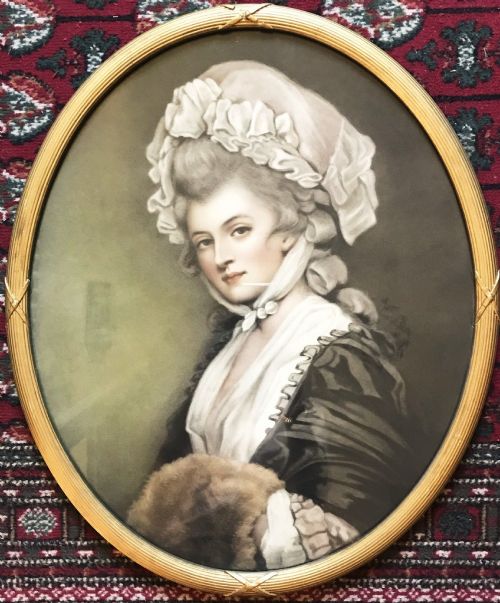
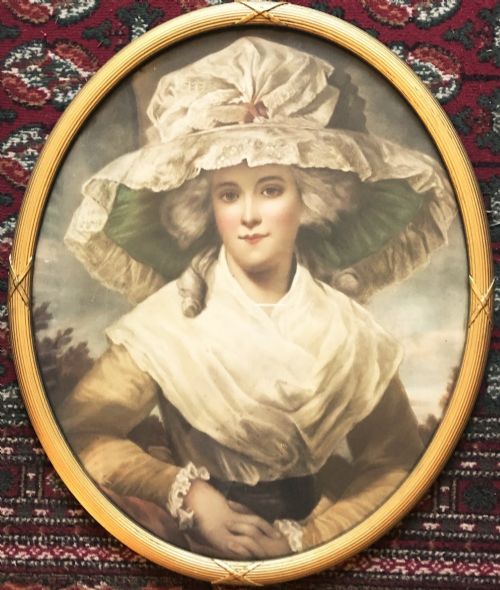
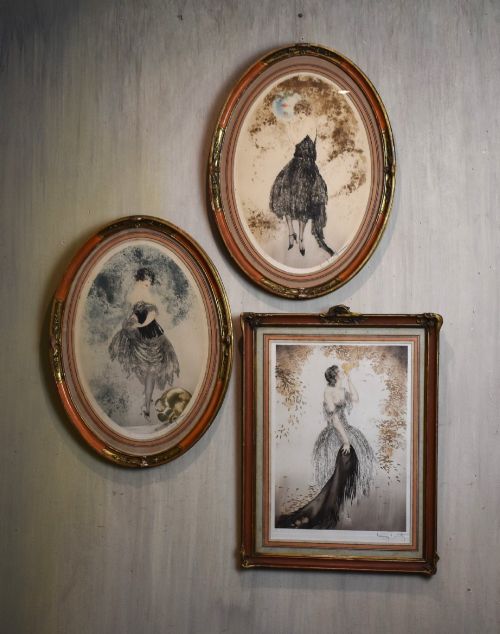


Antique Oval Framed Prints
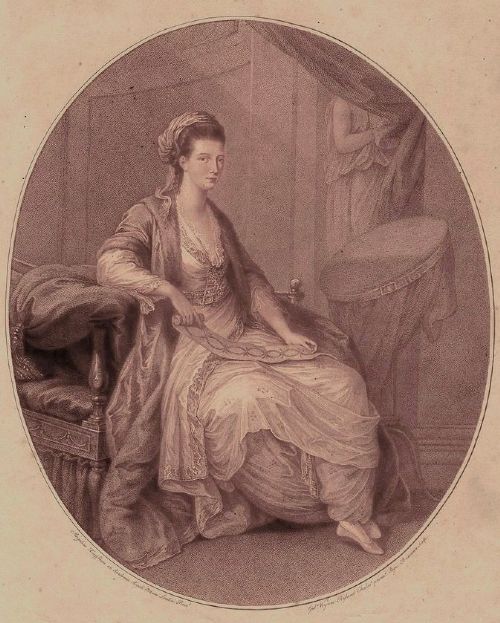
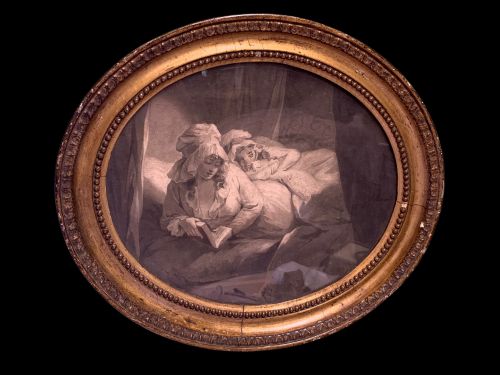
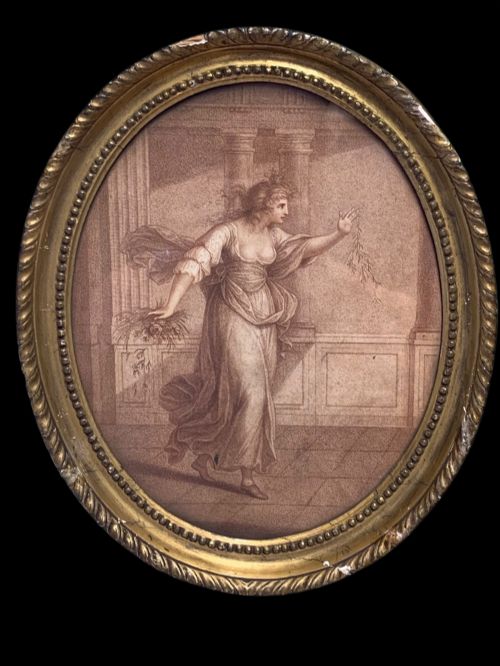
These antique oval framed prints bring domestic portraiture and natural history subjects into focus through curved glass and shaped timber.
Antique Oval Framed Prints
Antique oval framed prints encompass wall art, portrait miniatures, and framed engravings enclosed within curved or rounded borders. These pieces primarily date from the eighteenth and nineteenth centuries, spanning Georgian, Victorian, and Edwardian periods.
Buyers encounter subjects ranging from royal personages and naval officers to delicate botanical studies, butterfly specimens, and romantic scenes. The inventory also includes framed watercolours and etching reproductions alongside standard paper prints.
The format of an oval frame dictates the composition of the artwork, often focusing attention tightly on a central sitter or specimen. This curved geometry softens the corners of a room and distinguishes these works from standard rectangular hangings.
Materials and construction methods
Makers utilised paper, ink, and watercolour housed behind protective glass within timber frames. Giltwood, brass, and gilded gesso frequently form the outer boundaries, adding reflective depth to the perimeter.
Techniques range from early line engravings and stipple engravings to hand colouring and mezzotints. Silk surfaces occasionally serve as a base for late Georgian stipple work, providing a textured ground for the ink.
Frames are constructed to follow the precise curvature of the aperture, often employing segmented wood or moulded gesso to achieve a smooth, unbroken oval shape.
Materials across the selection include paper, glass, wood, giltwood, and brass, forming works from the seventeenth to the twentieth century.
Quality variations across the range
Quality rests upon the crispness of the original impression and the preservation of the paper or silk ground. Faded ink or heavy foxing diminishes the visual impact of an engraving, whereas clean lines retain their graphic authority.
The craftsmanship of the housing marks a distinct tier in the selection. Hand-carved giltwood and ornate dome-fronted glass demonstrate superior workshop skill compared to simpler wooden mouldings.
Hand colouring applied with precision elevates the artistic merit of botanical and fashion plates, distinguishing them from mass-produced monochromatic impressions.
John Smith·G. Kneller·Jacobus Houbraken·Louis Icart·Sir Thomas Lawrence·Hans Holbein·Bartolozzi·Abraham Van Blyenberch·Élisabeth Louise Vigée Le Brun·Rev B. Morris
The Antique Oval Framed Prints Glossary
- Mezzotint
- A printmaking process where the copper plate is roughened to achieve rich dark tones and smooth tonal transitions. It was widely used for reproducing oil paintings during the eighteenth and nineteenth centuries.
- Gesso
- A plaster mixture applied to wooden frames before gilding or painting to create a smooth surface for moulding. Elaborate decorative motifs are often pressed into this material.
- Giltwood
- Timber that has been coated with a thin layer of gold leaf or gold paint. It provides a bright, reflective boundary that enhances the artwork within.
- Portrait miniature
- A small, highly detailed painting or print depicting a specific individual. These works often incorporate delicate watercolour or stipple techniques.
Antique Oval Framed Prints: Frequently Asked Questions
How do I hang antique oval framed prints?
These pieces require secure picture hooks that accommodate the weight of glass and wooden frames. Their curved shape makes them effective as central focal points or grouped in symmetrical pairs on a wall.
Avoid placing them in direct sunlight to protect the paper and any hand-applied watercolours from fading. Ensure the wall fixings align with the hanging loop or cord attached to the reverse of the frame.
What periods do these framed prints cover?
The selection spans from the seventeenth century through the Georgian, Regency, and Victorian eras into the early twentieth century. Each period brings distinct framing styles, from simple mahogany surrounds to ornate gilded gesso.
Early examples often feature intricate line engravings of historical figures, while later Victorian and Edwardian pieces frequently include botanical studies and romantic portraits.
Are the frames original to the prints?
Many listings preserve their period frames, which match the aesthetic and age of the enclosed artwork. Original frames often display signs of age, such as minor gilt loss or mellowed timber patination.
Checking the fit and construction of the backing boards helps determine whether the frame and print have remained together over the centuries.