
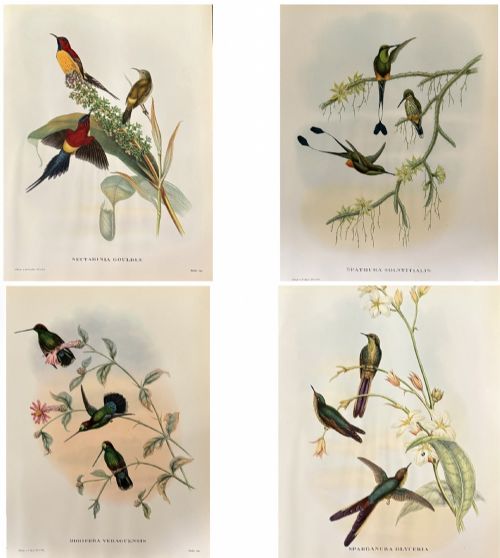
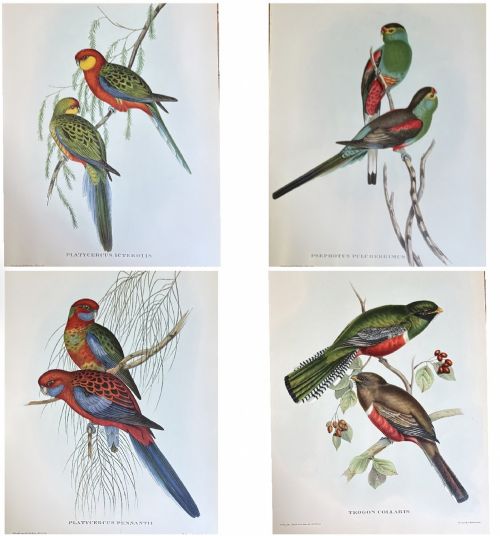
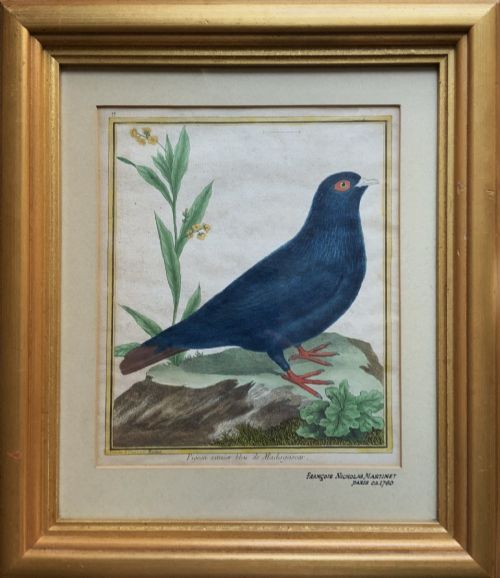
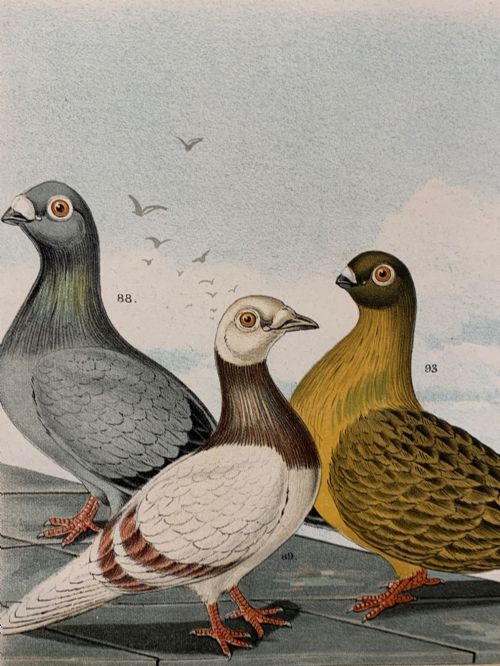


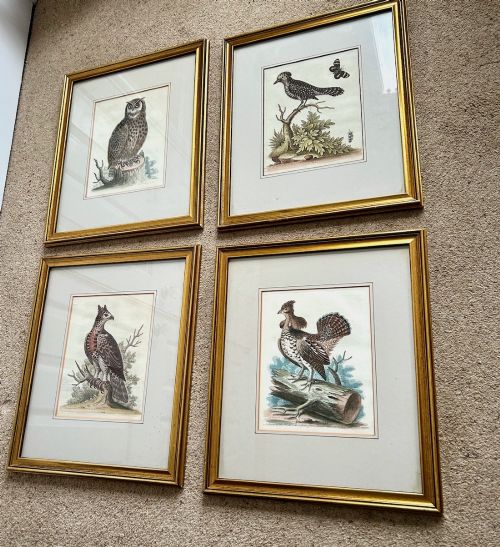


Antique Ornithology Prints
These antique ornithology prints are historical illustrations of birds, offering scientific study and decorative charm for the home.
Antique Ornithology Prints
Antique ornithology prints capture the intricate detail of avian life through historical illustration and fine printing techniques. When searching for antique ornithology prints, collectors typically encounter works originating from the eighteenth and nineteenth centuries.
The selections on this page span several distinct periods, featuring Victorian, Edwardian, and Georgian examples. These pieces appear in various formats, ranging from individual framed wall art to sets of multiple engravings and watercolours.
Buyers frequently find matched sets, such as groups of tropical birds or game prints, alongside singular framed watercolours. The origins reflect traditional British and European natural history publishing traditions.
How they were made
Makers utilised paper as the primary support medium, applying ink, watercolour, and lithographic pigments by hand. Many plates received hand-colouring after the initial impression was struck, bringing vibrant hues to the feathers and backgrounds.
Framing materials commonly include wood, gilt wood, and ebonised frames paired with deep giltwood mounts or glass protection. These archival mountings safeguard the delicate paper and watercolours from atmospheric damage.
Listings feature works across the 18th Century, 19th Century, Edwardian era, and 1950, utilising paper, ink, watercolour, and gilt wood.
What varies in quality
The standard of execution depends heavily on the precision of the initial engraving or lithography and the skill of the hand-colouring. Finer examples display meticulous attention to anatomical accuracy and feather texture.
Condition and completeness also govern the hierarchy, with uniform sets commanding greater interest than scattered single sheets. Original contemporary framing and genuine period mounts further elevate the standing of a piece.
François-Nicolas Martinet·George Edwards·William Swainson·Edward Lear·Eleazor Albin·Archibald Thorburn
The Antique Ornithology Prints Glossary
- Lithography
- A planographic printing method using a stone or metal plate on which the image area is created to retain ink. This technique allowed for the efficient reproduction of detailed colour illustrations during the nineteenth century.
- Engraving
- A printmaking process where an artist cuts lines directly into a metal plate with a burin. The resulting incisions hold the ink to produce sharp, precise lines on paper.
- Watercolour
- A paint consisting of pigment suspended in a water-soluble vehicle, applied directly to paper by hand. These pigments provide the subtle gradations seen in original bird paintings.
- Hand-coloured
- The process of applying pigments by hand to a monochrome printed base. This meticulous step added realistic coloration to published engravings and lithographs.
Antique Ornithology Prints: Frequently Asked Questions
How should I hang antique bird prints?
Protect these works from direct sunlight to prevent the watercolours and coloured inks from fading over time. Keep them away from damp environments like kitchens or unventilated bathrooms to preserve the paper.
Group smaller sets together on a single wall to recreate traditional nineteenth-century gallery displays. Ensure the framing uses acid-free backing materials to safeguard the paper.
Are these prints original or reproductions?
The pieces listed derive from historical periods spanning the eighteenth to the twentieth centuries, produced using traditional printing and painting methods. Examine the surface under magnification to identify plate marks, ink texture, and hand-applied watercolours.
Authors and artists such as Edward Lear and George Edwards produced these plates during their respective eras. Authentic period paper displays natural ageing characteristics distinct from modern facsimile output.
What is the difference between an engraving and a lithograph?
Engravings involve incising lines into a hard plate, yielding crisp outlines and fine cross-hatching. Lithography relies on chemical repulsion on a flat surface, allowing for softer tonal transitions and painterly effects.
Both techniques served as the primary methods for natural history illustration before modern photographic printing. Hand-colouring was frequently applied to both types to achieve botanical and ornithological accuracy.
How do I care for framed watercolours?
Maintain a stable room temperature and humidity level to prevent the paper from warping or developing foxing spots. Inspect the back sealing periodically to ensure dust and insects cannot reach the artwork.
Use museum-grade glass if possible to filter out ultraviolet rays that degrade historical pigments. Dust the frames gently with a dry, soft cloth without applying cleaning sprays near the glass.