




Edwardian Bird Art
Edwardian bird art brings together decorative avian imagery from the early twentieth century, offering collectors charming depictions of winged subjects in print, glass, and wood.
Edwardian Bird Art
When searching for Edwardian bird art, buyers encounter a diverse selection of pieces that span wall art, painted decoys, and architectural glass panels. These works capture avian subjects through watercolours, oil paintings, engravings, and stained glass, reflecting the period's keen interest in natural history and decorative crafts.
The objects on this page range from framed prints and delicate watercolours to carved wooden decoys and leaded glass windows featuring bird-on-branch designs. While many pieces originate directly from the Edwardian era, the selection also includes related Victorian and early twentieth-century works that share the same aesthetic focus on bird life.
Materials and techniques
The pieces rely on traditional media such as paper, canvas, and glass, combined with hand-painting and printing techniques. Watercolours and oil paintings demonstrate careful brushwork on paper or canvas surfaces, whilst framed prints utilise period printing methods.
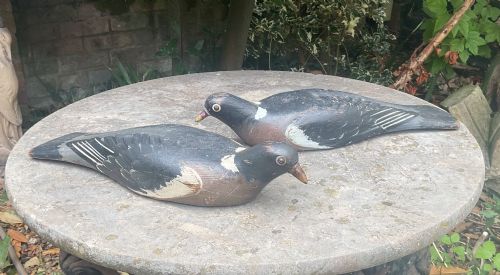
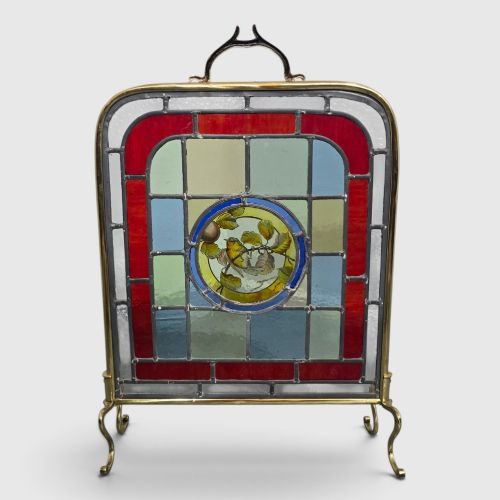
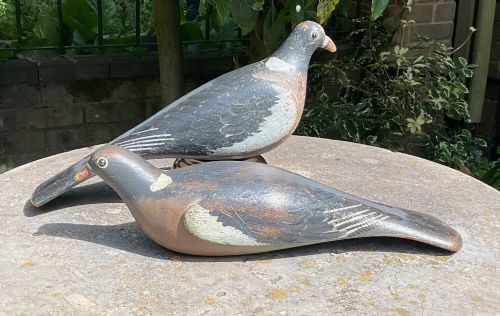
Three-dimensional objects employ carved wood and painted finishes, notably seen in decoy pigeons and ducks. Stained and leaded glass panels incorporate coloured glass, lead came, and amber bullseyes to form light-catching avian designs.
Listings feature items in wood, glass, paper, lead, paint, and gold leaf, spanning the Victorian period through the 1940s.
Distinctions in quality
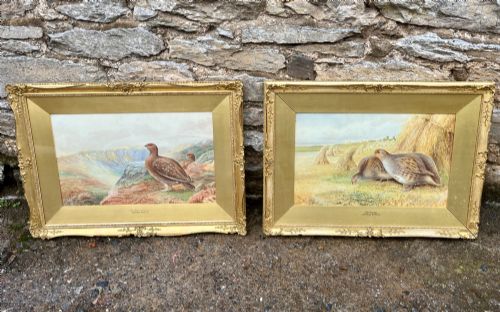
Quality in these works rests on the execution of the subject and the integrity of the materials. Finely rendered feather details in hand-painted watercolours and oil paintings distinguish superior artistic skill from standard production prints.
In glasswork, the complexity of the leaded design and the clarity of the coloured glass determine the refinement of the panel. For wooden decoys and carved panels, the depth of carving and the preservation of original painted surfaces mark the finer examples.
George Rankin·E H Windred·George Edwards·R Lauritsch·Arthur E Gonne·Archibald Thorburn·Minton·Longwy
The Edwardian Bird Art Glossary
- Decoy
- A carved and painted wooden representation of a bird, originally utilised in hunting but collected for its folk art appeal. Many Edwardian examples display original painted surfaces.
- Leaded glass
- Window panels constructed from pieces of glass joined together with lead cames. These often feature pictorial bird designs incorporating coloured bullseyes.
- Lustre pottery
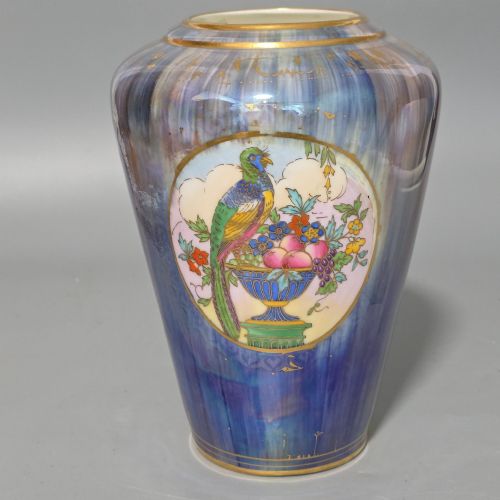
- Ceramics treated with a metallic glaze that produces an iridescent sheen. Pieces such as Minton lustre vases bring colourful avian motifs to pottery.
- Watercolour
- A painting method using water-soluble pigments on paper. Edwardian bird watercolours often capture game birds, parrots, or cockerels with delicate washes.
- Engraving
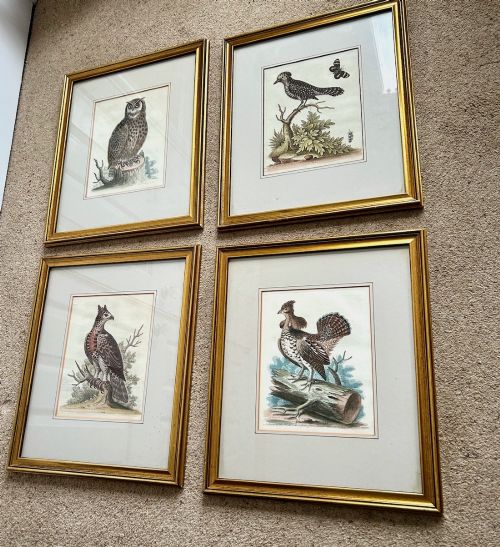
- A printmaking technique where an image is incised onto a plate. Early prints provide detailed study illustrations of birds from the eighteenth century onwards.
Edwardian Bird Art: Frequently Asked Questions
What types of birds appear most often?
The listings feature a wide variety of avian subjects, including game birds, pigeons, ducks, parrots, cockerels, and exotic species. Artists and craftsmen depicted these birds across different media like watercolours, prints, and carved wood.
Buyers will find that game birds and pigeons are particularly common among the paintings and wooden decoys, while decorative parrots and exotic species appear in watercolours and pottery.
How are stained glass bird panels displayed?
Stained glass panels and windows with bird designs are typically hung in windows using brackets or chains to allow natural light to pass through the coloured glass and lead lines.
These architectural pieces can also be mounted against interior walls with backlit frames to replicate the effect of daylight shining through the glass.
Are decoy pigeons and ducks carved from wood?
The decoy pigeons and ducks recorded in the listings are constructed from wood and finished with painted details. These functional items were hand-painted to resemble real birds.
Collectors appreciate them today as examples of early twentieth-century folk art and animal sculpture, often displaying them on shelves or tabletops.
How do I distinguish Edwardian prints from Victorian ones?
Edwardian pieces generally date from the early 1900s up to the First World War, reflecting the artistic styles and printing technologies of that specific decade. Victorian items originate from the nineteenth century and often feature distinct tonal qualities and framing styles.
Examining the paper stock, framing materials, and stylistic cues helps place a piece correctly within its respective period.