
Antique Open Front Shelves
Antique open front shelves offer accessible storage and display, bringing character and practical organisation to any room.
Antique Open Front Shelves
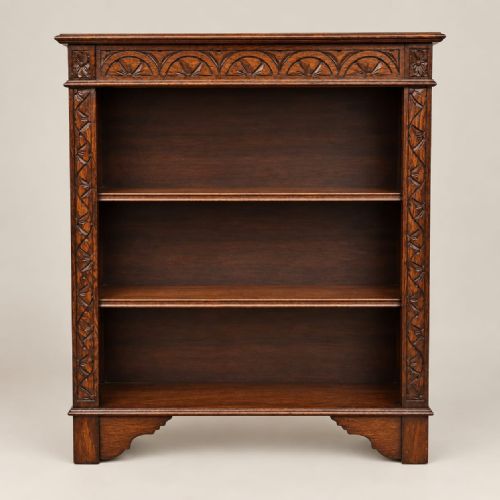
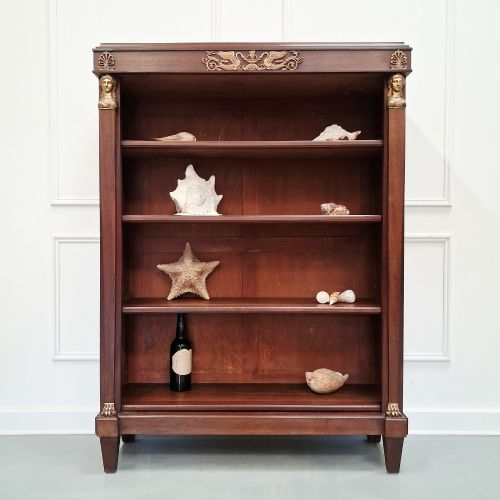
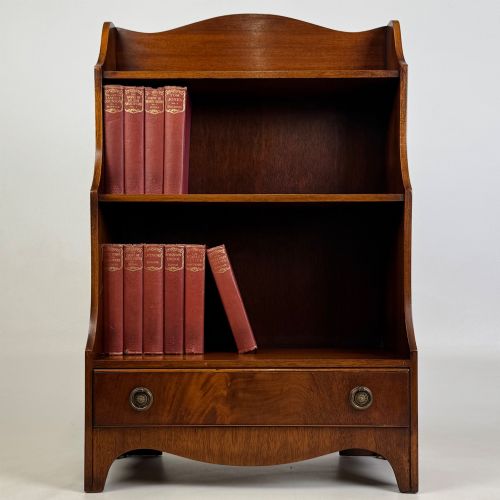
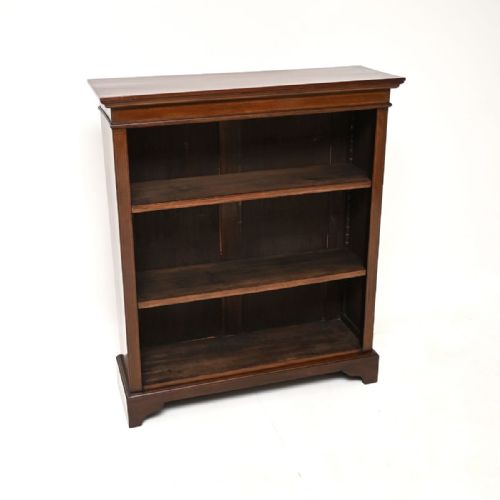
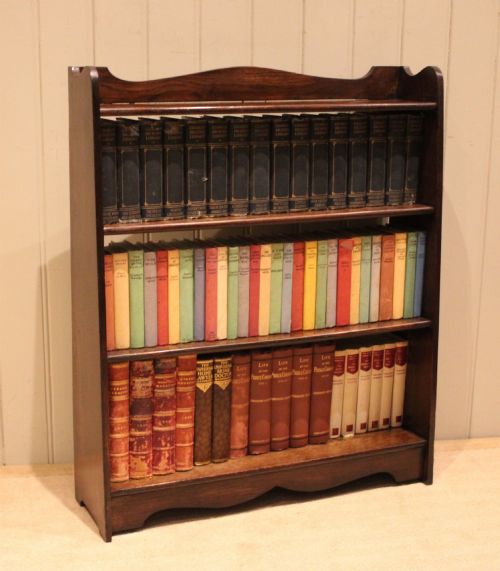
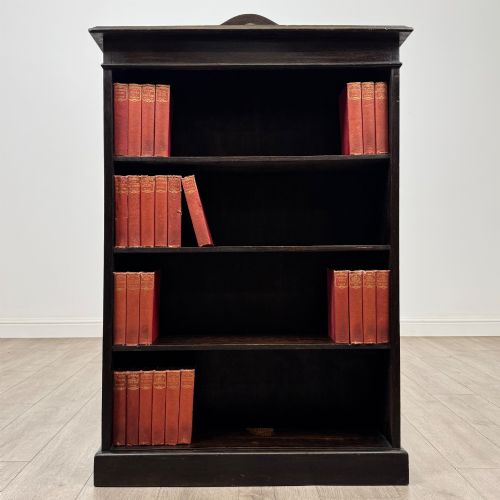
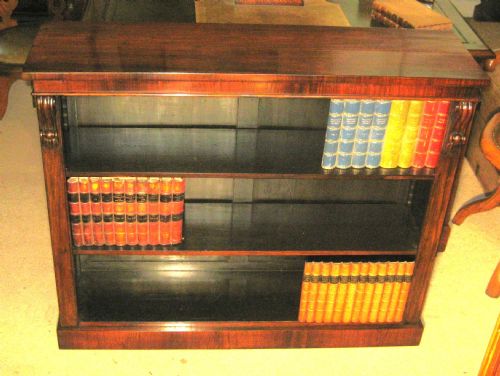
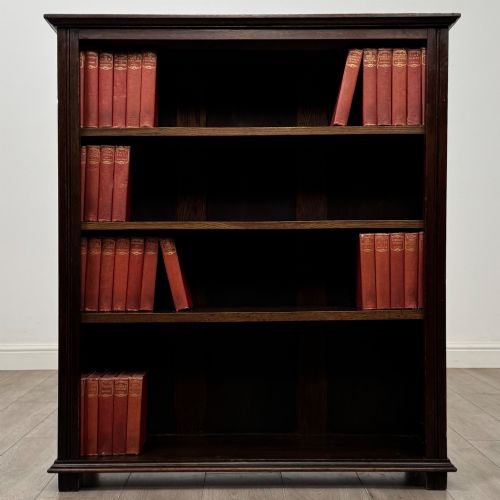
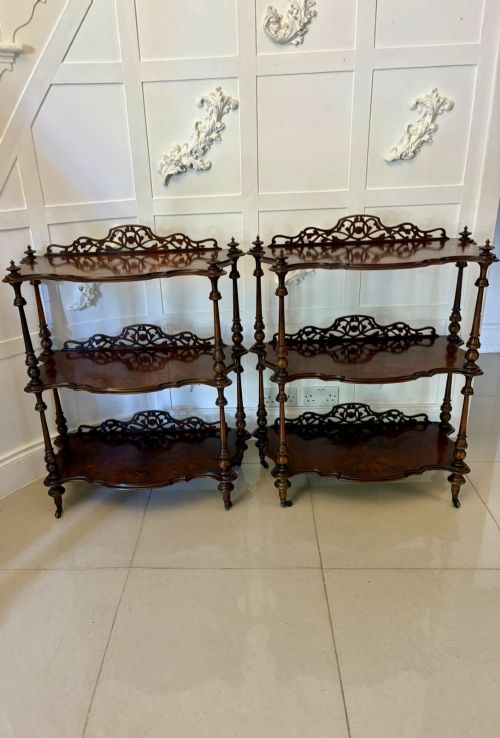
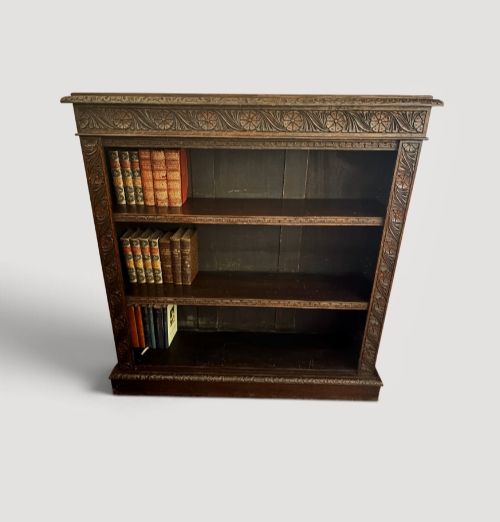
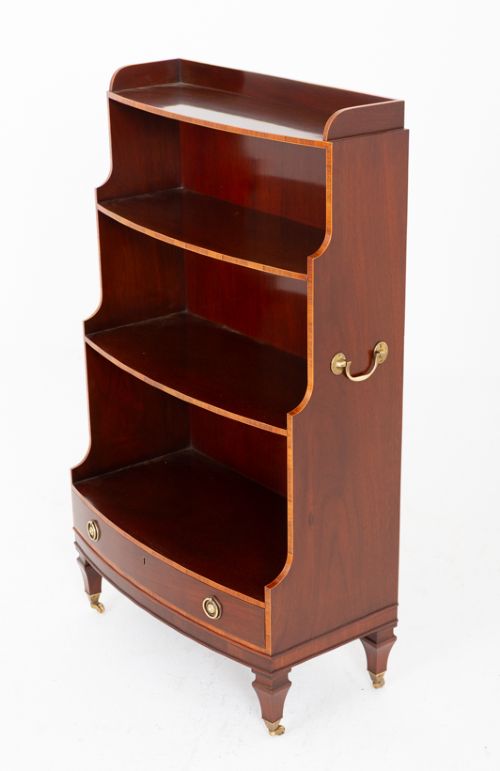
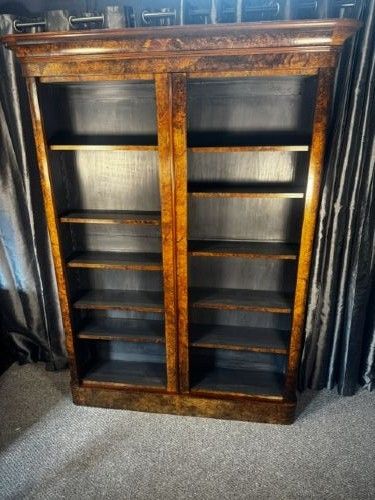
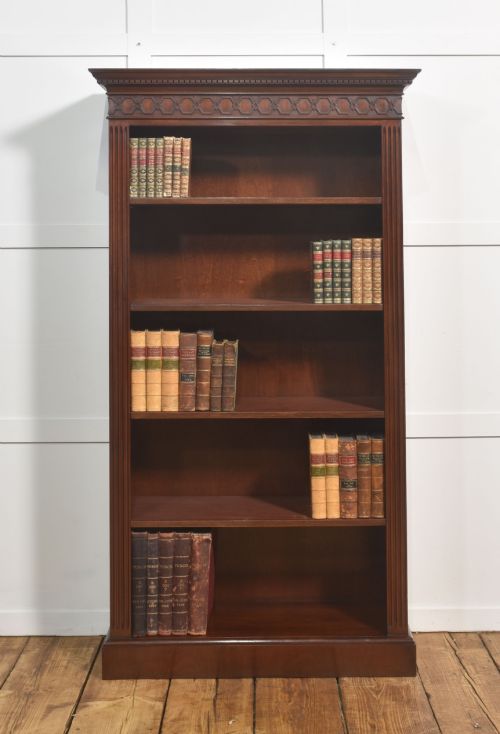
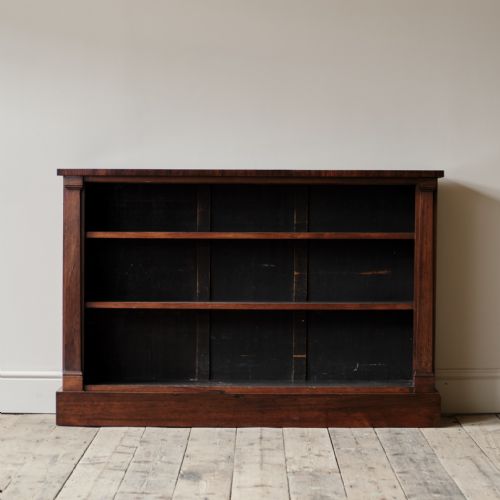
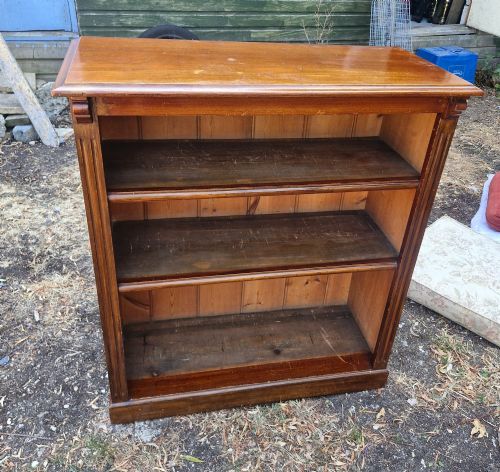
When you search for antique open front shelves, you are looking at items designed primarily for housing books and display pieces without the barrier of doors. These pieces appear across Victorian, Edwardian, and twentieth-century periods, taking forms such as bookcases, whatnots, and book troughs.
The most common versions you will meet on this page are mahogany and oak bookcases originating from the nineteenth and early twentieth centuries. These range from modest solid timber units to larger breakfront library furniture designed to anchor a room.
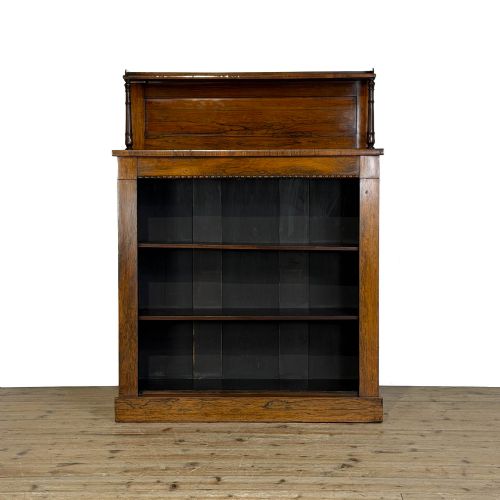
Makers and designers also produced specialised variations including rosewood chiffoniers, inlaid satinwood pieces, and compact Arts and Crafts designs. Each form reflects the domestic storage needs of its specific era.
Materials and Construction
Cabinet makers utilised durable hardwoods like oak and mahogany alongside decorative veneers such as burr walnut, rosewood, and birdseye maple. Solid timber formed the structural carcasses, while figured veneers provided decorative surfaces on larger breakfront and bookcase facades.
Construction techniques frequently incorporated adjustable shelving systems, allowing owners to alter shelf heights for varying book sizes. Brass inlays, ormolu mounts, and subtle carvings added decorative enrichment without compromising the functional open shelving.
Victorian readers clearly needed somewhere to drop their novels by the hearth, giving us low slope-shelf fireside book troughs.
Distinctions in Quality
Quality in these pieces rests upon the selection of timber and the precision of the cabinet work. Superior items display finely figured grain patterns, such as flame mahogany or burr walnut, matched carefully across the front surfaces.
Finer examples also feature well-engineered adjustable shelf mechanisms and robust structural joinery that maintains stability without needing excessive reinforcement. The depth of carved detail and the subtlety of inlaid brass or lighter wood stringing separate standard utility furniture from exceptional workshop pieces.
Sir Charles Barry
The Antique Open Front Shelves Glossary
- Breakfront
- A piece of furniture where the central section projects forward from the flanking outer sections. This configuration creates visual depth and allows for varied shelf capacities.
- Whatnot
- A multi-tiered open set of shelves used for displaying small ornaments and books. These pieces usually stand on slender upright supports.
- Book Trough
- A low, open receptacle designed to hold a small selection of books within easy reach. They appear frequently in Arts and Crafts contexts.
- ,Ormolu
- Gilded bronze or brass mounted onto furniture as a decorative embellishment. It provides a bright metallic contrast against dark woods like walnut.
- Chiffonier
- A low cabinet derived from a sideboard, sometimes combining open shelves with enclosed storage below. Regency and Victorian versions occasionally blend shelf space with cupboard doors.
Antique Open Front Shelves: Frequently Asked Questions
Where should I place open shelves?
These pieces suit studies, living rooms, and hallways where quick access to books or display items is useful. Their open format keeps rooms feeling spacious while providing practical storage.
Ensure you position them away from direct heat sources and strong sunlight to protect vulnerable timber veneers and polished finishes.
How do I adjust the shelves?
Many period bookcases use traditional wooden rackwork or brass stud strips set into the interior sides. You simply lift the shelf slightly and reposition the wooden or brass supports into the alternative slots.
Take care when moving older timber shelves to avoid binding or damaging the interior lining of the bookcase walls.
Are these pieces suitable for heavy books?
Solid oak and thick mahogany models handle heavy volumes easily, especially those equipped with robust fixed or well-supported adjustable shelves. Lighter Edwardian or inlaid pieces work better for standard octavo volumes and display items.
Check the thickness of the timber boards and the condition of the shelf supports before loading large collections onto any single tier.
How do I distinguish Victorian from Edwardian pieces?
Victorian examples frequently employ heavier timbers like rosewood, walnut, and dense mahogany, often featuring deeper carvings and darker finishes. Edwardian pieces tend to display lighter mahogany, satinwood stringing, and simpler proportions.
Examining the construction methods and secondary timbers inside the piece usually clarifies the manufacturing era.