


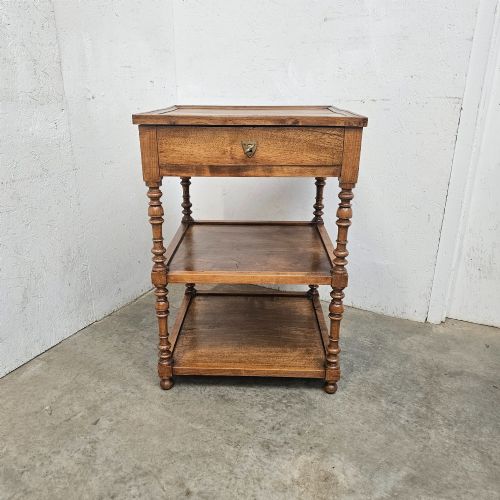

Antique Open Etagere
An antique open etagere offers tiered display space for books and decorative objects, bringing elegant vertical storage to a room.
Antique Open Etagere
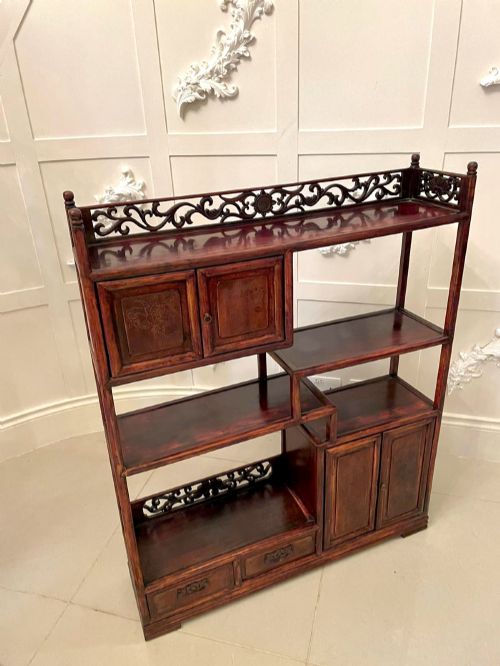
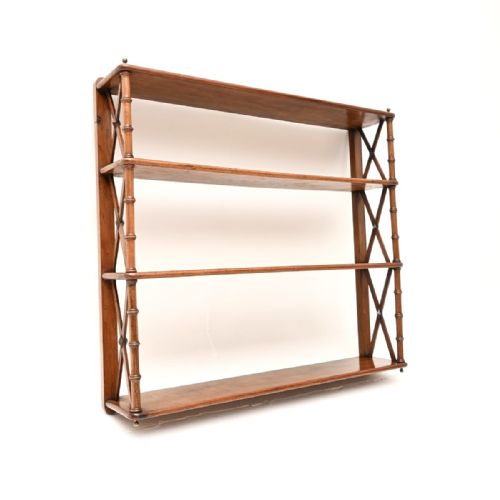
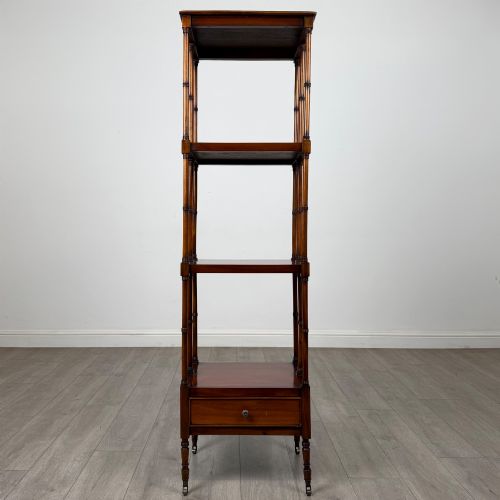
An antique open etagere provides tiered shelving designed for displaying ornaments, ceramics and books without obstructing the view across a room. These pieces appear in forms such as multi-tier whatnots, display cabinets, music stands and bookcases spanning the Georgian, Regency and Victorian periods.
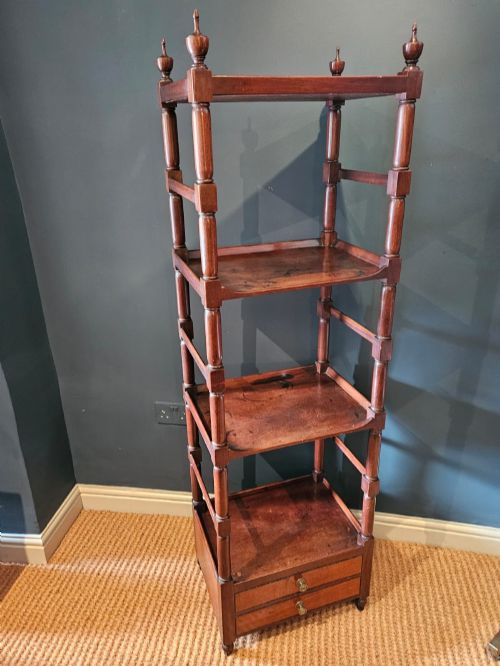
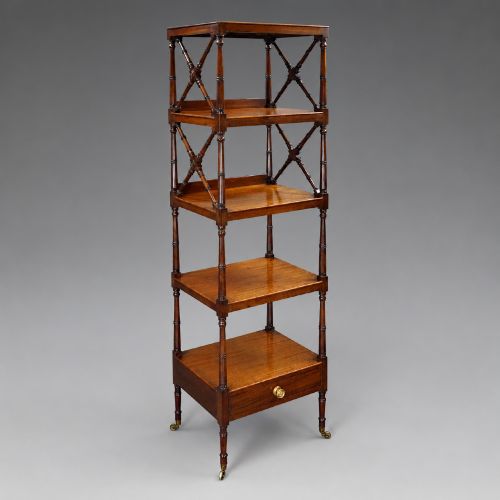
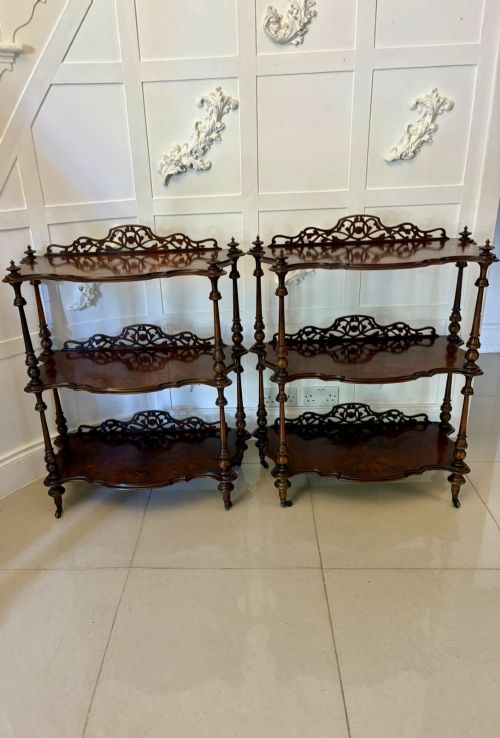
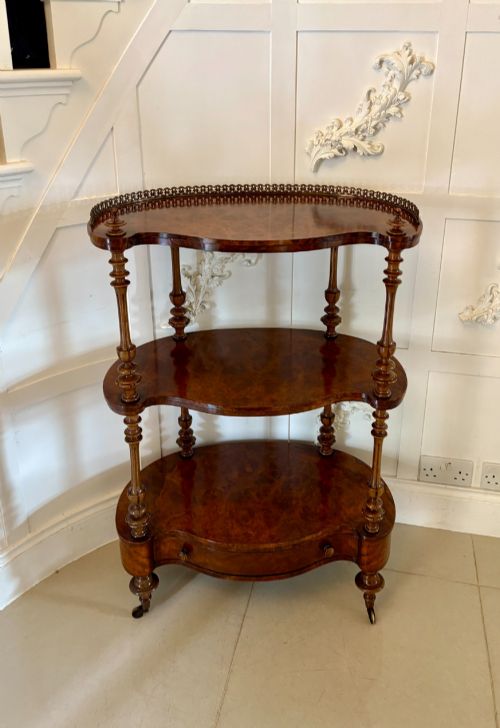
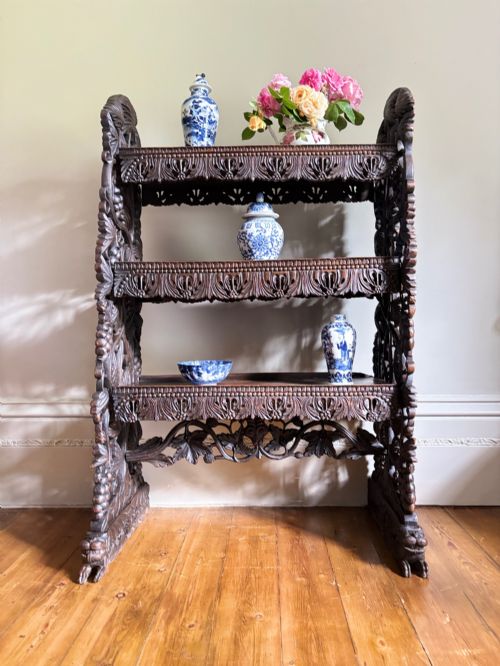
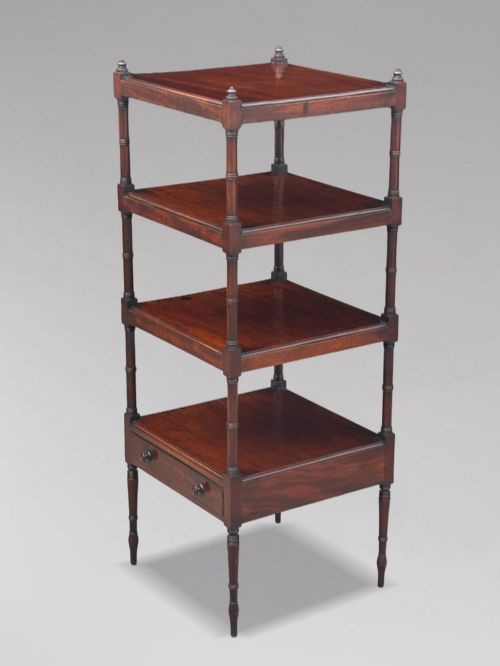
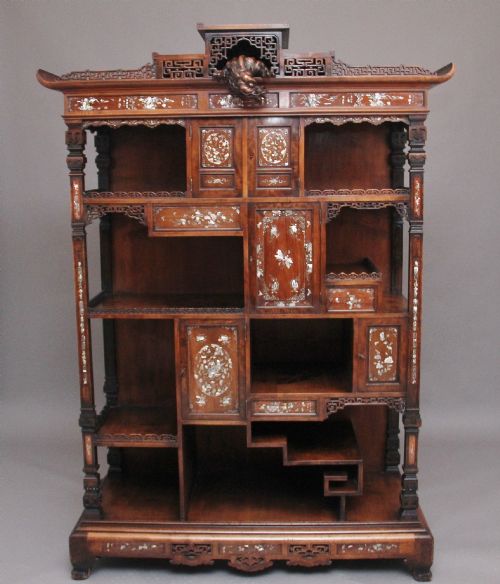
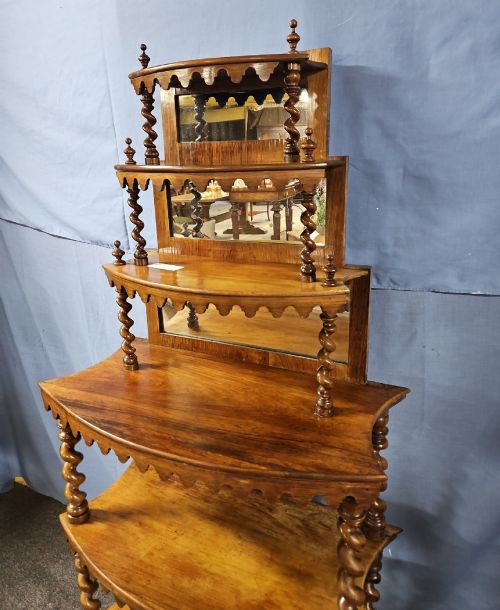
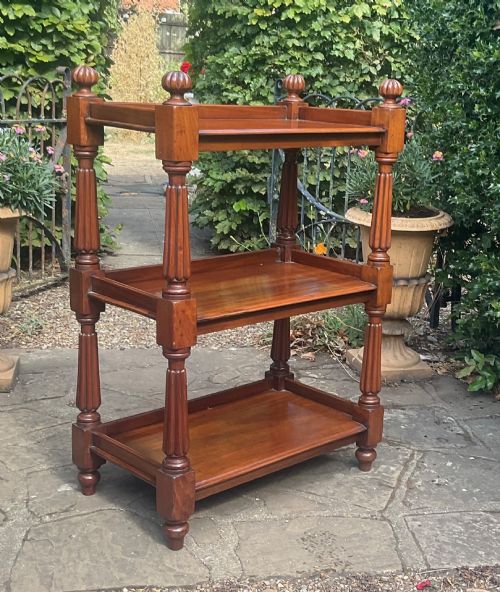
The version most frequently encountered on this page is the Victorian walnut or mahogany multi-tier whatnot, often with three or four open shelves supported by turned columns or uprights. Alongside these, buyers find corner models, serpentine-fronted designs and exotic interpretations incorporating bamboo, lacquer or hardwood.
Originating as French display furniture, the etagere evolved in English workshops to serve multiple domestic functions in drawing rooms and parlours. They range from compact corner units to tall, multi-shelf étagères and buffets designed to hold tableware or writing equipment.
Materials and construction methods
Cabinet makers utilised dense timbers such as mahogany, rosewood, walnut and burr walnut, selecting figured veneers to create decorative grain patterns on top surfaces and friezes. Hardwoods like padauk and teak also appear in pieces produced during the nineteenth century.
Structural support relied on turned or carved wooden uprights, sometimes supplemented by brass mounts, gilt metal details or iron scrollwork. Shelves were jointed carefully to the uprights, frequently incorporating lower cupboards or drawers fitted with brass handles.
Listings feature examples from the Georgian, Regency and Victorian eras, constructed in walnut, mahogany, rosewood and exotic hardwoods.
Distinctions in quality
Quality rests upon the selection of timbers, where highly figured burr walnut or rich rosewood veneer indicates a superior commission compared to plain secondary woods. The crispness of carved details, such as serpentine shaping on shelf edges or turned column supports, reveals the competence of the maker.
Structural integrity depends on the rigidity of the tier joints and the precision of the shelf alignment. Pieces that retain their original brass castors, mounts and matching grain patterns across multiple tiers demonstrate a higher standard of original manufacture.
Gabriel Viardot·Edwards & Roberts
The Antique Open Etagere Glossary
- Whatnot
- A piece of furniture consisting of a set of open shelves for displaying small objects, popular throughout the nineteenth century.
- Etagere
- A set of tiered open shelves used for display, derived from French interior fashions of the eighteenth and nineteenth centuries.
- Burr walnut
- Walnut timber taken from a growth on the tree, yielding highly decorative swirling grain patterns prized for veneering.
- Serpentine
- A curved line that undulates inwards and outwards, frequently used to shape the front edges of cabinet shelves and tops.
- Dumb waiter
- A tiered set of revolving or stationary shelves used traditionally for holding dishes or serving food in dining rooms.
Antique Open Etagere: Frequently Asked Questions
What rooms suit an antique etagere best?
An open etagere fits well in a drawing room, hallway or study where vertical display space is needed without enclosing a room with heavy doors. Their open shelves allow light to pass through while holding books or collections.
Smaller corner versions make efficient use of awkward spaces, while larger multi-tier buffets serve effectively as freestanding display surfaces against a principal wall.
How do I tell a Victorian whatnot from a Regency one?
Regency models tend to feature cleaner architectural lines, frequently utilising straight-grained mahogany with restrained brass mounts and slender uprights. They often reflect a classical influence dating from the early nineteenth century.
Victorian examples embrace a wider variety of woods, notably burr walnut and rosewood, with more ornate turning, serpentine edges and heavier proportions. They often display revivalist tendencies inspired by French or Rococo tastes.
Can these shelves hold heavy books?
Most antique open etageres and whatnots were designed primarily for decorative ornaments, ceramics, music scores or light reading material rather than heavy reference volumes. The slender turned uprights and open shelf joints are intended to support moderate weights.
Distributing heavier items on the lowest tier helps maintain stability, though owners should avoid overloading upper shelves to preserve the structural integrity of the piece.
What is the difference between an etagere and a whatnot?
While both terms describe tiered shelving units, whatnot is the traditional English term used predominantly from the late eighteenth century onwards. Etagere derives from French terminology and often implies a lighter, more decorative French or continental influence.
In practice, antique dealers and makers used both words interchangeably for open display furniture during the nineteenth century.