

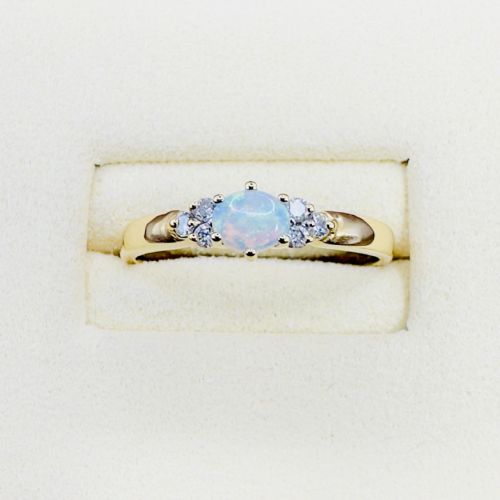
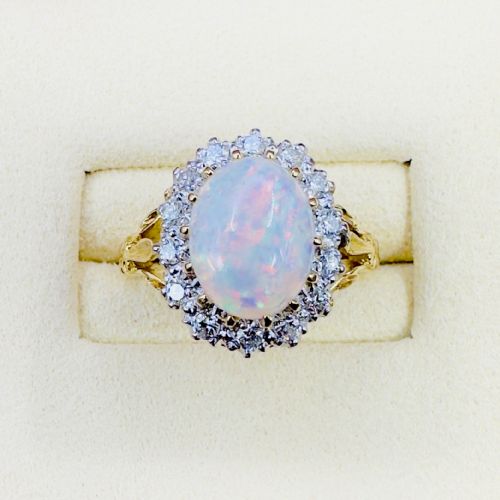
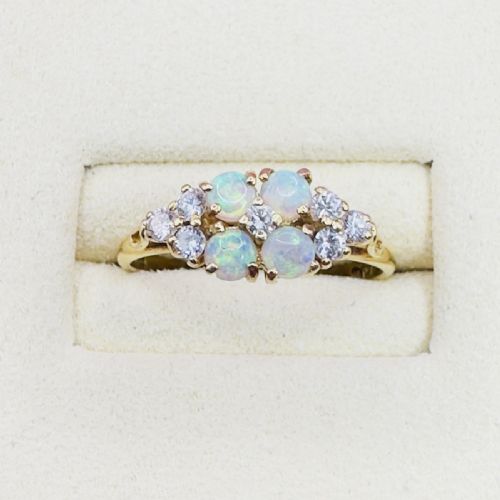
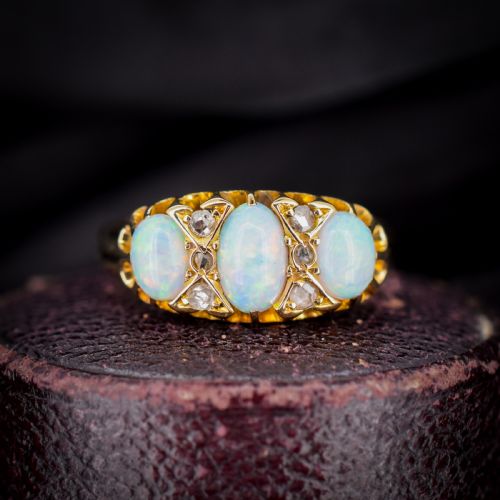
Antique Opal Ring 18ct
An antique opal ring 18ct pairs the play of colour in natural opals with durable gold settings.
Antique Opal Ring 18ct
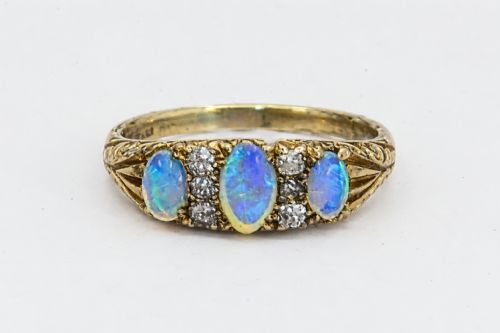
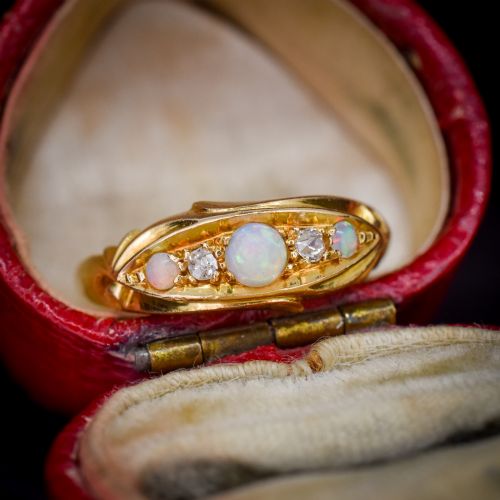
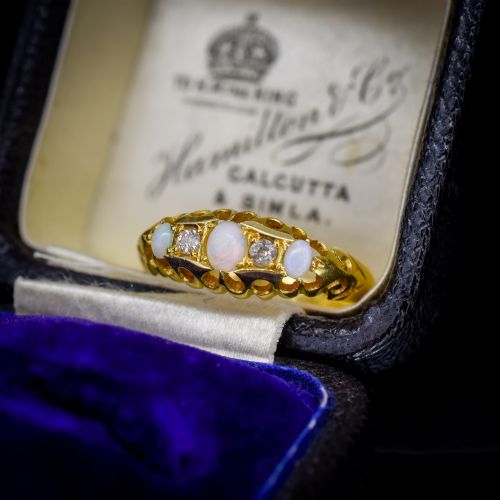
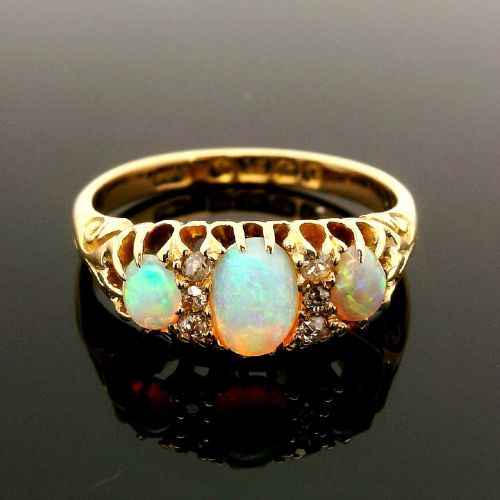
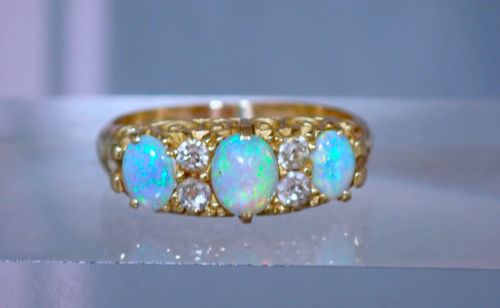
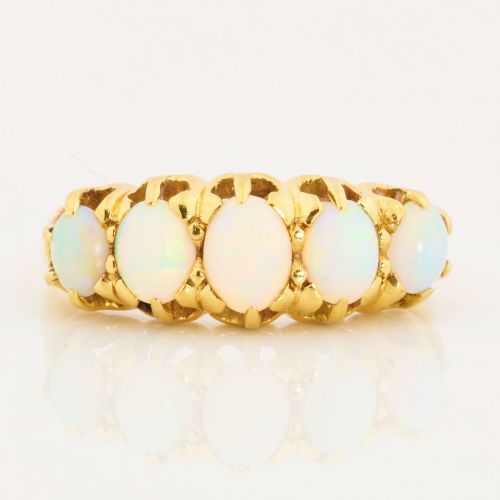
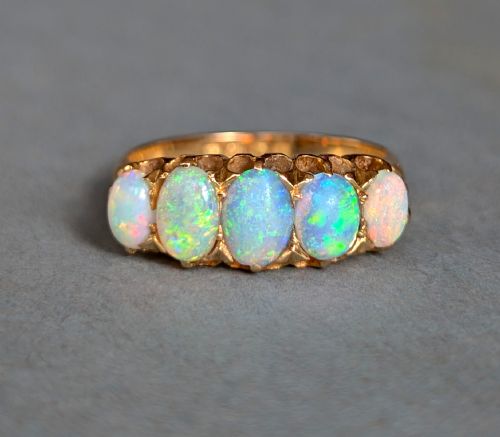
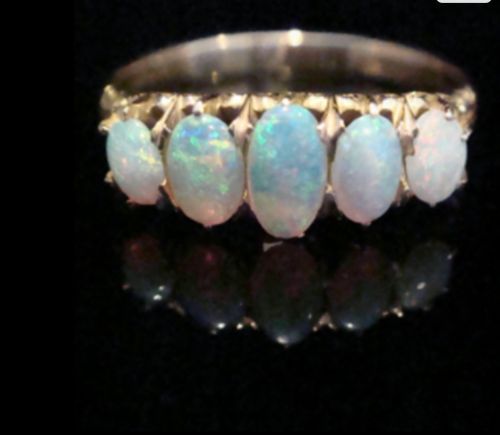
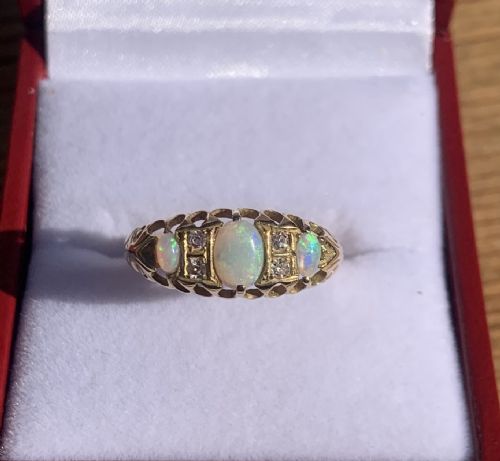
When searching for an antique opal ring 18ct, buyers encounter finger rings shaped by Victorian, Edwardian, and later twentieth-century jewellers. The most common form on this page is the traditional boat ring or five-stone setting, often pairing central opals with supporting diamonds.
These pieces originate from periods spanning the late nineteenth century through the mid-century decades, including distinct Edwardian and Victorian examples. Jewellers utilised both yellow and white 18ct gold, alongside platinum settings, to mount cabochon cut opals.
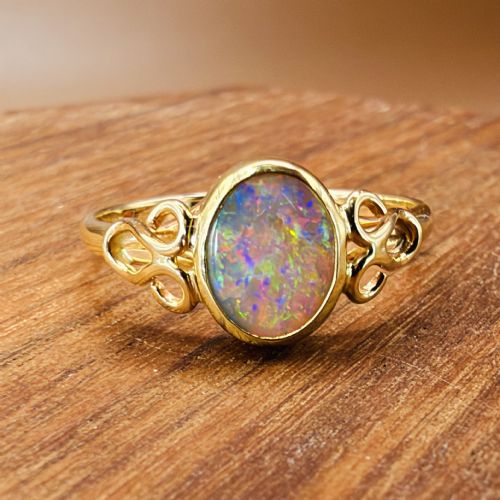
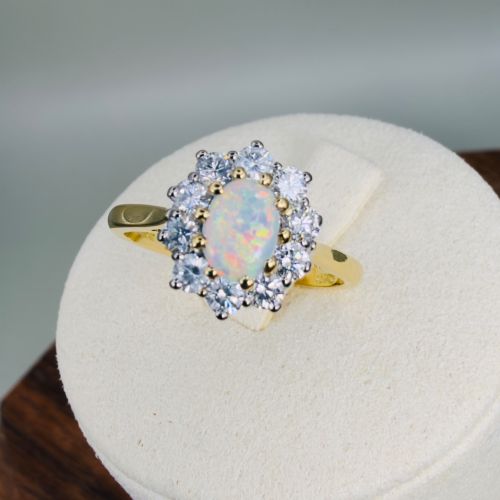
The selection ranges from simple solitaire configurations to complex multi-gem clusters incorporating emeralds, bloodstones, or rubies. Each format demonstrates the prevailing stylistic preferences of its decade of manufacture, from ornate nineteenth-century work to cleaner mid-century lines.
Materials and construction
Makers constructed these pieces using 18ct yellow or white gold, frequently combining platinum with gold during the Edwardian era to securely mount diamonds alongside softer opals. Hallmarks stamped into the metal bands often record assay office locations such as Birmingham and Chester.
The opals themselves are typically cut into cabochons to display their internal play of colour, secured in claw, bezel, or flush settings. Old-cut and rose-cut diamonds frequently accompany the principal stones in boat, cluster, and trilogy arrangements.
At least one tiny survivor on this page was made specifically as a child's ring.
Factors determining quality
Quality in these rings rests upon the optical vibrancy and structural integrity of the opal, alongside the matching and clarity of any accompanying diamonds. Stones exhibiting a strong, active play of colour across the surface command greater attention than muted specimens.
The precision of the metalwork also differentiates pieces, visible in the symmetry of claw settings, the crispness of gallery wirework, and the legibility of original gold hallmarks. Heavier, substantial 18ct gold bands that retain their original thickness indicate careful preservation over time.
The Antique Opal Ring 18ct Glossary
- Cabochon
- A gemstone cut with a smooth, rounded, convex upper surface rather than faceted planes. This style highlights the optical phenomena within opals.
- Boat ring
- A ring setting featuring a curved, navette-like profile that tapers towards the shoulders. This shape typically houses a row of graduated stones.
- Trilogy ring
- A ring featuring three primary stones set adjacently along the band. In these pieces, an opal typically occupies the centre flanked by diamonds.
- Play of colour
- The optical effect where spectral colours shift and flash across an opal as the viewing angle changes. It results from light diffraction within microscopic silica spheres.
Antique Opal Ring 18ct: Frequently Asked Questions
How do I care for an antique opal ring?
Opals contain water within their structure and possess a lower hardness than diamonds, making them sensitive to sudden temperature shifts and harsh impacts. Remove the ring during manual tasks and avoid ultrasonic cleaning solutions.
Store the piece separately in a fabric-lined box to prevent scratching from harder gems. Gentle cleaning with a soft, damp cloth preserves the polished surface of the stone and the integrity of the gold.
Are these rings suitable for daily wear?
These pieces were designed for personal adornment, but the softer nature of opals requires mindful wear compared to diamond-only jewellery. Many owners reserve them for regular social occasions rather than heavy daily activities.
Selecting a design with a protective bezel setting rather than high-set claws can offer additional security for the central opal. Regular checks by a jeweller ensure the retaining claws remain tight.
How can I tell a Victorian opal ring from an Edwardian one?
Victorian examples often display heavier gold weights, ornate hand-carved shoulders, and rich yellow gold tones. The stones may be secured in robust claw or boat settings with substantial metal presence.
Edwardian pieces frequently incorporate platinum-topped gold or white gold to create lighter, lace-like mounts. These later designs often favour delicate filigree and floral motifs alongside brighter, airier diamond arrangements.
What do the hallmarks on the band indicate?
British hallmarks stamped inside the 18ct gold shank denote the metal purity, the specific assay office, and the year of manufacture. Letters correspond to date codes designated by offices in cities such as Birmingham, Chester, and London.
Additional maker marks or crown symbols verify the composition and standard of the gold. These stamped details assist in authenticating the era in which the ring was produced.