


Victorian Claw Set Ring
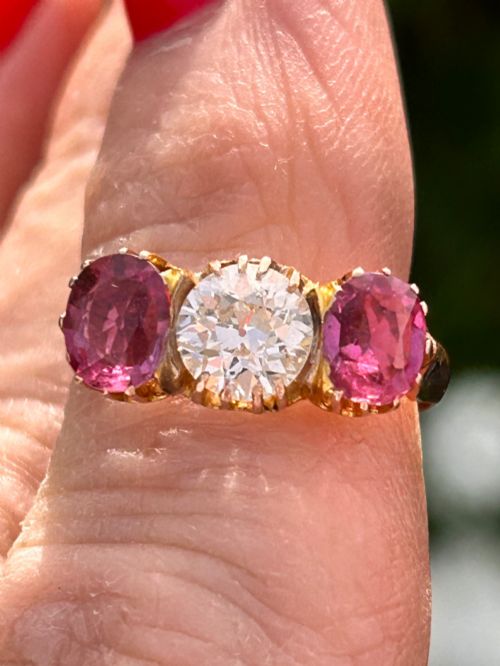
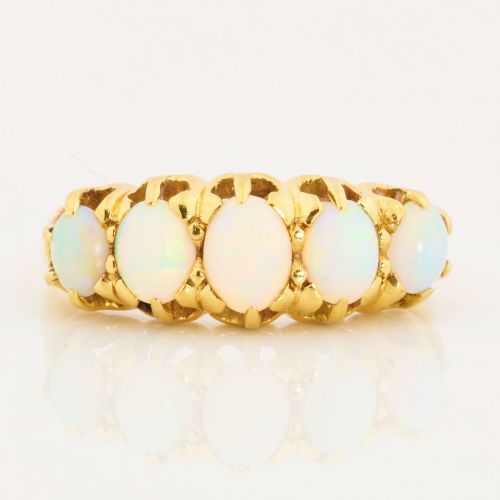
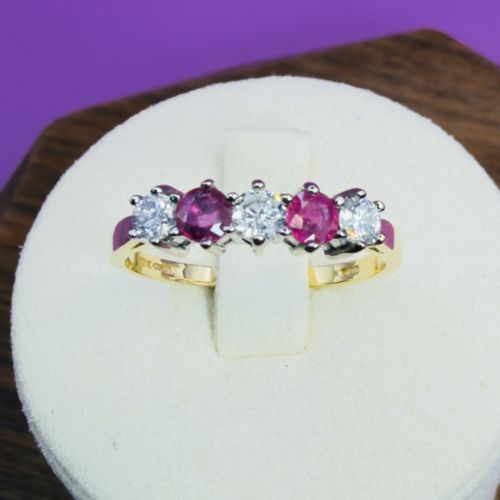
These Victorian claw set ring examples bring together rich stones and substantial gold bands that catch the eye and hold the hand.
Victorian Claw Set Ring
A victorian claw set ring brings together precious gemstones held by visible metal prongs, creating a secure setting that allows light to pass through the stone. You will encounter various configurations on this page, ranging from single stone solitaires to multiple stone trilogy and five stone bands.
The periods represented stretch from the Victorian era into later twentieth century revivals, showing how jewellers kept traditional claw settings alive. Forms focus entirely on finger rings, utilising the distinctive height that individual claws provide to elevate gems above the band.
Origins and styles span the Victorian, Edwardian, and turn of the century periods, often featuring traditional arrangements of diamonds, rubies, sapphires, and opals. Buyers searching for a victorian claw set ring look for this specific combination of secure gemstone mounting and period character.
How they were made
These rings are constructed primarily from 18ct gold and 18ct yellow gold, providing a warm, durable foundation for precious stones. Jewellers shaped the metal into substantial bands designed to support individual gem settings safely over decades of wear.
Stones including diamonds, rubies, sapphires, and opals are secured using distinct prongs or claws that grip the girdle of each gem. This method maximises the amount of light entering the stone from the sides, enhancing the natural brilliance of old cut diamonds and coloured gems.
Listings feature items spanning the Victorian era through the mid twentieth century, predominantly formed from 18ct yellow gold.
What varies in quality
The quality of a victorian claw set ring depends significantly on the presence and proportion of stones such as diamonds, rubies, sapphires, and opals. Heavier carat weights and well matched gemstone groupings elevate certain pieces above simpler or lighter bands.
The condition and execution of the goldwork also define the standard of each ring, particularly the integrity of the individual claws holding the gems. Finer examples maintain crisp metalwork around the stone mountings, preserving the original silhouette intended by the maker.
The Victorian Claw Set Ring Glossary
- Claw setting
- A mounting style where individual metal prongs hold a gemstone in place. This technique allows maximum light exposure around the stone.
- Trilogy ring
- A ring featuring three distinct gemstones set in a row. It often symbolises the past, present, and future.
- Solitaire
- A piece of jewellery featuring a single mounted gemstone. In these listings, this typically showcases a central diamond or opal.
- Old European cut
- An early round diamond cutting style characterised by a small table, heavy crown, and open culet. These stones display distinct light reflection patterns.
- Trefoil cluster
- A clustered arrangement of three stones forming a clover leaf shape. It represents a traditional decorative motif in period jewellery.
Victorian Claw Set Ring: Frequently Asked Questions
How do I clean my ring?
Clean your gold and gemstone ring using warm water and a soft brush to remove everyday oils. Avoid harsh chemicals that might harm softer stones like opals.
Dry the piece thoroughly with a lint free cloth before storing it in a dedicated jewellery box.
Can these rings be resized?
Most gold rings can be adjusted by a skilled jeweller to fit a different finger size. The solid 18ct gold bands respond well to traditional resizing methods.
Consult a professional who understands antique settings to ensure the claws remain secure during the process.
Are opals safe for daily wear?
Opals contain natural water content and require gentle treatment compared to harder gems like diamonds. Remove the ring during heavy physical tasks to protect the stone.
Store the piece away from extreme temperature shifts and direct sunlight to maintain its play of colour.
How do I date these rings?
Examine the cut of the stones and the style of the metal mounting for clues about the period. Old cut diamonds and specific claw configurations often point towards the Victorian era.
Compare the overall weight and band construction with documented examples from the late nineteenth and early twentieth centuries.