
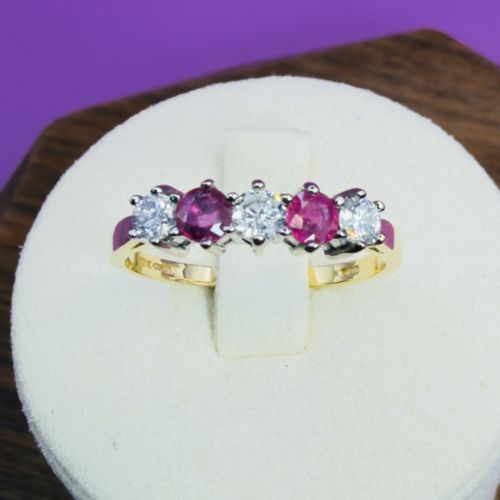


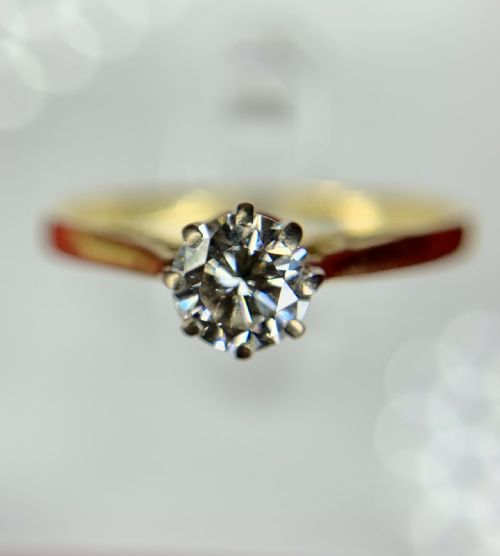
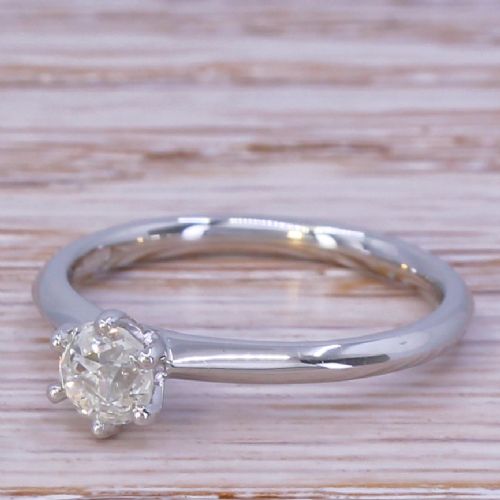


Traditional Claw Setting Ring
A traditional claw setting ring secures gemstones with slender metal prongs to maximise light entry and sparkle, making these enduring pieces ideal for engagement wear.
Traditional Claw Setting Ring
A traditional claw setting ring relies on individual metal prongs to hold stones securely while permitting light to pass through the facets. These pieces span multiple eras, including Victorian, Edwardian, Art Deco, and mid-century designs from the nineteenth and twentieth centuries.
The selections on this page predominantly feature diamond solitaire rings, alongside multi-stone configurations such as five-stone bands, cluster rings, and ruby or sapphire combinations. Yellow gold, white gold, and platinum serve as the primary mount materials across these varied decades.
Solitaire and multi-stone formations dominate the available inventory, offering distinct aesthetic profiles ranging from antique old cut diamonds to structured mid-century arrangements. Buyers encounter both minimal gold bands and platinum mountings across the different historical periods represented.
How they were made
Goldsmiths utilise yellow gold, white gold, and platinum to fabricate the structural bands and the delicate claws that cradle each gemstone. Precious metals are shaped by hand or cast to create secure settings tailored to cushion, mine cut, and brilliant cut stones.
Prongs are shaped carefully around the girdle of the gemstone to lock the material in place while minimising metal obstruction. This technique ensures maximum brilliance by allowing ambient light to reach the facets from multiple angles.
Listed items originate from across the Victorian, Edwardian, Art Deco, and mid-century periods, alongside dated pieces from the eighteen-seventies through to nineteen-sixty.
What varies in quality
The calibre of a traditional claw setting ring depends heavily on the precision of the metalwork surrounding the stone and the integrity of the prongs. Heavier gauge gold and platinum mountings provide greater durability and structural resilience over decades of daily wear.
Gemstone selection dictates the upper tier of quality, particularly where older cuts like mine cut and old cushion cut diamonds demonstrate superior hand-faceted character. The harmony between the weight of the metal and the proportions of the set stones determines the overall refinement of the piece.
The Traditional Claw Setting Ring Glossary
- Claw setting
- A mounting style that uses several narrow metal prongs to hold a gemstone securely in place. This method maximises the amount of light entering the stone.
- Solitaire
- A ring featuring a single prominent gemstone, most commonly a diamond. This classic design focuses visual attention entirely on the central stone.
- Cluster ring
- A jewellery design where a central stone is surrounded by a group of smaller gemstones. This arrangement creates a larger visual presence on the finger.
Traditional Claw Setting Ring: Frequently Asked Questions
What is a claw setting?
A claw setting uses individual metal prongs to elevate and secure a gemstone above the band.
This construction method allows maximum light to pass through the pavilion, enhancing the brilliance and fire of the stone.
How do I identify the period?
Stylistic cues, hallmark stamps, and the specific cutting style of the diamonds often indicate the era of manufacture.
Victorian and Edwardian pieces display distinct decorative metalwork, whereas mid-century examples tend toward cleaner, more streamlined silhouettes.
What is an old cut diamond?
An old cut diamond refers to stones shaped by hand before modern symmetrical cutting standards were established.
These diamonds typically feature larger facets and open culets that produce a softer, candlelit sparkle.