
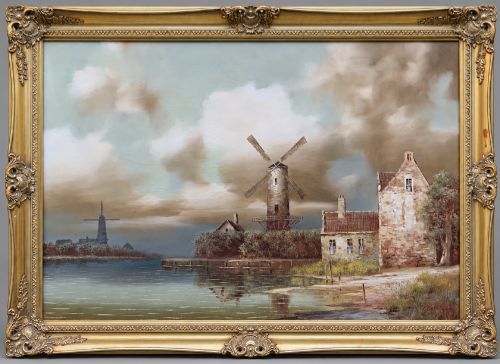
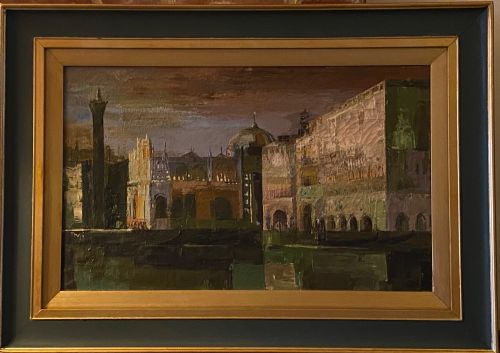
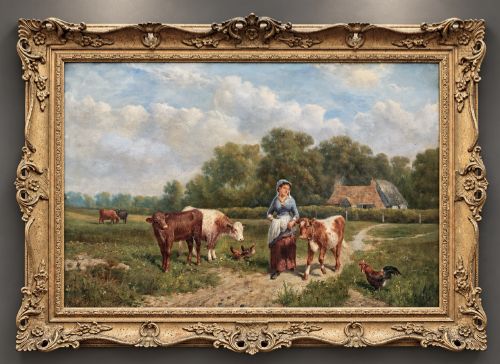
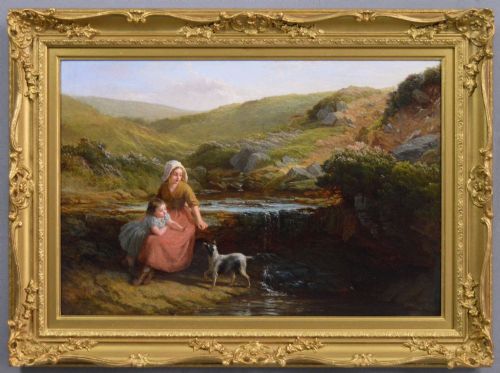
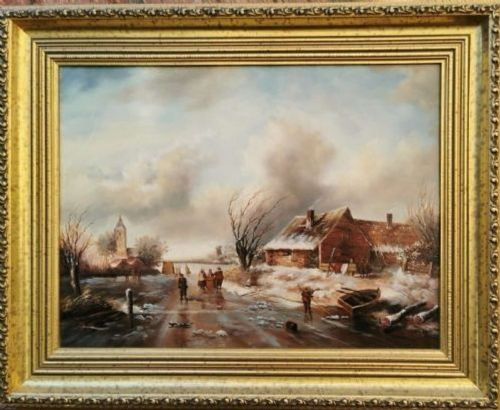
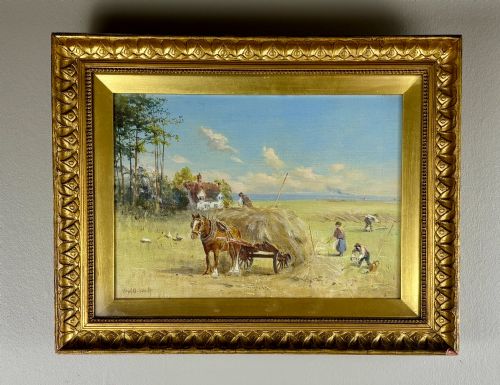
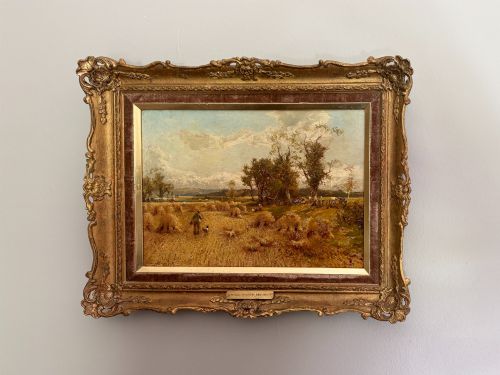
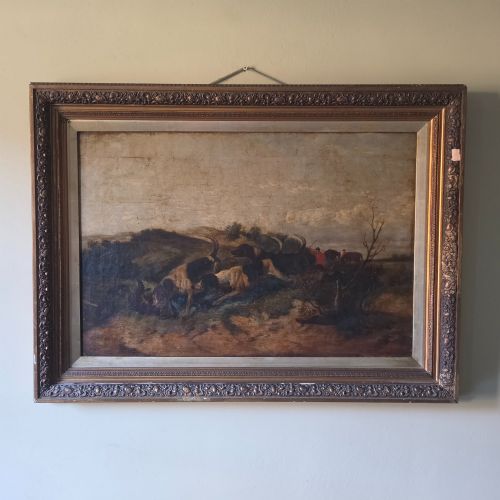
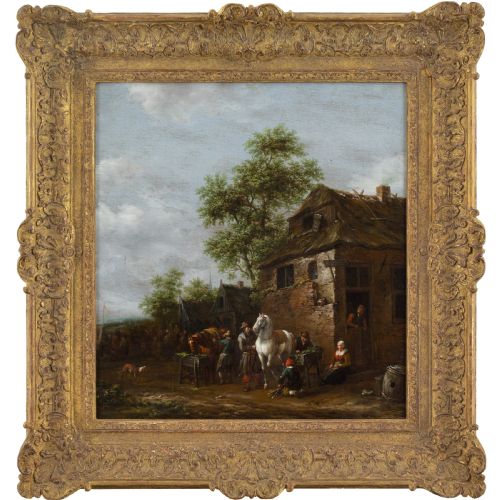
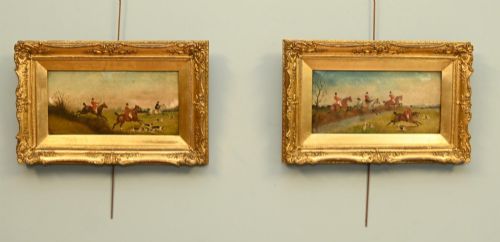
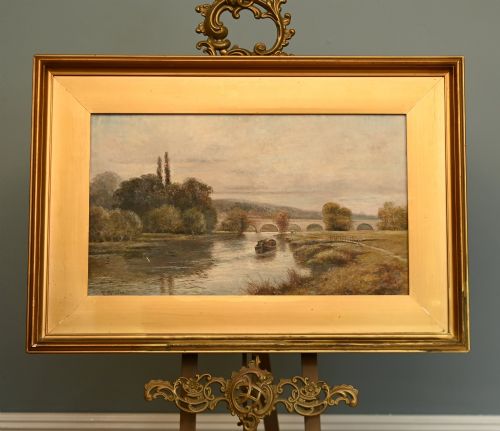
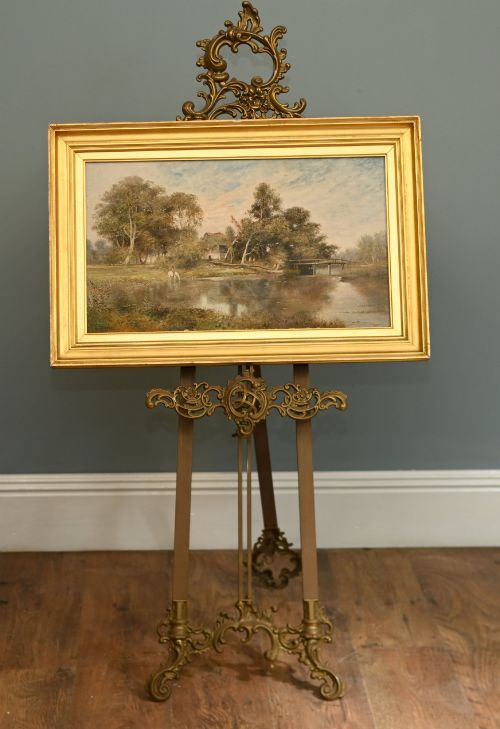
Antique Oil Landscape Scene
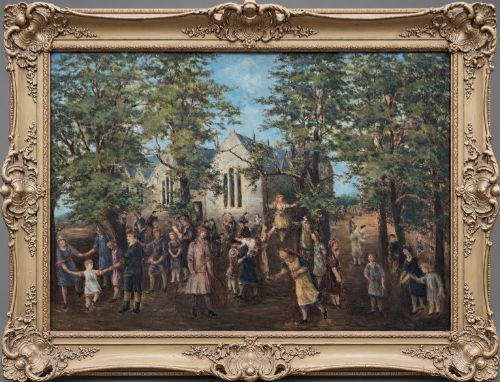
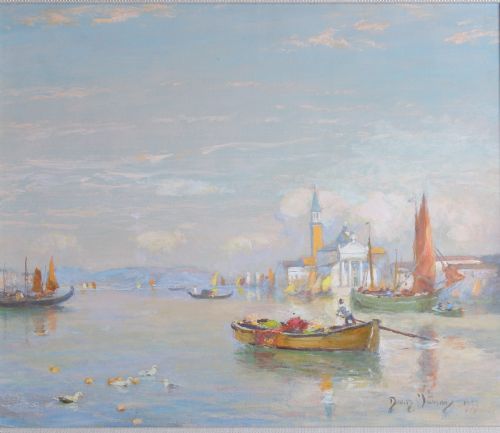
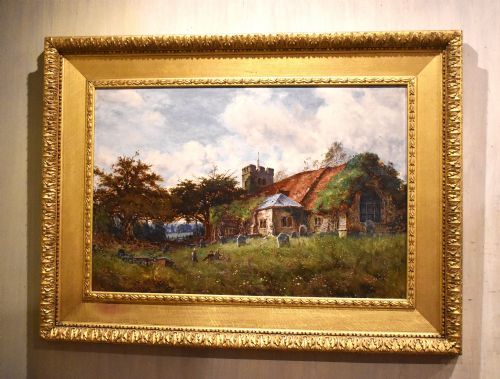
These canvases capture pastoral vistas, coastal shores and woodland streams, offering a window into past centuries through pigment and light.
Antique Oil Landscape Scene
An antique oil landscape scene brings together depictions of nature, rural life and coastal expanses rendered in traditional paint media. Buyers seek out these works to anchor a room with historical depth, capturing everything from quiet English riverbanks to dramatic Scottish highlands.
The pieces available span from the romantic visions of the nineteenth century through to early twentieth-century impressions. Canvases depict figures working the land, cattle resting by watermills, and panoramic marine views executed by regional schools across Britain, France, and the Netherlands.
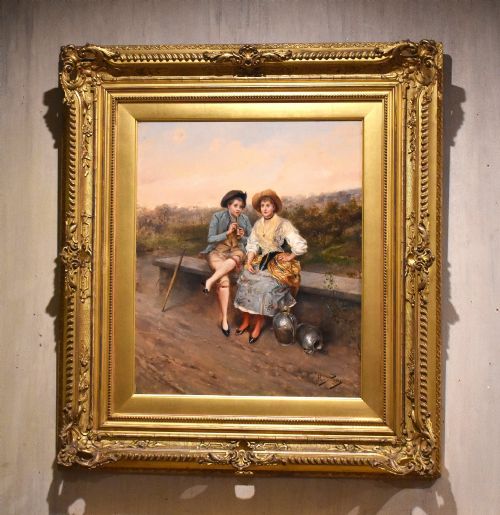
Framed paintings dominate the selection, often housed in period gilt wood or gesso surrounds that complement the palette within. Whether looking for a pastoral cottage scene or a stormy maritime view, the selection reflects the shifting aesthetic preoccupations of past artists.
Method and Material
Painters relied primarily on oil paint applied to stretched canvas, wooden panels, or card supports. Canvas offered a flexible surface capable of holding thick impasto, while wood panels provided a rigid ground for detailed brushwork.
Gilt wood and gesso frames completed the presentation, often moulded with decorative flourishes appropriate to the period of creation. The interaction between oil pigment and ground material allowed artists to build rich textures across woodlands and water surfaces.
Several sheep, cows, and a curious dog appear silently immortalised across these pastures.
Distinctions in Execution
Quality rests in the handling of light, atmospheric depth, and the confidence of the brushwork. Superior examples demonstrate a careful balance of tone that guides the eye naturally through the receding planes of the countryside.
The integrity of the support and the preservation of the original paint layer distinguish master works from provincial student copies. Signed works with documented provenance or attribution to recognised schools generally command greater attention from collectors.
Eugène Verboeckhoven·Richard Sebastian Bond·William Beattie-Brown·William H Myers·George Graham·John Horace Hooper·William Joseph Shayer Senior·Thomas Sidney Cooper·Albert Bierstadt·John Constable·Sam Bough·Robert Gallon
The Antique Oil Landscape Scene Glossary
- Canvas
- A heavy woven fabric stretched across a wooden frame to serve as a painting surface. It provides the characteristic texture visible beneath many traditional landscape oils.
- Impasto
- The application of thick paint that stands proud of the surface, creating physical texture and relief. Artists utilised this technique to catch natural light on water or foliage.
- Gesso
- A plaster mixture applied to wooden panels or frames to prepare a smooth surface for painting or gilding. It provides a durable seal for the wood beneath.
- Barbizon School
- A mid-nineteenth-century French movement focused on plein air painting and realist landscape subjects. Practitioners drew inspiration directly from forest and farmyard environments.
- Provenance
- The documented history of ownership surrounding a work of art. A clear lineage helps verify the authenticity and historical context of the piece.
Antique Oil Landscape Scene: Frequently Asked Questions
How do I date an oil painting?
Dating relies on examining the stretcher frames, canvas type, nail styles, and pigment composition alongside any signatures. Stylistic clues within the clothing of figures or architectural details also offer reliable markers.
Secondary indicators include framemakers' stamps, historical labels affixed to the reverse, and the inherent ageing of the oil varnish layer over time.
What is the difference between canvas and panel?
Canvas consists of woven fabric stretched over a wooden frame, offering slight give and a textured surface. Wooden panels provide a rigid, solid base that prevents the cracking sometimes associated with aged fabric.
Panels were frequently favoured for smaller studies or works executed by continental schools, while larger romantic vistas typically utilised canvas.
How should I care for an antique oil painting?
Keep paintings away from direct sunlight, excessive heat sources, and damp environments to prevent canvas warping and pigment degradation. Maintaining a stable room temperature protects the structural integrity of both the support and the frame.
Dust surfaces gently with a soft, dry brush without applying moisture or cleaning solutions, leaving conservation work to professionals.
What defines the Barbizon School style?
The Barbizon style centres on naturalistic depictions of rural French landscapes, focusing on unidealised farmyards and forests. Artists working in this manner prioritized atmospheric light and direct observation of nature over grand historical narratives.
These works paved the way for later impressionist movements by taking the easel outdoors.