




Antique Oil Lamp Globe
An antique oil lamp globe tops a period lighting fixture to diffuse light and complete the silhouette.
Antique Oil Lamp Globe
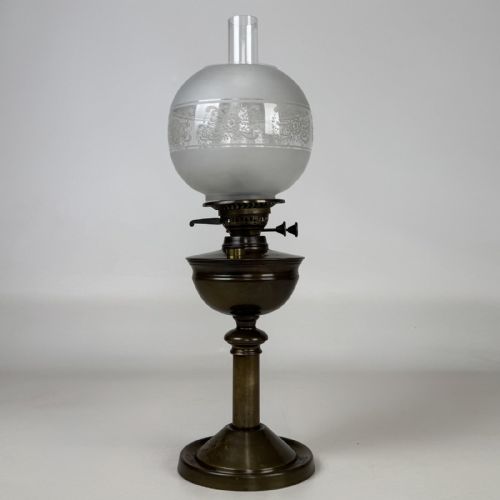
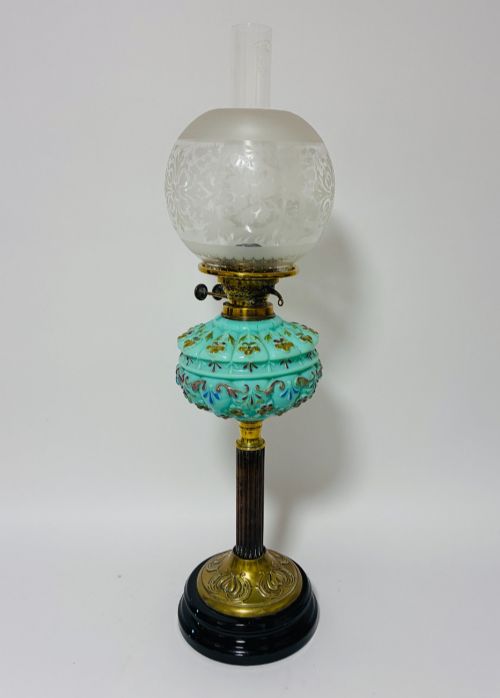
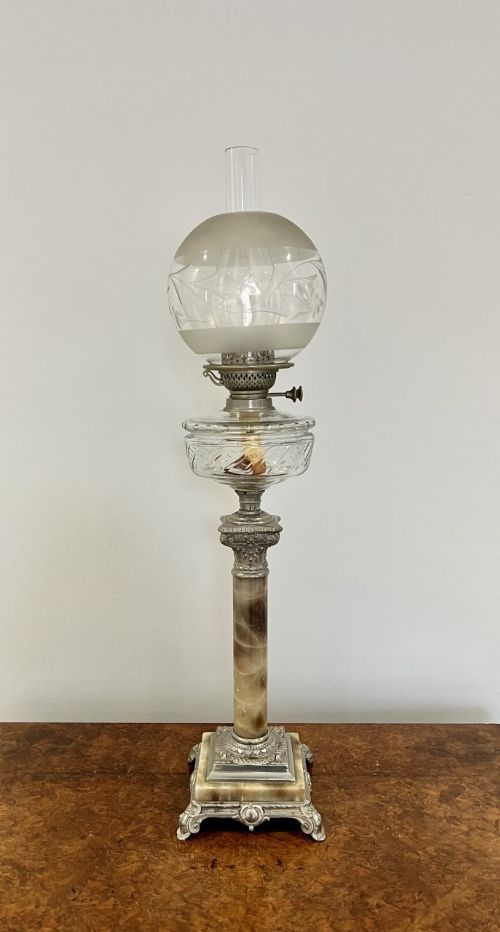
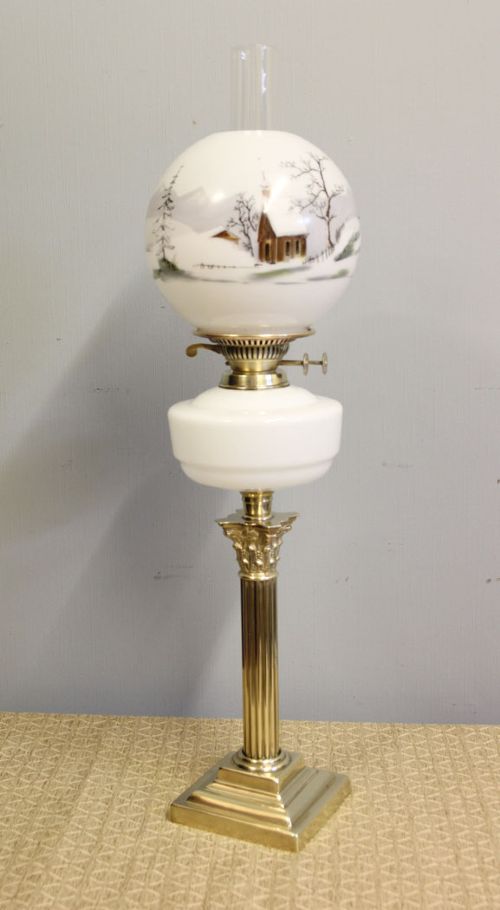
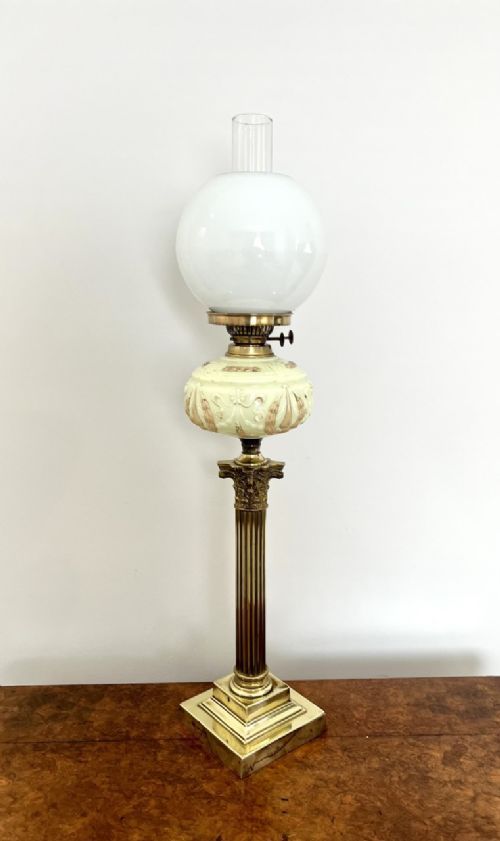
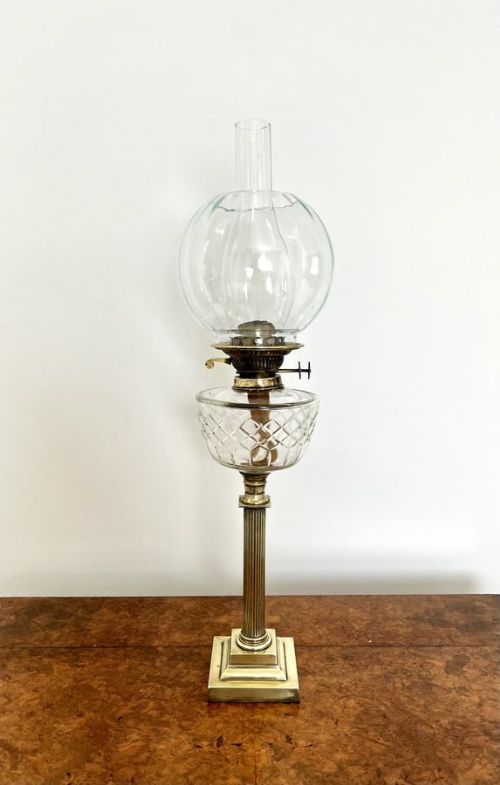
When you search for an antique oil lamp globe, you encounter glass shades created to fit nineteenth-century and early twentieth-century lighting fixtures. The examples on this page span the Victorian, Edwardian, and Art Nouveau periods, taking forms from simple tulip profiles to terrestrial globes.
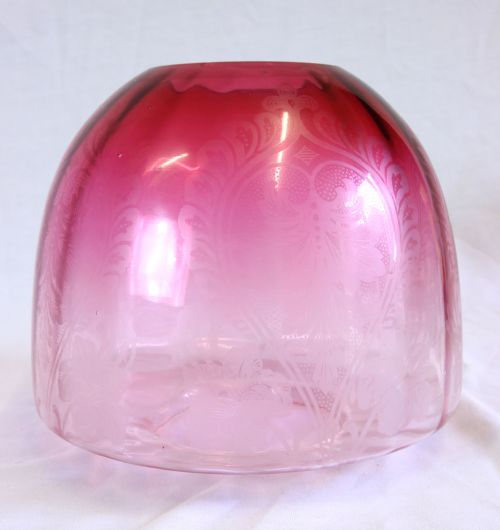
You are most likely to meet glass shades in solid colours like green, milk glass, and cranberry, alongside etched or opaque varieties designed to soften the flame's glare. These shades sit atop brass, ceramic, or bronze fonts, often secured with a brass ring.
The selection ranges from British and French production to Chinese export pieces, reflecting the diverse origins of domestic lighting during the nineteenth century. Whether paired with a Corinthian column or a faience base, these globes remain central to the lamp's overall design.
How they were made
Glassmakers blew and moulded coloured or opaline glass into globular and tulip forms, sometimes applying heat-sensitive minerals to achieve cranberry or vaseline hues. Artisans then etched surface patterns onto the cooling glass using acid or wheel-cutting techniques.
The supporting bodies combine cast brass, bronze, and ceramic elements, shaped into columns, urns, and figural bases. Metalworkers stamped and chased mounts, incorporating adjustable stands and collars to hold the glass globes securely.
The material record shows specialised glass types including cranberry, opaline, vaseline, and etched varieties alongside faience pottery bases.
What varies in quality
The crispness of the glass etching and the depth of colour separate standard utility shades from finer decorative examples. Heavy, evenly blown glass with smooth rims demonstrates superior manufacture compared to thin or bubbled alternatives.
Metal components show quality through the precision of their casting and the weight of the brass or bronze. Finer lamps feature crisp architectural detailing on columns and robust, well-fitted collars for the globes.
Hinks of Birmingham·Messengers·Harrods·Gaggenau
The Antique Oil Lamp Globe Glossary
- Font
- The oil reservoir of a lamp, typically made of glass, ceramic, or metal. It sits below the burner and supports the glass shade.
- Opaline glass
- An opaque or translucent pale glass developed in the nineteenth century. It diffuses light softly and appears frequently in period lamp shades.
- Cranberry glass
- A rich red glass created by adding gold chloride to the molten batch. It is characteristic of Victorian decorative lighting.
- Terrestrial globe
- A spherical shade form painted or printed with map details. These uncommon globes turn domestic lighting into geographical displays.
- Faience
- Tin-glazed earthenware used for decorative lamp bases. It provides a colourful, ceramic contrast to bronze and brass mounts.
Antique Oil Lamp Globe: Frequently Asked Questions
What is an oil lamp globe?
An oil lamp globe is a glass shade designed to fit over the burner of a nineteenth-century lamp. Its primary role is to diffuse the light evenly while protecting the flame from draughts.
These glass elements define the visual character of the lamp, appearing in plain opaline, rich cranberry, or etched designs. They sit securely upon the metal or ceramic font using brass rings or galleries.
How do I identify a Victorian globe?
Victorian lamp globes typically exhibit characteristic colours such as deep cranberry, pale green, or opaque milk glass. They often feature hand-etched floral motifs or tulip profiles shaped by nineteenth-century glassmakers.
Examining the rim reveals the hand- finished nature of the glass, which lacks the uniform machine seams found in later twentieth-century production. Matching the globe to standard Victorian brass or ceramic fonts provides further context.
Were these lamps converted to electricity?
Many period lamps undergo conversion to electricity to suit modern homes while retaining their original brass stands and glass shades. This adaptation involves running a cord through the central column without altering the exterior appearance.
Converted pieces combine nineteenth-century aesthetics with contemporary wiring, allowing these functional antiques to serve as everyday table lighting.
How do I clean an antique shade?
Cleaning an antique glass globe requires gentle washing in lukewarm water with mild soap. Harsh chemicals and abrasive sponges damage etched surfaces and historical glass.
Careful handling prevents chipping the fragile rims where the glass mounts into the brass collar. Allowing the shade to dry naturally preserves both the material and any subtle surface patination.