


Antique Oil Hurricane Lamp
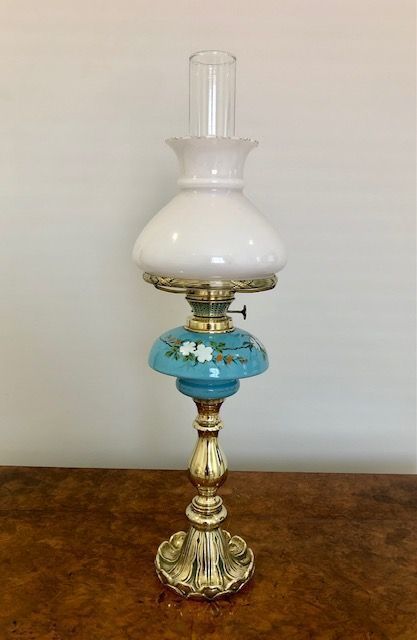
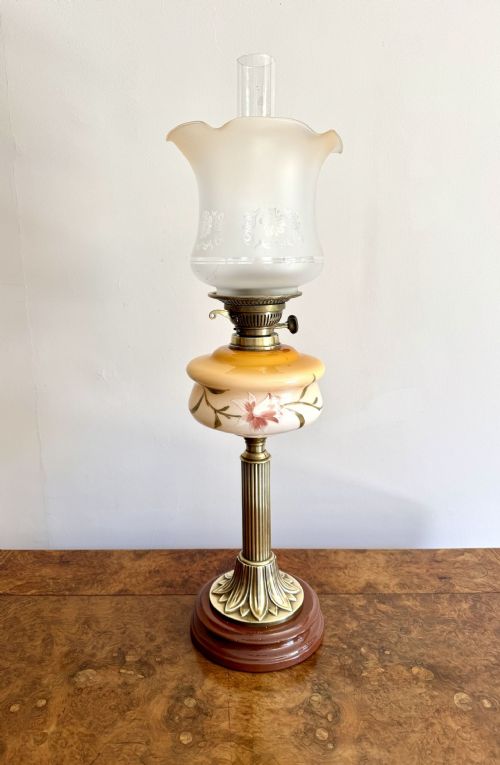
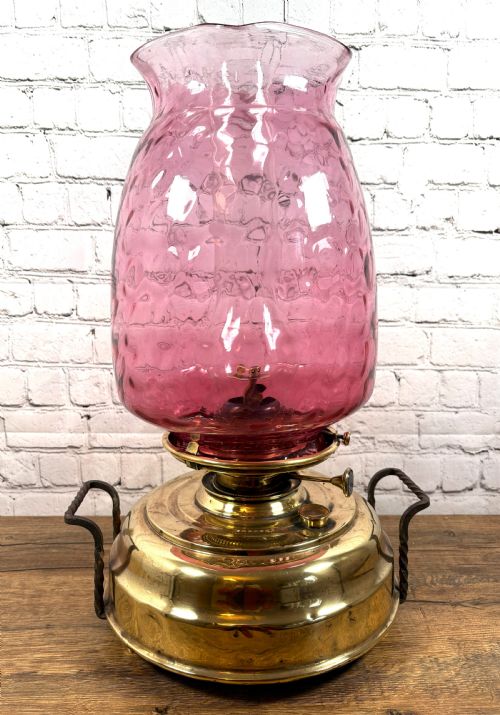
An antique oil hurricane lamp brings practical Victorian illumination into a modern room, combining brass bases with tinted or hand-painted glass shades.
Antique Oil Hurricane Lamp
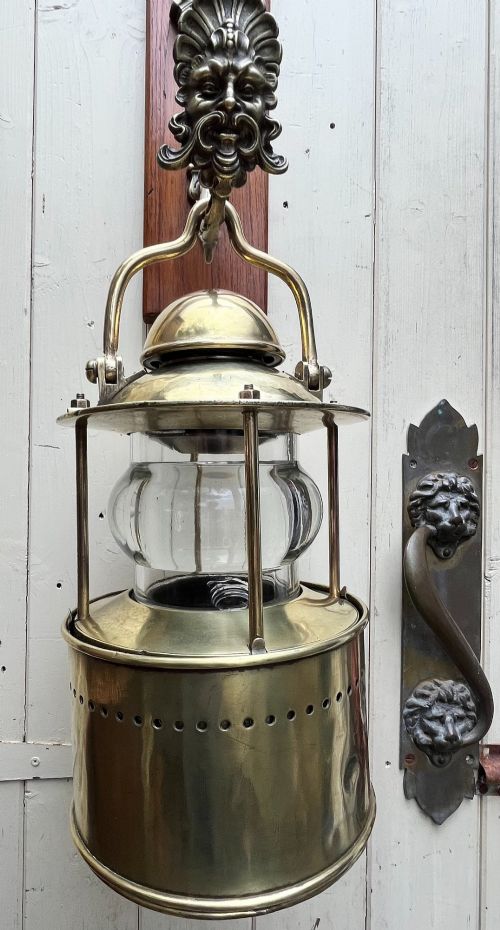
An antique oil hurricane lamp functions as a freestanding table lamp or wall lantern, designed to shield a burning flame from drafts. The examples seen here belong predominantly to the Victorian and Edwardian periods, stretching from the middle of the nineteenth century into the opening years of the twentieth.
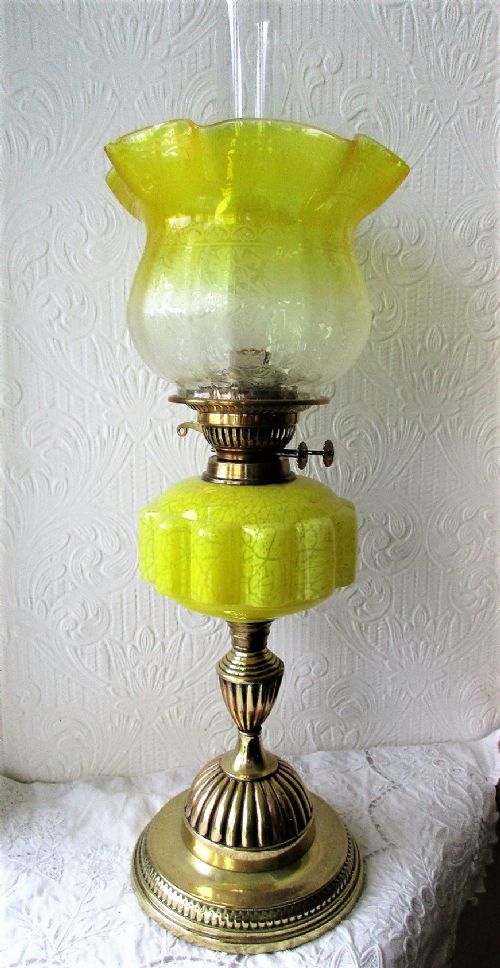
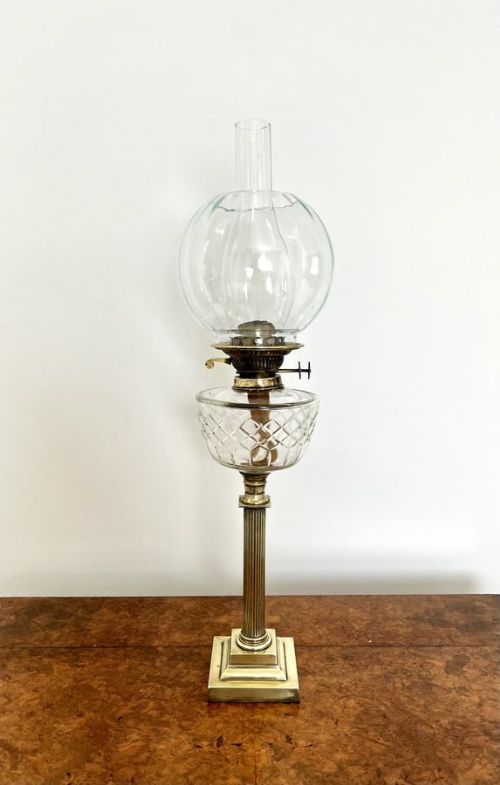
Brass serves as the primary metal framework for these pieces, often paired with coloured or clear glass fonts and shades. Buyers encounter table lamps alongside wall-mounted lanterns and specialised pulpit lamps.
Most pieces date between eighteen sixty and nineteen hundred, reflecting the height of domestic oil lighting before electric wiring reached most homes. Makers produced these in standard domestic sizes as well as larger decorative pairs.
Materials and construction
Makers constructed these lamps using heavy-gauge brass for the structural stems and bases, frequently incorporating embossed patterns or cast rococo revival details. Glass played an equally vital role, appearing in clear, frosted, opaline, or cranberry finishes across fonts and shades.
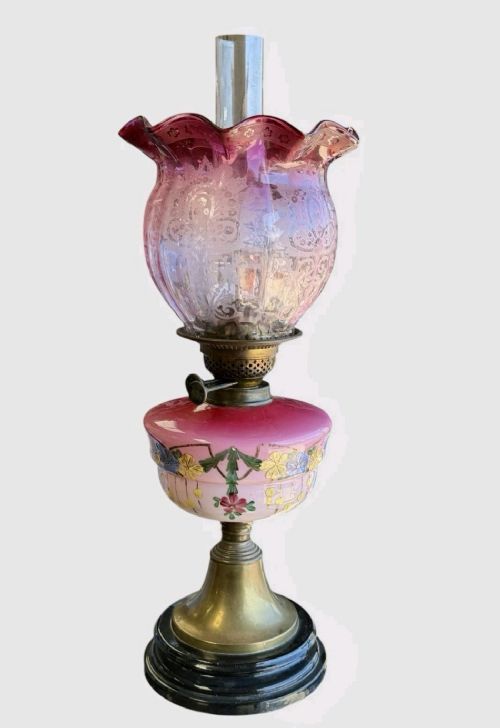
Certain vessels feature hand-painted decoration directly upon the glass, while others incorporate porcelain elements such as Meissen figures. Metal plating and gilt decoration were also applied to enhance the visual appeal of the finished light.
Listings feature brass, cranberry glass, opaline glass, and ceramic across the Victorian and Edwardian periods.
Assessing quality and finish
Quality in an antique oil hurricane lamp rests upon the weight of the brass casting and the crispness of any embossed or chased decoration. Substantial metal bases provide stability, whereas lighter pieces feel less robust in the hand.
The sophistication of the glass work distinguishes standard production from finer examples. Hand-painted details, layered cranberry glass, and matching opaline shades elevate a piece above simpler clear glass variants.
Meissen Porcelain
The Antique Oil Hurricane Lamp Glossary
- Opaline glass
- An opaque white glass developed during the nineteenth century, frequently utilised for lamp shades to diffuse light softly.
- Cranberry glass
- A rich red glass produced by adding gold chloride to the molten batch, popular for Victorian decorative items.
- Rococo revival
- A nineteenth-century design style drawing on asymmetrical scrolls, naturalistic plant motifs, and ornate curves.
Antique Oil Hurricane Lamp: Frequently Asked Questions
How do I date an antique oil lamp?
Dating relies on stylistic clues, material combinations, and manufacturing techniques recorded across the nineteenth and early twentieth centuries. Victorian examples often display heavier brass casting and robust proportions compared to later Edwardian pieces.
Examining the type of glass used in the shade and font also helps narrow the period of manufacture. Standard production shifts from mid-Victorian brass and cranberry glass toward lighter plated metals and opaline finishes by nineteen hundred.
Were these lamps used outdoors?
Many wall lanterns and domestic oil lamps were designed to protect the flame from drafts in hallways and exposed areas. The glass shade acts as a physical barrier, keeping the light steady when air currents move through a room.
While historical hurricane lamps served practical lighting needs in draughty spaces, surviving examples function primarily as decorative interior pieces today. Their enclosed glass shades ensure the flame remains protected during use.
Can I still burn oil in these lamps?
Operating these antique lamps with paraffin or lamp oil requires careful inspection of the internal burner mechanism and font integrity. Many collectors choose to display them purely as decorative objects rather than active light sources.
If you decide to burn oil, ensure the wick mechanism moves freely and the glass shade is entirely free from hairline fractures. Modern safety guidelines recommend checking all joints and seals before introducing fuel.
How do I clean brass lamp bases?
Cleaning antique brass requires a gentle approach to preserve the natural patina accumulated over the decades. Avoid harsh chemical dips that strip away the surface character developed since the Victorian era.
A soft cloth and mild soapy water will remove surface dust without damaging the metal. For glass components, remove the shade and wash it separately in lukewarm water before drying thoroughly.