




Antique Ocean Scene Painting
An antique ocean scene painting captures the movement and moods of the sea across the nineteenth and early twentieth centuries.
Antique Ocean Scene Painting
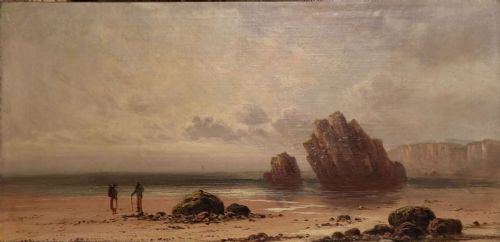
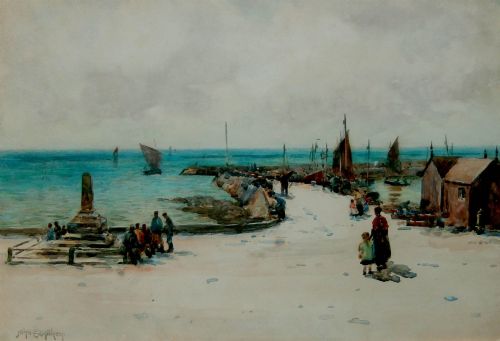
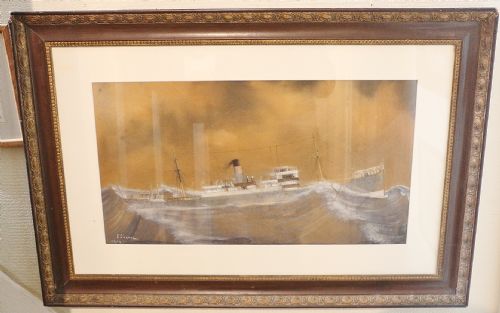
An antique ocean scene painting captures maritime life, coastal harbours and heavy seas across the nineteenth and early twentieth centuries. These works range from grand Victorian oil paintings of shipping vessels in storms to delicate Edwardian watercolours of quiet fishing ports.
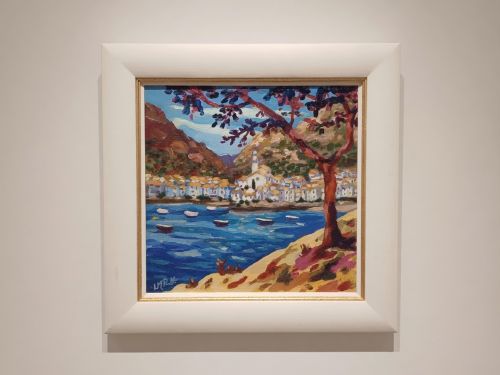
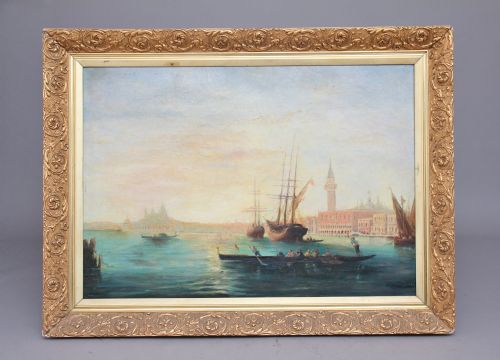
The pieces on this page span the Victorian era, the Edwardian period and the early twentieth century, taking in British Impressionism, realism and maritime art. Subjects stretch from Cornish harbours and Scottish fishing villages to Dutch coasts and the Venetian lagoon.
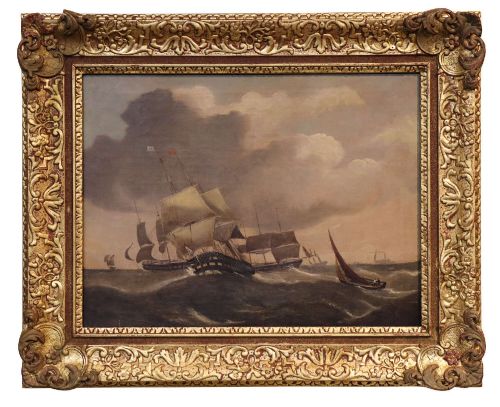
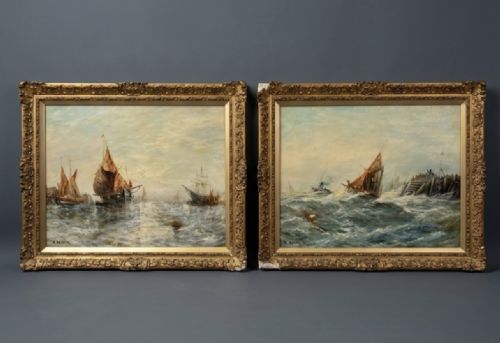
Buyers will encounter single compositions and paired works showing dramatic sea stacks, lighthouses, steamships and beached fishing boats. Mediums span oils on canvas and board alongside watercolours on paper, frequently housed in original gilt wood or ebonised frames.
How they were made
Artists worked primarily with oil paint on stretched canvas or wooden board, or applied watercolour paints to paper. Oil allowed for layered textures to depict churning waves and stormy skies, while watercolour offered translucent washes suited to coastal light.
Canvases and panels sat within protective surrounds, often utilising gilt wood or ebonised timber frames that defined the visual boundary of the maritime subject.
The selection includes works by listed Royal Academicians alongside watercolours and oil paintings on canvas and board.
What varies in quality
Quality rests in the artist's command of light, atmosphere and the restless movement of water. Stronger works demonstrate assured brushwork that renders the weight of heavy seas and the specific qualities of coastal air.
Composition and provenance elevate certain pieces, particularly those bearing signatures from established maritime painters or detailed local context such as specific Cornish harbours and named vessels.
John E. Aitken·William Banks Fortescue·Gustave De Bréanski·Claude Thomas Stanfield Moore·Sir William Russell Flint·Kate E Booth·Frederick Stuart Richardson·Sir David Murray·Marie-Edouard Adam·E Tucker·Percy Brooke·Owen Bowen·James Watson·Thomas Bush Hardy·Charles Martin Powell·James G. Faulds·Arthur Joseph Meadows·Harry John Pearson
The Antique Ocean Scene Painting Glossary
- Oil on Canvas
- Pigment mixed with drying oil applied to a woven fabric stretched across a wooden frame. This medium allowed artists to build rich textures and deep tones for stormy seas.
- Watercolour
- Paint consisting of water-soluble pigment applied to paper. It was frequently used for coastal views to capture bright, translucent daylight.
- Gilt Wood
- Timber framing coated with a thin layer of gold leaf or metallic gilt paint. These frames enclose many nineteenth-century maritime works.
- Seascape
- A work of art depicting the sea, coastlines or marine vessels. These subjects became particularly popular during the Victorian period.
- Sea Stack
- A geological landform consisting of a steep and often vertical column or columns of rock in the sea. They appear frequently in nineteenth-century coastal views.
Antique Ocean Scene Painting: Frequently Asked Questions
What periods do these paintings come from?
The works on this page date predominantly from the nineteenth century through to the early twentieth century, encompassing the Victorian and Edwardian eras. Artists worked across distinct movements including British Impressionism and nineteenth-century realism.
Dates range from mid-Victorian depictions of heavy seas to 1930s European coastal scenes. Each piece reflects the stylistic conventions of its specific decade.
How should I care for an antique painting?
Keep paintings away from direct sunlight and sources of extreme heat to prevent canvas warping and pigment fading. Maintain a stable room temperature to protect both the paint layer and the wooden support.
Dust surfaces gently with a soft, dry brush and avoid using water or chemical cleaners on the paint or historic frame.
Are these paintings supplied with frames?
Many listings include period surrounds such as gilt wood or ebonised frames that complement the artwork. These enclosures help protect the edges of the canvas or paper.
Details regarding the specific framing are recorded in individual item descriptions.
What subjects are most common?
Common subjects include stormy coastal waters, fishing boats returning to harbour, lighthouses and historic shipping vessels. Scenes often capture specific locations in Britain, France and Italy.
Artists focused heavily on maritime trades, coastal architecture and the changing atmospheric conditions of the sea.