


Antique Oak Torchere
An antique oak torchere brings height and architectural character to a room, serving as a slender display for plants, lamps or candles.
Antique Oak Torchere
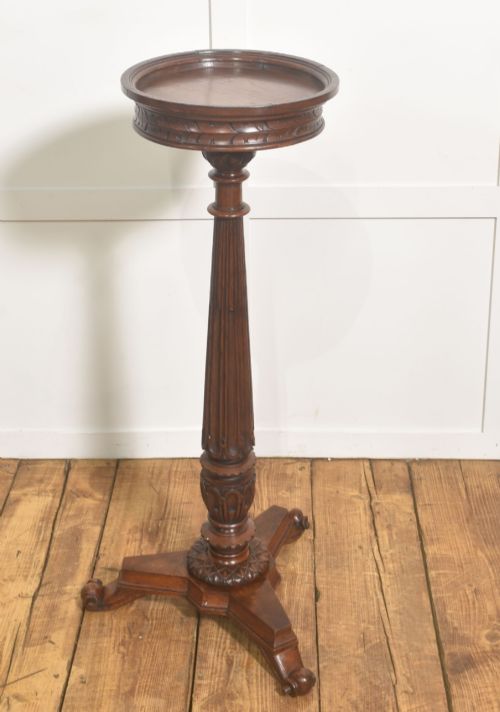
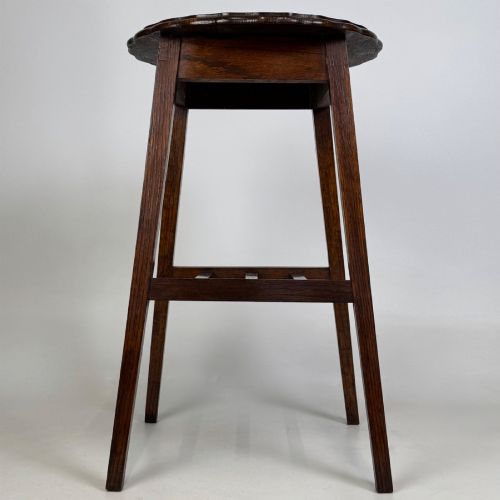
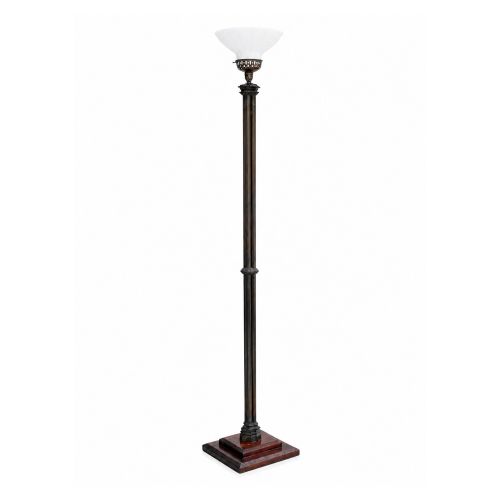
An antique oak torchere is a tall, slender stand designed to elevate an object rather than hold weight across a wide surface. The form encompasses candle stands, plant stands, pedestals and lamp tables made from timber.
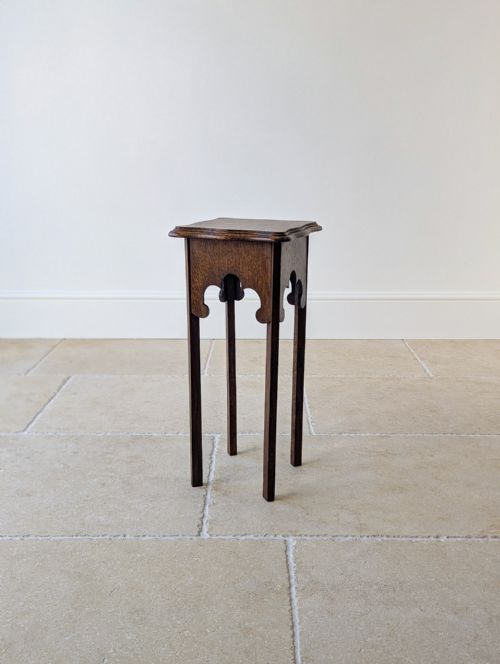
Most examples found here date from the eighteenth century through the Edwardian period and the early twentieth century. Makers of these pieces drew on Gothic Revival, Arts and Crafts, and Jacobean Revival styles.
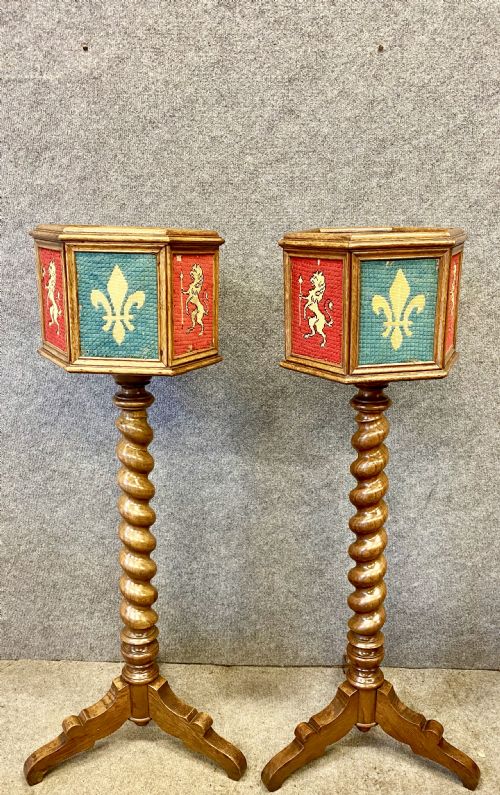
Makers adapted the classic torchere into multi-purpose stands that also served as smoking stands, bust columns and jardiniere holders. These variations in form reflect how the furniture was used in nineteenth-century and early twentieth-century domestic interiors.
How they were made
Carpenters utilised solid oak and burr oak for structural strength and distinctive grain patterns, occasionally incorporating carved wood, glass, metal, paint and needlepoint tapestry details. Timber selection governed the weight and stability of these tall stands.
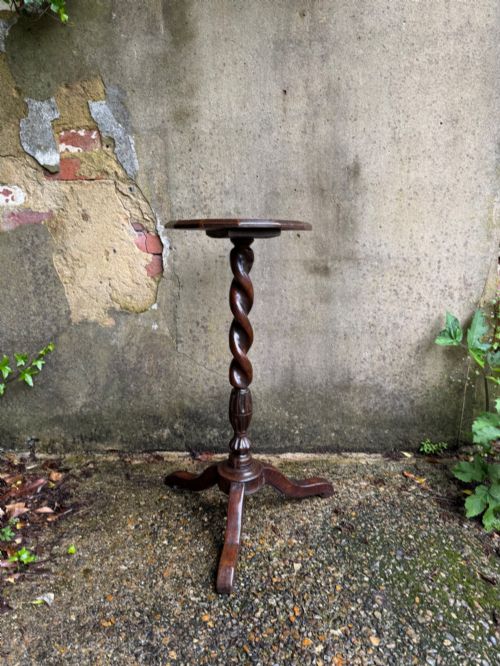
Construction techniques include turned spiral pillars, carved caryatid figures and joined pedestals built to support lamps, vases and statues without tipping. Workshops applied hand-carving and turning methods that defined periods like the Gothic Revival and Arts and Crafts.
Several Victorian stands doubled as smokers' stands, holding pipes, ash pots and candles all on one industrious little column.
What varies in quality
The standard of a piece depends on the depth and crispness of the hand-carving on the shaft and the stability of the base. Examples displaying intricate caryatid figures or burr oak veneers sit above plain turned columns.
Design cohesion separates workshop pieces from standard factory items, particularly in Arts and Crafts or Gothic Revival interpretations. Integration of materials like metal fittings and glass elements also influences the finish of the stand.
The Antique Oak Torchere Glossary
- Torchere
- A tall ornamental stand originally designed to hold a light source such as a candle or lamp. Modern uses include displaying plants, busts and vases.
- Caryatid
- A carved architectural figure acting as a support pillar in place of a column. These appear on nineteenth-century pedestals.
- Burr oak
- Wood taken from a tree growth that produces complex, swirling grain patterns. This material was selected for decorative surfaces on eighteenth-century and nineteenth-century stands.
- Arts and Crafts
- A design movement valuing handcraftsmanship and simple construction over mass production. Pieces from this tradition often feature exposed joinery and plain oak surfaces.
- Gothic Revival
- A style drawing on medieval architectural motifs including pointed arches and heavy carved detail. This aesthetic heavily influenced nineteenth-century church and domestic furnishings.
Antique Oak Torchere: Frequently Asked Questions
What is an oak torchere used for?
These stands elevate objects like table lamps, heavy plants, candles and decorative vases to eye level in a room. Their narrow footprint allows them to fit into corners and tight spaces where a side table would not.
Historically, they illuminated dark corners or displayed prized ornaments. Today, they serve a similar decorative purpose while adding vertical interest to interior spaces.
How do I date an antique torchere?
Dating relies on identifying stylistic markers such as Gothic Revival arches, Arts and Crafts simplicity or Jacobean Revival turning. The tools and joinery methods used on the underside of the top and base also provide clues to the period.
Timber choice offers further evidence, with burr oak and specific finishes pointing towards eighteenth-century pieces, while Edwardian and 1910s examples show lighter construction.
Where should I place a torchere at home?
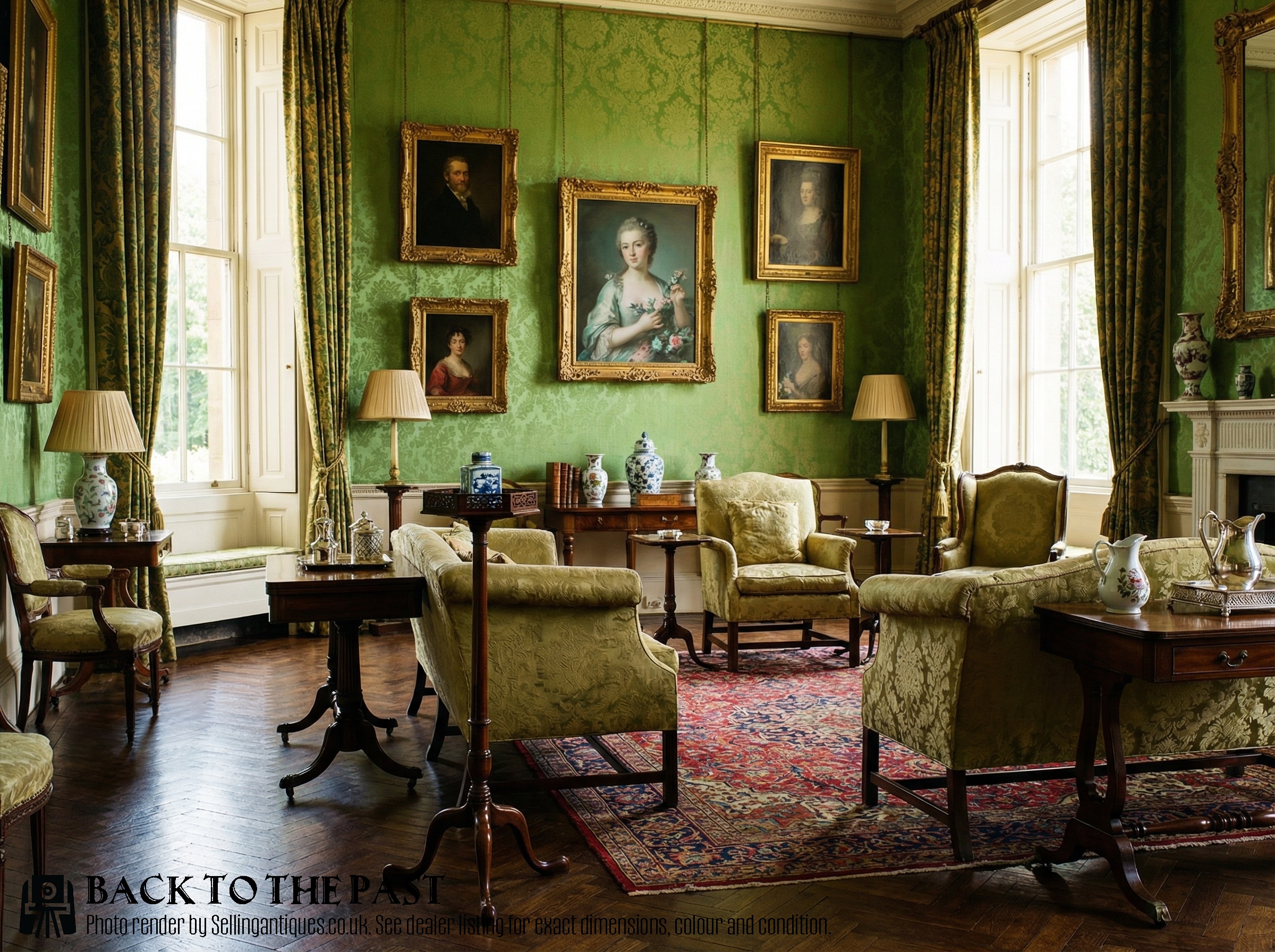
A torchere fits well in empty hallway corners, beside a fireplace, or framing a doorway where vertical height is needed. Because the base is narrow, placement in high-traffic pathways should be avoided to prevent accidental knocks.
Pairing the stand with a matching plant, lamp or bronze bust completes the traditional arrangement. Ensure the weight of the placed object aligns with the stability of the base.
Are plant stands and torcheres the same thing?
While makers used the terms interchangeably in listings, a torchere traditionally held a light source while plant stands featured wider flat tops. Many surviving nineteenth-century examples served both functions depending on the owner's needs.
Both forms share the characteristic tall, slender shaft and weighted base designed to keep elevated objects secure.