

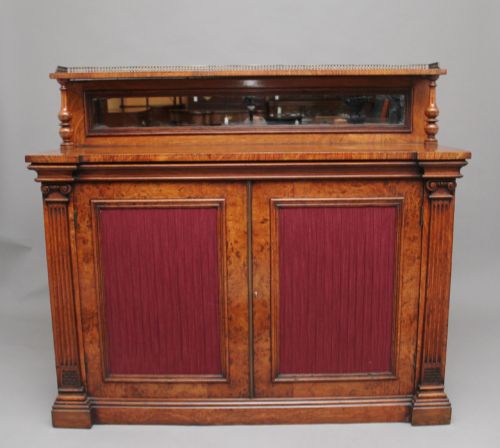


Antique Oak Sideboard Back
An antique oak sideboard back brings substantial grain and fitted display space to a dining room or hall, grounding the interior with period character.
Antique Oak Sideboard Back
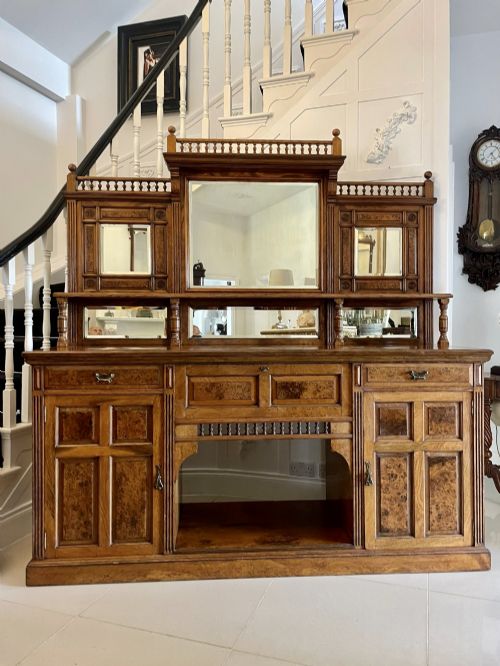
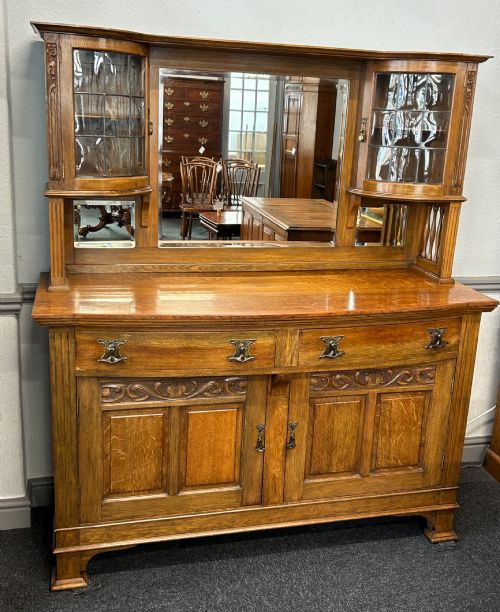
When you search for an antique oak sideboard back, you are looking at the upper superstructure or the complete monumental unit of Victorian, Edwardian, and Georgian dining room furniture designed for display and storage. These pieces combine a timber backboard, frequently incorporating mirror glass, shelves, and carved panels, mounted above a lower buffet or cabinet base.
The version you are most likely to meet on this page is the Victorian or Edwardian carved oak mirror back sideboard. These pieces frequently show robust proportions, with bevelled mirror plates set into scrolling wooden frames, alongside shelf tiers intended for ceramic display.
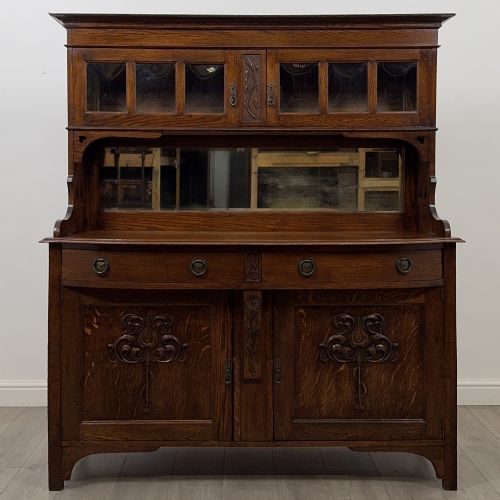
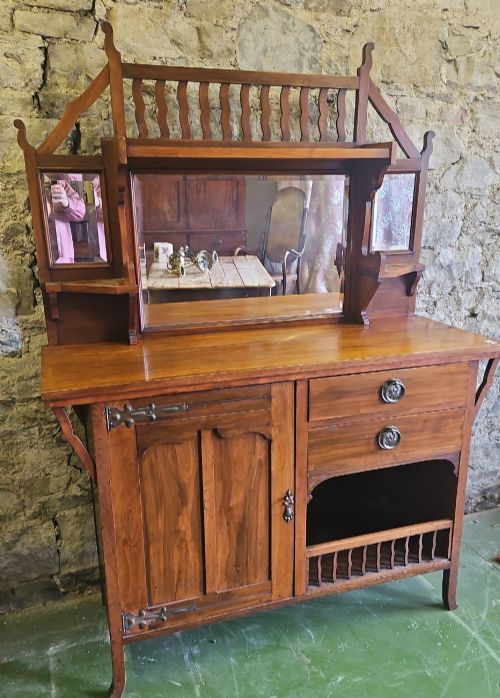
Alternative forms appearing in the listings include plate-rack dressers from the Georgian period and upright Arts and Crafts pieces utilising plain timber surfaces and simpler geometry. Whether substantial and heavily carved or linear and vernacular, each component provides architectural height and utility to the wall space it occupies.
What varies in quality
The selection of timber sets apart the higher tiers of these pieces, particularly where figured pollard oak or matched grain patterns are used across large expanses rather than plain stock. Cabinetmaking standards show in the depth and crispness of the carving, especially on complex motifs such as Green Man masks or intricate foliate scrolls.
Proportion and structural integration also determine quality, distinguishing unified workshop designs from simpler assemblies. Pieces bearing documented maker attribution and refined secondary wood selection occupy the upper end of the range.
Arts and Crafts, Gothic Revival, and Art Nouveau stylistic influences appear throughout the oak cabinet selections.
T Simpson and Son·James Simpson & Sons
The Antique Oak Sideboard Back Glossary
- Pollard oak
- Timber taken from trees that have been pollarded, producing highly decorative, clustered growth rings and intricate figuring. This material was favoured by high-end Victorian cabinetmakers for focal panels.
- Arts and Crafts
- A design movement valuing honest construction, simple geometric forms, and visible hand-craftsmanship over machine-made ornamentation. Pieces from this style often display exposed joinery and minimal carving.
- Gothic Revival
- An architectural and decorative style drawing on medieval ecclesiastical forms, characterised by pointed arches, trefoils, and heavy carved mouldings. In sideboards, this translates into dramatic verticality and sombre detail.
- Breakfront
- A cabinet design where the central section projects forward from the flanking wings. This layout adds architectural depth to the base and mirrors the stepped arrangement of the superstructure above.
Antique Oak Sideboard Back: Frequently Asked Questions
What is an antique oak sideboard back?
An antique oak sideboard back refers to the upper display structure or the complete shelved and mirrored assembly attached to a dining room base.
These architectural additions provided formal display space for silver and porcelain while anchoring large dining furniture within Victorian and Edwardian interiors.
How do I date an oak mirror back?
Dating relies on stylistic markers such as heavy Victorian Gothic carving, Edwardian restraint, or the linear simplicity associated with Arts and Crafts design.
Examination of secondary timbers like pine and the manufacturing techniques of the mirror glass help narrow the period of production.
How were these pieces used originally?
Dining rooms utilised these items to store serving dishes and cutlery in the lower cupboards while displaying decorative ceramics on the upper shelves.
The integrated mirrors also served to brighten dining spaces by reflecting natural light from windows and gas or electric chandeliers.
Where should I place a sideboard back?
These tall pieces require a solid wall capable of supporting their height and visual weight, most traditionally in a dining room or a spacious hallway.
Ensuring adequate clearance for the projecting cornice and shelves allows the carved details and mirror plates to function as a focal point.