


Antique Oak Purdonium
An antique oak purdonium is a dedicated fireside coal box designed to sit neatly beside the hearth, combining practical fuel storage with refined Victorian and Edwardian cabinet-making.
Antique Oak Purdonium
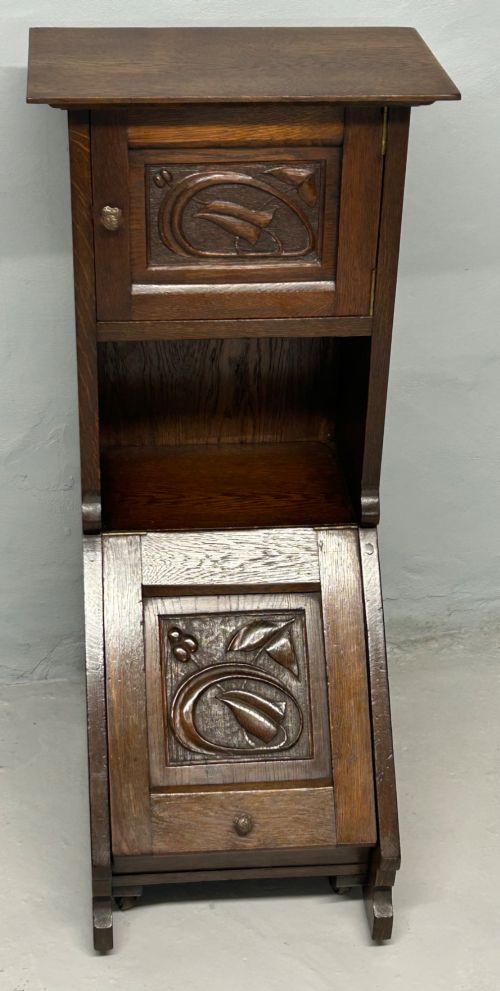
An antique oak purdonium provides a specialised enclosure for domestic coal, keeping hearthside fuel tidy and out of sight in a purpose-built piece of furniture. These items range from simple drop-front storage boxes to elaborate cabinets fitted with interior metal liners and matching shovels.
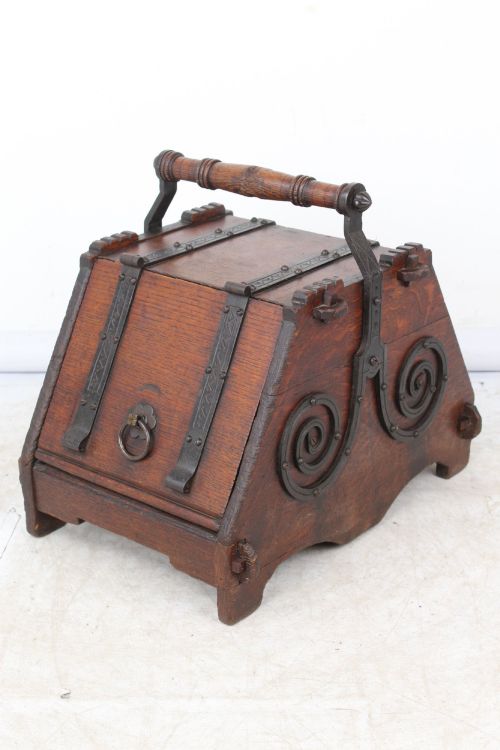
The versions most commonly met on this page date from the Victorian and Edwardian periods, stretching from the late nineteenth century into the early twentieth century. Examples span various stylistic influences, including Gothic Revival, Arts and Crafts, and Art Nouveau interpretations executed in solid timber.
Earlier precedents include eighteenth-century George III log and coal bunkers, though the specific purdonium form with its characteristic sloping front or drop-down door belongs firmly to the later nineteenth century. Alongside standard oak constructions, rarer variants utilise pollard oak for distinctive grain patterns.
Materials and Construction Techniques
Makers built these pieces primarily using solid oak and occasionally pollard oak, paired with functional interior metal liners intended to contain coal dust and residue. Wood framing provides the structural integrity for heavy fuel storage, often supplemented by applied mouldings and carved decorative panels.
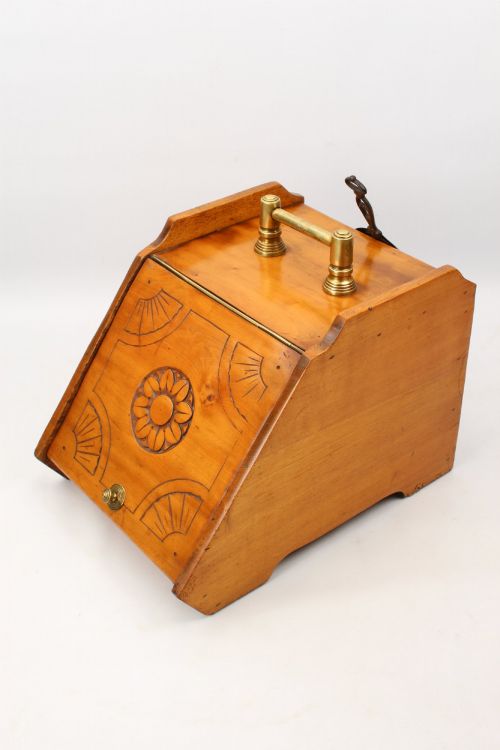
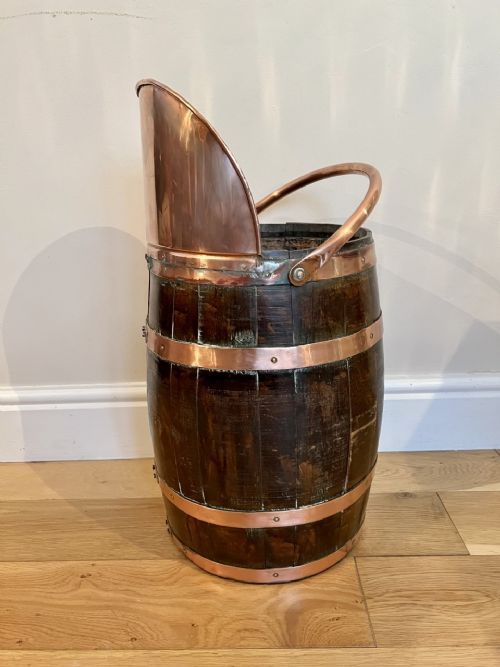
Hardware plays a central role in both construction and appearance, with brass and copper mounts, hinges, drop handles, and carrying grips secured to the wooden bodies. Wrought iron and standard metal components also appear on specific utilitarian variants and fireside accessories.
Listings feature oak, pollard oak, brass, copper, and wrought iron across Victorian, Edwardian, and eighteenth-century periods.
Distinctions in Quality and Craftsmanship
Quality rests heavily on the depth and execution of the cabinet-making, distinguishing standard production boxes from pieces featuring hand-carved fronts or specialised styling associated with designers like Christopher Dresser. The choice of timber grain, particularly figured pollard oak, elevates certain examples above plain utility pieces.
The integrity of the internal metal liner and the robustness of the brass or copper mounts indicate the original grade of manufacture. Pieces retaining their original matching shovels and functioning drop-front mechanisms demonstrate superior preservation of the complete fireside set.
The Antique Oak Purdonium Glossary
- Purdonium
- A specialised coal box or cabinet designed for the fireside, typically featuring a sloping front or drop-down door to dispense fuel. The term gained currency in the Victorian period for domestic coal containers.
- Pollard Oak
- Timber taken from trees that have been pollarded, producing a highly figured, mottled grain pattern. Cabinet-makers utilised this decorative wood for high-status furniture fronts and purdoniums.
- Drop Front
- A hinged panel that lowers to provide access to the interior storage compartment. This mechanism allows easy scooping of coal while concealing the fuel when closed.
- Coal Liner
- The removable metal insert housed inside the wooden box to hold the coal. It protects the surrounding oak from moisture, dirt, and abrasion.
- Gothic Revival
- A nineteenth-century design style drawing inspiration from medieval architecture and ornamentation. Pieces in this idiom feature pointed arches, heavy linenfold carving, and strapwork hinges.
Antique Oak Purdonium: Frequently Asked Questions
How do I date an oak purdonium?
Dating relies on examining the construction style, decorative motifs, and hardware characteristic of specific decades. Victorian examples often display heavy carving or Gothic Revival influences, while Edwardian pieces may show Art Nouveau or simpler Arts and Crafts lines.
Makers active in the late nineteenth and early twentieth centuries produced the vast majority of these items. Earlier eighteenth-century examples tend to take the form of simpler log bunkers rather than formal purdoniums.
How were purdoniums used?
Households kept these boxes beside the hearth to hold a manageable supply of coal for daily fires. The drop-front design allowed servants or homeowners to shovel coal directly from the interior container without scattering debris.
Many units came equipped with a dedicated interior compartment or side clips to hold a matching metal shovel. This kept the fireside tidy by keeping all necessary fuel tools self-contained.
Are liners original to the box?
Original metal liners fit the interior dimensions precisely and show appropriate signs of age, such as oxidation or wear from coal use. Replacements are common because the original metal often corroded from damp fuel over decades of service.
Examining the interior runners and fit can help determine if the liner has survived alongside the wooden cabinet. A matching removable insert ensures the piece remains authentic to its period use.