
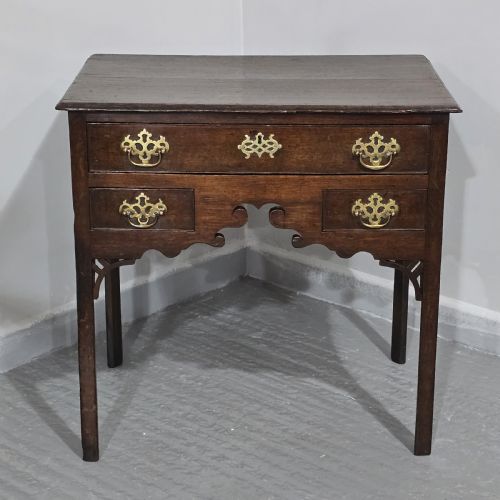


Antique Oak Kneehole Table
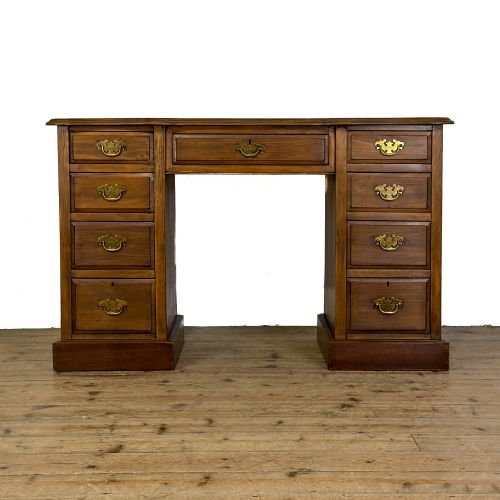
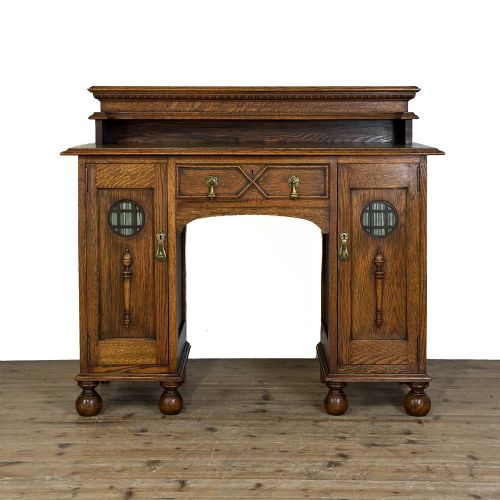
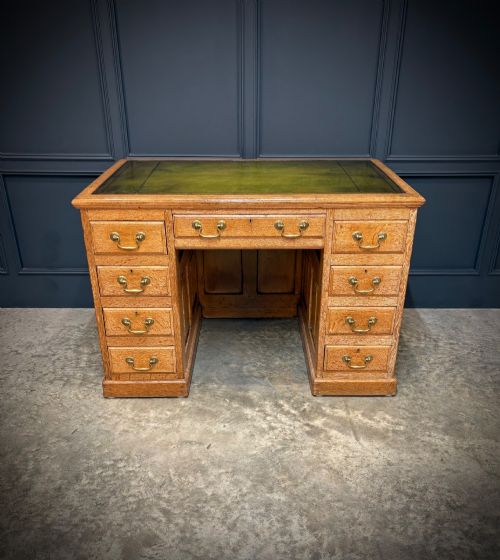
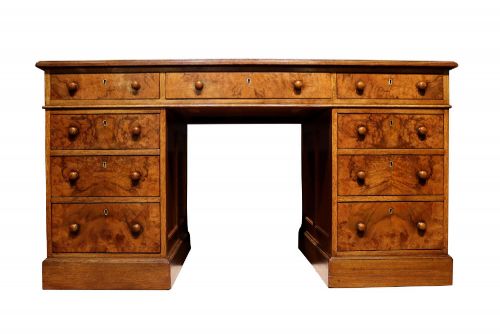
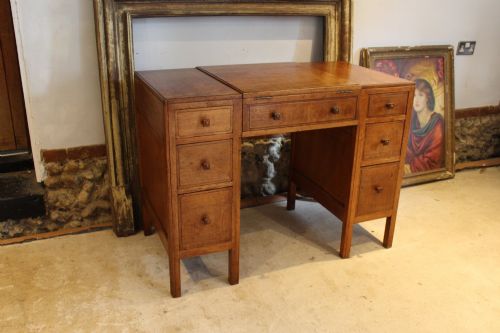
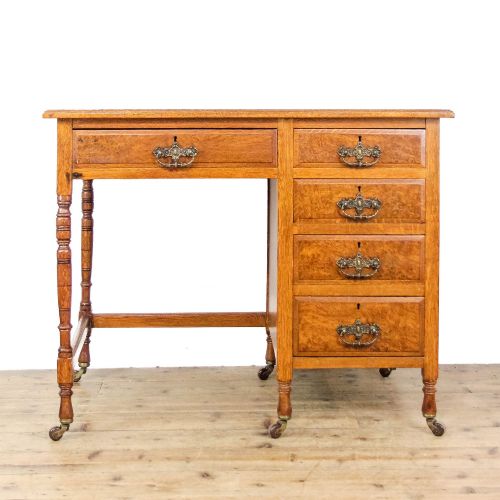
An antique oak kneehole table provides a compact writing surface with banks of small drawers flanking a central recess.
Antique Oak Kneehole Table
An antique oak kneehole table combines a dedicated writing surface with concealed storage situated beneath the top and within twin pedestals. These pieces originate across the eighteenth century, the Victorian period, and into the Edwardian era, spanning styles from Georgian formality to country house utility.
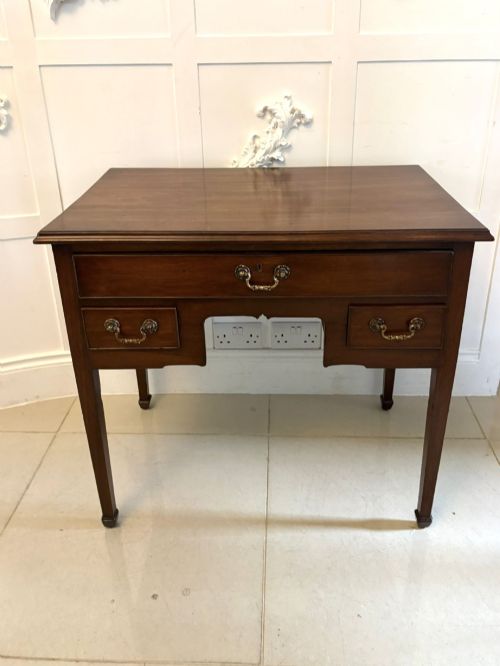
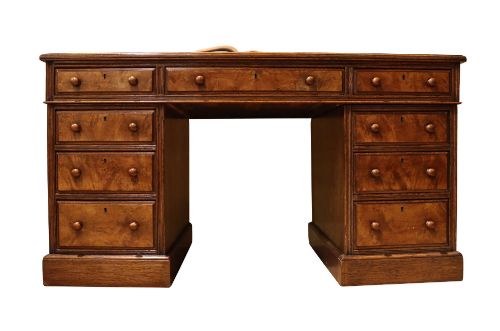
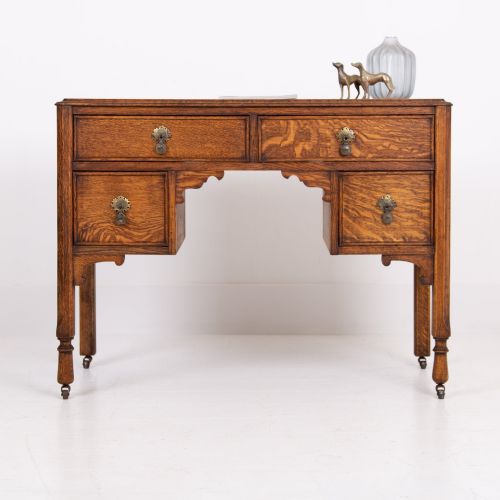
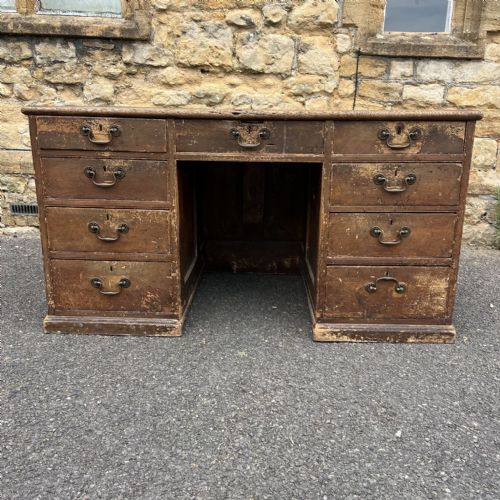
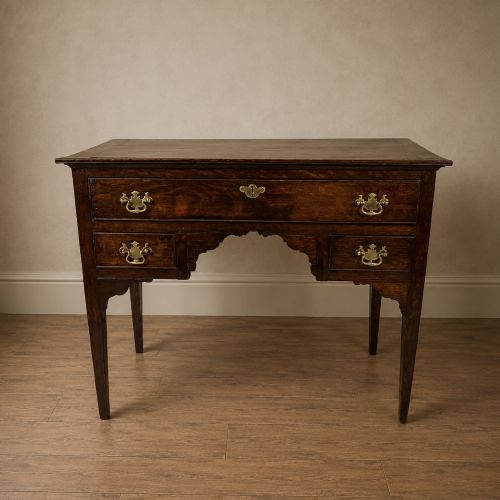
The version most commonly encountered on this page is the Victorian pedestal desk or writing table constructed in solid or burr oak, often featuring brass hardware and occasional leather inserts. Lowboys and dressing tables also appear under this designation, sharing the characteristic recessed centre and side drawers.
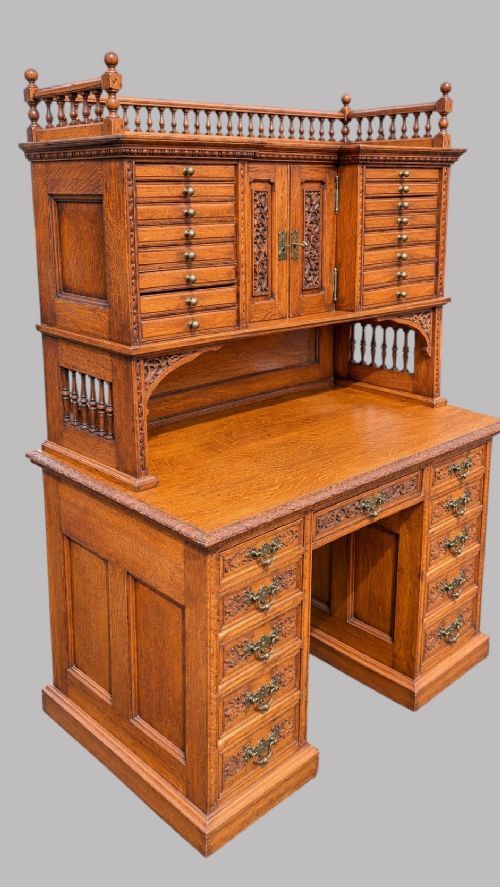
Makers and regional workshops produced these tables in various proportions, ranging from small ladies' writing desks to substantial estate manager's furniture. The timber grain and colour vary naturally, influenced by age and whether the primary material is golden English oak, pollard oak, or integrated with walnut.
Materials and construction
Carpenters constructed these tables using solid oak framing combined with secondary timbers such as pine, employing traditional dovetail joints for drawer construction. Timber selection prioritized durable native woods, occasionally augmented with burr walnut veneers or decorative carving.
Hardware elements like drop handles, escutcheons, and pulls typically utilise cast brass, affixed to drawer fronts alongside working locks and original keys. Writing surfaces frequently incorporate inset leather panels, whilst some examples retain stencilled decoration or glass table tops.
Listings feature periods from the 17th century through the Georgian and Victorian eras up to the 1930s, utilising oak, walnut, brass, and leather.
Gradations in quality
Quality rests upon the selection of timber figures, such as burr oak or pollard oak, and the precision of the joinery within the drawer linings and pedestals. Superior examples maintain balanced proportions and original brass hardware, whereas lower tiers exhibit replacement elements or plain, utilitarian secondary woods.
The presence of maker stamps, attributed workshop origins, and intact original finishes distinguish standard production pieces from fine cabinetwork. Construction depth, such as secondary oak linings rather than pine, elevates a table within the broader range.
Heal And Sons·Shapland And Petter·Gillow And Co·Thomas Turner·Howard And Son·Étienne Kohlmann
The Antique Oak Kneehole Table Glossary
- Kneehole
- A recessed space beneath the central section of a desk or dressing table designed to accommodate the user's legs. This configuration separates twin pedestals of drawers.
- Lowboy
- A small seventeenth or eighteenth-century dressing table or side table featuring one or more rows of drawers beneath the top. They typically stand on slender cabriole or straight legs.
- Pedestal desk
- A heavy freestanding writing table comprising two separate drawer units supporting a wide top. The central kneehole sits directly between these flanking stacks.
- Pollard oak
- Timber sourced from trees cut close to the trunk to encourage dense, knotty growth patterns. This creates highly decorative burr-like figures utilised in veneered surfaces.
- Escutcheon
- A protective plate surrounding a keyhole, usually cast in brass to prevent the wood from wearing around the lock.
Antique Oak Kneehole Table: Frequently Asked Questions
What is an antique oak kneehole table used for?
These tables function primarily as writing desks, dressing tables, or compact study surfaces within domestic interiors. The arrangement of drawers provides organised storage for stationery and personal items while maintaining a modest footprint.
The central recess allows a chair to tuck neatly underneath, making them practical for daily use in smaller rooms or home offices.
How do I date an oak kneehole table?
Dating relies on examining construction techniques, hardware styles, and timber characteristics. Eighteenth-century examples often feature hand-cut dovetails and pegged framing, while Victorian and Edwardian pieces show machine-sawn components and different brass casting methods.
Secondary woods like pine often indicate nineteenth-century or later vernacular production, whereas early pieces utilise consistent native hardwoods throughout.
Are these tables suitable for daily writing?
Most antique oak kneehole tables offer sturdy construction suitable for regular writing tasks and laptop use. The integration of leather inserts on many models provides a durable writing surface.
Buyers should verify the kneehole clearance height and desk depth to ensure comfortable seating proportions for modern use.
How do I care for an antique oak finish?
Routine maintenance involves dusting with a dry, soft cloth and occasionally applying traditional beeswax to nourish the timber. Direct sunlight and excessive moisture should be avoided to prevent fading and warping.
Leather writing surfaces require specialised balms to keep the material supple and prevent cracking over time.