
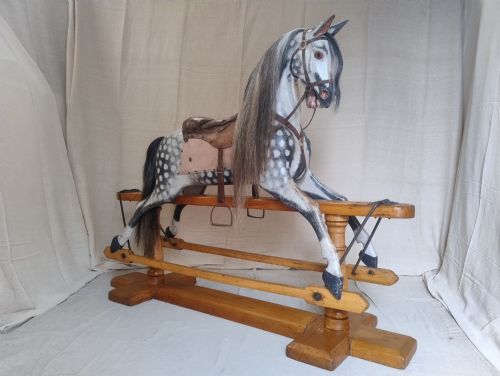


Antique Nursery Toy Horse
An antique nursery toy horse brings the distinct charm of nineteenth and early twentieth century playrooms straight into a modern interior.
Antique Nursery Toy Horse
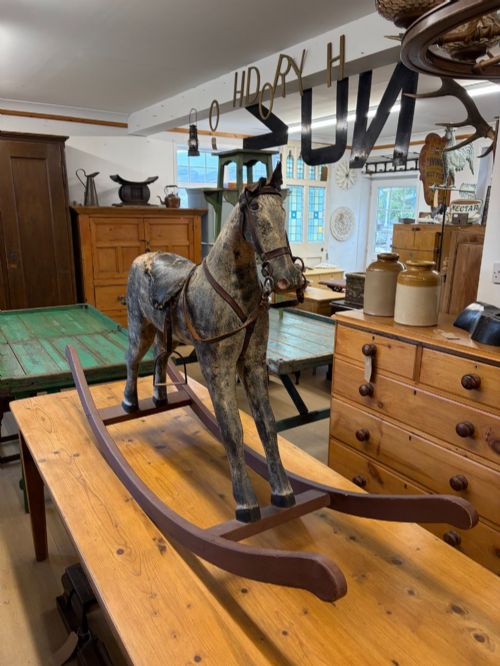
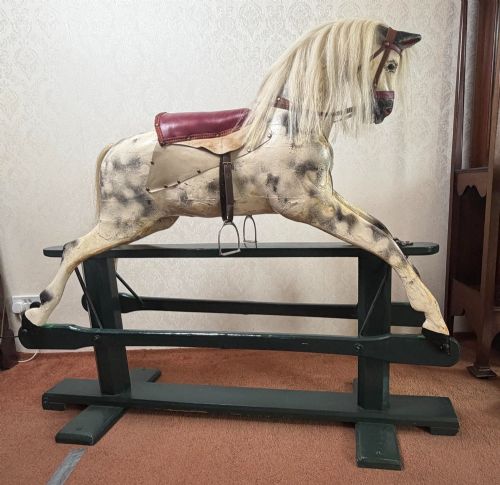
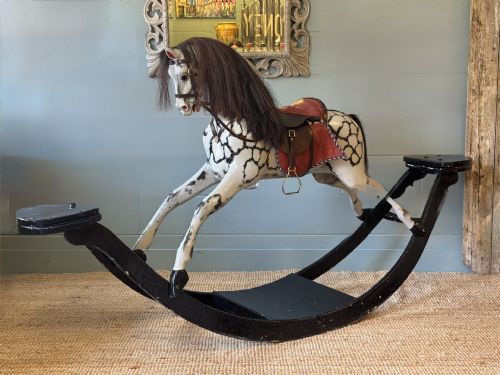
When you search for an antique nursery toy horse, you encounter substantial wooden playthings designed for children's amusement across the Victorian, Edwardian, and interwar periods. These pieces take the primary form of large rocking horses mounted on curved wooden rockers or safety stands, alongside smaller pull-along toys intended for younger children.
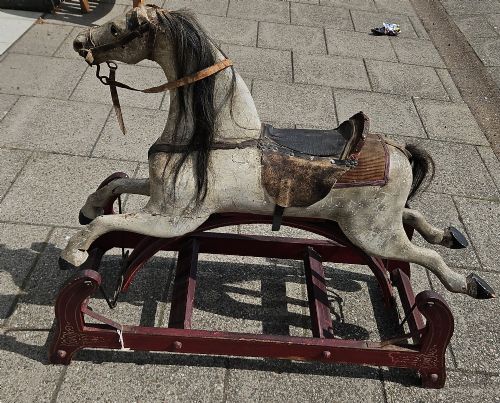
The versions most frequently met on this page date from the late nineteenth century through to the 1930s. They range from primitive, naive folk art creations carved from pine to sophisticated maker-stamped examples produced by renowned London toy firms.
How they were made
Makers constructed these figures predominantly from carved wood and pine, often utilising iron and steel for internal bracing, brackets, and mechanical rocker components. Artisans shaped the bodies from solid timber blocks or constructed them over hollow frames before applying layered gesso and oil paint to create dappled or solid finishes.
Detailing relied on traditional upholstery and taxidermy methods, incorporating real horsehair for manes and tails and stitched leather for saddles, bridles, and reins. The quality of these materials dictated the durability of toys subjected to decades of rigorous childhood play.
Many surviving nursery horses bear the distinct tooth marks of affectionate childhood owners who attempted to feed them.
What varies in quality
The distinction between ordinary and exceptional examples rests primarily on the integrity of the original surface paint and the sophistication of the carving. Pieces retaining their undisturbed early dapple or untouched folk art pigment command greater appreciation than those stripped to bare timber or heavily repainted.
Proportion and stance also separate the better workshops from naive provincial production. Master makers achieved anatomically convincing musculature and spirited head carriage, whereas simpler domestic pieces display charmingly stiff postures and rudimentary joinery.
G & J Lines of London·F H Ayres·Collinson·Lines Bros Sportiboy
The Antique Nursery Toy Horse Glossary
- Dappled
- A painted surface finish imitating the grey-white spotted coat of certain horses. This technique required considerable skill with layered brushwork.
- Folk art
- Objects created by self-taught makers or provincial craftsmen outside academic traditions. These items emphasise bold utility and naive charm over refined academic proportions.
- Safety stand
- A rigid wooden frame beneath a rocking horse that restricts excessive tipping. It replaced traditional curved floor rockers to protect playing children.
- Pull-along
- A small toy horse mounted on a wooden platform fitted with small iron wheels. Children towed these across nursery floors using a cord or leather strap.
Antique Nursery Toy Horse: Frequently Asked Questions
How do I date an old rocking horse?
Dating relies on examining the construction methods, nail types, and paint layers visible on the wooden body. Earlier nineteenth-century examples often feature simpler, more primitive carving and hand-forged ironwork.
Later pieces from the Edwardian period and the 1930s tend to display more standardised manufacturing techniques, sometimes accompanied by maker stamps or characteristic factory stances.
Are original painted finishes important?
Original painted surfaces are highly prized by collectors because they preserve the authentic visual history of the toy. Surviving dapple patterns or early folk art paint show how the horse looked when it first left the workshop.
Subsequent repainting conceals the underlying age of the timber and alters the character of the piece. Buyers generally seek out surfaces that display honest wear from active play rather than modern restoration.
What is the difference between a rocker and a stand?
Traditional floor rockers consist of two curved wooden shoes attached to the feet of the horse, allowing the entire animal to sway back and forth across the nursery floor. This design requires adequate clearance space during use.
Safety stands anchor the horse within a stationary wooden framework using swinging iron hangers. This innovation prevented the toy from tipping over completely during enthusiastic play.
How do I care for horsehair manes?
Real horsehair manes and tails require gentle maintenance to prevent brittle strands from breaking over time. Regular light dusting with a soft brush keeps the natural fibres clean without disturbing the old stitching.
Avoid using modern chemical cleaners or water on antique leather tack and hair attachments. Keeping the horse away from direct sunlight and damp environments preserves both the timber and the organic textiles.