


Antique Novelty Tableware
These antique novelty tableware pieces take familiar dining forms and shape them into animals, birds, shells, and transport, bringing wit to the dining table.
Antique Novelty Tableware
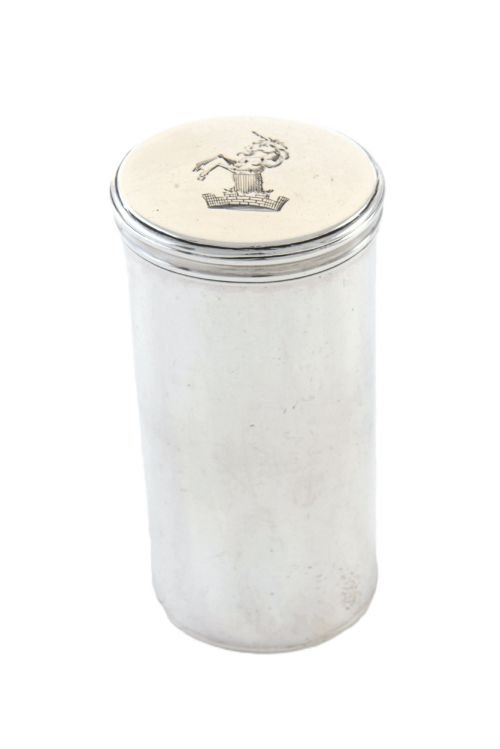
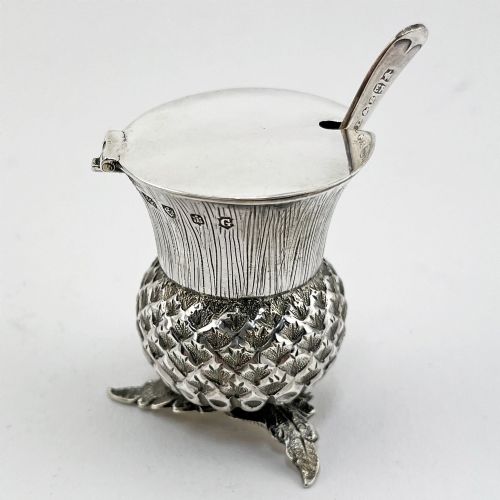
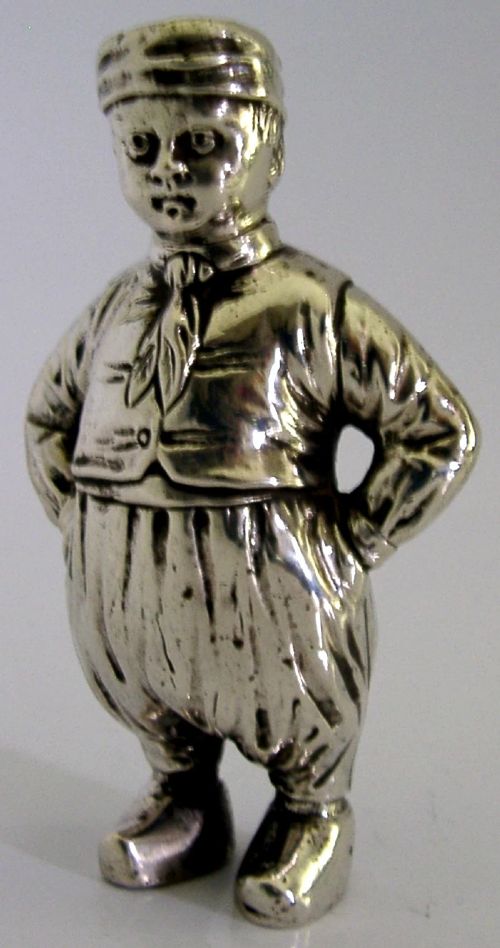
Antique novelty tableware turns functional dining implements into humorous or unexpected shapes, spanning cruet sets, menu holders, spoon warmers, pepper pots, and caddy spoons. A buyer searching this phrase encounters items shaped as birds, animals, vehicles, and plants.
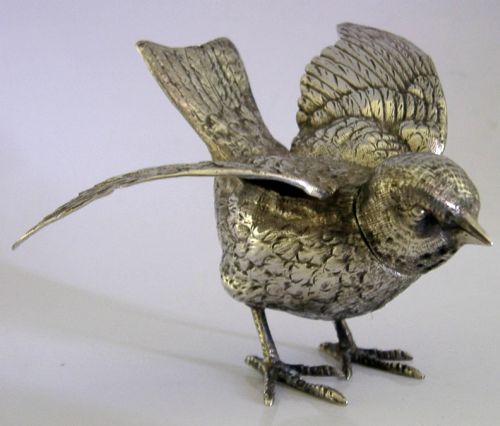
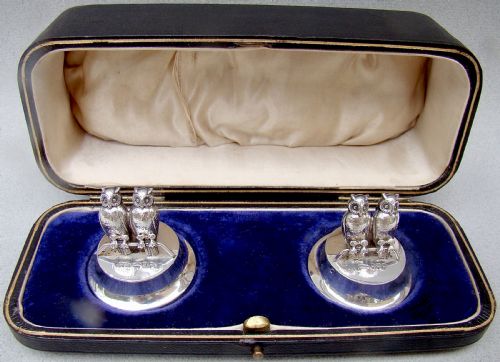
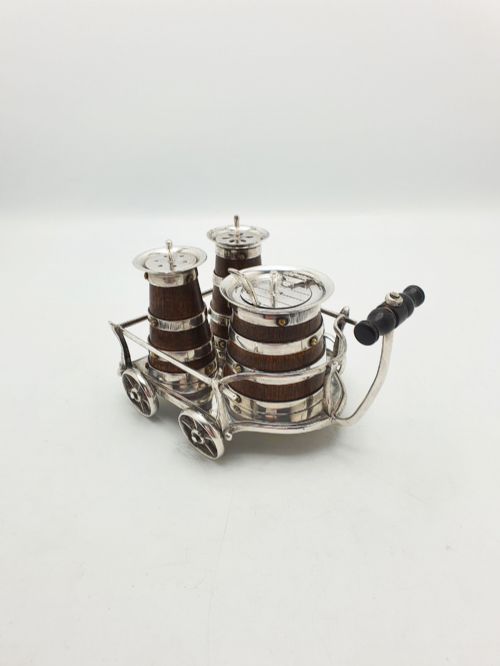
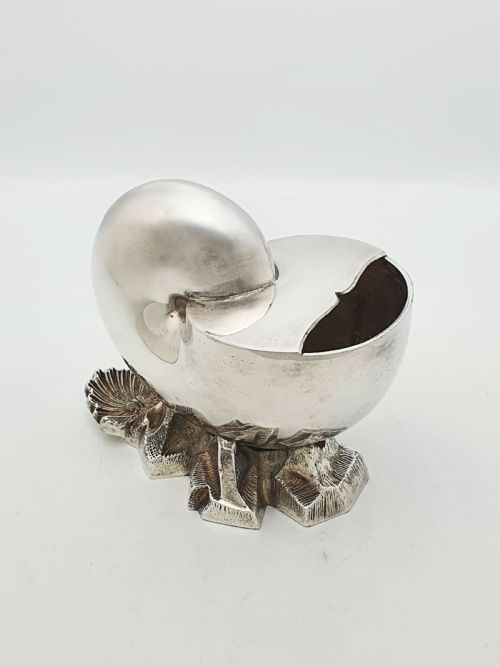
The selections on this page range from Victorian silver-plated shell spoon warmers and oak barrel cruet sets to Edwardian silver owl menu holders and sterling silver chick pepper pots. These pieces served practical functions at the formal dining table while entertaining guests with whimsical designs.
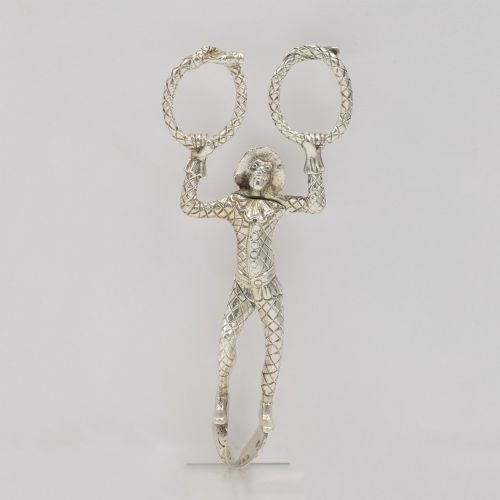
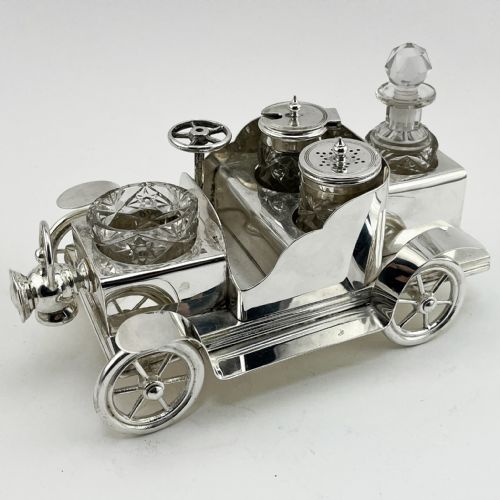
Originating largely across the nineteenth and early twentieth centuries, these items capture the Victorian and Edwardian taste for playful domestic objects. Examples include walnut sauce holders, monkey sugar tongs, and carriage cruet sets.
How they were made
Silversmiths and manufacturers utilised sterling silver, solid silver, and silver plate over base metals to shape these figural items, often employing fine casting and hand-chasing to render feathers, fur, and anatomical details.
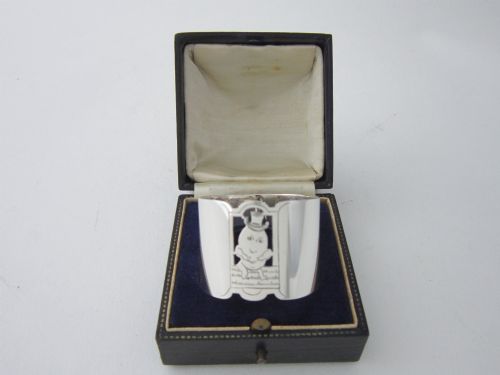
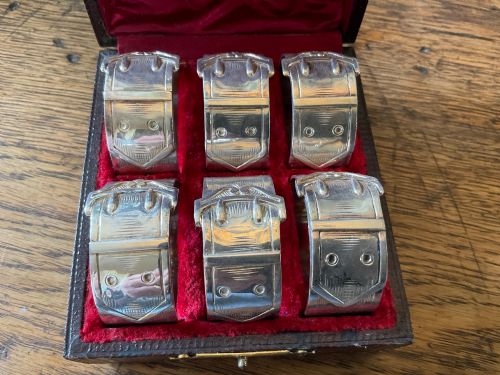
Glass, cut glass, pewter, and brass also appear in the evidence, combined with materials like silk and velvet in fitted presentation cases for cased sets of napkin rings or menu holders.
Object forms span cruet sets, spoon holders, nutmeg graters, toast racks, and napkin rings modelled as stirrups.
What varies in quality
The standard of a piece rests upon the crispness of the casting and the naturalism or charm of the figural form, separating ordinary condiment containers from pieces where every feather, scale, or vehicle component is sharply defined.
Maker attribution and the inclusion of original fitted cases or matched sets elevate the standing of an item, alongside the preservation of original silver plating or clear hallmarks on sterling pieces.
Levi and Salaman·Dee and Fargus·Grey and Co·Hukin and Heath·Reid and Summers·Henry Stuart Brown·Thomas Johnson
The Antique Novelty Tableware Glossary
- Cruet set
- A matched collection of bottles, jars, or shakers for condiments such as salt, pepper, mustard, oil, and vinegar, frequently held in a specialised stand.
- Spoon warmer
- A Victorian vessel designed to hold hot water and keep serving spoons warm for gravy or soup, often modelled as a nautilus shell or animal form.
- Caddy spoon
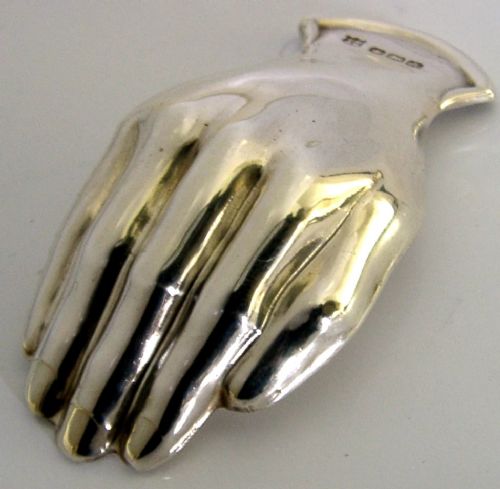
- A small spoon used for measuring tea leaves from a caddy into a teapot, often found in novelty shapes like jockey caps or hands.
- Menu holder
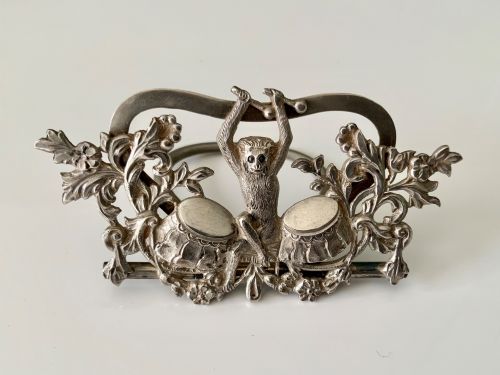
- A small weighted stand designed to display table menus or place cards, frequently cast in figural designs such as owls or monkeys.
- Nutmeg grater
- A pocket-sized container incorporating a steel grating rasp and a compartment to store whole nutmegs for seasoning food and drinks at the table.
Antique Novelty Tableware: Frequently Asked Questions
What were novelty cruet sets used for?
These sets held condiments like salt, pepper, and mustard on the dining table during formal meals. Their humorous animal or vehicle designs sparked conversation among guests.
Hosts placed them centrally or passed them along the table as part of nineteenth-century dining ritual.
How do I identify a spoon warmer?
Spoon warmers are hollow vessels with an opening designed to hold hot water and warm gravy or soup spoons before use. They often take sculptural forms like shells or barrels.
Most date from the Victorian era and sit directly on the dining sideboard.
Are these pieces made of solid silver?
The evidence shows a mix of sterling silver, solid silver, and silver plate over base metals. Hallmarks on silver pieces indicate the maker, town, and year of assay.
Silver-plated items utilise a thin layer of silver over materials like copper or white metal.
How can I date my novelty tableware?
Dating relies on maker marks, design registration numbers, and silver hallmarks that record the exact year of production. Style markers like Victorian ornamentation also help place an item.
Comparative forms in the evidence span the late eighteenth century through the Edwardian period and into the 1940s.