


Victorian Novelty Condiment Pot
A victorian novelty condiment pot brings animal and figural humour to the dining table through clever smithing.
Victorian Novelty Condiment Pot
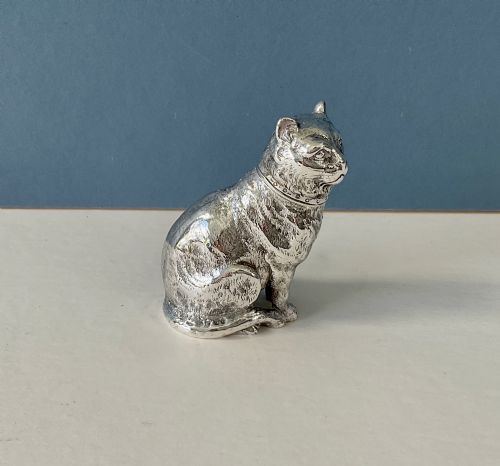
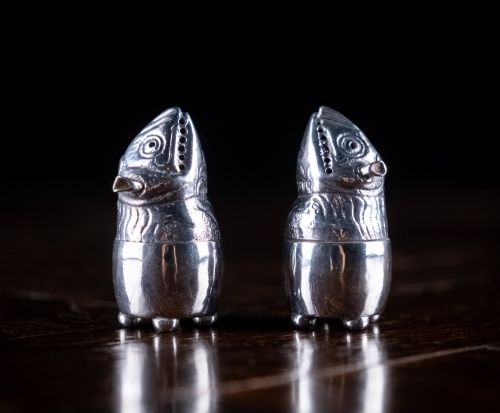
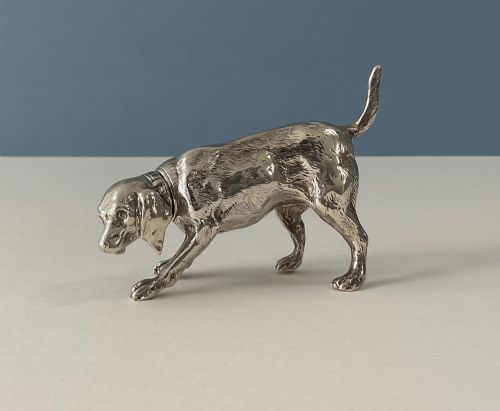
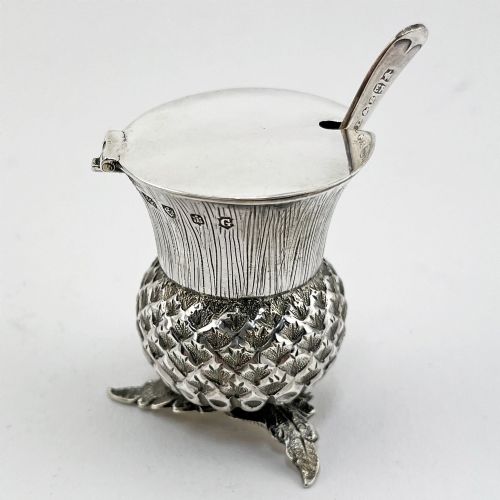
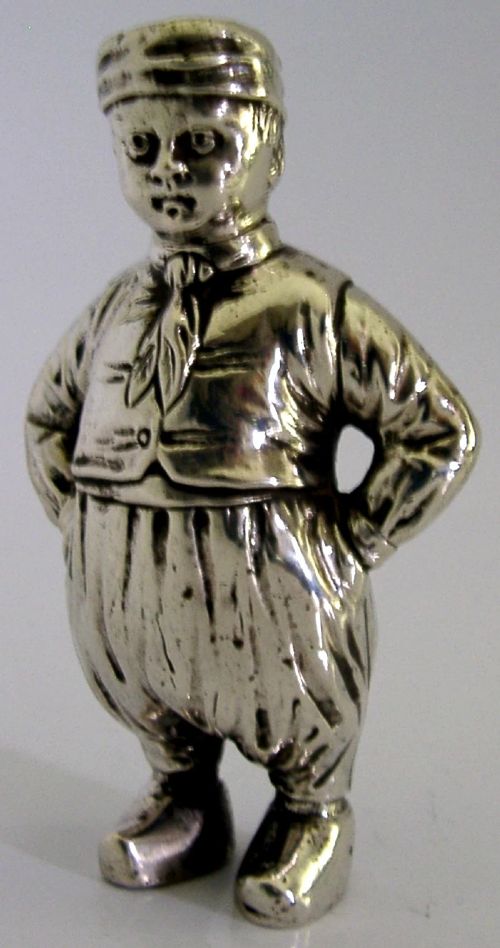
A victorian novelty condiment pot takes the form of animals, birds, or everyday objects designed to hold salt, pepper, or mustard. You meet pieces shaped like cats, dogs, owls, chicks, bears, and even musical instruments or furniture.
Most examples date from the nineteenth century into the Edwardian period, spanning sterling silver, silver plate, pewter, and oak. These items served a practical dining purpose while providing a conversational talking point for guests.
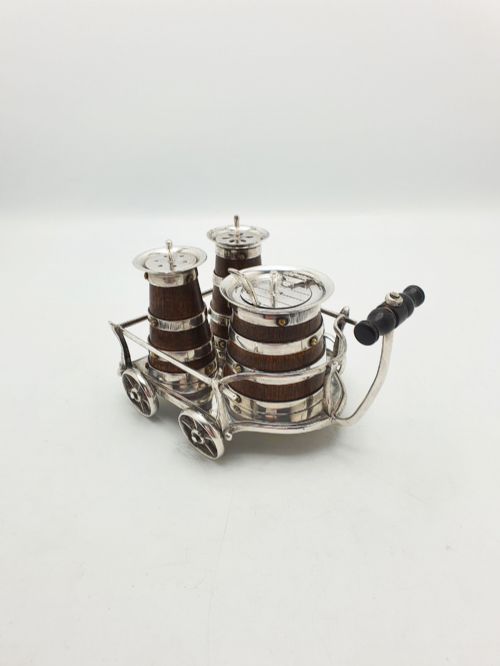
Cruet sets and condiment holders group these figural pepper pots and mustard pots together on small stands. You encounter solitary pepperettes alongside matched pairs and larger farmyard or equestrian groupings.
Materials and construction
Silver smiths shaped sterling silver, solid silver, and silver plate into detailed figural forms through casting and hand chasing. Cut glass and standard glass provided internal liners and bodies for barrels and cruets.
Woodworkers utilised oak and walnut for trays, frames, and barrel bodies, often combining timber with silver plate mounts and wirework stands. Velvet and pewter also appear in specific mountings and early pieces.
Mr Punch's faithful dog Toby occasionally stands guard over the dinner table as a cast silver pepper pot.
Assessing quality in figural condiments
The precision of the casting and the crispness of the feather or fur chasing determine the merit of a piece. Finer examples capture realistic anatomical detail or distinct character in faces and expressions.
Makers' marks, clear hallmarks, and registration numbers distinguish standard production items from workshop pieces created by noted silversmiths. Substantial weight and intact original glass liners add to the desirability.
Frederick Brasted·Sampson Mordan·Mappin & Webb
The Victorian Novelty Condiment Pot Glossary
- Cruet set
- A collection of small condiment containers housed together on a stand or tray. They typically hold oil, vinegar, mustard, salt, and pepper.
- Cast silver
- Silver melted and poured into a mould to create a three-dimensional figural shape. This technique allowed smiths to form complex animal and character models.
- Silver plate
- A thin layer of silver bonded to a base metal core such as copper or brass. It offered the appearance of solid silver at a lower cost during the nineteenth century.
Victorian Novelty Condiment Pot: Frequently Asked Questions
How do I clean antique silver pots?
Clean antique silver pots gently with a soft cloth and a reputable silver polish formulated for antiques. Avoid abrasive materials that can wear away thin silver plate or fine chasing.
Take care around glass liners and wooden elements such as oak barrels or walnut trays to keep moisture away from vulnerable joints.
How were these pots used?
These pots sat on dining tables or sideboards to hold seasonings like mustard, salt, and pepper within reach of diners. Guests or servants used the figural shakers and pots to season food during meals.
Many pieces formed part of larger cruet sets or matched pairs designed to coordinate across the table setting.
How can I tell the period?
Dating relies on maker marks, silver hallmarks, registration numbers, and stylistic cues from the nineteenth and early twentieth centuries. Victorian pieces often feature heavy ornamentation and biological realism.
Edwardian items continue these figural themes while sometimes adopting lighter designs or different manufacturing stamps.