

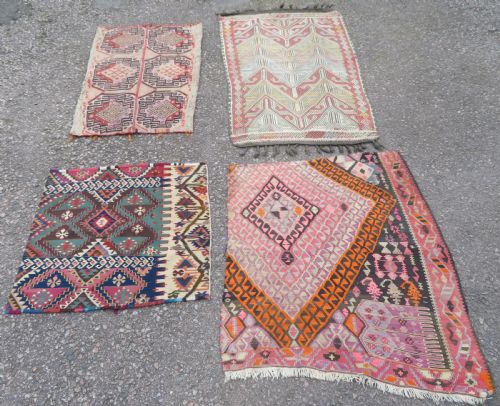
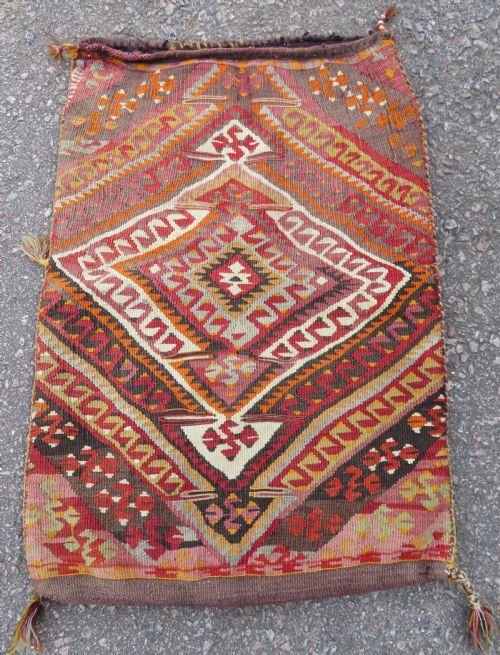
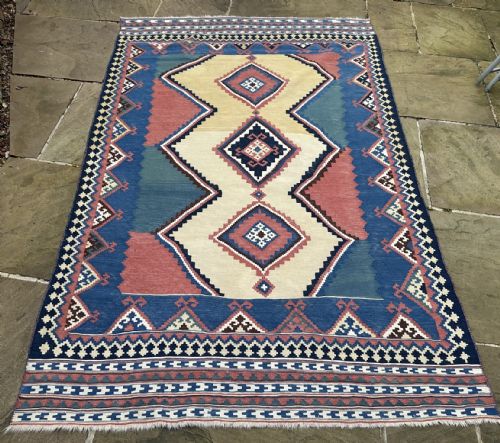
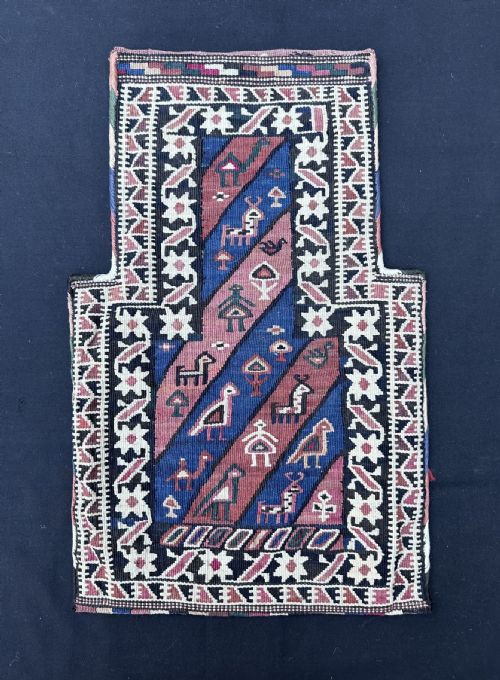


Antique Nomadic Flatweave
When you search for an antique nomadic flatweave, you enter a world of tribal utility textiles woven by pastoral groups across Persia, Central Asia, and the Caucasus.
Antique Nomadic Flatweave
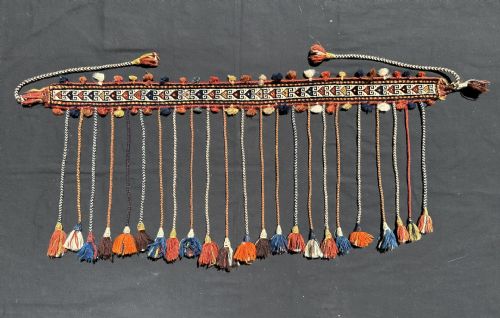
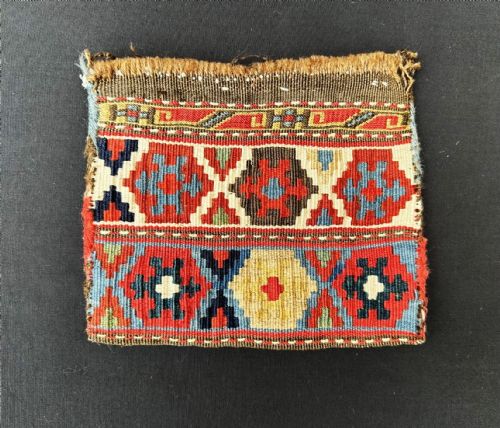
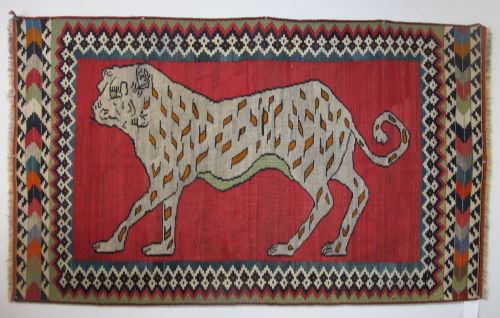
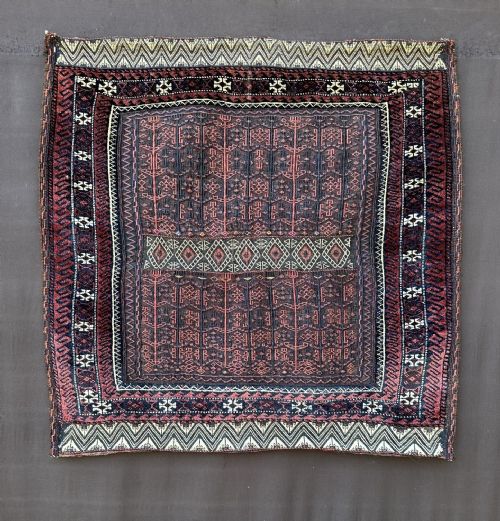
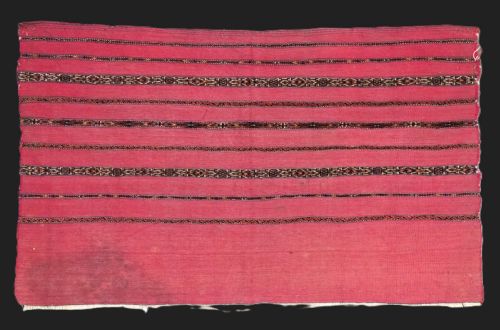
Buyers frequently encounter smaller formats such as chantehs, salt-bags, and mafrash panels alongside larger kilim rugs and sofres. The designs reflect the specific tribal heritage and regional weaving traditions of makers from regions like Fars, Kerman, Azerbaijan, and Khorassan, dating from the mid-nineteenth century through the early twentieth century.
The aesthetic is distinctly graphic, driven by the structural demands of flatweaving techniques where pattern and colour emerge directly from the warp and weft interlacing. These textiles offer an intimate connection to pastoral life, retaining the character of tribal weaving created for domestic utility.
Materials and construction
The construction relies heavily on hand-spun wool and occasionally cotton, sometimes supplemented by goat hair for durability in structural edges and base webs. Natural dyes provide the enduring palette, yielding rich tones that age with considerable depth across the surface of the weave.
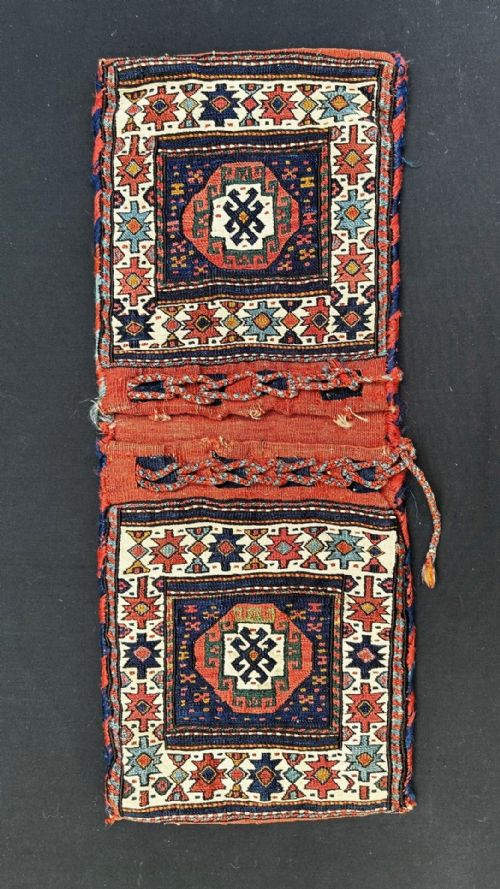
Weavers utilised various flatweave techniques, including slit-tapestry weave found in kilims and sofres, alongside intricate soumac wrapping on bags and trappings. Additional decorative elements occasionally incorporate silk and cowrie shells, enhancing specific ceremonial or utilitarian pieces.
Antique Nomadic Flatweave Retail Price Guide 2026
Typical asking prices for nomadic flatweave among the pieces listed under this phrase on Sellingantiques today, from the lower quarter to the upper quarter. They describe what is for sale here now, not the wider market.
Listings feature nomadic flatweaves dating from the mid-nineteenth century up to the nineteen-twenties, originating predominantly from Persian, Central Asian, and Caucasian tribal groups.
Distinctions in quality
Quality in these textiles rests upon the fineness of the weave, the structural integrity of the flatweave or soumac technique, and the handle of the wool. Tighter, more precise interlacings create sharper graphic definition in tribal motifs and ensure greater durability for everyday use.
The sophistication and saturation of the natural dye palette also dictate the standing of a piece, as well as the completeness and originality of tribal components such as backings, closures, and side cords on bags and trappings.
The Antique Nomadic Flatweave Glossary
- Sofre
- A spread or cloth used for sharing meals or handling dough in nomadic households. These flatweaves typically feature elongated formats with distinct border and field arrangements.
- Mafrash
- A large rectangular storage bag or chest panel used by nomadic tribes for bedding and household possessions during migration. They are frequently constructed in soumac or banded flatweave techniques.
- Soumac
- A brocade-like flatweaving technique where supplementary pattern wefts wrap around the warp threads before passing back, creating a textured, durable surface. This method appears frequently on finer antique bags and trappings.
- Chanteh
- A small tribal vanity bag or container used for personal possessions. These miniature pieces showcase concentrated tribal iconography in a compact format.
- Chuval
- A large storage bag produced by Turkmen groups, often featuring characteristic guls and fine weave structures. They formed an essential part of the nomadic bride's dowry.
Antique Nomadic Flatweave: Frequently Asked Questions
What is a nomadic flatweave?
A nomadic flatweave is a pileless textile woven by pastoral tribal groups for domestic and migratory utility rather than commercial export. These pieces include storage bags, animal trappings, dining cloths, and utility rugs.
Created using techniques like slit-tapestry and soumac, they display geometric and tribal motifs tied to specific regions across Persia, Central Asia, and the Caucasus.
How were tribal bags used?
Tribal bags served practical functions in nomadic tents, functioning as containers for salt, bread, personal items, and bedding during seasonal migrations. They were loaded onto pack animals or stacked inside the tent to organise household goods.
Their specific shapes and sizes, such as salt-bags or mafrash panels, directly reflected their intended storage purpose within the camp.
How do I care for an antique flatweave?
Care for an antique flatweave involves gentle treatment, regular light vacuuming without a rotating brush, and avoiding direct, prolonged exposure to harsh sunlight. Using a quality underlay helps prevent slipping and reduces friction against hard flooring.
Professional textile conservation and cleaning should be utilised when necessary, avoiding harsh chemical treatments that might affect natural dyes.
How are tribal regions identified?
Identifying tribal origins depends on analysing the specific combination of structural motifs, colour palettes, weave techniques, and wool characteristics. Different confederacies like the Qashqai, Shahsevan, and Afshar employed distinct design vocabularies and structural quirks.
Comparative study of known tribal pieces helps connect specific flatweaves to regions such as Fars, Azerbaijan, or Kerman.