
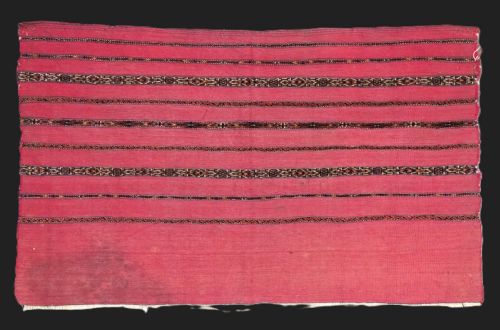


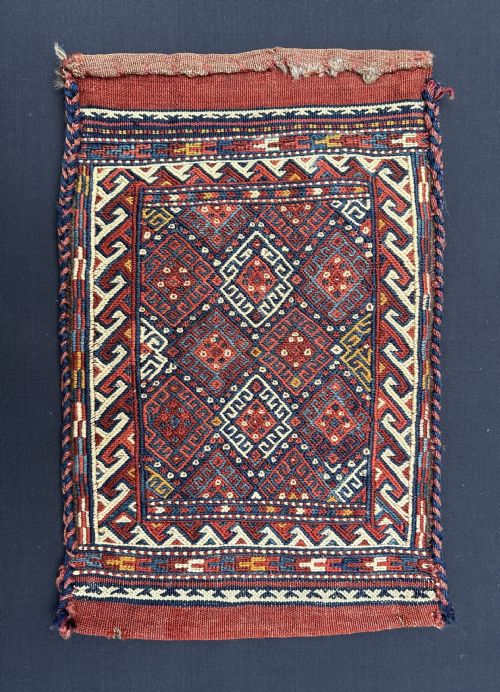
Antique Nomadic Bagface
An antique nomadic bagface carries the dense tribal iconography of weavers working far from permanent towns.
Antique Nomadic Bagface
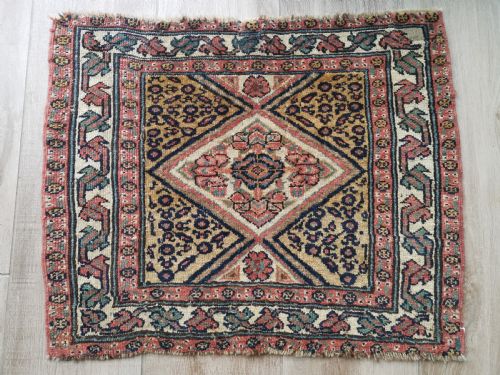
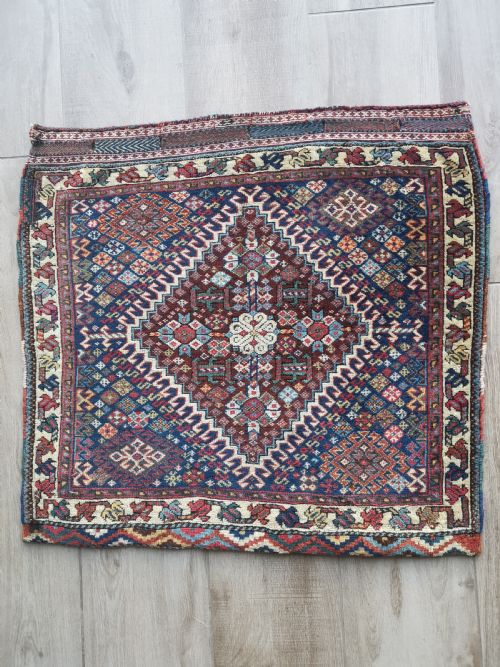
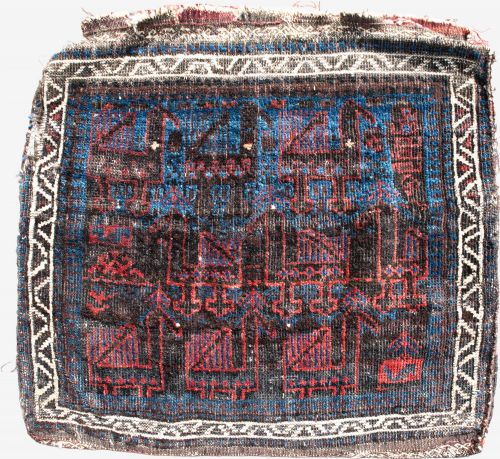
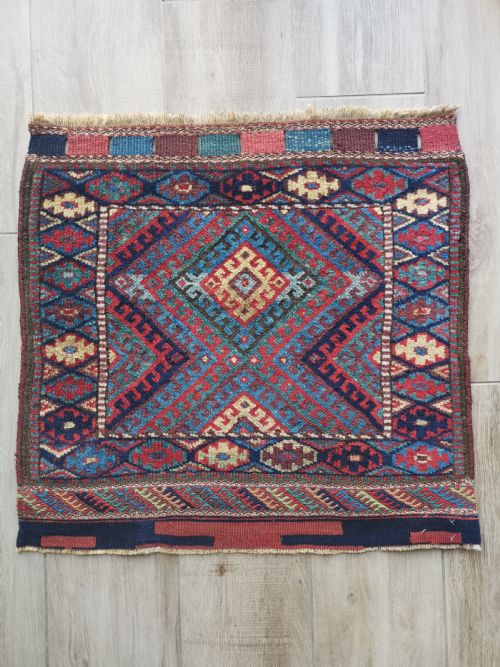
An antique nomadic bagface represents the front panel of a utility sack once used for transport or storage by pastoral groups. When a buyer searches for an antique nomadic bagface, they encounter portable textiles woven by Persian, Turkmen, and Caucasian tribes during the nineteenth and early twentieth centuries. These fragments and complete faces display the distinct structural designs used for keeping household goods or riding gear.
The pieces on this page span several specific tribal groups, including Baluch, Qashqai, Jaf, Khamseh, Shahsevan, and various Turkmen branches such as Tekke, Ersari, and Yomut. Format types include torba faces, chuval faces, and bird bags produced across regions from north-east Persia to Turkmenistan and Azerbaijan. Each regional group employed particular formats suited to domestic utility and camel or horse transport.
How they were made
Weavers constructed these pieces predominantly from hand-spun wool and natural dyes, occasionally incorporating cotton or goat hair for structural support and dark outlines. The pile wool provides a tactile density, while foundation threads maintain the tension necessary for geometric precision. Natural dyestuffs yield deep reds, indigos, and earth tones that mellow gradually across decades.
The weaving technique relies on tight knotting and structured flatweave backs or borders, which ensured durability during nomadic migration. Turkmen and Persian weavers balanced high knot counts with sturdy warps to withstand constant handling and suspension inside tents or on pack animals. These methods produced robust textiles intended to function under harsh field conditions.
The listings span the nineteenth and early twentieth centuries, featuring wool, cotton, goat hair, and natural dyes across Turkmen, Persian, and tribal nomadic styles.
What varies in quality
Quality rests upon the fineness of the weave and the saturation and clarity of the natural dyes. Dense knotting allows complex medallion patterns and guls to emerge with sharp definition, separating utilitarian pieces from exceptional dowry weaving. Furthermore, the vibrancy and integrity of the dye palette dictate the visual impact of the surface.
Structural preservation and completeness also separate pieces across the range. Surviving bagfaces that retain their original borders, secured edges, and uncompromised wool pile demonstrate superior care and material strength. The precision of tribal layout and the sophistication of secondary motifs reveal the skill of the individual weaver.
The Antique Nomadic Bagface Glossary
- Bagface
- The decorative front panel of a nomadic storage sack, preserved after the plain back panel wore away or was removed.
- Torba
- A small Turkmen storage bag format, typically wider than it is tall, used inside the yurt for household possessions.
- Chuval
- A large Turkmen tent bag utilised for bedding and heavy storage during seasonal migrations.
- Gul
- A primary octagonal medallion repeated across Turkmen tribal weavings to denote specific clan lineages.
- Beshir
- A regional style associated with Ersari Turkmen weavers, often featuring large-scale botanical or ikat-inspired motifs.
Antique Nomadic Bagface: Frequently Asked Questions
What were nomadic bagfaces used for?
Nomadic tribes utilised these bags for storing household goods, clothing, and blankets inside tents or for transporting provisions during migrations. Families hung them against lattice walls or loaded them onto pack animals.
Over time, the decorative front panels survived independently from plain utility backs because collectors prized their intricate tribal designs and fine woolwork.
How do I identify different tribal styles?
Tribal attribution depends on specific colour palettes, structural formats, and repeating geometric motifs unique to each group. For instance, Turkmen pieces feature distinctive guls, while Baluch works often incorporate bird or tree designs.
Studying the border arrangements and secondary filler ornaments helps clarify whether a piece originates from Persian, Caucasian, or Turkmen weavers.
Are these pieces fragments or complete bags?
Many examples survive as single bagfaces because the sturdy front panel endured while the plain back fabric deteriorated through heavy use. Some listings retain original sides, upper webs, or attached backs.
Buyers encounter both cut fragments and complete structural faces depending on how the textile was preserved before entering the market.
How should I care for an antique bagface?
These textiles require gentle handling, protection from direct sunlight, and occasional light vacuuming with a low-suction attachment. Keeping them away from damp environments preserves the natural wool pile.
Many collectors mount smaller bagfaces securely on fabric-covered boards for wall display to prevent stretching and distribute weight evenly.