




Antique Nocturnal Oil Painting
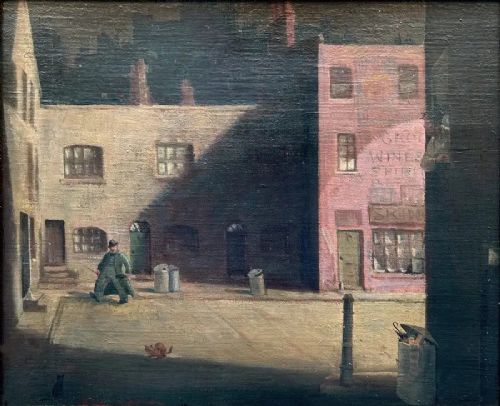
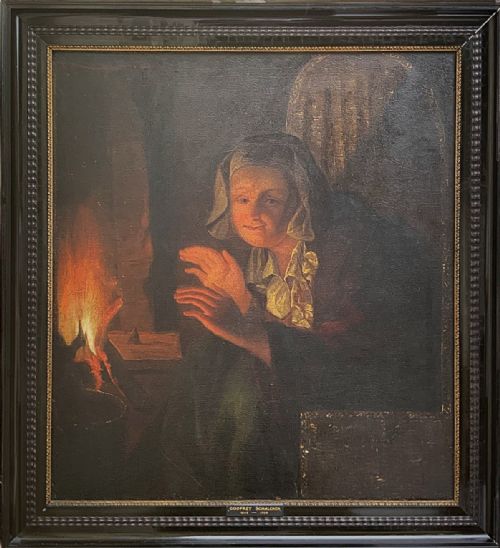
An antique nocturnal oil painting captures the quiet drama of moonlight on water, ruined castles, and country lanes.
Antique Nocturnal Oil Painting
When you search for an antique nocturnal oil painting, you encounter works spanning the nineteenth and twentieth centuries, including Regency and Victorian examples. These canvases and wood panels capture moonlit landscapes, maritime scenes, and architectural subjects in darkness.
The pieces on this page range from Dutch Golden Age interpretations and Scottish Romanticism to Impressionism and the Hudson River School. You find coastal views, winter country landscapes, and campfires rendered in deep shadow and pale light.
How they were made
The makers applied oil paint to canvas and wood panel supports, building up dark tonalities with luminous highlights to suggest moonlight. Many works incorporate gilt and gesso wood frames that complement the shadowed palettes of the art.
Techniques vary from the tight brushwork of Dutch School followers to the looser handling found in maritime impressionism and post-impressionism. Artists used subtle gradations of tone to define nocturnal forms without losing the depth of shadow.
Several artists spent their nights painting moonlight on the Medway and Loch Ness.
What varies in quality
Quality rests in the handling of light and shadow, distinguishing works with atmospheric depth from those with flat dark passages. The ability to render the pale, convincing glow of moonlight against a night sky marks the stronger artist.
The condition of the canvas, panel, and original gilt wood frame influences the overall integrity of the piece. Brushwork control in complex subjects such as shipping on water or architectural ruins further separates standard decorative works from accomplished fine art.
Francisco Sancha·William Samuel Horton·George Cole·Owen Bowen·Hubert Thornley·Josef Theodor Hansen·Anton Pick
The Antique Nocturnal Oil Painting Glossary
- Oil on Canvas
- Pigment mixed with drying oil applied to a woven fabric support. This combination allowed artists to create rich, layered nocturnal scenes.
- Wood Panel
- A rigid wooden support used by painters before and alongside canvas. Panels often preserve fine detail in early or classical compositions.
- Gilt Wood
- Wood carved and coated with gold leaf or gold paint to create a decorative frame. These frames surround many nineteenth-century paintings.
- Impressionism
- A style focusing on the visual impression of the moment, particularly shifting light and colour. This approach appears in several moonlight marine and landscape scenes.
- Gesso
- A paint mixture consisting of a binder mixed with chalk or gypsum. It prepared wood panels and frames before gilding or painting.
Antique Nocturnal Oil Painting: Frequently Asked Questions
What subjects appear in nocturnal paintings?
These works typically show moonlight on landscapes, seascapes, rivers, and architectural ruins. Common motifs include shipping vessels, castles, churches, and campfires.
Artists also recorded winter country scenes and coastal villages under the cover of night. Each subject relies on the contrast between dark shadows and pale moonlight.
Which periods are represented?
The selection includes pieces from the Regency and Victorian eras, alongside later nineteenth and twentieth-century works up to the nineteen-sixties. Earlier Dutch influences also inform several compositions.
Dates span from seventeenth-century interpretations up to mid-twentieth-century examples. Stylistic shifts range from classical Dutch School methods to impressionist techniques.
What materials support these artworks?
Painters utilised oil paint on canvas and wood panels. These mediums allowed for the deep tonalities necessary to render night scenes.
Many pieces retain their period gilt wood frames finished with gesso. The combination of oil paint and framed wood creates a complete historical object.
How do I care for an oil painting?
Keep the artwork away from direct sunlight and extreme humidity fluctuations. Stable environmental conditions protect both the canvas and the wooden support.
Dust the surface gently with a soft, dry brush and avoid chemical cleaners. Consulting a professional restorer ensures the conservation of the paint layer.