




Antique Needlework Lamp Table
An antique needlework lamp table combines a functional sewing station with a bedside or parlour stand, offering refined storage alongside a surface for illumination.
Antique Needlework Lamp Table
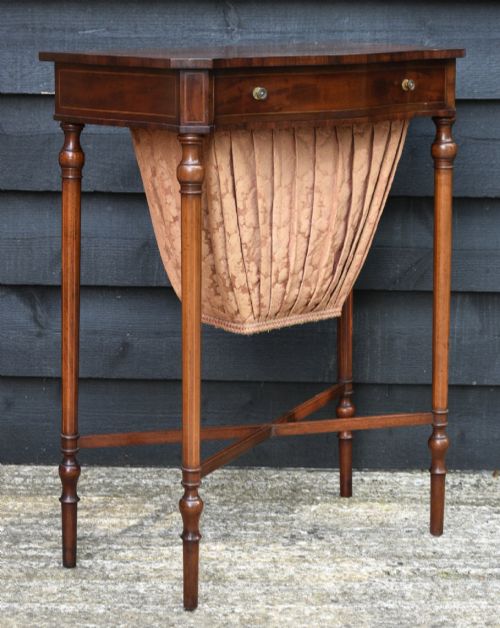
An antique needlework lamp table is a versatile small furniture piece designed to hold a light while concealing sewing materials or textiles within a fitted compartment beneath the top. These pieces frequently appear in forms such as sewing tables, occasional tables, side tables, work tables, and wine tables.
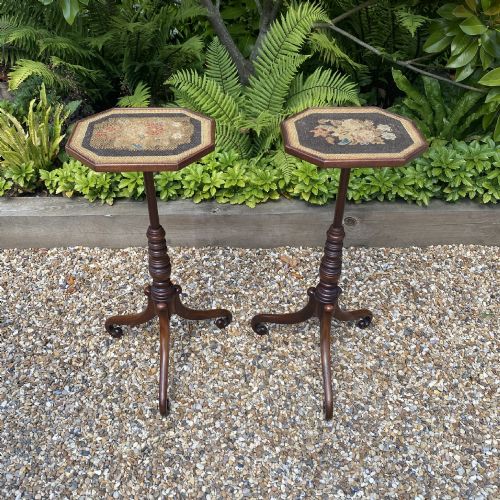
The selection ranges from early nineteenth-century Regency and Georgian examples to Victorian and Edwardian pieces, spanning mahogany, rosewood, walnut, and burr walnut. Buyers encounter variations including drop leaf designs, trumpet bodies, cradle bases, and octagonal tops.
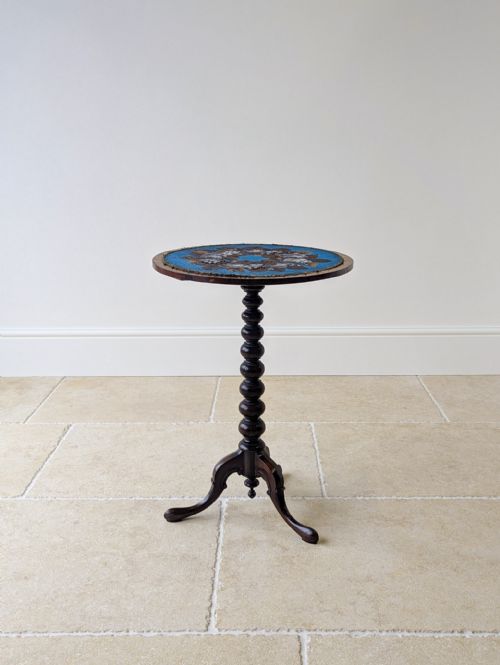
Makers integrated textile components such as beadwork, needlepoint, and silk baskets directly into the furniture structure. This dual purpose serves collectors seeking both display utility and period craftsmanship.
How they were made
Cabinetmakers utilised dense hardwoods such as mahogany, rosewood, walnut, and burr walnut for the primary frames and surfaces, often selecting figured veneers to catch the light. Timber selection dictated the structural stability of slender tripod legs, lyre ends, and pedestal bases.
Metalwork details including brass inlays, hinges, and castors provided functional accents and mobility to freestanding forms. Textile elements like silk, beadwork, and needlepoint were integrated into hanging baskets or inset tops with precise hand-stitching.
Antique Needlework Lamp Table Retail Price Guide 2026
Typical asking prices for needlework lamp table among the pieces listed under this phrase on Sellingantiques today, from the lower quarter to the upper quarter. They describe what is for sale here now, not the wider market.
Listings feature woods including mahogany, rosewood, walnut, and burr walnut across periods from Georgian and Regency to Victorian and Edwardian.
What varies in quality
The calibre of timber preparation and veneer matching distinguishes finer examples from simpler workshops, particularly in the use of burr walnut and figured mahogany. Superior pieces exhibit seamless grain continuity across moving parts and drop leaves.
The integrity of the internal sewing compartments and the preservation of original textile elements, such as beadwork and silk baskets, dictate the standing of an individual table. Structural refinement in pedestal turnings and brass inlay execution further separates standard production from exceptional cabinet work.
Gillows
The Antique Needlework Lamp Table Glossary
- Trumpet table
- A form featuring an octagonal or circular body that flares outwards toward the base, resembling the bell of a musical instrument. This shape became popular during the Victorian period for sewing tables.
- Drop leaf table
- A table with hinged flaps on either side that can be raised to extend the surface area or lowered when space is restricted. These flaps are supported by swing brackets.
- Lyre end
- A furniture support shaped in the stylized form of a classical Greek lyre instrument. It frequently appears on Regency pedestals and side tables.
- Beadwork
- Decorative hand-stitching using small glass or ceramic beads to create pictorial or geometric patterns. It appears on Victorian table inserts and textile panels.
Antique Needlework Lamp Table: Frequently Asked Questions
What is an antique needlework lamp table used for?
These tables served primarily as dual-purpose furniture for domestic parlours and bedrooms during the nineteenth and early twentieth centuries. The surface held a reading lamp or candlestick while the internal compartment stored thread, needles, and textile projects.
Today, buyers utilise them in living spaces as compact side or occasional tables that retain historical character and concealed storage. The enclosed baskets or boxes suit the containment of small contemporary items.
How do I distinguish between Regency and Victorian examples?
Regency tables frequently feature rosewood or mahogany timbers, brass inlay, lyre ends, and classical proportions dating from the early nineteenth century. Cabinet work from this era emphasises clean architectural lines and restraint.
Victorian pieces often display burr walnut or heavier mahogany constructions, trumpet bodies, cradle bases, and elaborate carved details. The aesthetic shifts toward curved silhouettes and prominent grain patterns by the mid to late nineteenth century.
Are the sewing baskets usually original?
Many surviving tables retain their original silk, fabric, or wooden drop bags, though delicate textiles frequently required restoration over time. The presence of period-appropriate needlepoint or beadwork adds historical context to the piece.
Buyers examine the mounting points beneath the table frame to understand how the textile component integrates with the wooden housing. Replacements are common due to the fragile nature of vintage silks and fabrics.
Can these tables support a modern lamp?
The structural design of the tops and central pedestals provides adequate stability for standard table lamps and decorative objects. Solid hardwood construction ensures the surface bears weight safely.
Care should be taken with drop leaf mechanisms or hinged tops to ensure weight rests evenly across fixed structural supports rather than moving leaves.