

Antique Needlepoint Seating
Antique needlepoint seating brings historical hand-worked textiles together with timber frames, offering functional chairs and stools spanning several centuries.
Antique Needlepoint Seating
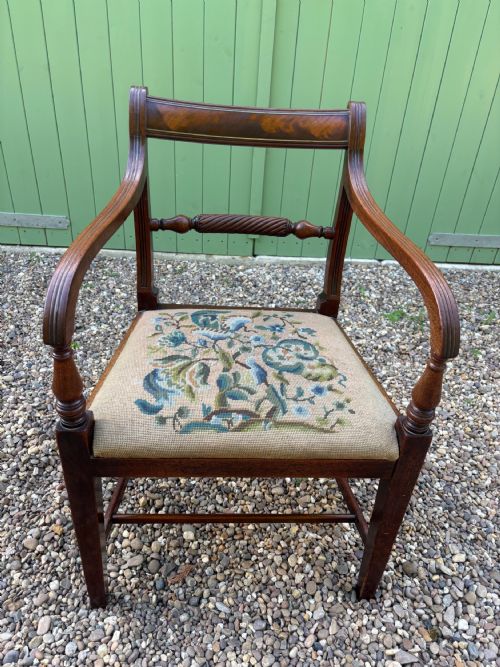
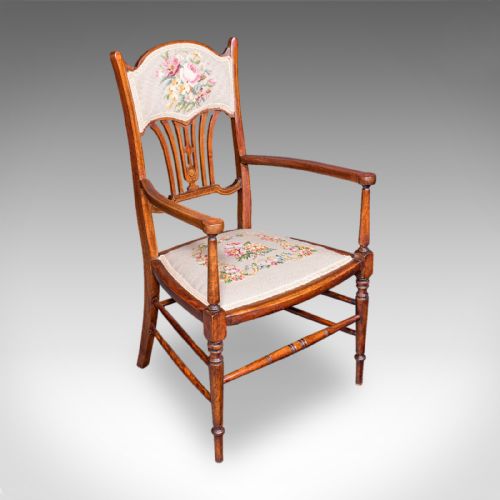
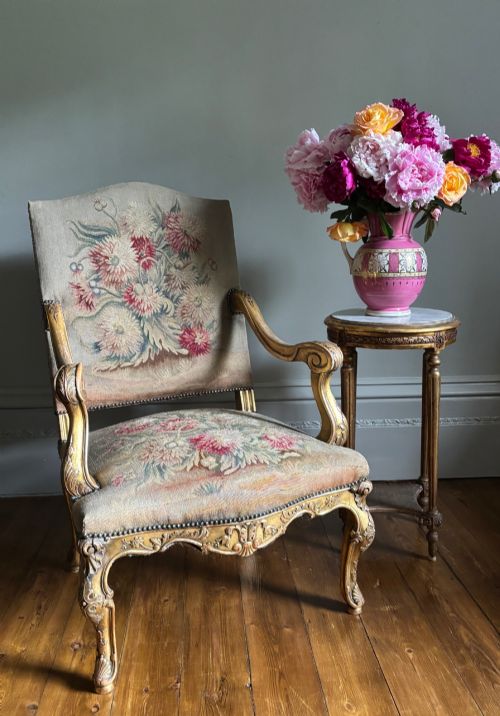
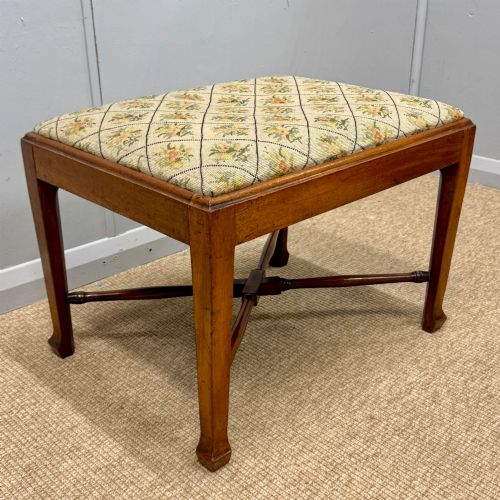
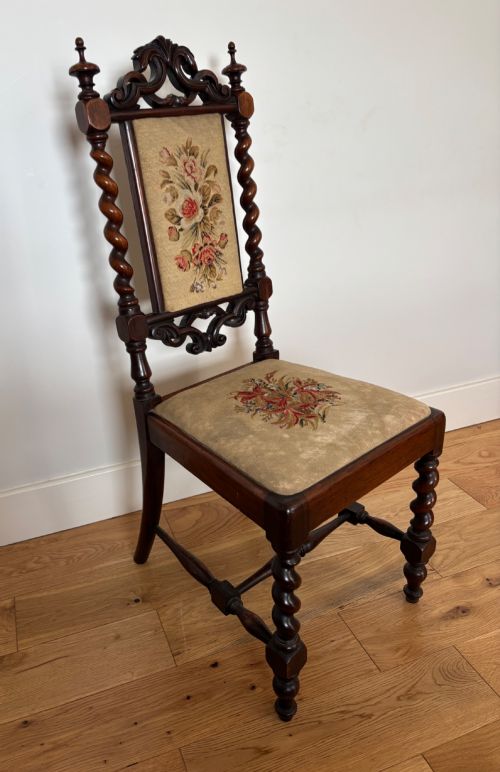
Antique needlepoint seating encompasses armchairs, side chairs, dining chairs, stools, and piano stools spanning the eighteenth, nineteenth, and early twentieth centuries. These pieces combine wooden frames in mahogany, walnut, rosewood, beech, or oak with wool tapestry and textile upholstery.
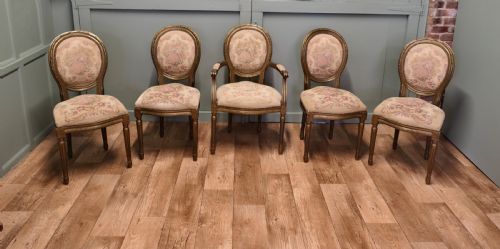
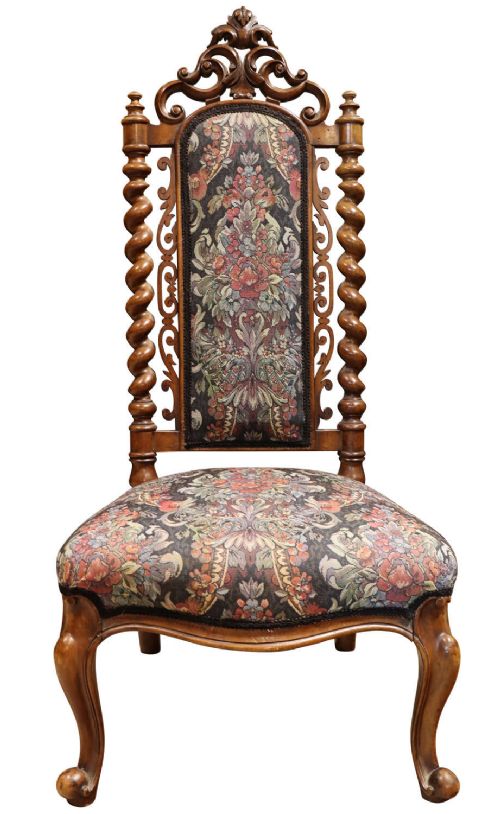
The Victorian period contributes heavily to the available selection, alongside Georgian, Regency, Edwardian, and French styles such as Louis XVI and Regence. Buyers frequently encounter nineteenth-century walnut and mahogany examples alongside revival pieces and French salon suites.
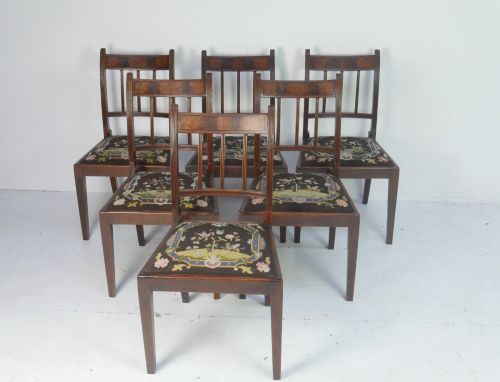
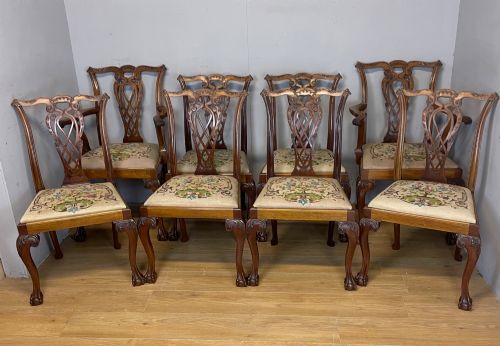
Object types range from single occasional chairs and dressing table stools to sets of dining chairs and matching pairs. Frames exhibit diverse regional characteristics, including English cabinetmaking and French decorative carving.
Materials and Construction
Frames are constructed from dense hardwoods like mahogany, walnut, and rosewood, joined using traditional cabinetmaking techniques suited to each period. Beech and oak also appear, particularly in provincial or specific stylistic pieces.
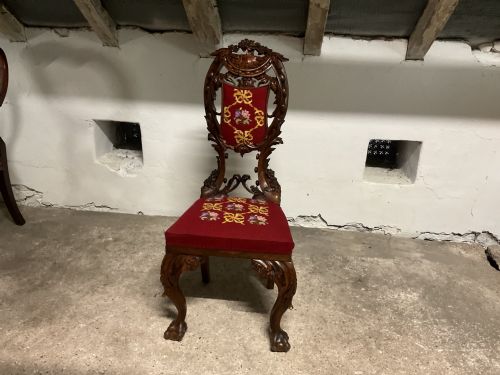
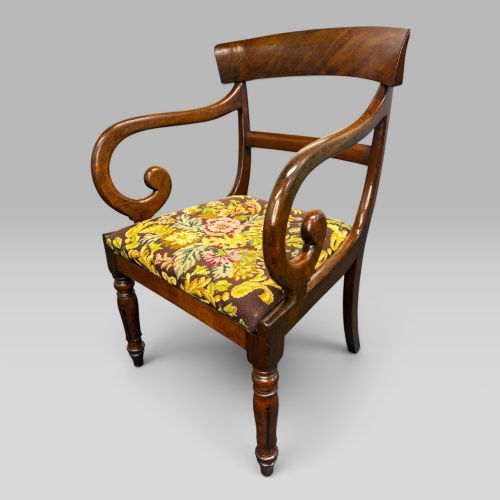
Upholstery relies on hand-worked needlepoint, tapestry, and wool textiles stretched over seat pads, drop-in frames, or open-arm panels. Decorative elements incorporate carved woodwork, brass mounts, or ormolu depending on the stylistic influence.
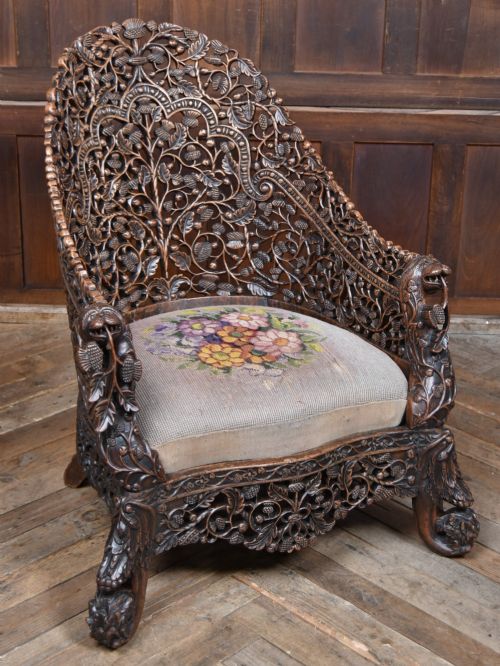
A Burmese thistle chair brings unexpected botanical carving into the nineteenth-century seating lineup.
Craftsmanship and Preservation
Quality rests in the precision of the timber carving, the structural integrity of the frame joints, and the fineness of the needlepoint work. Superior examples display crisp joinery and hand-stitched tapestry panels with dense, well-preserved wool threads.
The relationship between the frame and its upholstery influences overall merit, particularly where original or early needlepoint survives intact on period frames. Finer pieces demonstrate harmonious proportions and uncompromised structural timber.
Charles Tozer·Warings·Waring and Gillow·Liberty and Co
The Antique Needlepoint Seating Glossary
- Needlepoint
- A form of canvas work embroidery executed with wool or silk yarn, commonly used for historical chair upholstery. It provides durable decorative surfaces on period seats.
- Prie Dieu
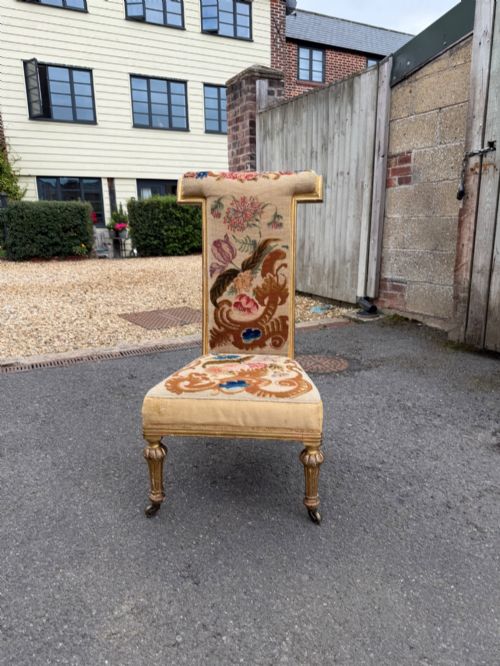
- A devotional chair featuring a low seat and an elevated upper rail designed for kneeling and prayer. These Victorian pieces often retain original tapestry upholstery.
- Petit Point
- A fine needlepoint stitch worked over a single canvas thread, allowing intricate pictorial detail. It distinguishes higher quality upholstery panels on antique armchairs.
- Drop-in Seat
- A removable wooden frame upholstered separately and dropped into a recess in the chair rails. This construction method simplifies reupholstering antique seating.
- Cross Stretcher
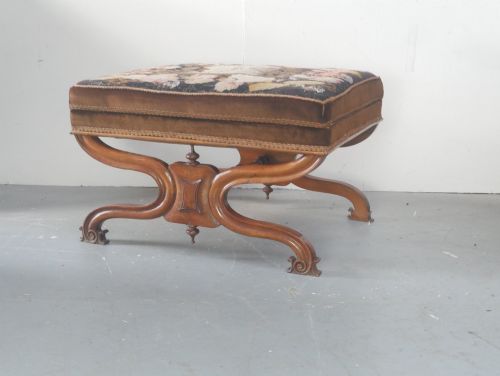
- A structural timber brace connecting the legs of a chair or stool in an X-shape for added stability. It is frequently found on eighteenth and nineteenth-century seating forms.
Antique Needlepoint Seating: Frequently Asked Questions
Can these chairs be used daily?
Most antique seating is structurally sound for regular use, provided the frame joints remain tight and secure. Walnut and mahogany frames offer sufficient strength for contemporary sitting.
Delicate needlepoint panels require careful maintenance and protection from excessive direct sunlight to prevent wool degradation over time.
What is a piano stool with needlework?
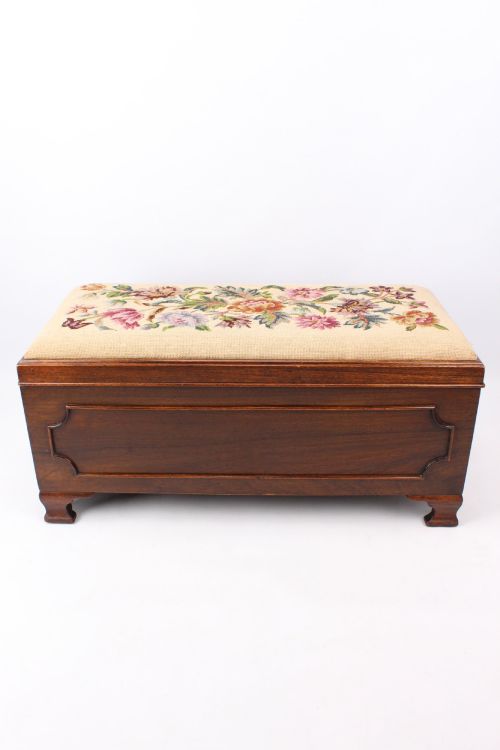
Piano stools are adjustable or stationary seats designed for keyboard players, often featuring revolving mechanisms or box compartments for sheet music. The tops are upholstered in durable wool tapestry or needlepoint.
These pieces date frequently from the Regency and Victorian periods, matching the domestic musical habits of the nineteenth century.
How do French styles differ from English ones?
French seating from the eighteenth and nineteenth centuries incorporates painted finishes, giltwood, kingwood parquetry, and ornate ormolu mounts. The carved frames often follow Louis XVI or Regence design canons.
English equivalents tend to rely on exposed mahogany, walnut, or rosewood grains with architectural or revival carving traditions.