


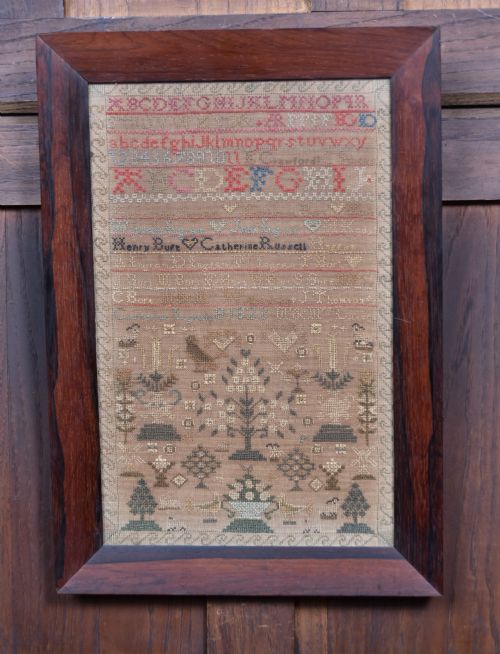


Antique Needlepoint Sampler
An antique needlepoint sampler is a textile record of youthful patience, offering intimate glimpses into domestic history through alphabet, motif and map.
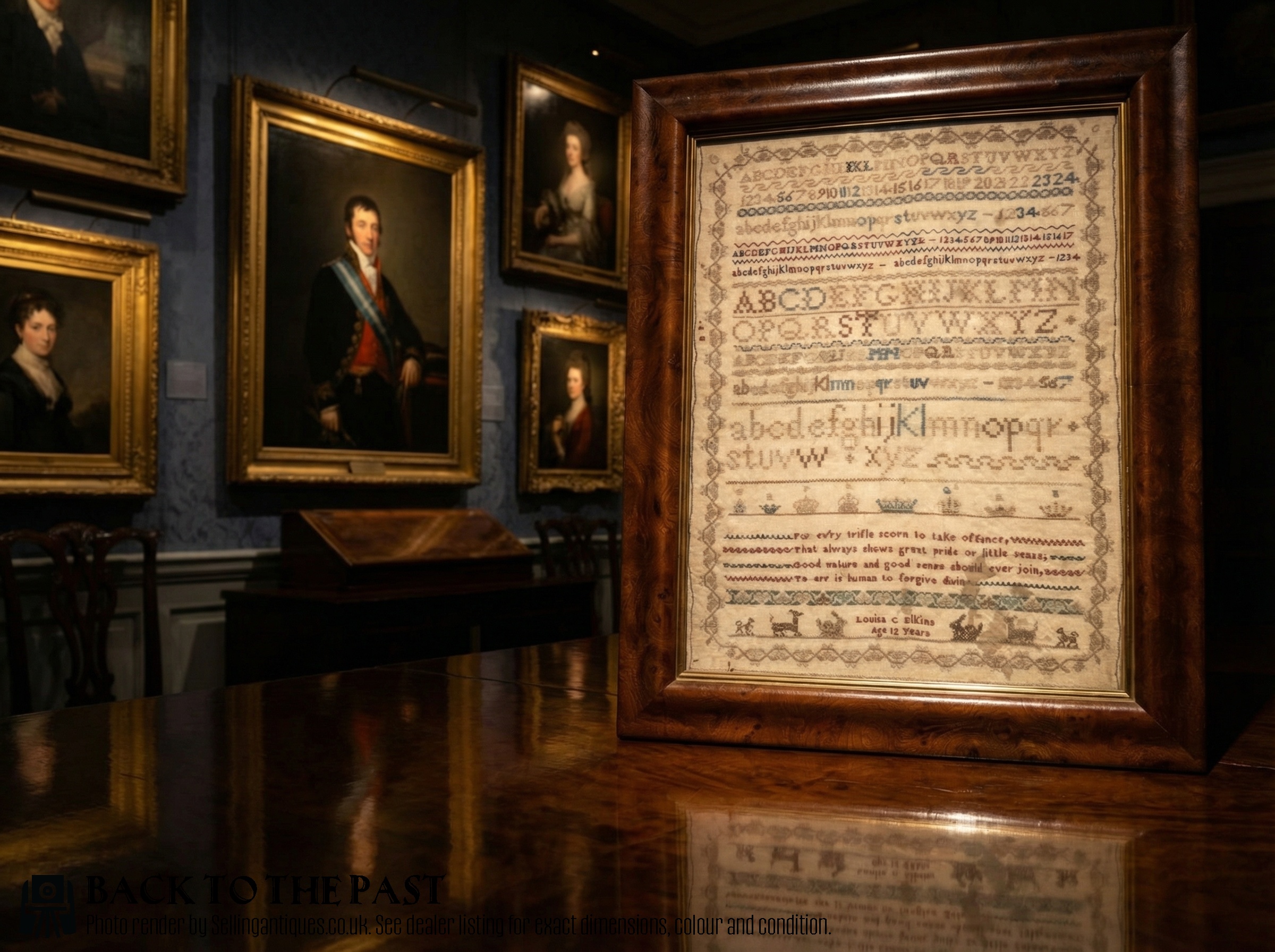
Antique Needlepoint Sampler
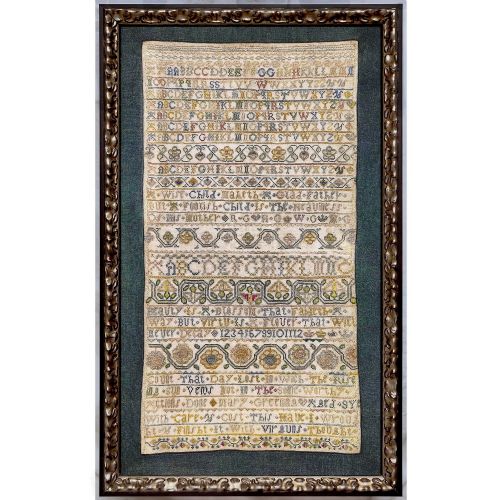
When you search for an antique needlepoint sampler, you encounter framed textile panels created to demonstrate stitch proficiency, literacy and household management. These works range from simple rows of alphabets and numerals executed by young girls to large pictorial scenes and detailed cartographic maps.
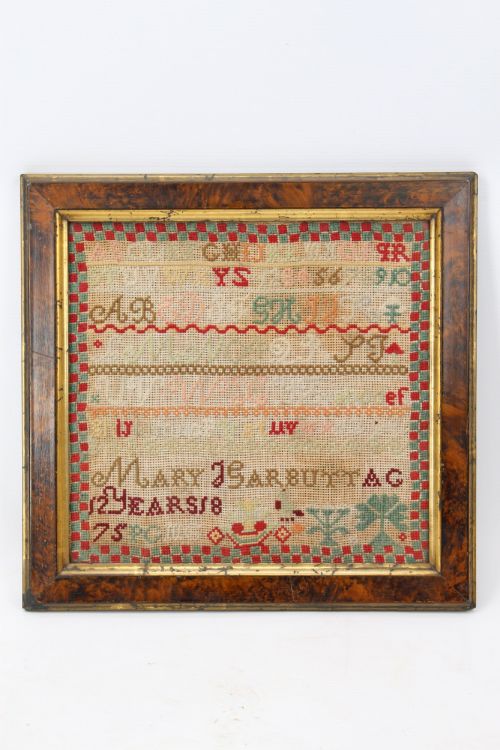
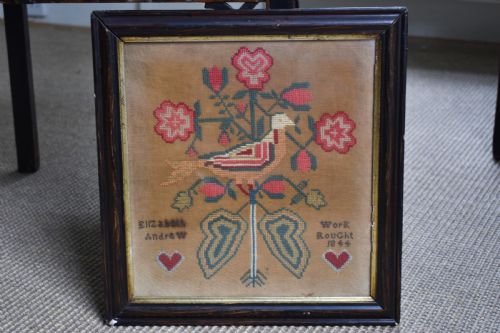
The versions most commonly met on this page date from the eighteenth and nineteenth centuries, spanning Georgian and Victorian periods. Makers often recorded their name, age, and completion date, transforming a standard needlework exercise into a personal historical document.
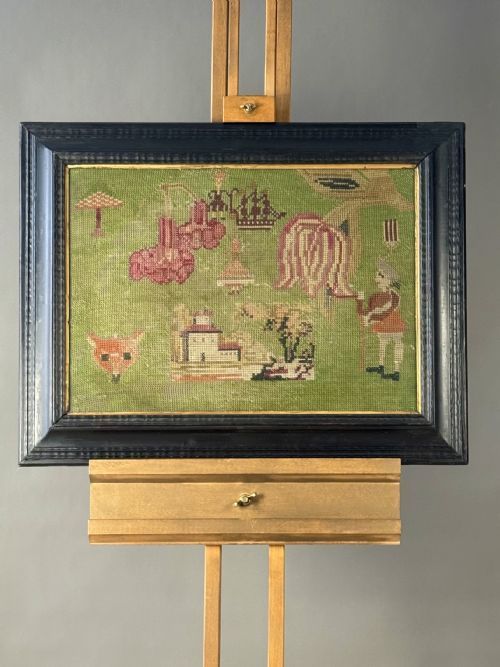
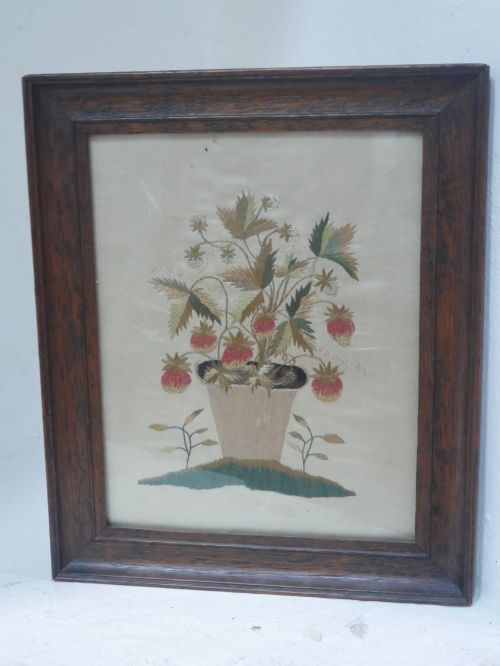
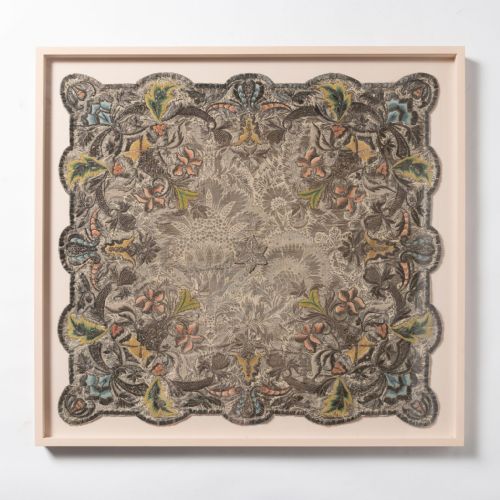
Beyond traditional band samplers, the selection includes pictorial needlework pictures depicting religious figures, botanical studies, and narrative scenes. Many retain their original wood frames and glass protection, preserving the textile surfaces for centuries.
How They Were Made
Needlework samplers rely on a foundation of plain-woven linen fabric, which provided a stable grid for counting threads and executing precise stitches. Makers worked across this ground using wool, silk thread and standard thread to build up dense, textured surfaces.
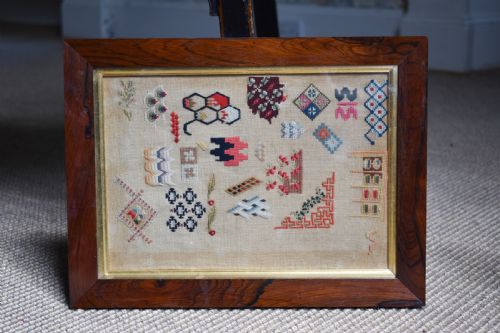
Stitching techniques varied from basic cross-stitch and eyelet holes to complex gros point needlework and decorative band patterns. Silk floss appeared in specific Georgian examples to add a subtle sheen to floral motifs and lettering.
Completed textiles were typically mounted onto stretchers and housed behind glass within wood frames to protect the delicate fibres from dust and handling. This framing process often preserved the original colours of the wool and silk threads against fading.
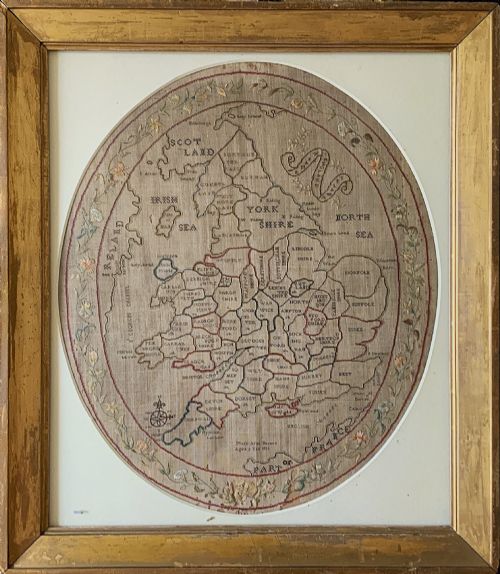
One young maker stitched a detailed map of England and Wales while another recorded a stray stitch error with complete candour.
What Varies in Quality
Quality in these textiles rests upon the regularity of the stitching and the complexity of the design layout. Finer examples display uniform tension across every letter and motif, whereas simpler pieces show minor stitch errors and uneven spacing.
The ambition of the subject matter distinguishes standard schoolroom exercises from exceptional needlework pictures. Map samplers, narrative illustrations and detailed botanical studies require superior planning and a wider repertoire of stitches.
Original condition and preservation contribute significantly to the standing of a piece. Examples that retain vivid wool and silk colours, clear maker inscriptions and period wood frames hold greater visual coherence.
The Antique Needlepoint Sampler Glossary
- Band sampler
- A narrow horizontal strip of various repeating embroidery stitches and patterns. These early formats allowed young makers to practice different techniques on a single length of linen.
- Cartographic sampler
- A needlework map featuring geographical boundaries, countries, and counties. Young makers stitched these geographical exercises to demonstrate both needle proficiency and academic knowledge.
- Gros point
- A coarse counted-thread embroidery stitch worked on canvas or linen mesh. This technique creates a durable, textured surface often used for pictorial scenes and larger framed panels.
- Silk floss
- Unspun or loosely twisted silk fibres used for embroidery. This material imparts a high lustre and smooth finish to specific motifs within Georgian and Victorian works.
- Needlework picture
- A pictorial textile panel designed primarily for wall display rather than stitch demonstration. These works depict specific subjects such as landscapes, animals, or religious narratives.
Antique Needlepoint Sampler: Frequently Asked Questions
How old is my sampler?
Many samplers include embroidered dates and the maker's age, which provide a precise point of origin. Stylistic clues such as lettering fonts, framing materials, and specific motif choices help narrow down the period when dates are absent.
Eighty-year spans in Victorian production mean that costume details and frame construction often assist in determining whether a piece belongs to the early nineteenth century or the later decades.
Who made these textiles?
Young girls working in dame schools, boarding academies or domestic households created the majority of these pieces as part of their education. Stitching alphabets and religious verses formed a standard part of upbringing for daughters of prosperous families.
Makers frequently embroidered their names, ages, and occasionally the name of their school or location directly into the lower margin of the linen.
How should I hang my sampler?
Display textiles away from direct sunlight to prevent the silk and wool threads from fading over time. Maintain stable indoor humidity levels to protect both the fragile linen ground and the antique wood frame.
Ensure the piece hangs securely using appropriate fixings on the wall, avoiding areas near heat sources that might dry out the original organic materials.
Why do some pieces show errors?
Makers were frequently children learning complex techniques, so minor counting mistakes and irregular letter spacing occurred naturally during the process. These intentional or uncorrected miscalculations reflect the authentic human effort behind each classroom exercise.
Stitch errors often help authenticate an antique piece against modern reproductions, demonstrating the genuine trial and error of a young maker at work.