



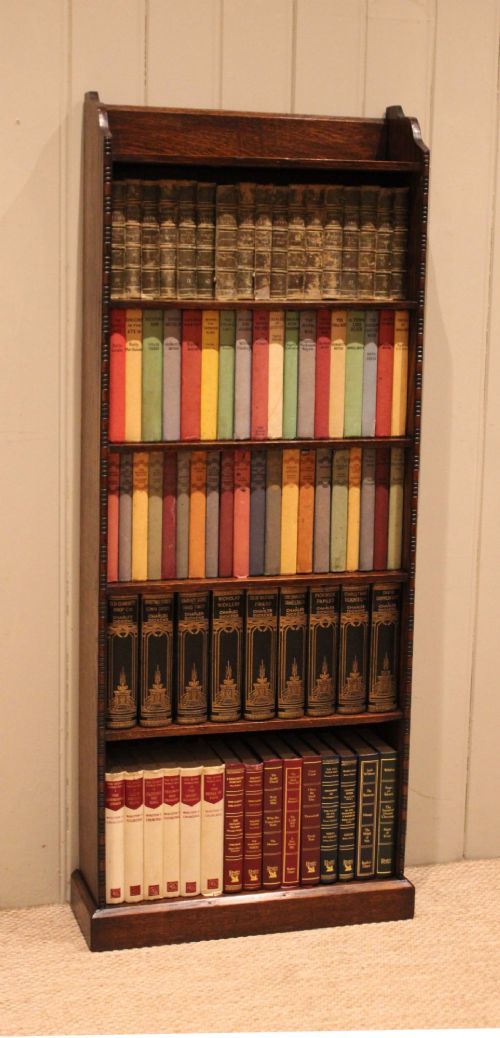
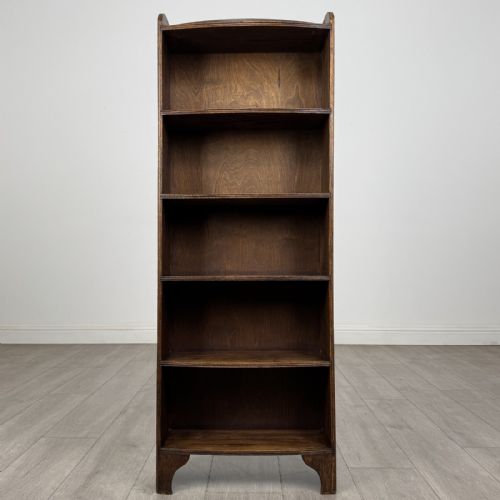
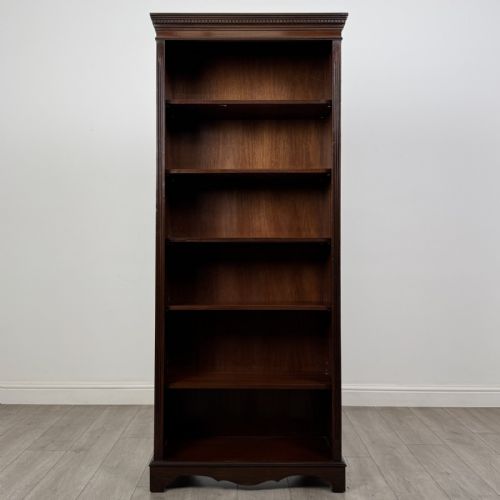
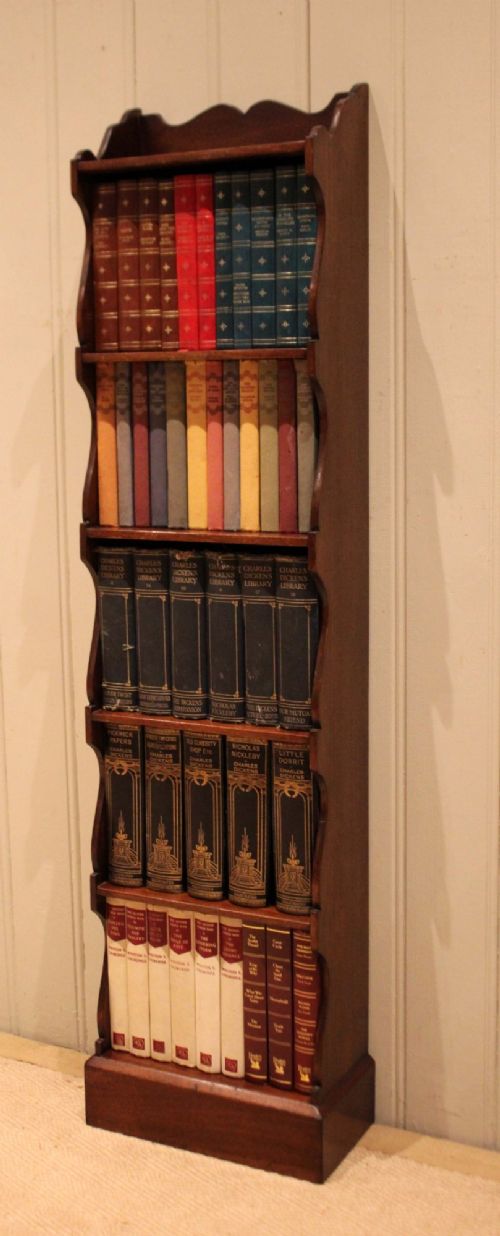
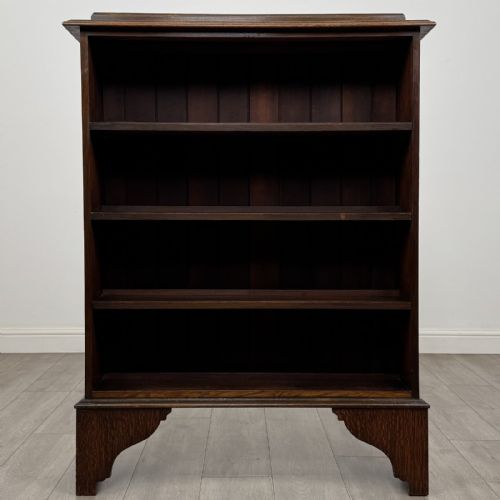
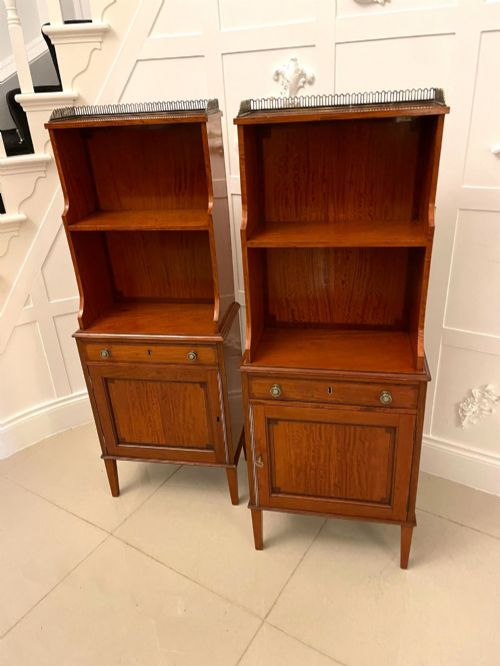
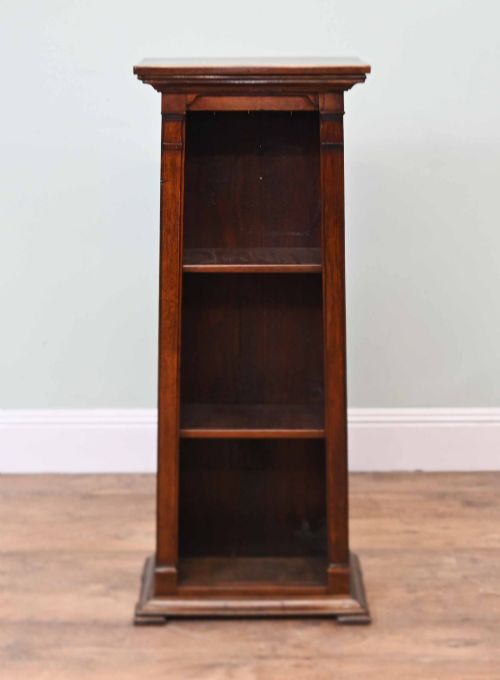
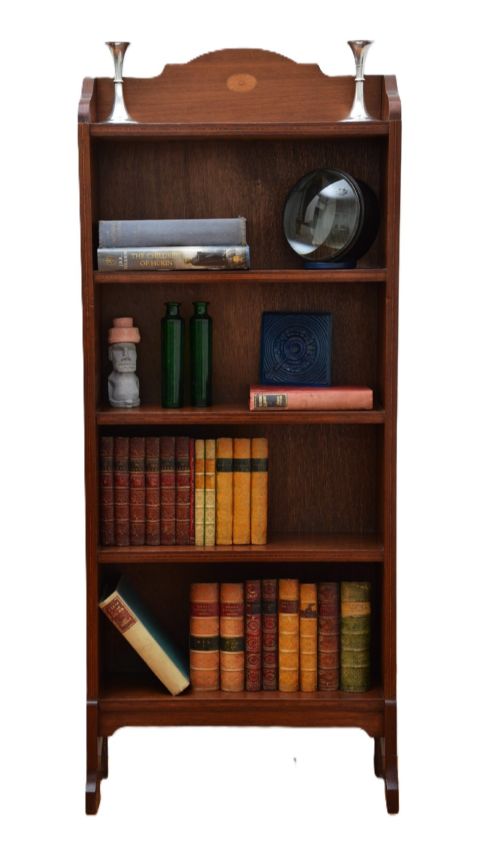
Antique Narrow Open Bookcase
An antique narrow open bookcase gives tight floor plans a place for volumes without closing in the walls.
Antique Narrow Open Bookcase
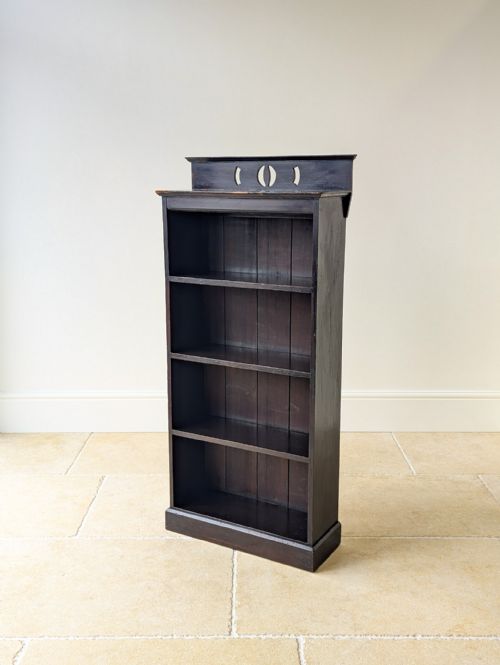
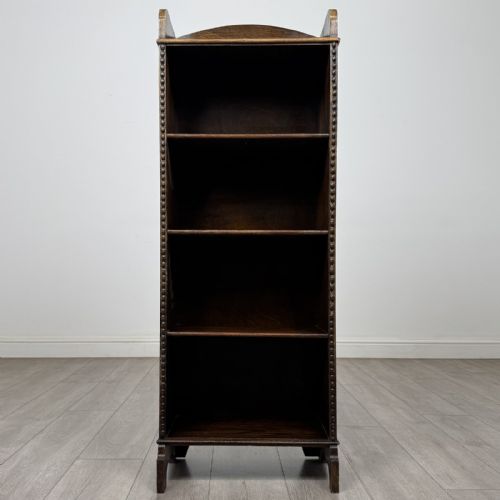
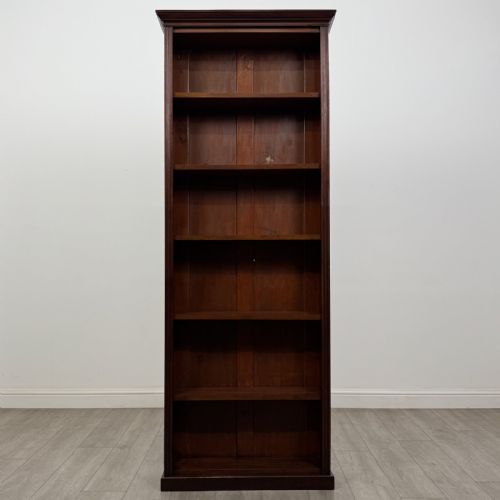
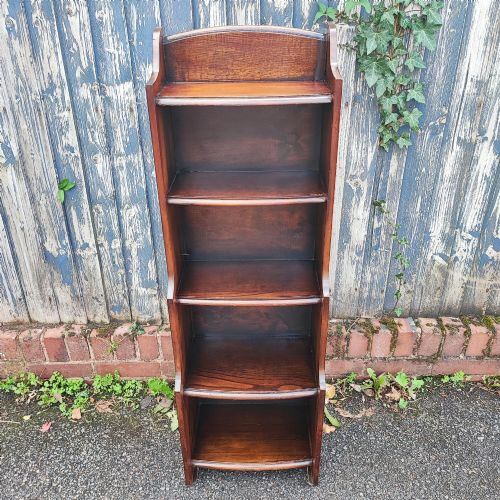
An antique narrow open bookcase provides accessible shelving for books and display within a compact footprint. Buyers searching this phrase look for slender proportions that fit alcoves and small rooms.
The pieces appearing here span the Victorian, Edwardian, and early twentieth-century periods. Oak and mahogany form the core of the selection, accompanied by occasional satinwood, rosewood, and painted finishes.
Tall and small variants emerge alongside styles such as Arts and Crafts, Sheraton Revival, and Regency. Many examples incorporate galleries, adjustable shelves, or inlaid details.
Materials and Construction
Timbers like oak and mahogany dictate the structural integrity of these bookcases, chosen for their strength and grain. Cabinetmakers utilised solid boards alongside veneers, applying brass fittings for adjustable shelf supports and galleries.
Details such as carved edges, beaded borders, and satinwood inlay demonstrate period craftsmanship. Painted surfaces and decorative cut-outs appear in specific Arts and Crafts and French examples.
Antique Narrow Open Bookcase Retail Price Guide 2026
Typical asking prices for narrow open bookcase among the pieces listed under this phrase on Sellingantiques today, from the lower quarter to the upper quarter. They describe what is for sale here now, not the wider market.
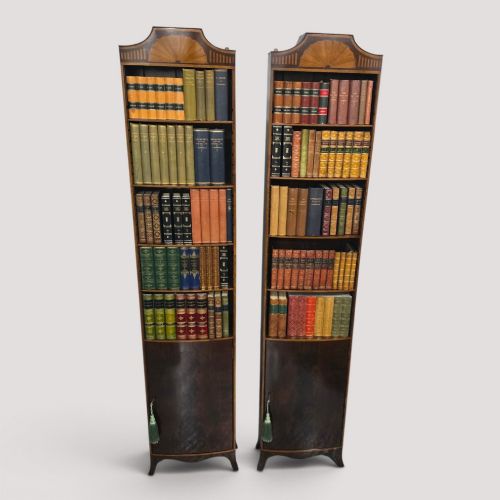
Some narrow bookcases come paired, offering symmetrical shelving for people who own twice as many books as wall space.
Assessing Quality
Construction methods and timber selection set finer pieces apart from standard utility furniture. Solid secondary woods, precise joinery, and well-figured grain indicate higher workshops.
The integration of design elements such as raised galleries, slender pillars, or inlaid woodwork elevates a piece. Adjustability in shelving and balanced proportions reflect careful initial design.
Gillows·Waring and Gillows·Wylie Lochhead·E.A. Taylor
The Antique Narrow Open Bookcase Glossary
- Open bookcase
- A piece of furniture designed for storing books without doors enclosing the front. This format allows immediate access to volumes.
- Gallery
- A raised decorative border around the top surface of a piece. It prevents items from sliding off the edge.
- Adjustable shelves
- Shelves that can be moved to different heights using pins or ratchets. This system accommodates books of varying sizes.
- Satinwood inlay
- Contrasting timber inserted into the primary wood surface in decorative patterns. It adds lightness and visual detail.
- Arts and Crafts
- A design movement favouring honest construction and material honesty over excessive ornamentation. Pieces often display functional joinery and carved motifs.
Antique Narrow Open Bookcase: Frequently Asked Questions
How do I style an open bookcase?
Balance books with objects and leave some shelf space empty to prevent a heavy look. Group volumes by size or colour to create visual order.
Keep frequently read items at eye level and place heavier volumes on the lower shelves for stability.
Can shelves be adjusted easily?
Many period bookcases feature adjustable shelving systems utilising wooden ratchets, brass studs, or shelf pegs. These mechanisms allow custom spacing for different book formats.
Fixed shelves do appear in smaller utilitarian pieces, so checking the interior configuration helps determine flexibility.
Where should I place a narrow bookcase?
Slender proportions suit tight spaces such as hallways, bedroom alcoves, or narrow wall spaces between windows. Their shallow depth keeps walkways clear.
Avoid positioning wood furniture in direct sunlight or against damp exterior walls to protect the timber.
What defines Arts and Crafts bookcases?
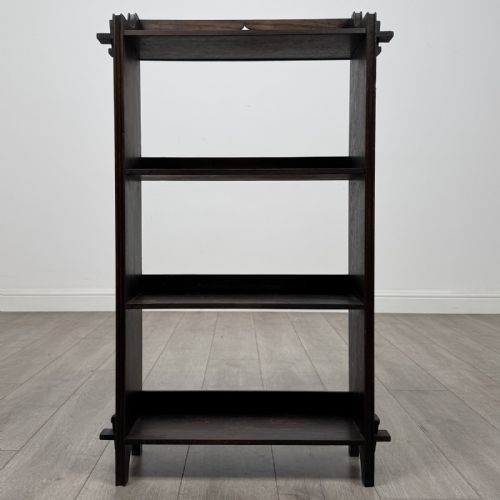
Arts and Crafts examples emphasise visible construction, solid oak timber, and decorative cut-outs or geometric lines. Makers focused on craftsmanship rather than revival ornament.
These pieces often feature subtle carved edges or pegged joints rather than machine-cut veneer.