

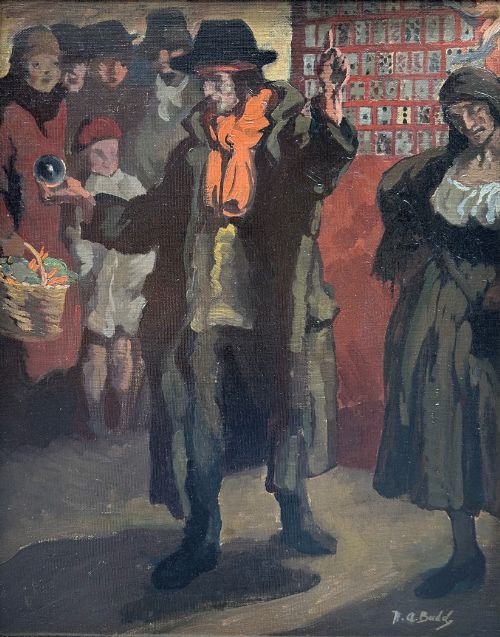
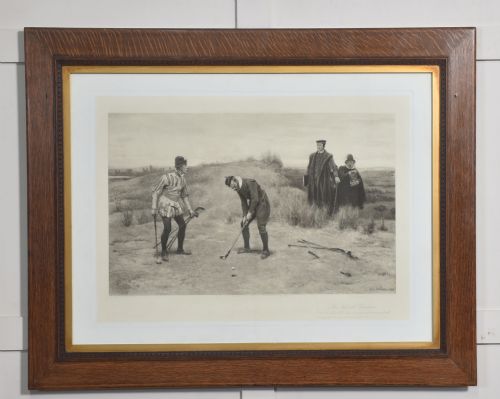


Antique Narrative Prints
Antique narrative prints tell stories through paper and canvas, bringing historical events, domestic dramas, and literary scenes directly into a room.
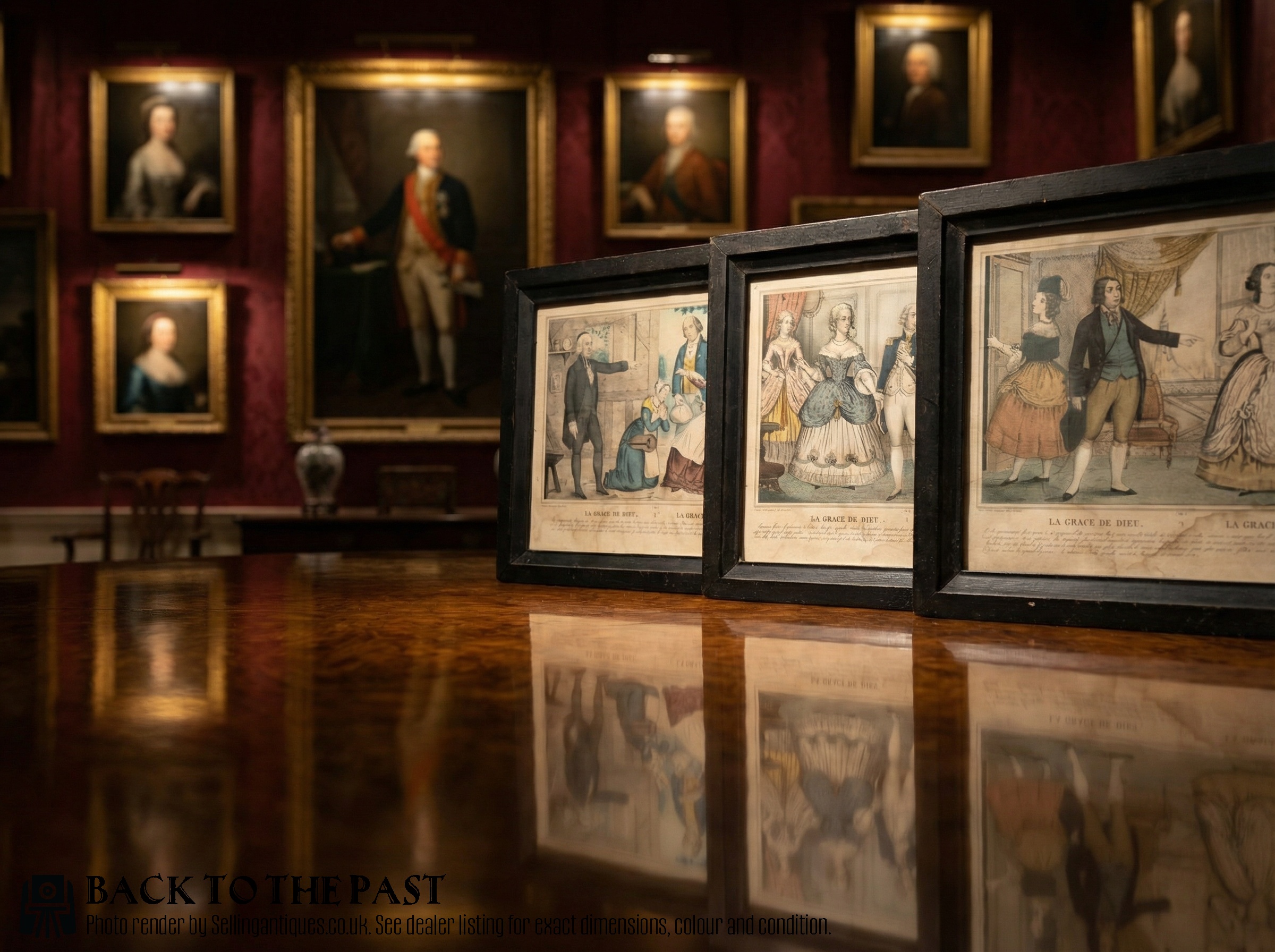
Antique Narrative Prints
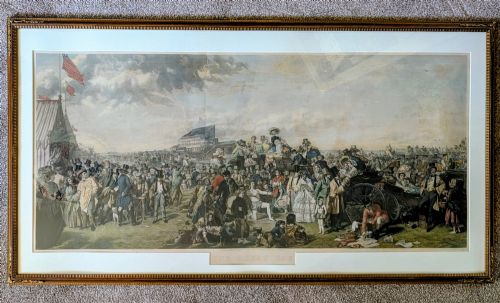
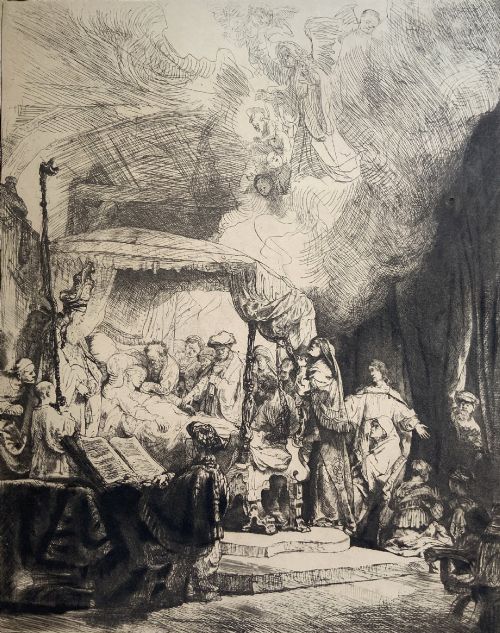
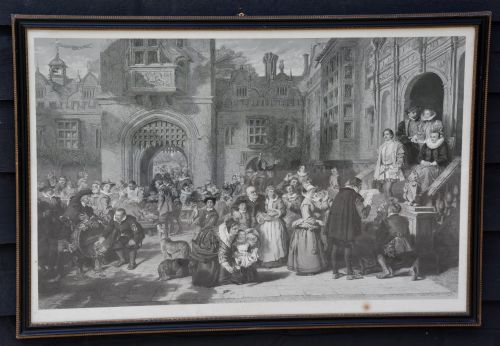
Antique narrative prints encompass framed works on paper, engravings, etchings, and lithographs that depict specific stories, historical moments, or genre scenes. These pieces capture human drama, religious subjects, and popular melodramas through the shared language of visual storytelling.
The selections available here lean heavily into nineteenth-century English and European printmaking traditions, alongside related works on canvas, silk, and textile. Buyers encounter framed engravings after major artists, nineteenth-century lithographs, and framed decorative wall prints.
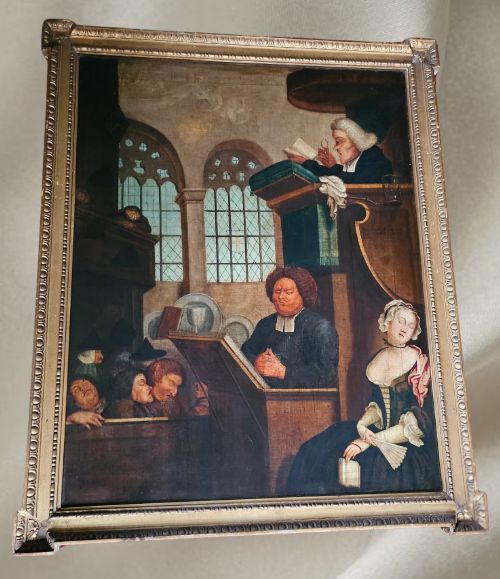
Makers and publishers span different centuries, featuring reproductions after well-known painters like William Hogarth alongside original etchings and textile wall art. Pieces range from large framed engravings in original frames to sets of coloured stipple engravings and lithographic series.
How they were made
Printmakers utilised techniques such as etching, engraving, stipple, and lithography to transfer detailed narrative compositions onto paper and silk. Engraved and etched lines created sharp outlines and deep shadow, while lithographs allowed for softer tonal gradations.
Many of these printed sheets received hand-colouring after publication to enrich the visual impact of the scene. Publishers often paired the prints with dedicated wooden frames, including carved wood and original Hogarth frames.
Certain narrative pieces crossed the boundary from paper into textile and ceramic forms, utilising oil on canvas, woven kalamkari temple paintings, and Pratt ware plaques to convey the same storytelling impulse.
What varies in quality
The impression quality of an engraving or etching dictates the crispness of the lines and the fidelity to the original artist's composition. Early strikes from a metal plate retain a fine, sharp clarity that later or worn impressions lose.
The survival of original framing components, such as period wood frames or contemporary protective glass, influences the historical integrity of the piece. Associated materials like early silk grounds or original hand-colouring elevate the visual depth.
The prestige of the original artist whose work is reproduced, combined with the skill of the printmaker or engraver, shapes the standing of the finished work within the tradition.
William Powell Frith·Amand-Durand·William Hogarth·Herbert Ashwin Budd·J. C. Dollman·Charles Burton Barber·Hendricus Joseph Dillens·E. Jackson Stodart·Antonio Capellan·Michelangelo·John Boydell·H. Singleton·Eugene Hindle·Jules Le Roy·David Wilkie·Herbert Dicksee
The Antique Narrative Prints Glossary
- Engraving
- A printmaking technique where an artist cuts lines directly into a metal plate using a sharp tool called a burin. The resulting plate holds ink within the incised grooves to transfer the image under high pressure.
- Etching
- A process in which acid bites lines into a metal plate that has been covered with a protective ground and drawn upon with a needle. This method allows for fluid, expressive lines similar to freehand drawing.
- Stipple engraving
- A method of creating tonal gradations through a dense pattern of dots and short dashes made with a fine stipple graver or roulette wheel. It was frequently used for reproducing softer paintings and portraits.
- Lithography
- A planographic printing process based on the mutual antipathy of oil and water, utilising a flat limestone or metal plate. It enabled artists to produce both monochrome and multi-coloured narrative prints efficiently.
- Genre painting
- A category of art depicting scenes from everyday life, ordinary people, and domestic interiors rather than grand historical or religious subjects.
Antique Narrative Prints: Frequently Asked Questions
What is a narrative print?
A narrative print is a visual artwork on paper that tells a distinct story, whether drawn from literature, history, religion, or everyday domestic life. These images were designed to communicate plots and moral lessons directly to the viewer.
In historical interiors, such prints served as accessible substitutes for expensive oil paintings, allowing households to engage with popular cultural themes and dramatic tales.
How do I care for antique prints?
Antique prints require protection from direct sunlight and excessive humidity to prevent the paper from yellowing, fading, or developing mould. Keeping them behind UV-filtering glass helps preserve the delicate inks and watercolours.
When hanging these works, choose interior walls that maintain a stable temperature away from direct heat sources to safeguard both the paper and any original wooden frames.
Are these prints original works?
Many narrative pieces are historical print reproductions created after famous paintings by artists such as William Hogarth or William Powell Frith. These prints were published to make popular artworks available to a wider audience.
At the same time, the selection includes original artist etchings, hand-coloured lithographs, and unique paintings on canvas or textile that function as direct narrative artworks.
How are periods told apart?
Georgian narrative prints often feature fine stipple work, classical compositions, and subtle hand-colouring on laid or early wove paper. Nineteenth-century examples frequently showcase bolder engraving techniques, rich Victorian domestic themes, and industrial lithography.
Later pieces from the Edwardian era and the 1920s introduce broader stylistic shifts, reflecting changing tastes in interior decoration and framing materials.