

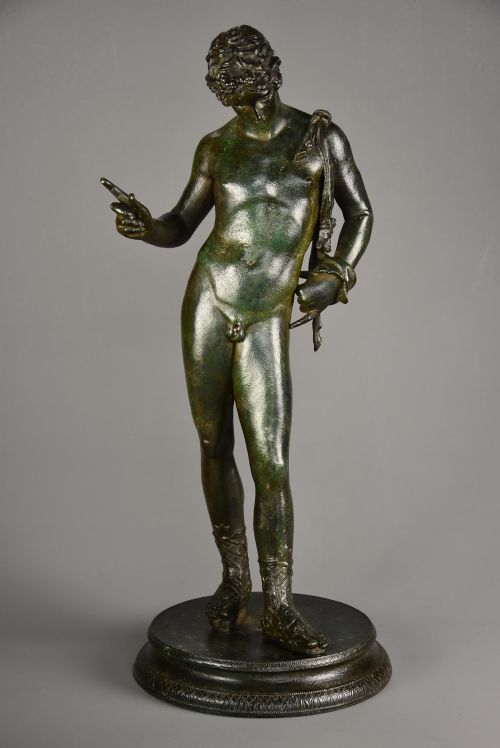



Antique Narcissus Statue
An antique narcissus statue brings the classical world straight into your study, cast in rich patinated bronze and mounted on fossil marble.
Antique Narcissus Statue
When you search for an antique narcissus statue, you encounter Grand Tour souvenirs cast in Italy during the nineteenth century. These sculptures reproduce famous classical bronzes excavated at Pompeii and held in Neapolitan museums.
The figures typically portray the youth standing in a contemplative pose, often identified with green or dark patination. Some examples connect the imagery to Bacchus or Dionysus based on classical prototypes.
Most pieces date from the late nineteenth century around eighteen eighty to eighteen ninety. They rest upon heavy bases fashioned from fossil marble or plain marble.
Materials and construction methods
Foundries produced these sculptures using traditional bronze casting techniques to replicate ancient Roman statuary. Artisans applied patination treatments in shades of dark and green to emulate the appearance of aged metal.
Statues were mounted onto turned or slab bases of fossil marble to provide stability and a classic display format. The combination of heavy metalwork and natural stone defines the physical substance of these works.
The archive records Italian Grand Tour bronzes dating primarily from eighteen eighty.
Measures of quality in nineteenth-century casts
Quality rests upon the crispness of the chasing and the fidelity of the casting to the ancient original. Finer examples capture the musculature and facial expression with distinct clarity rather than soft detail.
The richness and depth of the bronze patination distinguish superior foundry work from plain surfaces. Heavier and more accurately figured marble bases also elevate the standing of a sculpture.
Michele Amodio
The Antique Narcissus Statue Glossary
- Grand Tour
- A traditional travel itinerary undertaken by nineteenth-century elites collecting classical souvenirs. It gave rise to small bronze sculptures purchased in Italy.
- Patinated Bronze
- Metal treated with chemical solutions to produce a specific surface colour. Dark green and deep brown finishes dominate these classical figures.
- Fossil Marble
- A natural limestone containing ancient organic remains used for sculpture bases. It provides a heavily patterned dark foundation for the bronze figures.
- Neoclassical
- An artistic movement reviving the styles of ancient Greece and Rome. This aesthetic guides the proportion and subject matter of the statues.
- After the Antique
- A descriptor for later copies modelled directly on ancient sculpture discoveries. These works translate museum antiquities into collectible domestic scale.
Antique Narcissus Statue: Frequently Asked Questions
What is an antique narcissus statue?
These pieces are nineteenth-century bronze sculptures modelled after classical antiquities discovered in Italy. They served as decorative souvenirs for travellers touring European cultural sites.
Most examples date from the eighteen eighties and nineties, cast in Neapolitan foundries. They depict the mythological youth or related bacchic figures on marble bases.
How were these statues displayed?
Sculptures were traditionally placed upon library tables, mantelpieces or pedestals within nineteenth-century homes. Their fossil marble bases ensured stability while adding a formal architectural element.
Collectors arranged them alongside other classical antiquities and travel souvenirs. They were intended to signal scholarly taste and an appreciation for classical history.
Why are some figures called Bacchus?
Classical bronzes excavated at Pompeii shared overlapping iconographic details that nineteenth-century foundries sometimes conflated. Statues with similar postures were identified interchangeably as Narcissus, Bacchus or Dionysus.
Contemporary documentation and modern cataloguing often retain these alternative titles based on nineteenth-century souvenir naming conventions.
How do I care for bronze and marble?
Dust the bronze gently with a soft dry cloth and avoid harsh cleaning products that strip the patination. Preserve the natural surface without applying modern polishes.
Keep the fossil marble base clean by wiping it gently with a dry cloth. Protect the stone from moisture and abrasive impacts.