
Antique Napkin Holders
Antique napkin holders span individual rings to boxed dining sets, bringing tactile history and refined metalwork to the table.
Antique Napkin Holders
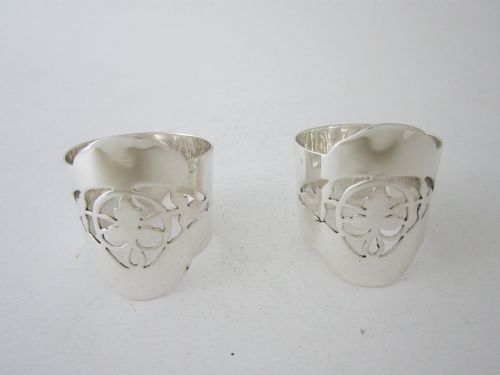
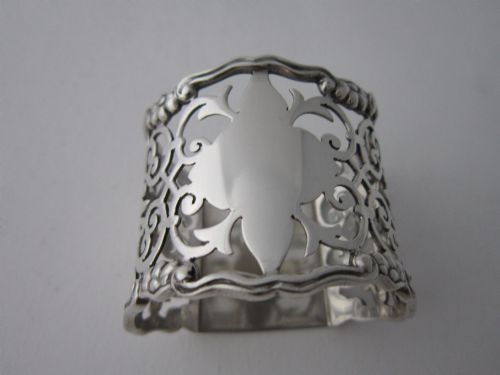
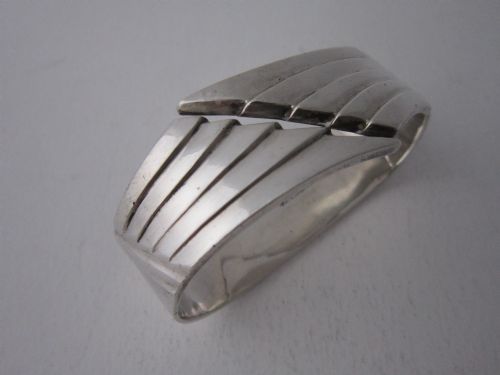
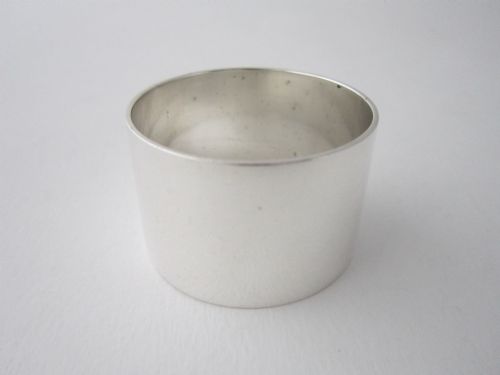
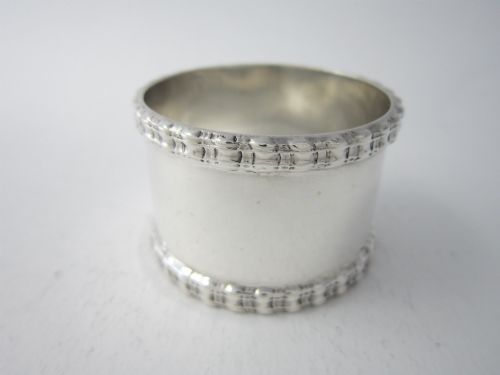
Antique napkin holders encompass individual rings, matched sets, clips, and toast racks designed to organise table linen at formal meals. These domestic accessories survive predominantly from the Victorian, Edwardian, and George V periods, reflecting changing dining customs across the late nineteenth and early twentieth centuries.
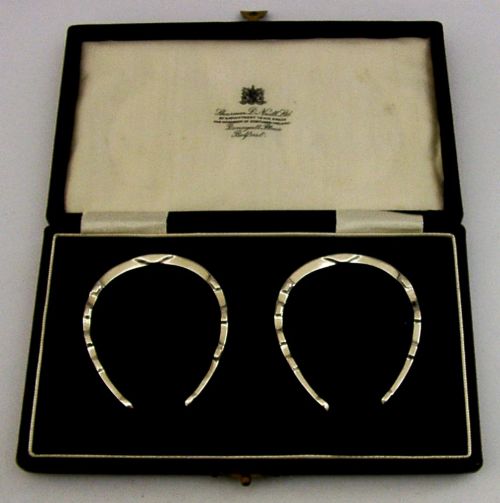
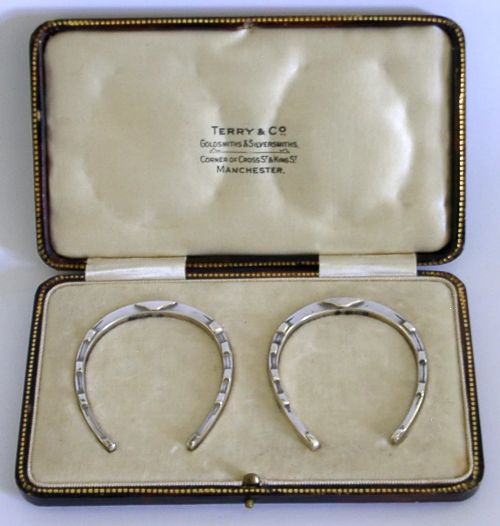
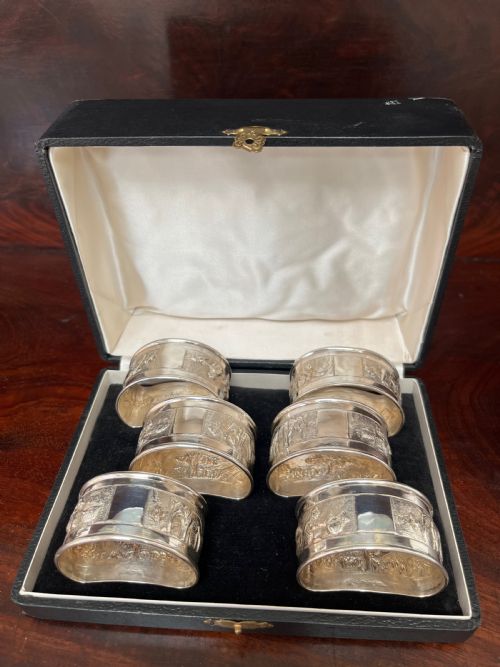
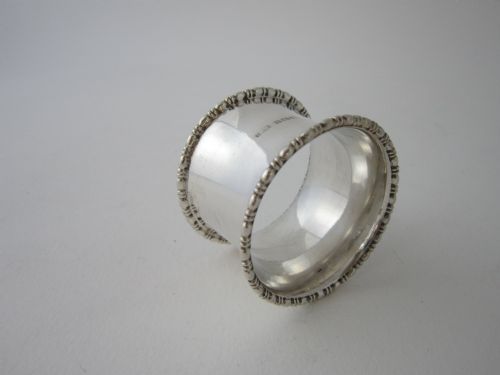
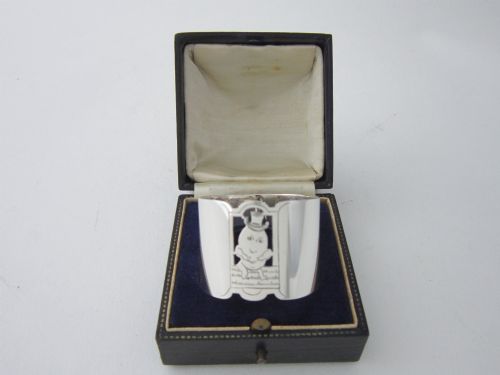
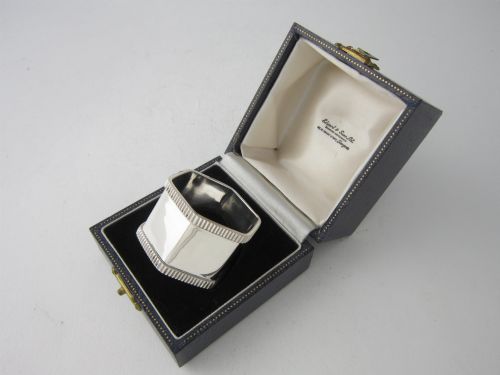
The versions most frequently encountered on this page are solid sterling silver and silver-plated napkin rings, often preserved in original fitted cases. Collectors also meet specialist forms such as shield-shaped napkin clips, figural designs, and cased sets numbered for individual diners.
How they were made
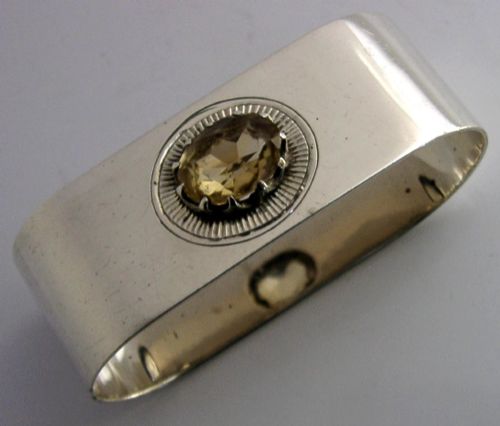
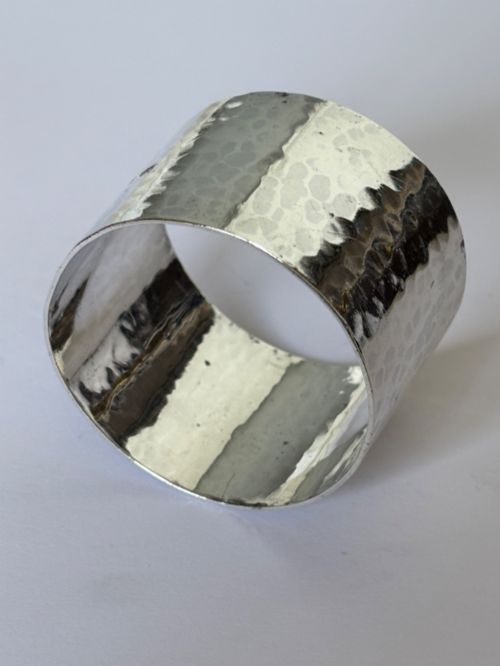
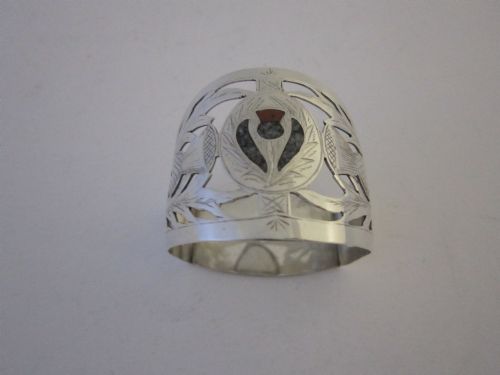
Silversmiths utilised sterling silver and silver plate as principal metals, shaping them through techniques such as hand hammering, turning, and casting. Many pieces incorporate decorative details including applied enamel, polished citrines, and inset agates, while others employ hardwearing pewter or turned hardwood.
Presentation sets often rely on protective enclosures lined with silk, velvet, or leatherette to house the metalware securely. These fitted boxes demonstrate the same attention to detail as the silver rings inside them.
Listings feature sterling silver and silver plate alongside alternative materials like pewter, enamel, citrine, agate, silk, velvet, and leatherette.
What varies in quality
Quality rests upon the weight of the metal, the crispness of maker's marks, and the integrity of any applied stones or enamel work. Substantial gauge silver and hand-hammered surfaces indicate superior workshop output compared to lighter, mass-produced alternatives.
The survival of original fitted cases and complete boxed sets elevates a piece above individual examples found in isolation. Well-preserved textiles and intact box hinges distinguish items kept carefully from those subjected to heavy daily use.
Albert Edward Jones·C.T. Burrows and Sons·Liberty and Co·Mappin and Webb·Cartier·Tiffany and Co
The Antique Napkin Holders Glossary
- Sterling silver
- A silver alloy containing 92.5 percent pure silver by mass, standard for quality British tableware.
- Silver plate
- A base metal coated with a thin layer of silver, common in Victorian and Edwardian dining sets.
- Napkin clip
- A spring mechanism or shield-shaped device designed to secure a napkin to a diner's clothing.
- Toast rack
- A table accessory with vertical metal loops, frequently grouped alongside napkin rings in matching dining suites.
- Hallmark
- A series of official stamps applied to precious metals indicating the maker, assay office, and year of testing.
Antique Napkin Holders: Frequently Asked Questions
How were napkin holders used?
Diners used them at formal breakfast, lunch, and dinner tables to keep napkins tidy between meals or to assign specific linen to each guest. Numbered sets ensured family members or dinner guests retained the same napkin over multiple days.
Clips were fastened directly to clothing to protect garments during dining, while cased sets remained stored on sideboards until required.
How do I care for silver napkin rings?
Sterling silver and silver-plated items require gentle cleaning with a soft cloth and proprietary silver polish to remove tarnish without abrading the metal. Avoid abrasive pads that can scratch engraved decoration or damage inset stones.
When not in use, storing rings in lined boxes or dry environments helps prevent oxidisation and preserves any original velvet or silk interiors.
How can I date an antique napkin ring?
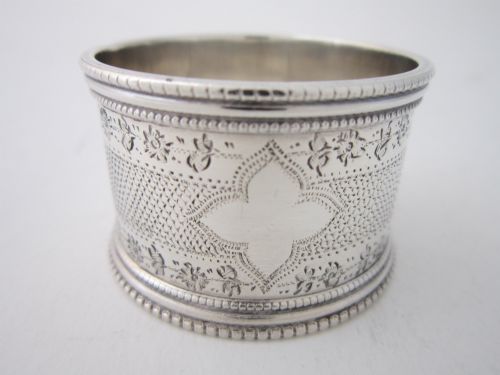
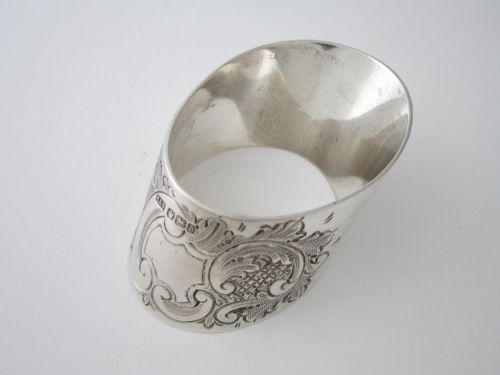
Dating relies heavily upon hallmarks stamped into the metal, which reveal the assay office and specific year of manufacture under British assay office codes. Stylistic clues such as Art Deco geometric lines, Arts and Crafts hand hammering, or Victorian floral engraving also indicate the period.
Original fitted cases and retailer stamps provide further context regarding the era of production and original point of sale.