

Antique Music Storage
Antique music storage units solve the domestic problem of keeping scores orderly, bringing period charm and timber warmth to a room.
Antique Music Storage
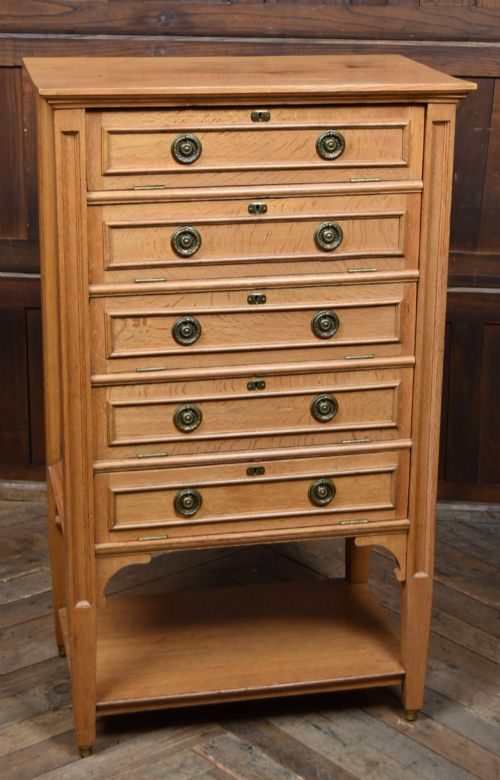
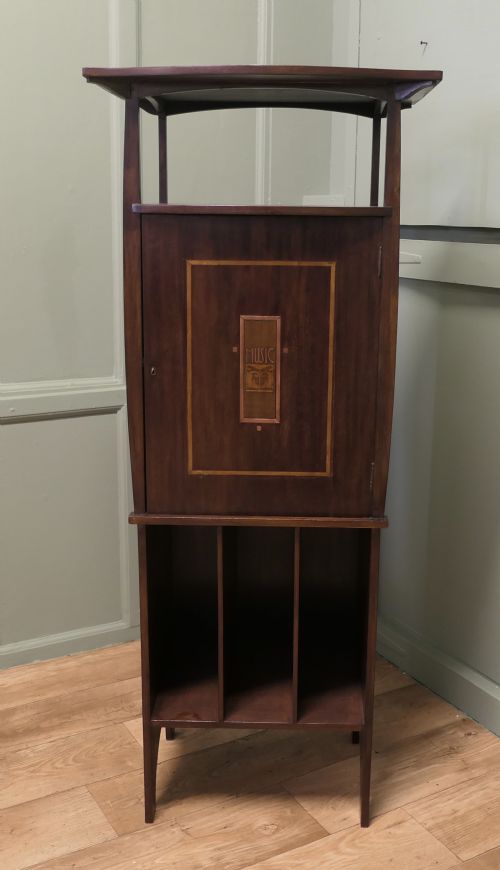
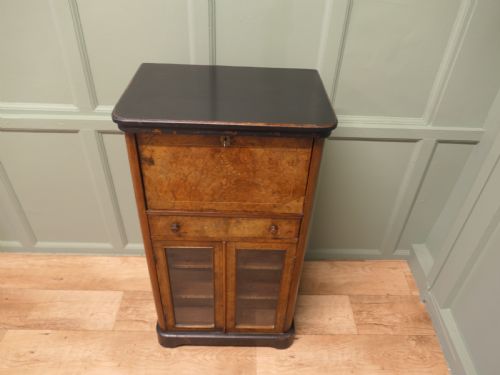
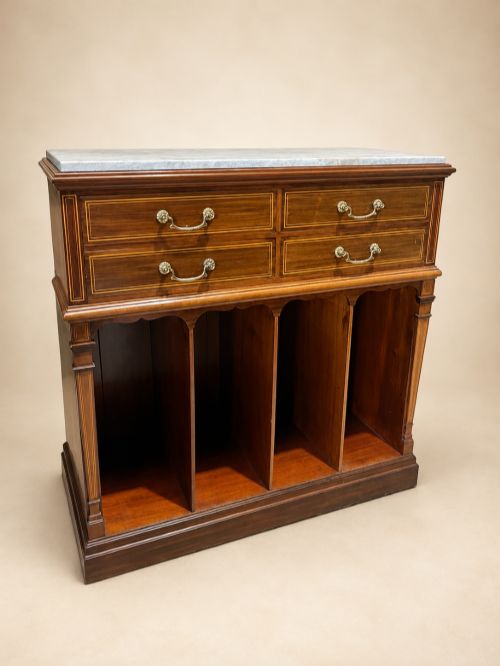
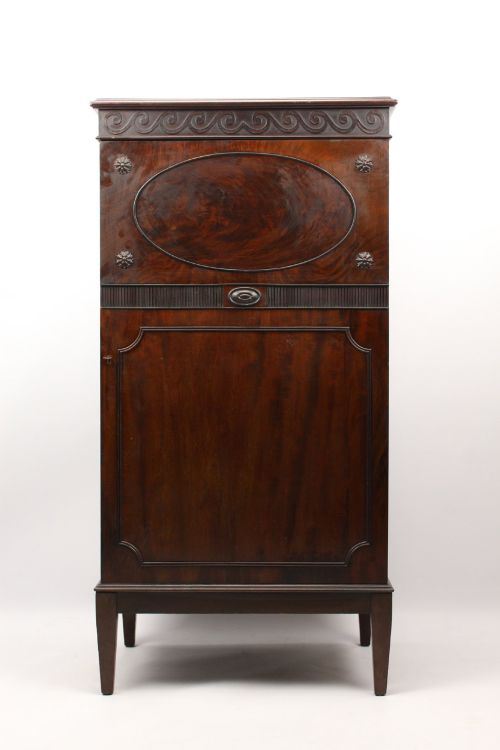
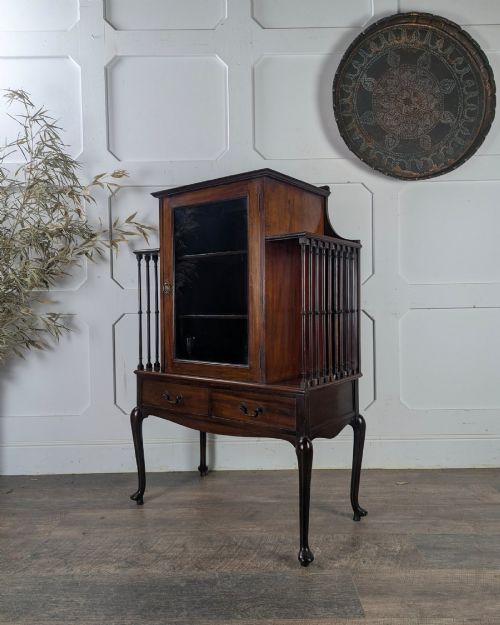
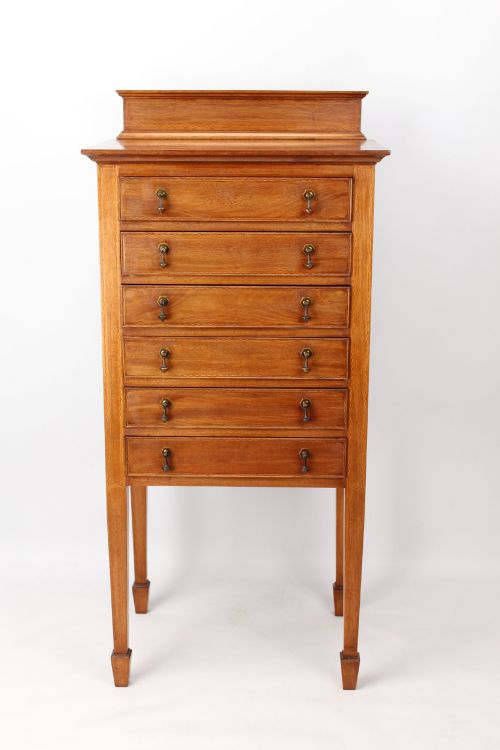
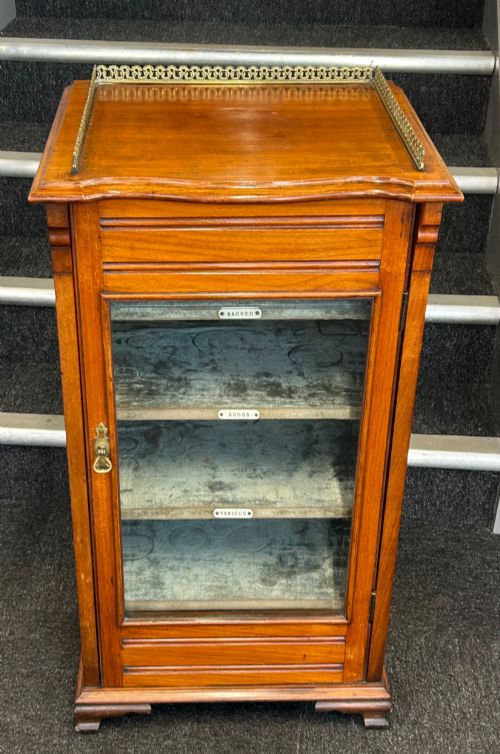
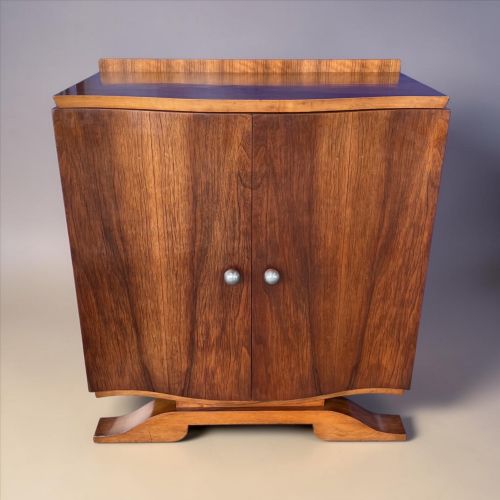
When you search for antique music storage, you encounter purpose-built pieces designed to hold sheet music, scores and folios in domestic parlours and drawing rooms. The selection includes music cabinets, piano stools, canterburys, and filing cabinets originating from periods such as the Victorian, Edwardian, Regency, and Art Deco eras.
Materials and construction methods
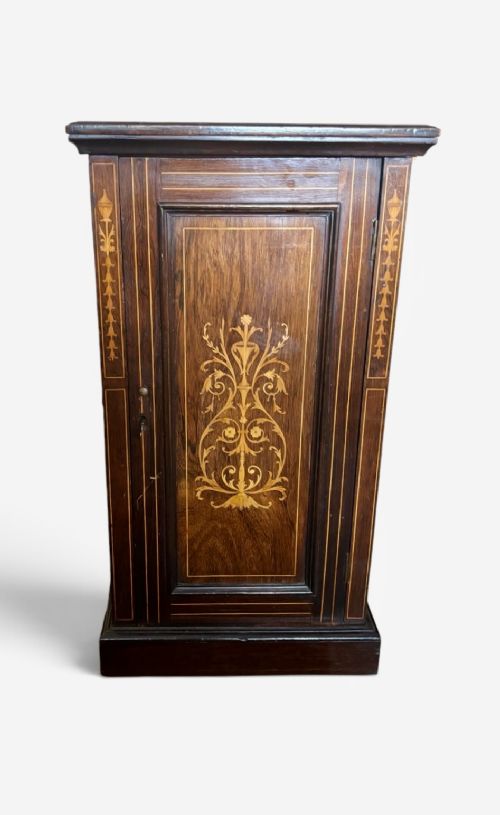
Cabinet makers utilised dense hardwoods such as mahogany, walnut, burr walnut, rosewood and satinwood to construct these storage pieces. Many surfaces feature delicate inlay work or contrasting wood veneers to enhance the visual appeal of the exterior.
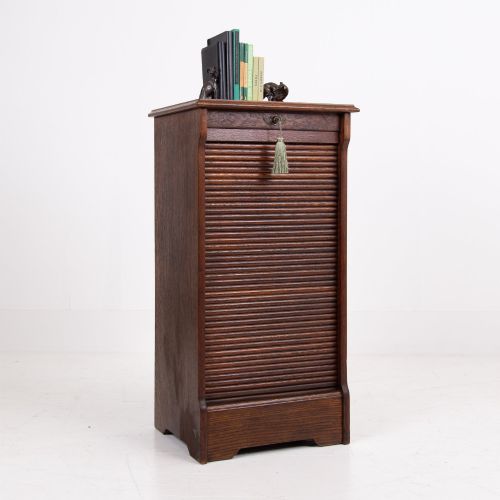
Functional hardware played a key role in construction, incorporating brass fittings, glass panels and fabric details on doors or drop-down compartments. Tambour doors and multi-drawer designs provided practical access while maintaining a refined aesthetic.
The archive includes specialised pieces ranging from multi-drawer filing cabinets to traditional canterburys and piano stools.
Evaluating craftsmanship and design
The distinction between standard production items and finer pieces lies in the selection of timber veneers and the intricacy of the inlay work. Cabinets featuring figured burr walnut, rosewood or finely executed satinwood banding demonstrate a higher level of artisan ambition.
Structural integrity and the quality of interior fittings also set examples apart. Smooth drawer movement, intact brass hardware, and specialised internal divisions for sheet music indicate superior original manufacture compared to simpler utilitarian variants.
GM Elwood for JS Henry·Denby and Spinks·Henry Ogden and Son
The Antique Music Storage Glossary
- Canterbury
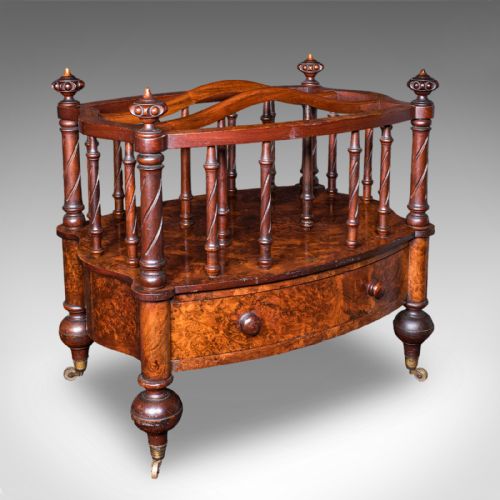
- A low stand featuring upright partitions, traditionally used for holding sheet music, newspapers or magazines. Originating in the late eighteenth century, these pieces often incorporate small castors and a lower drawer.
- Tambour door
- A flexible door constructed from narrow slats of wood glued to a canvas backing, allowing it to slide smoothly around a curved track. This mechanism is frequently found on compact filing and music cabinets.
- Satinwood
- A durable, hard timber with a natural golden sheen and satiny lustre, highly prized for decorative stringing and inlay. Makers utilised it to create striking contrasts against darker woods like mahogany.
- Aesthetic Movement
- A late nineteenth-century design style that prioritised artistic expression and simplicity over heavy Victorian ornamentation. Pieces from this movement often display clean lines and thoughtful craftsmanship.
Antique Music Storage: Frequently Asked Questions
What is a music cabinet?
A music cabinet is a specialised piece of furniture designed specifically to store sheet music, folios, and scores in an organised manner. They typically feature shallow drawers, drop-front compartments, or vertical slots to keep paper flat and protected.
These pieces became popular in nineteenth and early twentieth-century homes as domestic piano playing grew widespread. They allowed families to keep their collection tidy yet accessible near the instrument.
How do you use a piano stool?
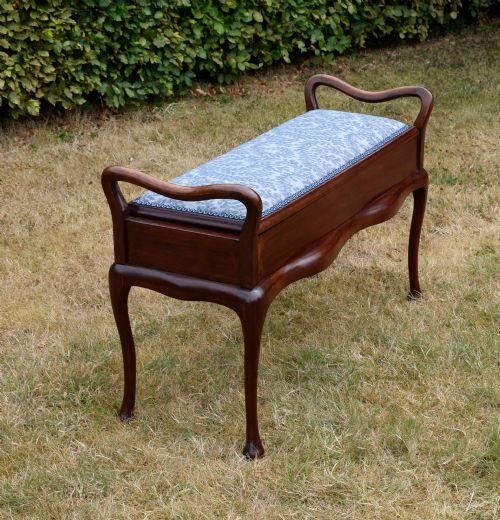
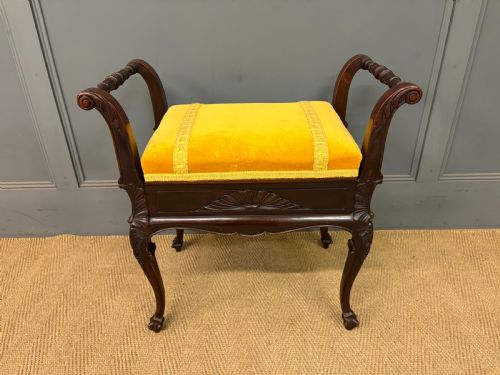
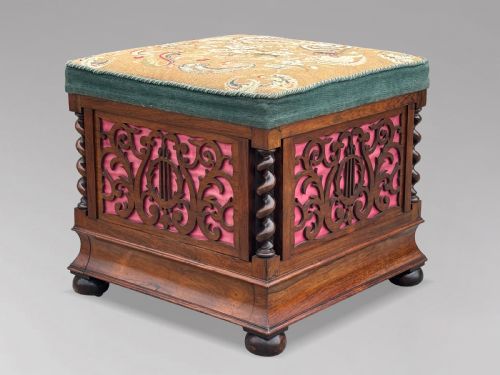
A piano stool provides seating for the pianist while incorporating hidden storage beneath the seat or within side compartments. Musicians used the internal space to keep frequently played pieces close at hand during practice sessions.
In modern living spaces, these stools serve well as flexible seating that doubles as a discreet place to store small items. They fit neatly beside pianos, desks, or in hallways.
How do you distinguish an Edwardian music cabinet?
Edwardian music cabinets generally date from the early twentieth century and often display lighter timbers such as mahogany or satinwood inlay. Their aesthetic tends to be less heavy than Victorian designs, favouring slender proportions and refined decorative stringing.
Look for Maker signatures, simpler brass handles, and four-drawer configurations with drop fronts or internal partitions. These structural details point toward the manufacturing standards of the Edwardian period.
Can these cabinets store modern items?
These cabinets adapt readily to modern storage needs beyond sheet music, accommodating documents, art supplies, or small collections. The shallow drawers and compartmentalized interiors suit organising papers and stationery.
Placing one in a study or living room introduces period character while providing practical desktop organisation. The internal divisions help keep miscellaneous items sorted out of sight.