


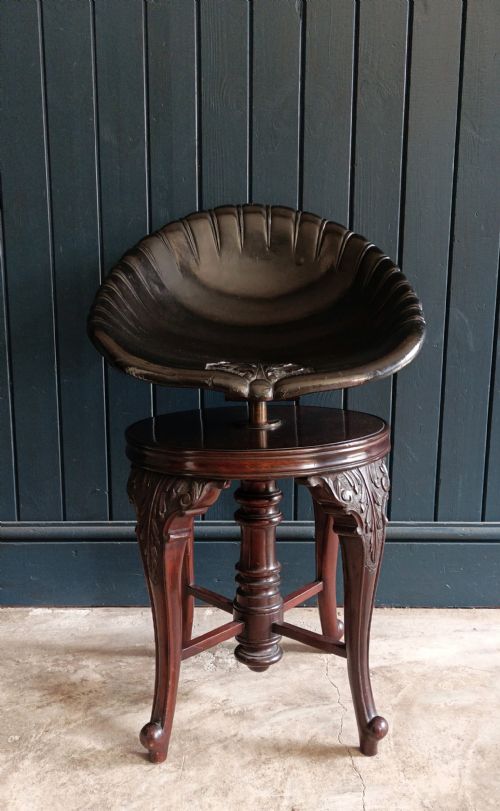


Antique Music Room Seat
These antique music room seat examples bring period character to a home, offering dedicated seating designed specifically for musicians at the piano or harp.
Antique Music Room Seat
An antique music room seat serves musicians at keyboard instruments and harps, functioning as a practical piece of furniture designed for adjustment and comfort during practice. These items span the Georgian, Victorian, and Edwardian periods, reflecting the domestic musical habits of past centuries through various specialised forms.
Revolving piano stools and duet seats dominate the selection, alongside rarer items like the harpist music stool and patent music chairs. Makers produced these pieces in forms such as fall front storage stools, lift up seat boxes, and swivel designs utilising timber frames.
Originating primarily from the nineteenth and early twentieth centuries, these furnishings combine utility with decorative woodwork. The selection includes mahogany and rosewood constructions, often featuring upholstered tops in velvet, leather, or fabric.
How they were made
Cabinet makers utilised dense hardwoods like mahogany and rosewood to construct sturdy frames capable of supporting mechanical revolving mechanisms and lift up lids. Inlaid detailing frequently adorns Edwardian examples, showcasing fine woodworking skills of the period.
Upholstery forms an integral part of these seats, employing materials such as green and tan leather, velvet, and traditional fabrics. Craftsmen padded the tops to ensure comfort during extended periods of playing.
Listings span the Georgian, Victorian, and Edwardian periods, featuring mahogany, rosewood, walnut, and brass alongside leather and velvet upholstery.
What varies in quality
The sophistication of the mechanical action separates standard stools from superior examples, particularly in revolving and patent designs that allow height adjustment. Smooth operation of the swivel mechanism or the fall front storage indicates careful initial engineering.
Selection of timber grain and the finesse of inlay work define the visual merit of the piece. Finer items display carefully matched rosewood or mahogany veneers and intact, high grade leather or velvet upholstery.
Francis Alleyne
The Antique Music Room Seat Glossary
- Revolving piano stool
- A seat featuring a central screw mechanism allowing the user to adjust their height by spinning the top. This design became particularly popular during the Victorian era for keyboard players.
- Duet piano stool
- A wider seat designed to accommodate two musicians playing together on the same keyboard instrument. These often incorporate lift up seats for storing sheet music.
- Papier Mache
- A composite material made from paper pulp and binder, utilised for decorative elements on select nineteenth century music stools. It provides a smooth surface suitable for ornamentation.
- Fall front
- A hinged panel that drops forward to reveal interior storage space for music books and accessories. This feature is commonly found on Victorian walnut upholstered stools.
- Patent music chair
- An adjustable seating design protected by a formal registration, offering mechanical innovations for musicians. These frequently incorporate specialised metal hardware and leather upholstery.
Antique Music Room Seat: Frequently Asked Questions
What is a revolving piano stool?
A revolving piano stool is a specialised seat featuring a central screw mechanism that allows the player to adjust their height by spinning the top. This design ensured proper posture at the keyboard.
These pieces date predominantly from the Victorian and Edwardian eras, combining mechanical utility with fine timber construction in mahogany or rosewood.
How do I identify an Edwardian music stool?
Edwardian music stools often feature inlaid mahogany woodwork, lighter frames, and practical additions like lift up seats for storing sheet music. They reflect the refined domestic interiors of the early twentieth century.
Unlike heavier Victorian designs, these Edwardian pieces lean towards subtle ornamentation and functional storage compartments beneath upholstered velvet or leather tops.
Can I use an antique music seat daily?
These pieces were built for regular use by musicians, employing durable hardwoods like mahogany and robust mechanical parts. They function effectively as piano stools or decorative occasional chairs.
Caring for the timber and maintaining the upholstery ensures these historic furnishings remain practical additions to a modern music room or living space.
What materials were used for these seats?
Cabinet makers relied heavily on dense timbers such as mahogany and rosewood, occasionally incorporating walnut or papier mache. Frames frequently featured inlaid details and sturdy metal hardware for adjustable mechanisms.
Upholstery materials range from traditional fabrics and rich velvet to green and tan leather, padded to provide comfort during long practice sessions.