
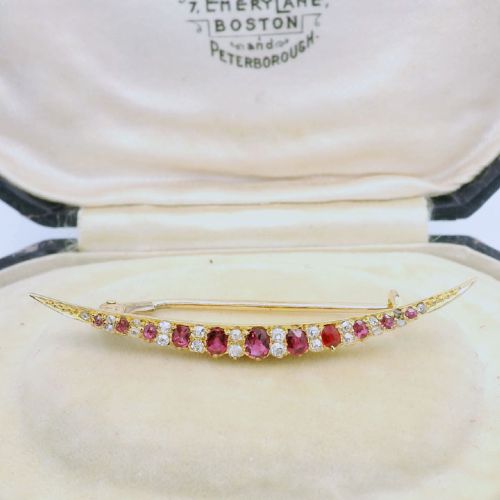


Antique Moon Pin
An antique moon pin is a crescent-shaped jewel worn on lapels and collars, capturing celestial charm from the Victorian and Edwardian eras.
Antique Moon Pin
When you search for an antique moon pin, you enter a world of celestial jewellery spanning the Victorian, Edwardian and Art Deco periods. These pieces take the form of crescent brooches, bar pins and stick pins, often combining the moon motif with stars, swallows or floral accents. You will most frequently encounter gold crescent brooches set with pearls, rubies, sapphires and diamonds.
The materials range from 9ct and 15ct yellow and rose gold to silver, platinum and 18K gold. Gems such as moonstone, turquoise and paste appear alongside precious stones, reflecting the romantic and symbolic tastes of the late nineteenth and early twentieth centuries. Every piece serves as a wearable miniature sculpture from the workshops of the past.
How they were made
Goldsmiths constructed these jewels using yellow gold, rose gold, silver and platinum, shaping metal into slender crescent frames. Stones were then flush-set, bezel-set or claw-set into the curved mounts by hand. Seed pearls and larger pearls were often threaded or pegged securely onto the gold structure.
Lapidaries cut diamonds, rubies, sapphires and tourmalines to fit the delicate dimensions of the crescent shape. Artisans integrated pin stems and safety catches suited to the fastening habits of the era, ensuring both beauty and function.
What varies in quality
The distinction between standard examples and the finest pieces lies in the choice of materials and the precision of the stone-setting. Top-tier pins feature exceptional unheated sapphires, vibrant Thai rubies or well-matched natural pearls arranged with careful attention to proportion. The weight and purity of the gold, such as 15ct or 18ct settings, also elevate a piece.
Artisanal execution dictates the overall refinement of the jewel. Delicately engraved details, secure stone flushness, and balanced compositions separate mass-produced items from superior masterworks of the Edwardian and Victorian workshops.
The Antique Moon Pin Glossary
- Seed pearl
- A very small, natural or cultured pearl used in clusters or rows. These tiny gems were exceptionally popular in Victorian and Edwardian cluster work.
- Stick pin
- A long pin with a decorative head, worn upright in a cravat, lapel or hat. The head often depicts a crescent moon or star motif.
- Bar pin
- A horizontal metal rod with a pin mechanism on the reverse, sometimes centred with a crescent moon ornament. They were widely worn to secure collars and scarves.
- Paste
- Hand-cut glass or lead crystal used to imitate gemstones. High-quality antique paste stones were meticulously faceted and foiled to catch the light.
Antique Moon Pin: Frequently Asked Questions
How do I date an antique moon pin?
Dating relies on material hallmarks, metal purity standards like 9ct or 15ct gold, and stylistic clues. Victorian pieces often use heavier yellow gold mounts, while Edwardian examples favour platinum and lighter yellow gold with delicate diamond work.
Looking at the pin mechanism and clasp also helps establish the period. Older brooches feature C-clasps and long pin stems extending beyond the safety edge, whereas later pieces incorporate rolling safety catches.
Were crescent moon pins worn every day?
Victorians and Edwardians wore these pins frequently as daily accessories to fasten cravats, secure lace collars, or adorn lapels. Their versatile size made them suitable for both daywear and evening gatherings.
Because they were worn often, many survived with varied gemstone combinations like ruby, sapphire and pearl. They served as tokens of affection and symbols of growth and change.
What is the difference between a moon pin and a brooch?
A moon pin is simply a specific style of brooch or stick pin shaped like a crescent moon. All moon pins function as brooches or pins, but not all brooches share the celestial motif.
Collectors categorise them by their specific fasteners and silhouettes, distinguishing between horizontal bar pins, vertical stick pins and curved crescent brooches.
How should I care for an antique moon pin?
Gentle handling is essential because seed pearls and soft stones like moonstone or turquoise are sensitive to harsh chemicals and moisture. Store each piece separately in a lined box to prevent scratching the gold and gems.
Cleaning should be done with a soft, dry cloth rather than liquid dips. Professional inspection of the settings ensures that old claws and peg-set pearls remain secure.