


Antique Mirrored Makeup Table
An antique mirrored makeup table brings character and a functional surface to a bedroom, combining practical glass with period timber.
Antique Mirrored Makeup Table
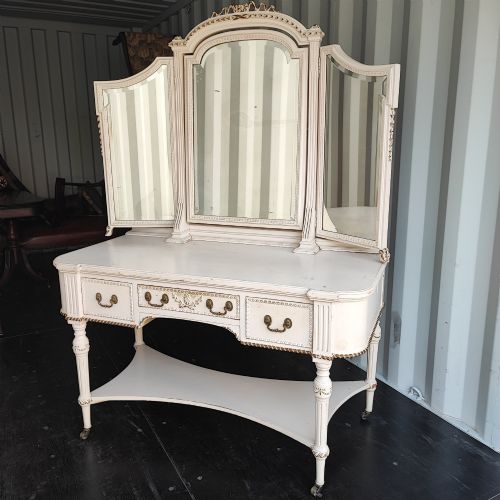
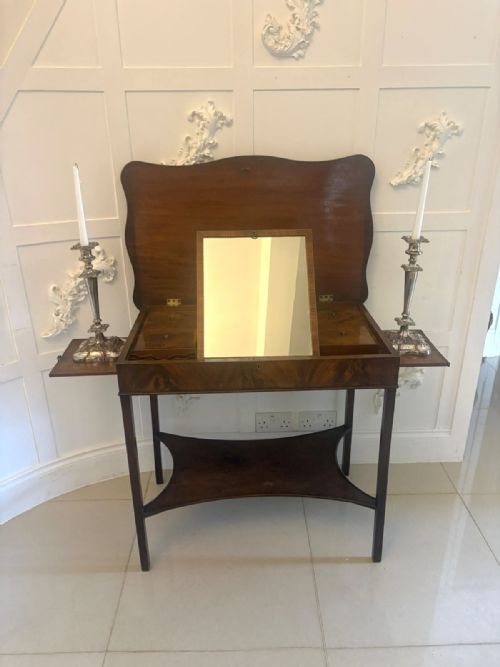
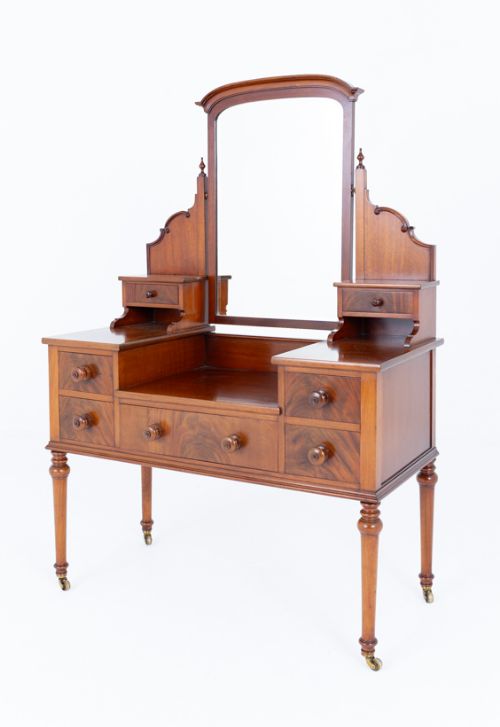
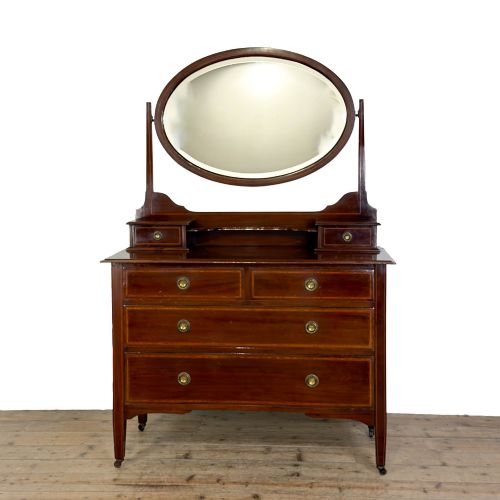
When you search for an antique mirrored makeup table, you encounter dressing tables, vanity tables, and dressing table mirrors spanning from the Georgian period through the Victorian and Edwardian eras into Art Deco pieces of the 1920s and 1930s.
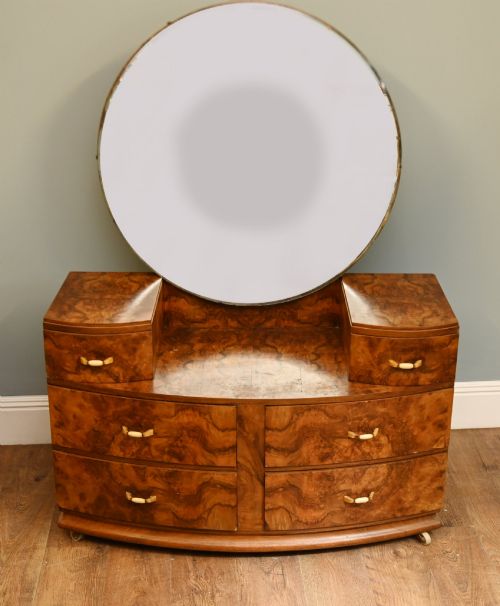
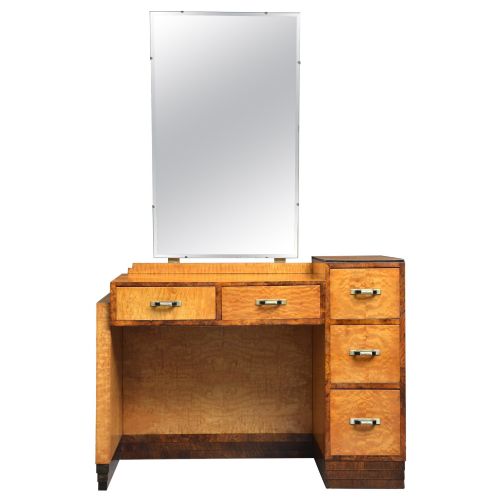
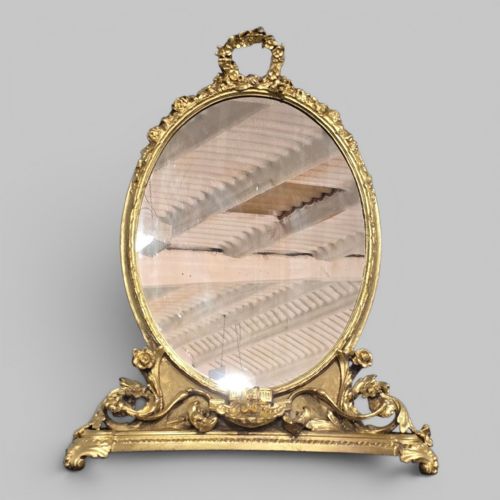
The most common forms on this page include mahogany, walnut, and satinwood dressing tables fitted with adjustable or fixed mirrors, alongside freestanding vanity mirrors designed for tabletops.
Makers such as Maples, Maurice Adams, Harry and Lou Epstein, and John Taylor of Edinburgh represent the diverse craftsmanship available across these centuries.
How they were made
Cabinetmakers utilised timber veneers including burr walnut, maple, kingwood, and rosewood over solid foundations, often adding marquetry inlay, ormolu mounts, and hand-applied lacquer.
Mirror glass was silvered and set into pivoting frames of brass, bronze, or carved wood, supported by pedestals or superstructure arms.
Structural integrity relied on dovetail joints in drawers and traditional joinery methods suited to mahogany, oak, and satinwood.
What varies in quality
The distinction between standard pieces and the finest examples lies in the selection of figured wood veneers like burr walnut and the intricacy of carved details or ormolu mounts.
Makers known for retail excellence, such as Maples or Epstein, distinguish items through refined proportions and integrated hardware.
The preservation of original mirror glass and surface finishes dictates the integrity of each piece.
Maples·Maurice Adams·Harry and Lou Epstein·John Taylor of Edinburgh
The Antique Mirrored Makeup Table Glossary
- Burr walnut
- A veneer taken from the burl growth of a walnut tree, yielding swirling, highly decorative grain patterns. It was favoured by Victorian and Art Deco cabinetmakers for statement furniture fronts.
- Ormolu
- Gilded bronze ornamentation applied to furniture, commonly seen on French Empire and nineteenth-century pieces. It provides a metallic contrast to dark woods like mahogany.
- Pedestal dressing table
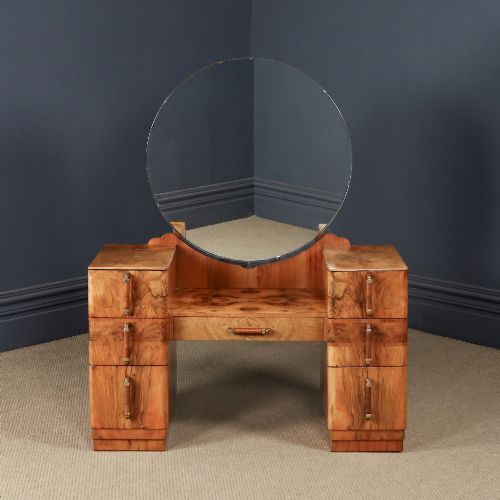
- A form featuring banks of small drawers flanking a central kneehole space, often surmounted by a large mirror. This style allows for ample storage beneath the tabletop.
- Satinwood
- A durable, dense exotic timber with a lustrous, golden-yellow sheen. It was utilised extensively during the Sheraton Revival and by Scottish makers for light-toned dressing furniture.
- Chinoiserie
- A decorative style employing hand-painted oriental motifs and lacquered surfaces. It appears on select twentieth-century dressing tables.
Antique Mirrored Makeup Table: Frequently Asked Questions
What is a duchess dressing table?
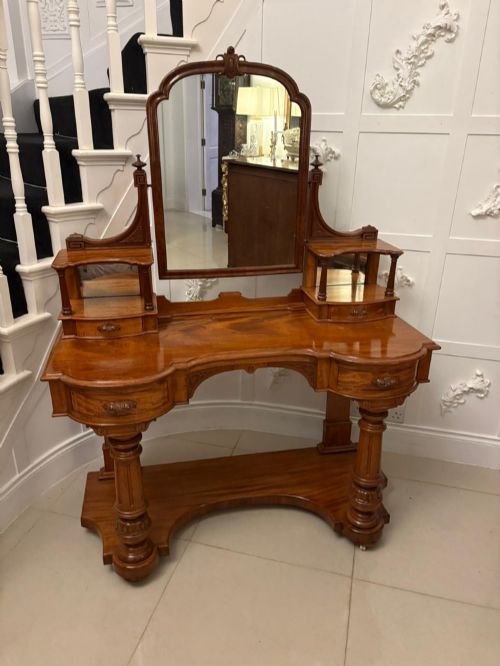
A duchess dressing table is a large Victorian form characterised by a central swinging mirror supported by small accessory drawers above a larger pedestal base.
These pieces typically utilise burr walnut or mahogany and serve as a central focal point in a bedroom.
How do I identify an Art Deco dressing table?
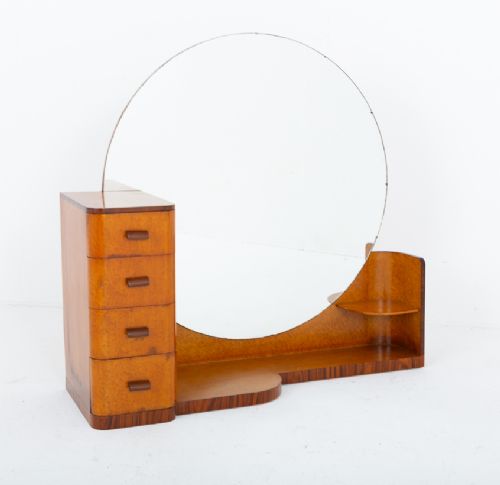
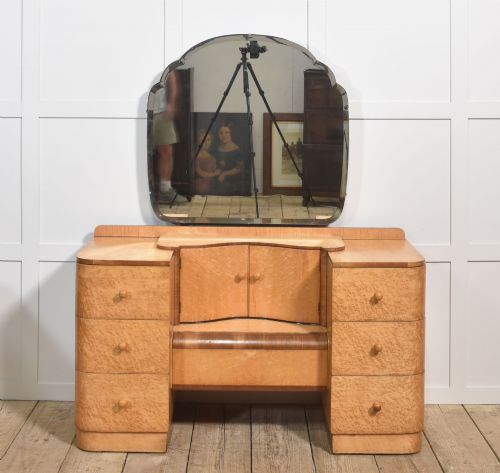
Art Deco dressing tables from the 1920s and 1930s feature geometric shapes, symmetrical veneers like figured walnut or maple, and large circular or shield-shaped mirrors.
They often omit heavy carving in favour of clean lines and polished wooden surfaces.
Are the mirrors original?
Many pieces retain their original glass, which can show light foxing or spotting due to age.
Replacements do occur over time, so examining the backing and silvering helps determine the age of the glass.
How should I clean wood surfaces?
Dust regularly with a soft cloth and apply quality beeswax periodically to nourish timber veneers like mahogany and satinwood.
Avoid modern chemical sprays that can strip historic polished finishes.