
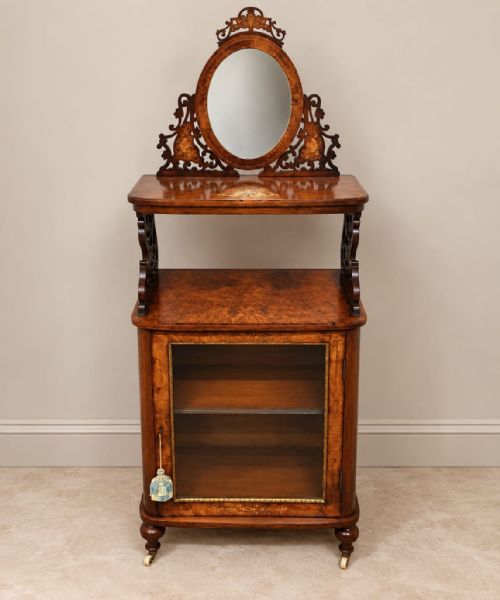
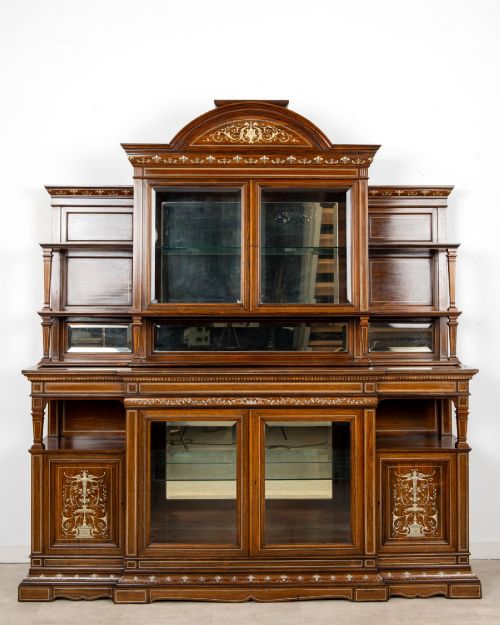
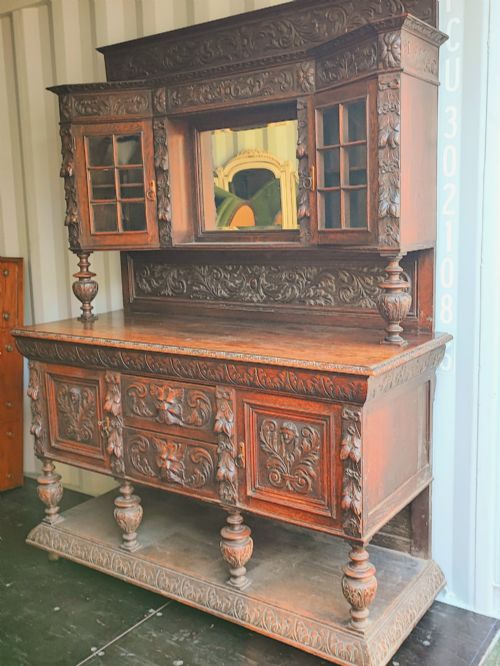
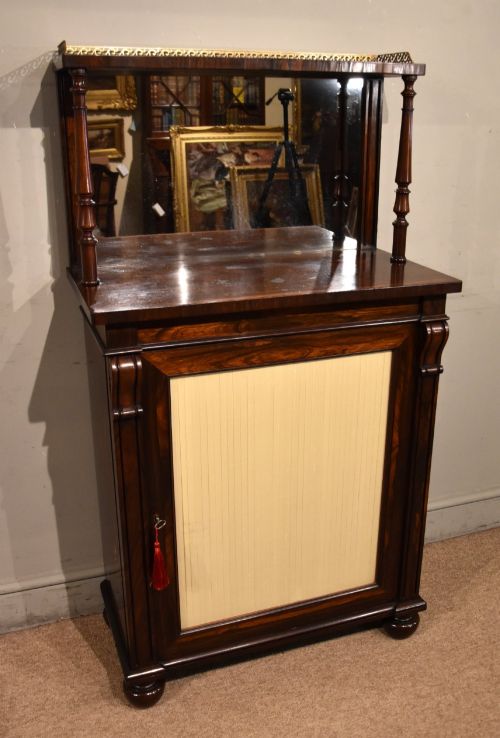
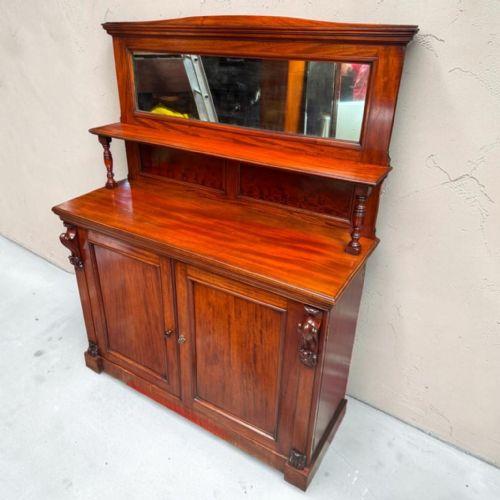
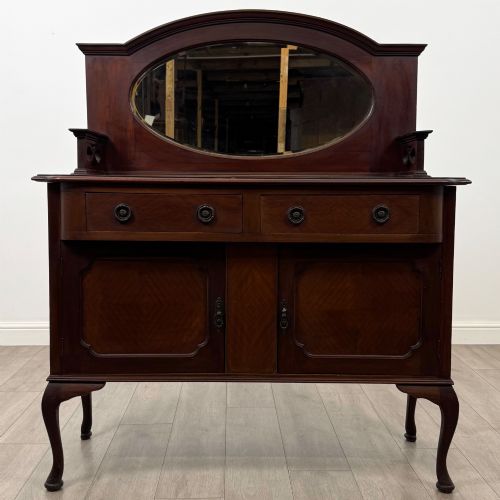
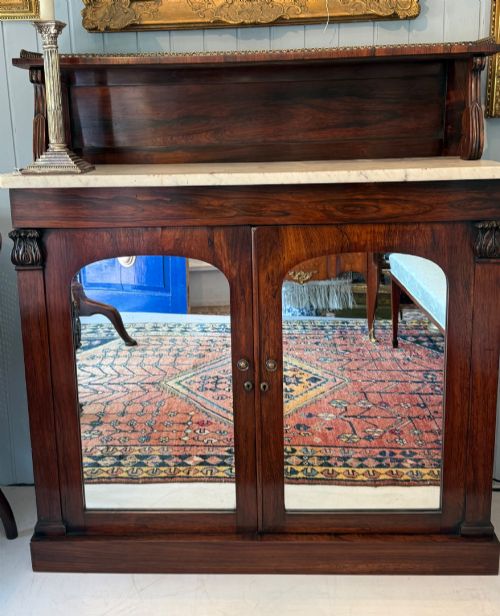
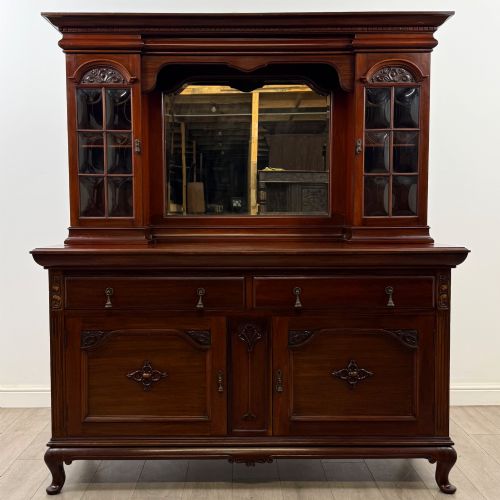
Antique Mirrored Credenza Cabinet
An antique mirrored credenza cabinet brings reflective depth and rich timber tones to a room, combining display space with concealed storage.
Antique Mirrored Credenza Cabinet
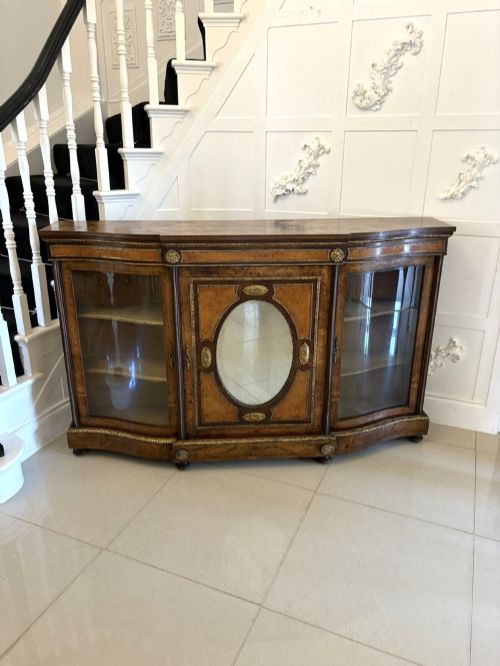
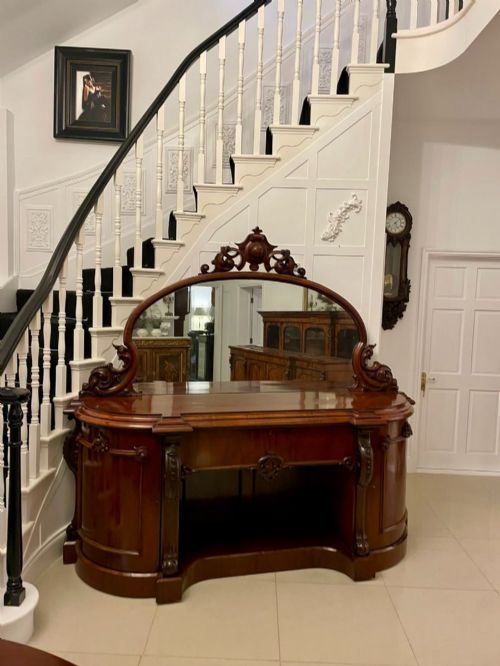
When searching for an antique mirrored credenza cabinet, buyers encounter nineteenth-century walnut, mahogany, and rosewood pieces designed for formal reception rooms. These items span Victorian, Edwardian, and Regency periods, frequently taking the form of low credenzas, chiffoniers, and mirror-backed sideboards.
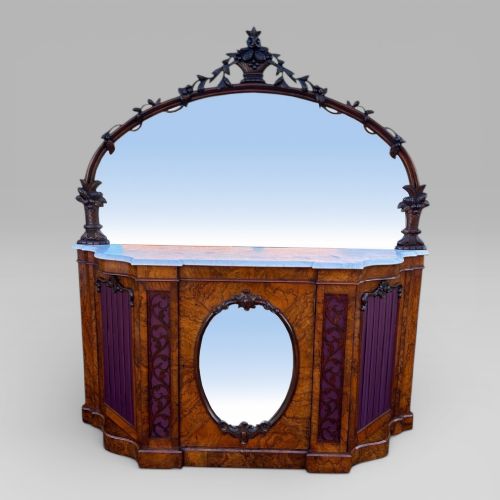
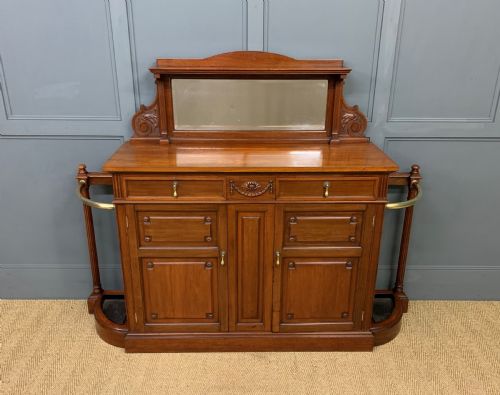
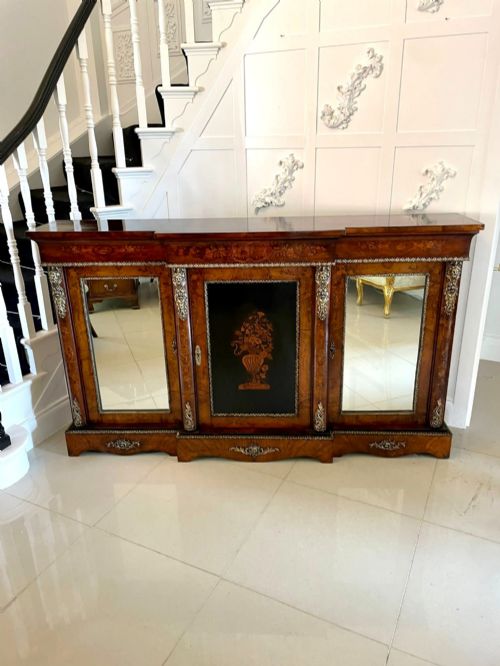
The dominant forms on this page include burr walnut credenzas featuring mirrored doors and ormolu mounts alongside rosewood side cabinets. Makers of the Victorian and Edwardian eras also produced substantial carved oak and mahogany examples with integrated glass display elements.
Originating primarily from British workshops, these cabinets reflect the shifting domestic tastes of the nineteenth century towards glazed and mirrored furniture. Buyers find both compact side cabinets and large London-quality credenzas suited to dining and drawing room interiors.
Materials and Technique
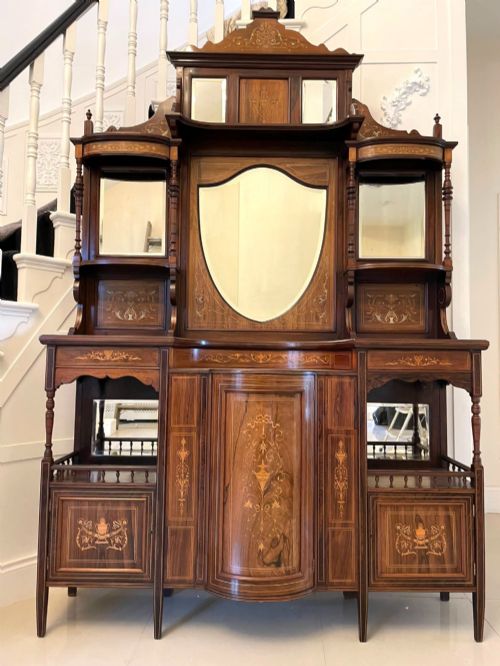
Cabinetmakers utilised rich timber veneers such as burr walnut, rosewood, and mahogany laid over solid carcass woods, often enhancing surfaces with intricate marquetry and brass inlay. Ormolu mounts and brass galleries frequently accent the primary woods.
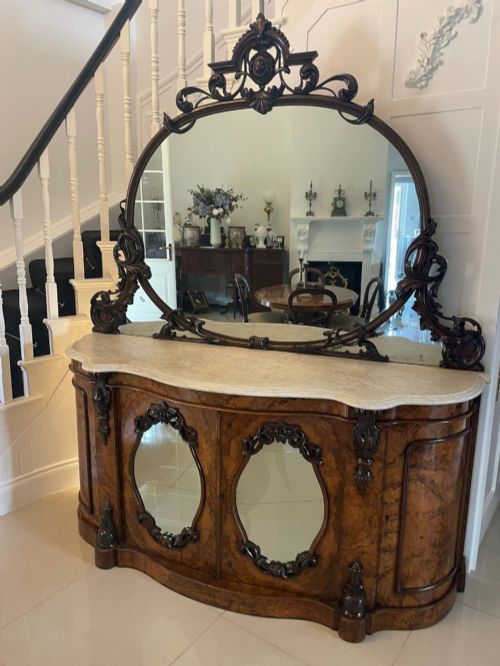
Glass integration defined the aesthetic, employing mirror glass within panelled doors and high back structures to bounce light around a room. Carved detailing and polished marble tops appear on select pieces from the mid-nineteenth century onward.
Cabinet forms include open bookcases, hall cupboards, and marble-topped mirror back sideboards alongside traditional credenzas.
Distinctions in Standard
The standard of timber selection and veneer matching defines the upper tier of these cabinets, where burr walnut or figured rosewood displays complex, symmetrical grain patterns. Lesser pieces rely on plainer woods with minimal figure or simpler construction.
Hardware and metalwork differentiate output significantly, with finely chased ormolu mounts and heavy brass inlays marking out workshop production above standard commercial joinery. The precision of the marquetry and the depth of the hand-polished finish separate standard examples from finer commissions.
Shoolbred & Co.·Collinson & Lock·Gillows·Garnett & Sons
The Antique Mirrored Credenza Cabinet Glossary
- Credenza
- A low cabinet or sideboard designed for display and storage, often featuring mirrored doors and decorative mounts. These pieces sat against drawing room walls during the Victorian period.
- Chiffonier
- A compact sideboard or cabinet equipped with shelves, drawers, or enclosed cupboards below a mirrored or panelled superstructure. They became popular in nineteenth-century parlours.
- Ormolu
- Gilded bronze ornamentation applied to furniture fronts and mounts. It added a bright metallic contrast to dark woods like rosewood and walnut.
- Marquetry
- Inlaid wood veneers arranged to form decorative patterns or pictorial designs on cabinet surfaces. Craftsmen used contrasting timbers to achieve tonal variation.
- Burr Walnut
- Wood taken from the growth excrescences of walnut trees, yielding highly figured and swirling grain patterns. It served as a premium veneer for high-status Victorian cabinets.
Antique Mirrored Credenza Cabinet: Frequently Asked Questions
Where were these cabinets placed?
These cabinets traditionally stood against the main walls of Victorian and Edwardian drawing rooms, dining rooms, and morning rooms. Their low profiles allowed owners to display decorative objects on top while storing household items below.
In modern homes, they serve similar functions in hallways and living spaces, where their mirrored backs help reflect natural light and brighten darker corners.
How do I date a mirrored cabinet?
Dating relies on combining stylistic clues with timber choices and construction methods. Regency pieces often show brass inlay and rosewood, while mid-nineteenth-century items frequently feature burr walnut and heavy ormolu.
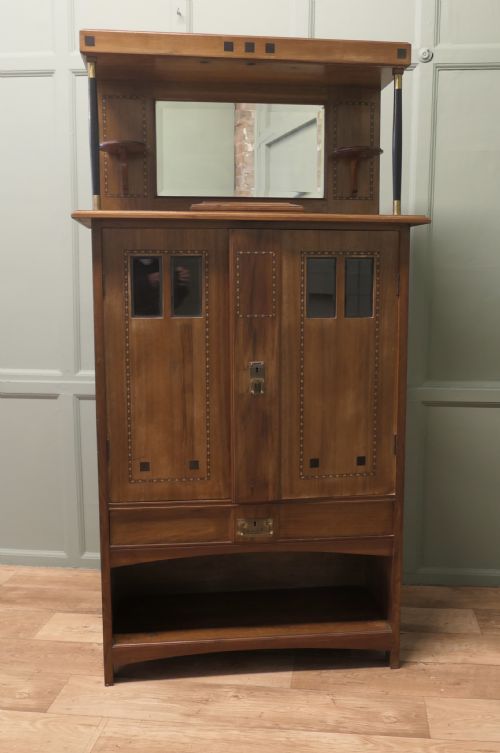
Later Victorian and Edwardian examples shift towards lighter oak, simpler Arts and Crafts lines, or extensive marquetry work associated with specific workshop production.
What is the difference between a credenza and a chiffonier?
A credenza is typically a low, symmetrical cabinet designed primarily for display, frequently enclosed by glass or mirrored doors across the entire front. They often include decorative ormolu mounts.
A chiffonier is generally smaller and more utilitarian, featuring a combination of lower cupboards and an upper shelf structure supported by small pillars, sometimes with a mirror backing.
How do I care for antique wood finishes?
Maintain antique timber and veneer surfaces by keeping them away from direct sunlight and sudden temperature fluctuations that can cause wood to dry and split. Regular dusting with a soft, dry cloth prevents particulate build-up.
Apply a traditional beeswax polish sparingly when the wood appears dry, buffing gently to preserve the historic lustre of the French polished surface.