
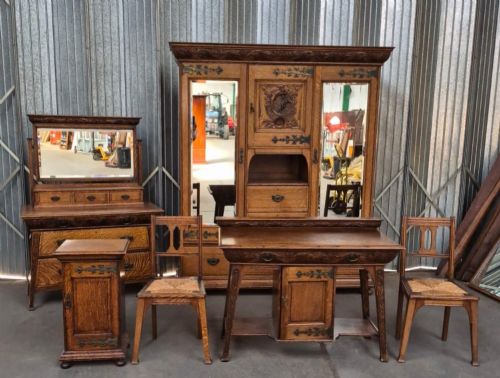


Antique Mirror Wardrobe Set
An antique mirror wardrobe set brings matching grandeur and practical glass to a bedroom through complete period suites.
Antique Mirror Wardrobe Set
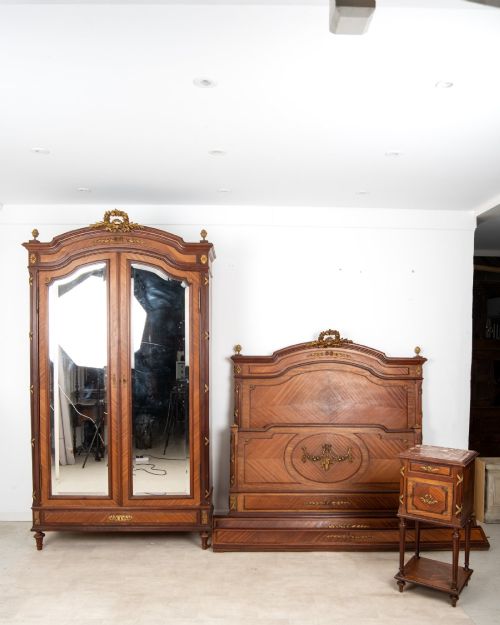
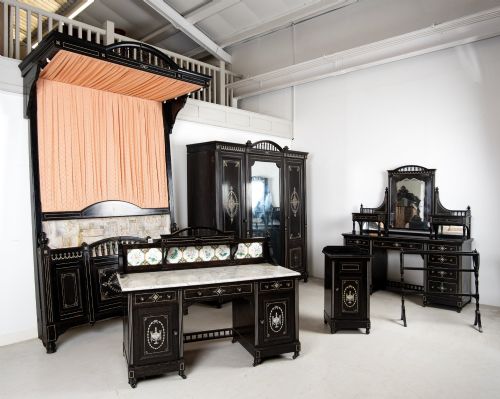
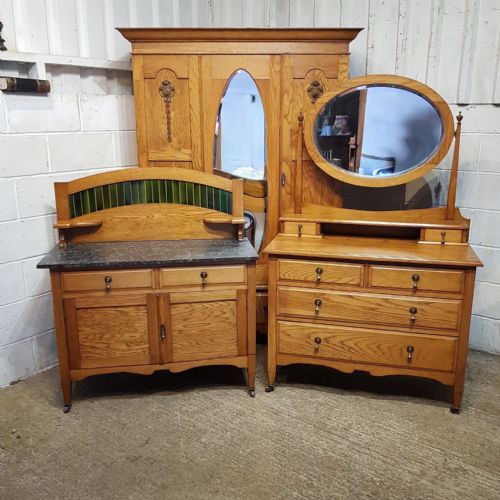
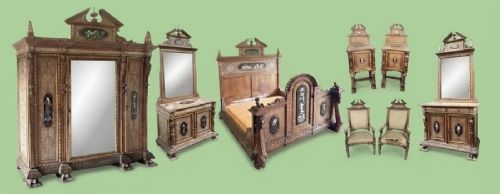
An antique mirror wardrobe set is a coordinated grouping of bedroom furniture, typically featuring a large wardrobe with mirrored doors alongside matching pieces such as beds, dressing tables, and bedside cabinets. Buyers seeking an antique mirror wardrobe set will find these expansive multi-piece suites rendered in styles spanning the Victorian era through Art Deco and Arts and Crafts movements.
The most common versions met on this page include multi-piece suites from the Edwardian period and around nineteen hundred, often uniting walnut, oak, or mahogany elements with integrated dressing mirrors. These suites provide a unified aesthetic for a bedroom, combining the storage of a wardrobe with the reflective utility of full-length or dressing mirrors.
Originating predominantly from British and French workshops, these bedroom furniture suites reflect the domestic ambitions of the late nineteenth and early twentieth centuries. Surviving sets range from compact pairs to extensive eight-piece groupings designed to furnish substantial period chambers.
How they were made
Cabinet makers utilised dense hardwoods such as mahogany, walnut, and oak as the foundational structure for these wardrobes and suites, often applying intricate veneers and marquetry. Brass hardware, ormolu mounts, and ebonised wood details were frequently integrated to accent the primary timber.
Mirrored glass formed a central functional component, set securely into large wardrobe doors using traditional joinery and rebate techniques. Marble was also incorporated into associated surfaces like dressing tables, providing durable and decorative tops within the suites.
Materials recorded across these bedroom suites include walnut, oak, mahogany, ebonised wood, marble, and brass.
What varies in quality
The distinction between standard and superior examples rests upon the ambition of the design and the execution of the cabinet work. Suites bearing attribution to notable makers or specific stylistic movements generally demonstrate finer timber selection and more complex marquetry or inlay.
Coherence across the entire suite dictates overall desirability, where matching timbers, complementary hardware, and uniform patination indicate a unified original commission rather than a later assembled grouping.
Waring & Gillows·Lamb of Manchester·Heals·Gaylayde·B Cohen & Sons
The Antique Mirror Wardrobe Set Glossary
- Compactum
- A large, highly organised wardrobe designed to incorporate multiple internal compartments, drawers, and hanging space. This form maximises storage efficiency within a single footprint.
- Ormolu
- Gilded bronze mounts applied to furniture surfaces for decorative effect. It was frequently utilised in French revival pieces to add metallic enrichment.
- Marquetry
- The art of applying decorative veneer pieces to a structure to form intricate pictorial patterns. Craftsmen used various coloured woods to create complex surface designs.
- Ebonised wood
- Timber treated with a dark finish to imitate the appearance of ebony. This technique was popular in Victorian design for creating high-contrast decorative details.
- Breakfront
- A cabinet design where the central section projects forward from the flanking outer sections. This architectural arrangement creates depth and shadow on large wardrobe facades.
Antique Mirror Wardrobe Set: Frequently Asked Questions
What pieces come in a set?
These sets generally comprise a large wardrobe featuring mirrored doors, accompanied by related furniture such as dressing tables and beds. Additional pieces like bedside cabinets and compactums frequently complete the larger groupings.
The exact combination varies according to the original commission, with surviving suites ranging from simple pairs to comprehensive eight-piece collections designed for substantial period bedrooms.
How do I date a suite?
Dating relies on identifying the prevailing stylistic movement, such as Arts and Crafts, Art Deco, or Louis XVI Revival, combined with the choice of materials and construction methods. Details like brass hardware and timber preparation provide further chronological indicators.
Comparing the specific design characteristics against known output from documented makers and periods helps narrow the manufacturing window to specific decades like the Edwardian era or the nineteen twenties.
Are the mirrors original?
Original mirrors in these wardrobes often exhibit subtle signs of age, such as slight foxing or minor silvering degradation at the edges, which correspond to the period of the surrounding cabinet work. The beveling and mounting technique within the wooden door frame also indicate whether the glass belongs to the initial construction.
Checking the rear of the wardrobe door reveals how the mirror is secured, as period fixings and original backing boards are typical of authentic nineteenth and early twentieth-century suites.
How do I care for the wood?
Maintaining these wooden surfaces requires protecting them from direct sunlight and maintaining stable room humidity to prevent the timber and veneers from drying or cracking. Regular dusting with a soft cloth preserves the finish without requiring heavy chemical polishes.
Periodic application of appropriate wax feeds the antique wood, helping to maintain the natural lustre and depth of the walnut, oak, or mahogany surfaces over time.
Can these wardrobes be dismantled?
Many large period wardrobes are constructed to be taken apart for transport, utilising wooden peg joints, internal bolts, or modular carcass designs. This dismantling capability was essential for moving heavy pieces into upper-floor chambers.
Examining the internal construction reveals whether the cornice, base, and sides separate from the main hanging section, allowing for safer relocation of the furniture.