



Antique Mirror Topped Sideboard
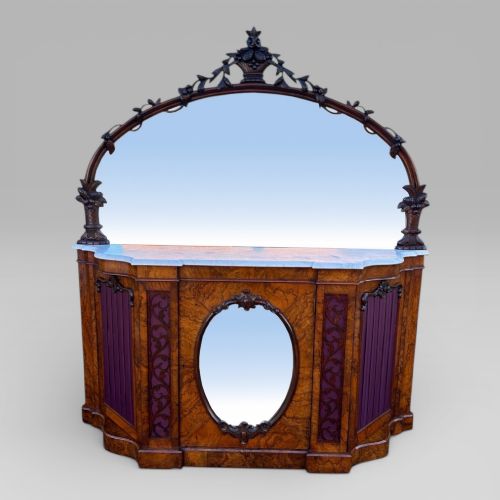
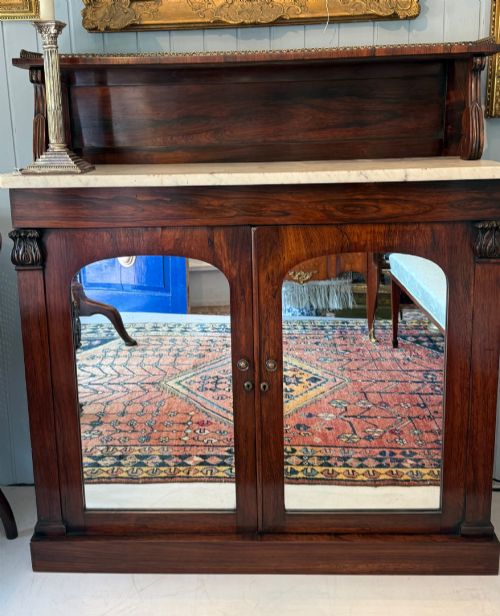
An antique mirror topped sideboard brings depth and reflective light to a room, uniting timber cabinetry with integrated glass.
Antique Mirror Topped Sideboard
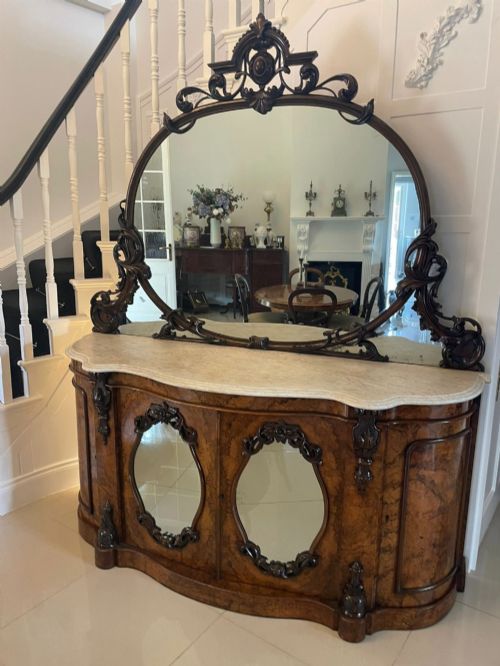
An antique mirror topped sideboard combines a low timber base with an upright glass back, serving both display and storage functions in domestic interiors. Buyers searching for an antique mirror topped sideboard encounter pieces primarily from the Victorian and Edwardian periods, alongside later nineteenth century examples.
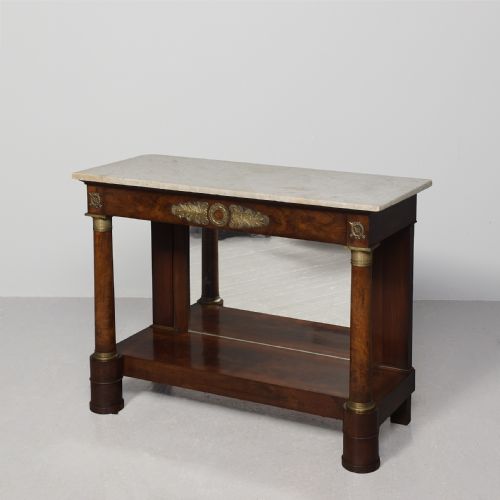
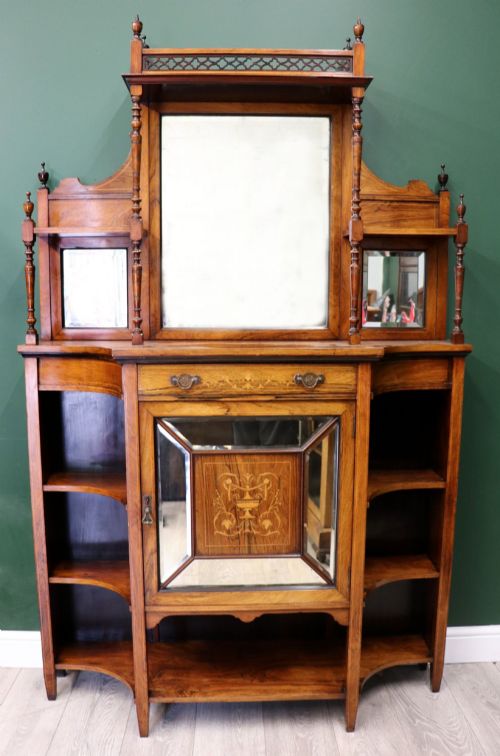
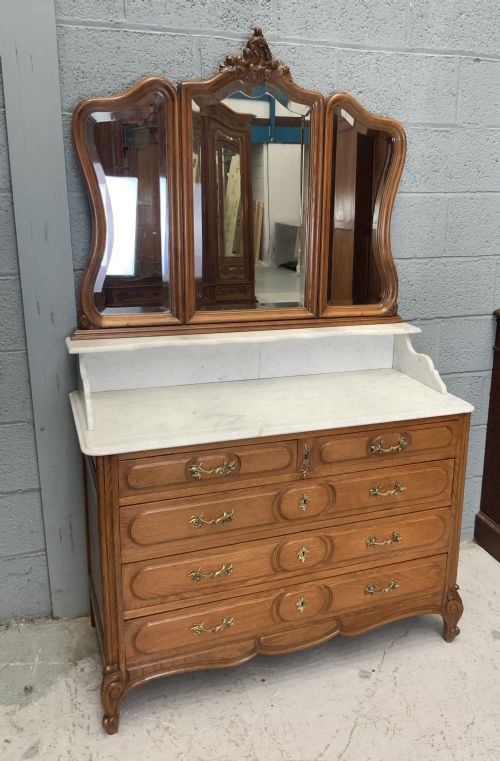
The form often overlaps with credenzas, chiffoniers, and console tables featuring mirrored superstructures. Walnut, mahogany, and burr walnut dominate the timber structures, frequently paired with inset marble surfaces.
Most variations date between the mid nineteenth century and the early twentieth century, showing revival styles such as Victorian Rococo and Neoclassical alongside plain Edwardian cabinetry.
Materials and construction
Cabinetmakers utilised dense hardwoods including mahogany, walnut, and oak for the primary carcass construction, applying figured burr veneers and marquetry inlay to prominent surfaces. These timbers provide the structural stability required to support heavy marble slabs and tall glass frames.
Silvered mirror glass forms the defining upper section, secured within carved or moulded wooden frames that match the base. Marble tops, found on numerous pieces, were shaped and polished to fit precisely over the lower cabinetry.
Antique Mirror Topped Sideboard Retail Price Guide 2026
Typical asking prices for mirror topped sideboard among the pieces listed under this phrase on Sellingantiques today, from the lower quarter to the upper quarter. They describe what is for sale here now, not the wider market.
The listings span the Victorian and Edwardian eras, incorporating walnut, mahogany, oak, and marble.
Assessing quality and craftsmanship
Quality reveals itself in the selection of timber veneers, where symmetrical burr walnut or figured mahogany displays thoughtful grain matching across doors and panels. Carved details executed with crisp depth distinguish superior workshops from simpler production pieces.
The integration of the mirror superstructure into the lower sideboard demonstrates the builder's skill, particularly where curved glass or complex serpentine shapes meet rigid marble and timber joints.
The Antique Mirror Topped Sideboard Glossary
- Credenza
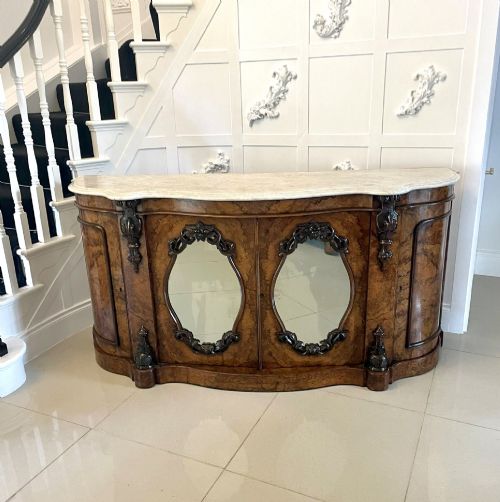
- A low dining room cabinet or sideboard, often enclosed by doors and lacking the raised legs of a table. In Victorian examples, these frequently incorporated mirrored backs for display.
- Burr walnut
- A prized timber harvested from walnut tree growths, yielding intricate, swirling grain patterns. Cabinetmakers used its veneers on the principal facades of high-status sideboards.
- Chiffonier
- A compact sideboard or cabinet equipped with shelving or a small mirror superstructure. This form gained popularity during the nineteenth century for smaller reception rooms.
- Marquetry
- Decorative inlay work using various coloured woods to create pictorial or geometric patterns on furniture surfaces. It appears on polished walnut credenzas and sideboards.
- Serpentine
- A furniture front or marble top curving gently outward in the centre and inward at the sides. This contour requires precise woodworking and stone-cutting skills.
Antique Mirror Topped Sideboard: Frequently Asked Questions
Where were mirror topped sideboards placed?
These pieces traditionally stood against dining room or drawing room walls, serving as serving stations or display surfaces for silver and ceramics. The mirrored glass reflected candlelight and added visual space to the room.
In modern interiors, they function similarly in living areas or hallways, offering generous surface space and concealed storage beneath the mirror.
Are these sideboards heavy?
Solid timber frames combined with thick marble slabs and glass superstructures create substantial weight. Moving them usually requires multiple people and careful handling of the detached or integrated mirror sections.
Securing taller mirror backs to the wall is sometimes necessary for stability in active households.
How do I identify a Victorian mirror back?
Victorian examples often display rich burr walnut or mahogany veneers, deep carving, and sometimes marquetry inlay. The glass in older mirrors may show subtle imperfections or foxing.
Construction details like hand-cut joints and heavier timber framing help distinguish these nineteenth-century pieces from later reproductions.