





Antique Mirror Slip
An antique mirror slip provides the inner border framing a glass plate, holding the reflective surface within its wooden rebate.
Antique Mirror Slip
An antique mirror slip functions as the narrow interior moulding or lining that sits directly against the glass within a larger frame, frequently seen in eighteenth-century and nineteenth-century wall and overmantel mirrors. These slips appear across Georgian, Regency, and Victorian periods, often accompanying convex plates, fretwork frames, and architectural overmantels.
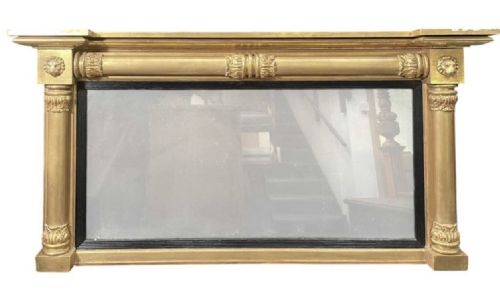
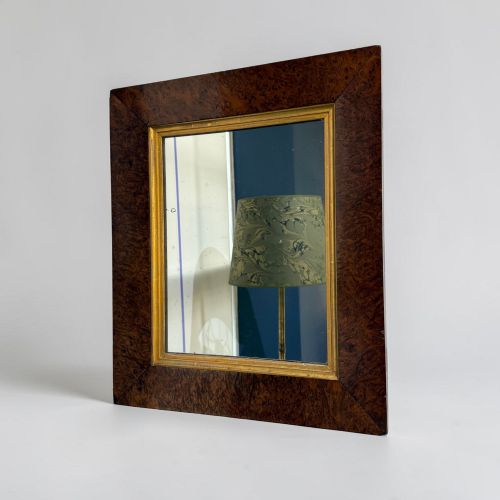
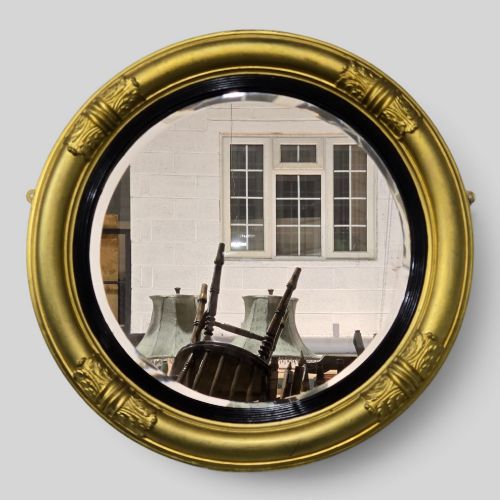
The slips themselves emerge in materials like giltwood, ebonised wood, and plain wood, sometimes taking a gilt finish inside a darker outer frame. They serve to bridge the main frame and the glass, adding a refined layer of depth to the overall composition of the piece.
Materials and construction
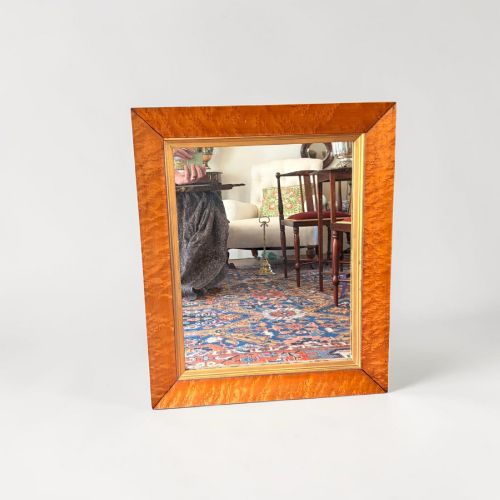
Craftsmen built these frames and slips from timber foundations such as mahogany, walnut, sycamore, and birds-eye maple, applying gesso to create crisp moulded details and applied decoration. Giltwood surfaces received layers of gold leaf laid over red bole, while ebonised wood achieved its dark tone through staining and polishing.
Glass plates were individually silvered and held securely by the wooden rebate of the slip, often backed with protective boards. Fretwork styles involved delicate jigsaw cutting of thin mahogany or walnut veneers, while convex glasses sat deep within rounded giltwood rims.
Antique Mirror Slip Retail Price Guide 2026
Typical asking prices for mirror slip among the pieces listed under this phrase on Sellingantiques today, from the lower quarter to the upper quarter. They describe what is for sale here now, not the wider market.
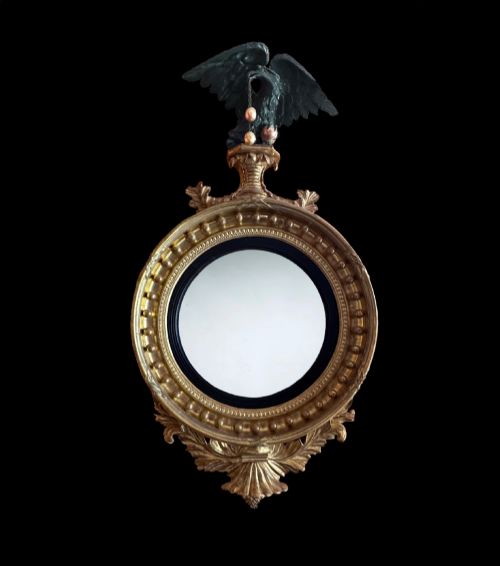
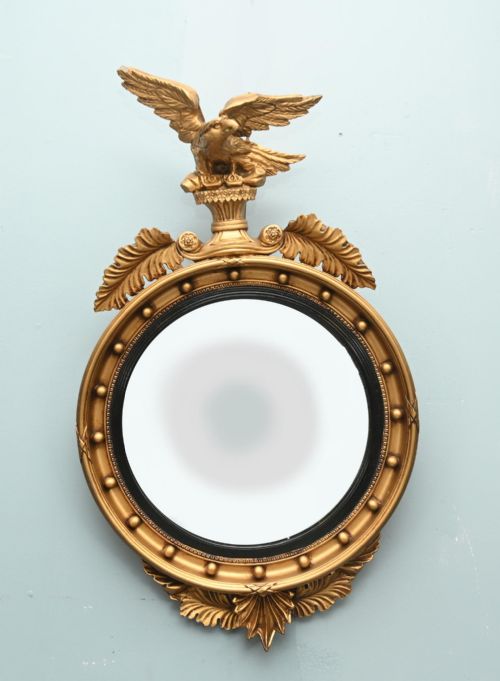
Several convex mirrors include watchful eagle surmounts keeping guard over the glass below.
Judging quality and execution
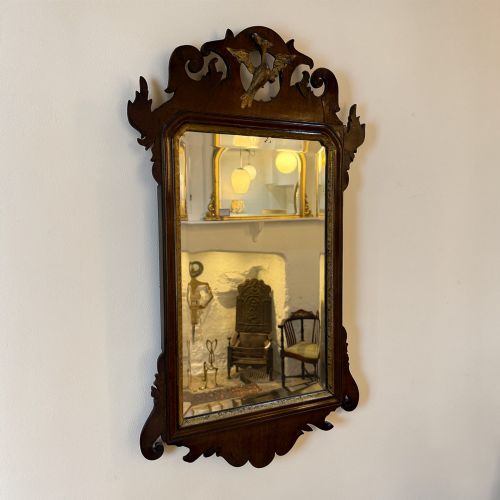
Quality rests in the crispness of the carved or pierced wood details and the uniform application of the gilt or ebonised finish. Fretwork panels show superior craftsmanship when the piercing is sharp and balanced without crude tool marks.
The treatment of the slip itself indicates the care taken by the maker, with finely carved mouldings and clean gilding separating standard joinery from superior cabinet work. The retention of original mirror glass and backing boards further distinguishes better-preserved examples.
The Antique Mirror Slip Glossary
- Giltwood
- Timber coated with fine layers of gold leaf over a prepared gesso ground. This technique creates the bright metallic sheen seen on Regency and Georgian frames.
- Ebonised wood
- Timber stained and polished to imitate expensive ebony. This finish provides a stark black contrast against gilt slips and glass.
- Fretwork
- Openwork ornamentation carved or pierced from thin wood using a fretsaw. It defines the scrolling outlines of Chippendale style and Georgian wall mirrors.
- Convex glass
- A spherically curved mirror plate that captures a wide, distorted panoramic reflection. It sits centrally within circular frames often fitted with ball-turned bezels.
Antique Mirror Slip: Frequently Asked Questions
What is a mirror slip?
A mirror slip is the narrow inner frame or moulding that surrounds the glass plate and separates it from the main outer border. It provides a finished edge and helps secure the reflective surface in place.
These slips appear in contrasting materials, such as a gilt slip set inside an ebonised or mahogany frame, adding depth and visual division to the piece.
How do I date a convex mirror?
Dating a convex mirror involves examining the construction of the circular wooden frame, the backing boards, and the type of glass used. Earlier Regency examples often feature heavy giltwood bezels with applied acanthus or eagle mounts.
Later Victorian and revival pieces from the twentieth century utilise different joinery techniques and newer backing materials while copying the classic bullseye format.
Where should I hang an overmantel mirror?
An overmantel mirror is traditionally placed directly above a fireplace mantelpiece to reflect light and fill the vertical wall space. Their substantial proportions suit reception rooms and principal living spaces.
When hanging these heavy pieces, secure fixings into structural wall studs or masonry are essential to support the weight of the timber frame and thick glass plate.
What distinguishes Chippendale style mirrors?
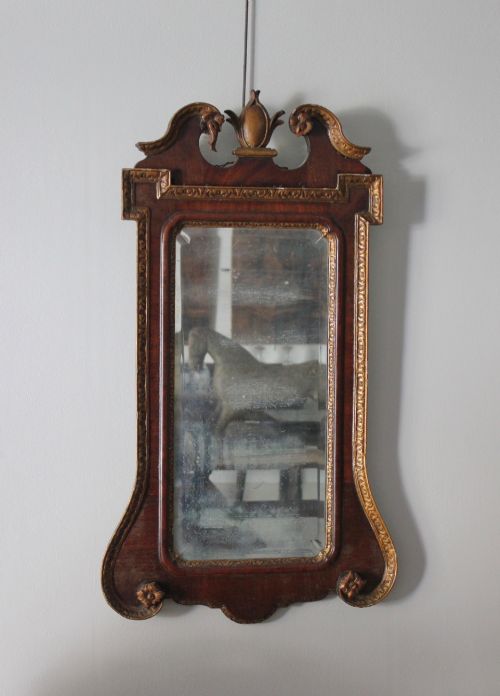
Chippendale style mirrors are characterised by elaborate fret-cut wooden frames featuring scrolling silhouettes, architectural pediments, and symmetrical foliage. They frequently employ mahogany, walnut, or sycamore.
Many of these pieces incorporate gilded slip mouldings around the glass, combining dark figured wood with bright metallic highlights typical of the mid-eighteenth century and later revival periods.