





Antique Mini Chest
An antique mini chest packs the architectural presence of full-scale furniture into a compact tabletop footprint, drawing collectors with its intricate proportions and domestic utility.
Antique Mini Chest
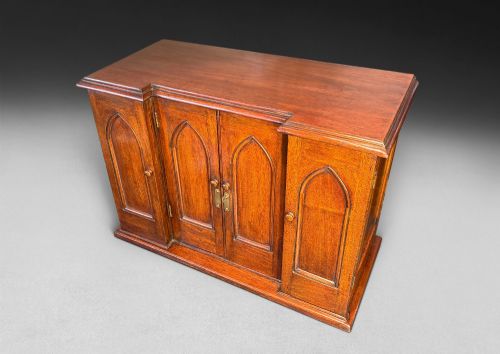
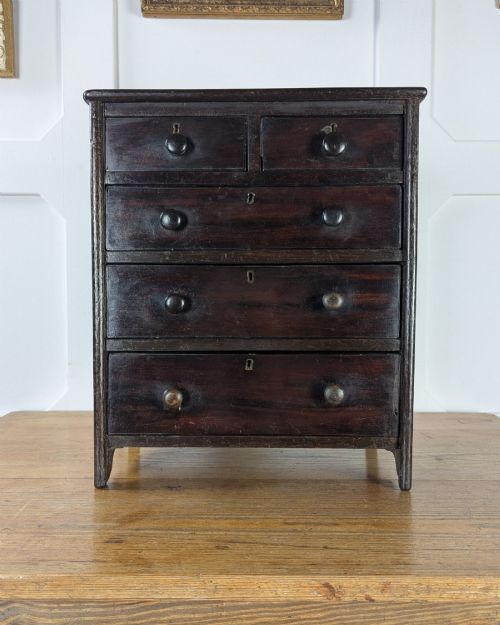
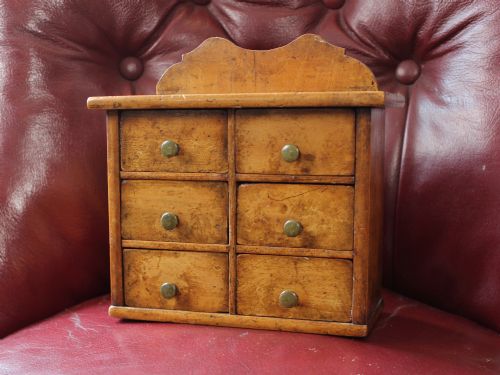
When searching for an antique mini chest, buyers encounter a diverse selection of scaled-down furniture forms produced across the eighteenth, nineteenth, and early twentieth centuries. These pieces encompass miniature chests of drawers, spice cabinets, apprentice pieces, and collectors' cases designed for desktop or tabletop placement.
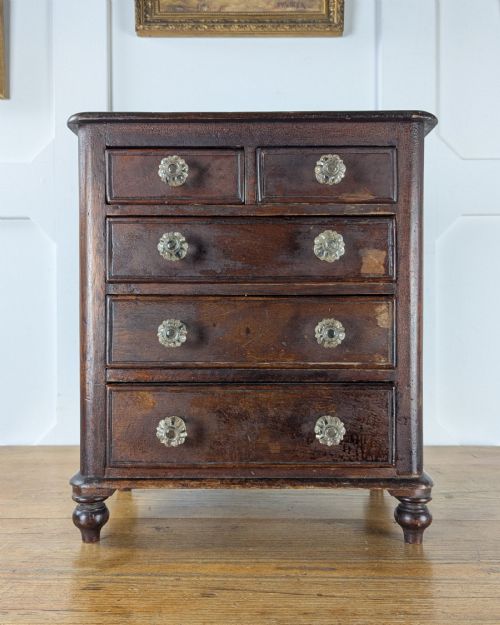
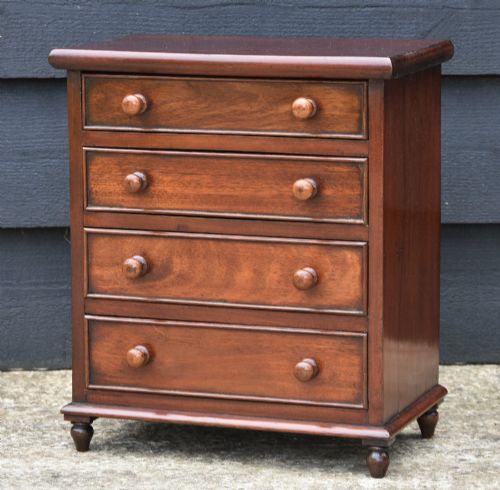
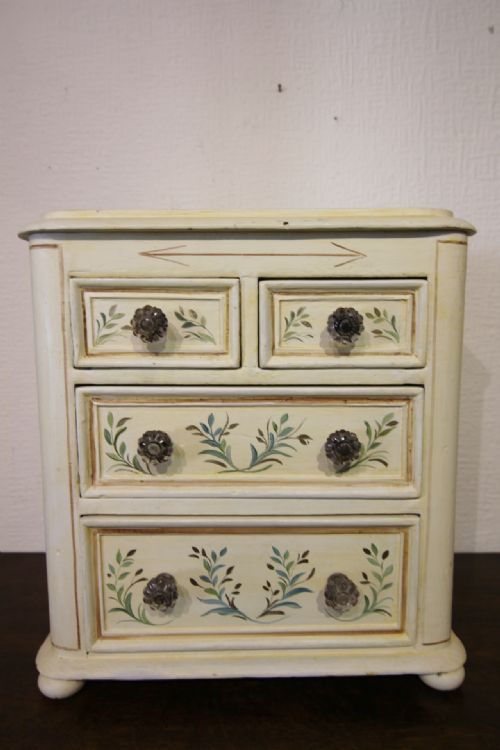
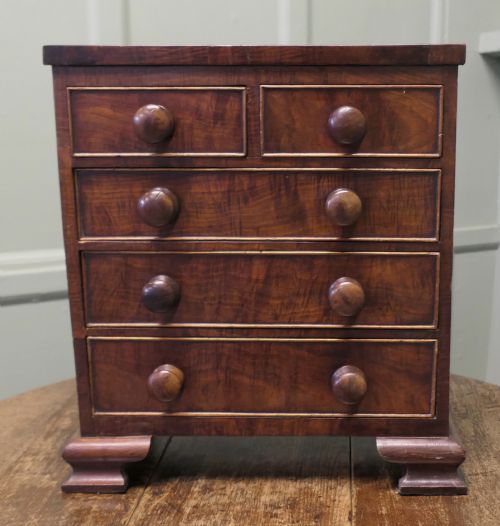
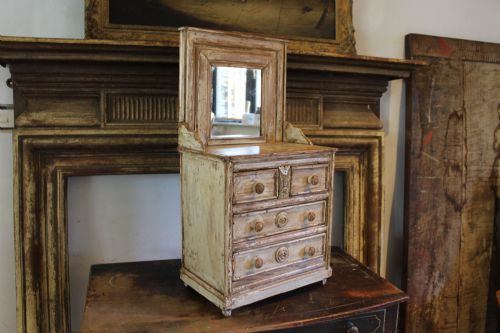
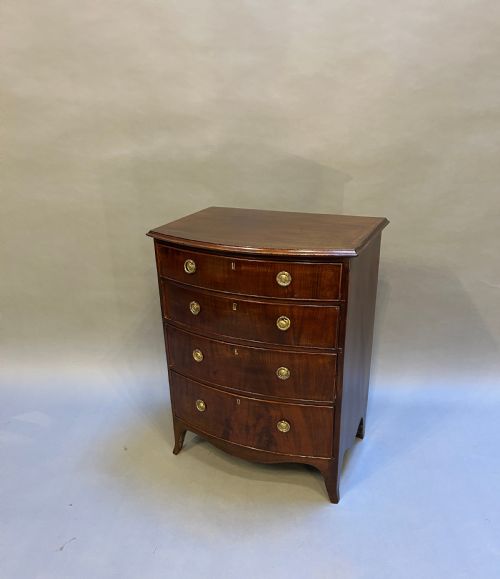
The most common examples on this page are nineteenth-century Victorian mahogany miniature chests of drawers, often featuring classic bowfront designs or turned feet. Alongside these standard domestic forms appear specialised storage pieces like needle drawer cabinets, coffer bach designs, and specimen cases in oak, pine, and walnut.
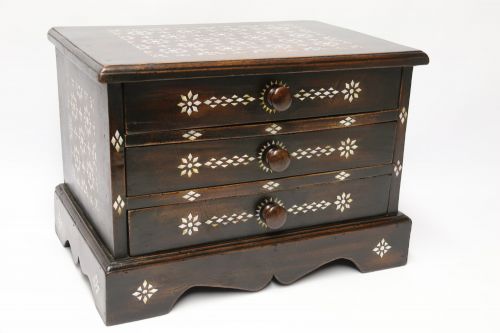
Origins span English workshops, French provincial makers, and Anglo-Indian production, demonstrating that small-scale cabinetmaking served varied purposes from trade samples to specialised domestic storage. Each piece reflects the joinery standards of its period, whether Georgian mahogany or Victorian pitch pine.
How they were made
Cabinetmakers constructed these small chests using dense hardwoods such as mahogany, walnut, and oak, frequently enhanced by burr veneers, satinwood inlays, or fruitwood elements. Secondary timbers like pine appear on drawer linings and internal framing, demonstrating traditional joining methods adapted for miniature scale.
Surface finishes range from clear polish that highlights mahogany grain and burr walnut figures to painted pine and simulated wood grain. Details such as brass drop handles, ebonised mouldings, and turned feet complete the construction, relying on precise hand-joinery to maintain durability in a reduced footprint.
Listings feature 18th-century, Georgian, Victorian, and Edwardian periods, utilising mahogany, oak, pine, walnut, and fruitwood.
What varies in quality
Quality in these small pieces rests on the fidelity of the proportions and the precision of the miniature scale joinery. Finer examples display carefully chosen timber figures, such as figured mahogany or burr walnut, matched across the drawer fronts with subtle grain continuation.
The handling of secondary details separates workshop standards. Better pieces retain original brass hardware, clean dovetail joints on the drawers, and crisp mouldings, whereas simpler utilitarian items rely on painted finishes and plain deal or pine construction.
The Antique Mini Chest Glossary
- Apprentice piece
- A small item of furniture created by a craftsman to demonstrate skill and secure entry into a guild or trade. These pieces often mirror full-size chests of drawers.
- Bowfront
- A convex, curved front profile on a chest of drawers that swells outward in the centre. This style appears frequently on nineteenth-century mahogany examples.
- Coffer bach
- A small Welsh chest featuring a drawer beneath the main lidded compartment. Typically constructed from native oak during the Georgian period.
- Wellington chest
- A tall, narrow chest of drawers secured by a hinged vertical locking sidebar on one side. Named after the Duke of Wellington, these usually feature multiple small drawers.
- Specimen case
- A small cabinet or chest fitted with shallow drawers for storing natural history samples, coins, or geological collections. They often utilise oak, mahogany, or walnut.
Antique Mini Chest: Frequently Asked Questions
What were mini chests used for?
These small cabinets served multiple functions in period interiors, ranging from desktop storage for documents and jewellery to apothecary storage for spices. Many functioned as personal collectors' cases for specimens or sewing implements.
Cabinetmakers also produced them as trade samples or demonstration pieces to showcase joinery skills to prospective clients without transporting full-scale furniture.
How do I date an antique mini chest?
Dating relies on identifying the primary wood species, construction techniques, and stylistic markers associated with specific periods. Georgian pieces often feature solid mahogany and simple bracket feet, while Victorian examples introduce burr walnut veneers, bowfront profiles, and turned feet.
Secondary woods inside the drawers and the style of the metal handles provide further clues to the decade of manufacture, matching the broader trends of English and continental cabinetmaking.
Where should I place a mini chest at home?
Their compact dimensions make them suitable for tabletops, desks, and sideboards where floor space is limited. They provide functional storage for small items like keys, stationery, or collections while acting as focal points in a room.
Placing them away from direct heat sources and strong sunlight protects the delicate wood veneers and historic surface finishes from drying or fading.
Are apprentice pieces different from regular miniature chests?
Apprentice pieces represent skilled work executed to prove a craftsman's competency, though the term was often applied broadly by later dealers to various small chests. Both categories share identical construction care and scaled-down dimensions.
Distinguishing between them depends on the specific workshop traditions and regional naming conventions rather than a difference in structural quality.