
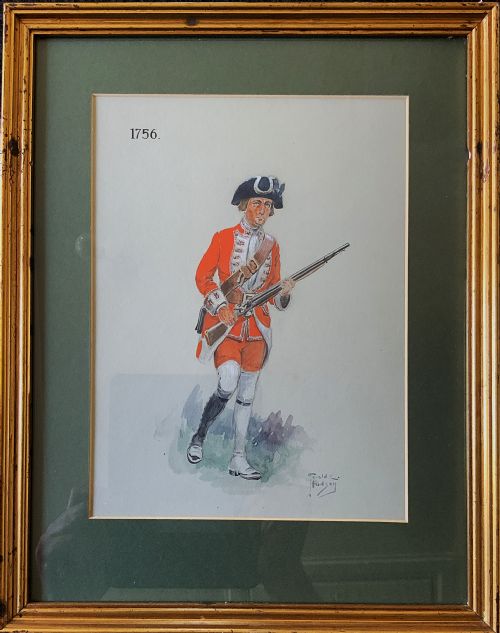


Antique Military Paper Painting
These antique military paper paintings capture centuries of regimental history through delicate watercolours, pastels, and gouache.
Antique Military Paper Painting
When you search for an antique military paper painting, you seek historical works on paper that depict soldiers, cavalrymen, officers, and battlefield scenes from the Georgian era through to the mid-twentieth century. These works range from intimate wartime sketch portraits of individual captains and majors to detailed watercolour narratives of historic engagements and garrison life.
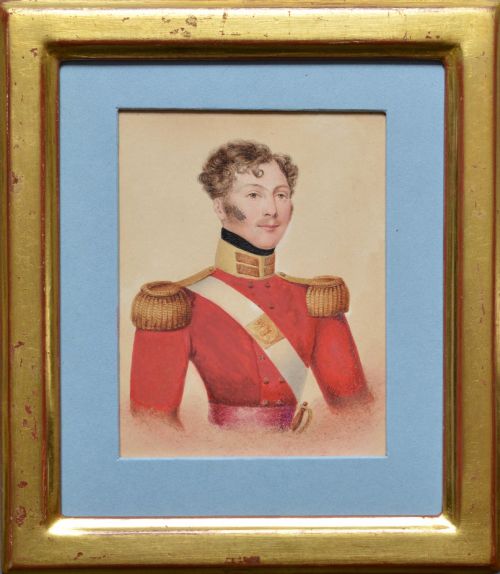
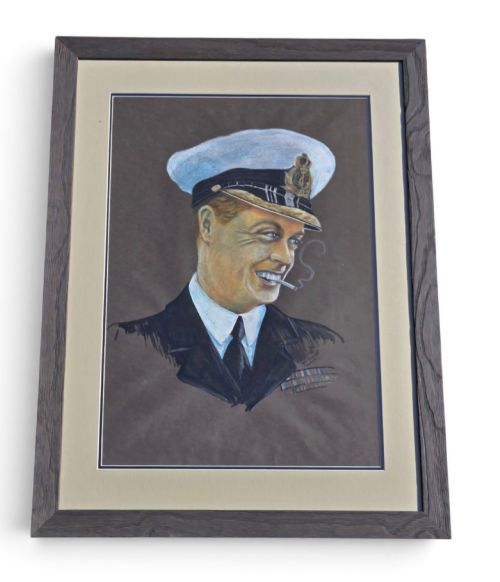
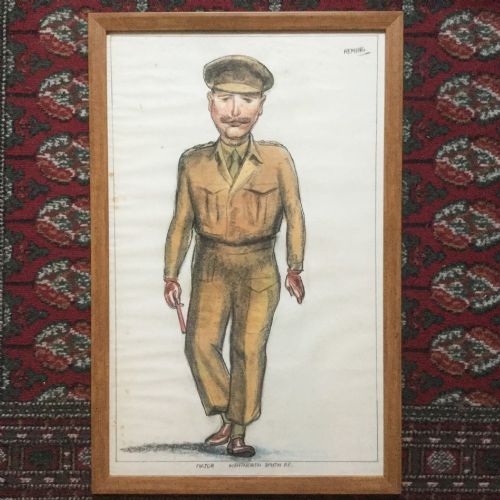
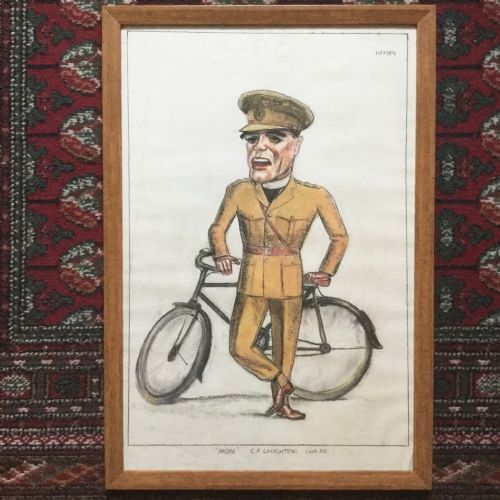
You are most likely to encounter nineteenth-century British school watercolours and early twentieth-century pieces by named artists such as Snaffles, alongside period pastels and gouache sketches. The subjects span named regiments like the Staffordshire 80th Regiment of Foot and the Royal Engineers, as well as royal portraits and campaign landscapes.
The form is defined strictly by its medium on paper, housed within traditional wooden, giltwood, or glass frames that preserve the fragile pigments. Collectors find these pieces valued for their documentary detail of uniforms, campaign dress, and military routine recorded directly from the period.
Materials and technique
Artists executed these works primarily on paper using watercolour, gouache, and pastel, often enhancing details with ink wash or bodycolour to define uniform buttons, lace, and insignia. The delicate nature of these pigments required protective framing behind glass to prevent light degradation and moisture damage over the decades.
Many works utilise heavy watercolour paper or tinted card as a base, allowing the artist to exploit the paper's natural tone for highlights in uniform coats and horses. Framing typically involves period wood or giltwood moulding that matches the aesthetic of the Georgian, Victorian, or Edwardian era in which the painting was produced.
Recorded subjects span diverse military roles, from cavalry officers and engineers to formal royal portraits and campaign scenes.
The markers of quality
Quality rests upon the precision of the draughtsmanship, particularly in the accurate rendering of regimental uniforms, equine anatomy, and facial characterisation. Works by accomplished hands demonstrate a confident mastery of wash and pigment that conveys movement and atmosphere without losing the strict details of military dress.
Condition and originality also dictate standing, with preference given to works retaining their original pigments without excessive fading, foxing, or acidic paper damage. The integration of period framing and documented provenance further elevates an example above standard decorative works.
Herskind·Thomas Mackay·Snaffles·Frederick Tayler·George Cattermole
The Antique Military Paper Painting Glossary
- Gouache
- An opaque watercolour medium characterised by the addition of a white pigment to give it body. It allows artists to build rich, dense layers of colour on paper.
- Watercolour
- A painting method in which the paints are made of pigments suspended in a water-based solution. Transparency is key to this medium, allowing light to reflect from the paper beneath.
- Pastel
- A dry painting medium in the form of a stick, consisting of powdered pigment and a binder. It produces velvety textures and rich, luminous tones.
- Giltwood
- Wood that has been coated with a thin layer of gold leaf or gesso paint. It was commonly used for framing fine artwork during the eighteenth and nineteenth centuries.
- Wash
- A thin, transparent layer of diluted watercolour or ink spread evenly across the paper. It establishes atmospheric backgrounds and tonal depths in military scenes.
Antique Military Paper Painting: Frequently Asked Questions
How should I display a paper painting safely?
Keep these works out of direct sunlight to prevent the watercolour pigments and pastels from fading over time. Maintaining a stable room temperature protects the fragile paper and prevents the wooden or giltwood frames from warping.
Ensure the artwork hangs away from damp walls and heat sources to preserve the integrity of the paper support and the historical framing materials.
What do uniform details tell us?
Specific regimental insignia, lace patterns, and headdress styles allow historians to date the artwork accurately and identify the branch of service. Details such as the uniform of the Staffordshire 80th Regiment of Foot or Royal Engineers place the subject within a precise military context.
These visual records often capture transitional periods in military dress before official uniform regulations changed. They serve as primary evidence for uniform researchers and regimental historians.
Are pastels as stable as watercolours?
Pastels consist of dry pigment powder held together by a minimal binder, making them inherently more prone to dusting and displacement if subjected to vibration. They require secure glazing and professional framing to prevent pigment particles from shedding onto the inside of the glass.
Watercolours absorb into the paper fibres, offering greater mechanical stability, though they remain sensitive to light exposure. Both mediums demand careful preservation to maintain their original appearance.
How do I identify a nineteenth-century work?
Examine the paper type, framing construction, and the style of the script used for any signatures or contemporary inscriptions on the reverse. Nineteenth-century watercolours often employ hand-made papers with distinct watermarks and characteristic pigment mixes typical of the Victorian and Georgian periods.
Comparing the uniform cut and artistic technique with dated examples in historical records helps narrow down the production era. Professional framing components, such as old backing boards and hand-cut nails, also offer clues to the age.