


Antique Metamorphic Furniture
Antique metamorphic furniture transforms before your eyes, offering clever dual-purpose designs that shift effortlessly from one function to another.
Identifying antique metamorphic furniture
When you search for antique metamorphic furniture, you encounter ingenious convertible pieces designed to serve dual purposes within the home. The selections here span the Regency period through the early twentieth century, including Edwardian examples.
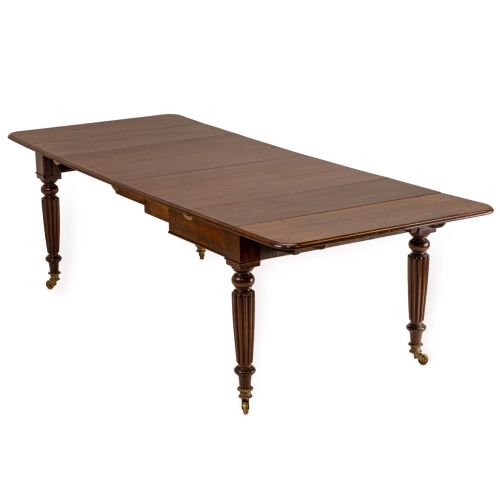
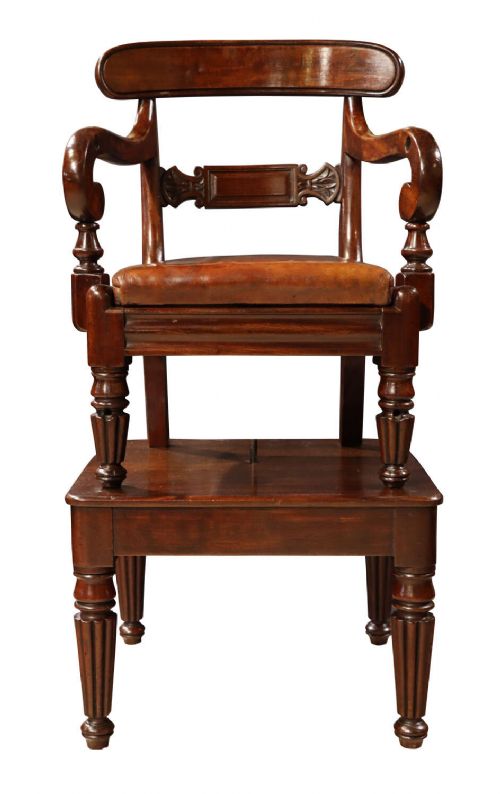
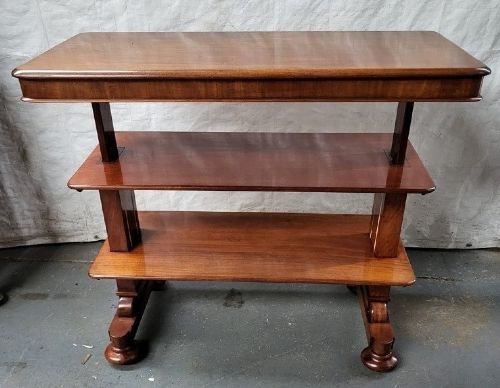
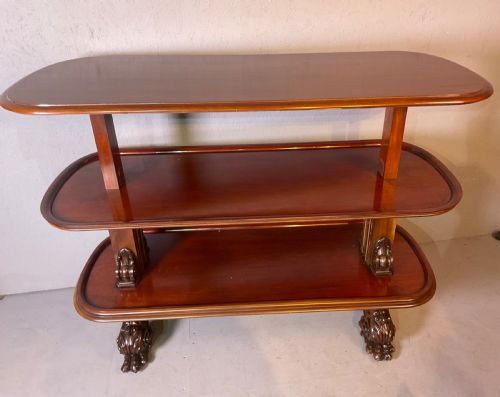
The physical forms on this page take shape as writing desks, library armchairs that convert to steps, occasional tables, and surprise drinks tables. These dual-function objects reflect the Victorian and Edwardian appetite for space-saving ingenuity and mechanical cleverness.
Origins represented in these listings point towards London makers and specific stylistic revivals such as Louis XV. Each piece demonstrates a physical transformation that merges domestic utility with mechanical novelty.
Materials and construction
Construction relies heavily on mahogany and mixed hardwood, providing the structural rigidity necessary for moving parts and folding mechanisms. Brass hardware is integrated to facilitate smooth pivoting, sliding, and unfolding actions without binding the wood.
Surface treatments incorporate leather insets for writing surfaces, alongside cane work and glass panels on specialised tables. These combined materials support both the decorative ambitions of the Regency and Edwardian eras and the heavy physical handling demanded by convertible furniture.
Retail Price Guide 2026
Typical UK retail prices for metamorphic furniture, calculated from the Sellingantiques database of over a million retail prices indexed since 2003. This retail price guide relies exclusively on Sellingantiques data; no external sources or auction records are used, so the figures do not describe the wider market.
Listings feature mahogany, brass, leather, glass, cane, and mixed hardwood across pieces dating from the Regency period to the early twentieth century.
Assessing quality and execution
Superior quality in metamorphic pieces lives in the precision of the hidden joints and the smoothness of the mechanical action. When a desk or armchair shifts positions, the movement should feel balanced and deliberate rather than loose or jarring.
Material selection and the finesse of secondary timbers also separate standard examples from finer workshops. The integration of brass fittings and the preservation of original leather or cane surfaces dictate the overall integrity of the piece.
J.C Vickery of London
The Antique Metamorphic Furniture Glossary
- Metamorphic furniture
- Furniture designed to transform from one distinct object into another, such as a chair turning into a set of steps or a table concealing a drinks compartment.
- Regency
- An architectural and decorative style spanning the early nineteenth century, characterised by classical restraint, mahogany usage, and refined brass mounts.
- Edwardian
- The period spanning the early twentieth century up to the First World War, noted for lighter furniture forms and revivals of earlier French styles.
- Occasional table
- A small, portable table intended for miscellaneous uses around a room, which in metamorphic examples often conceals internal compartments or lifting mechanisms.
- Mixed hardwood
- A timber grouping utilised in cabinetmaking where various durable broad-leaved tree woods are selected for internal framing or secondary structural support.
Frequently Asked Questions
What is metamorphic furniture?
Metamorphic furniture is a convertible piece designed to change its form and function through integrated hinges, pivots, or sliding sections. These clever designs allow a single object to serve two entirely different purposes in a room.
Examples include chairs that fold out into library steps and tables that conceal drinks compartments. This ingenuity made them popular in refined interiors where space and multifunctionality were prized.
How do library step armchairs work?
Library step armchairs are engineered so the back and seat sections pivot or unfold outward to create a stable staircase. This allows a reader to reach high bookshelves before transforming the steps back into a comfortable armchair.
Mechanisms rely on sturdy brass hinges and solid mahogany framing to support the weight of a person climbing. The transformation is concealed within the normal silhouette of an upholstered seat.
What materials are used?
These convertible pieces are constructed primarily from mahogany and mixed hardwoods to provide the strength required for moving joints. Brass hardware is standard for operational parts, while surfaces frequently feature leather, cane, or glass.
These traditional materials ensure that the physical transitions do not compromise the stability of the frame. Each substance was chosen for both its durability and its aesthetic contribution to the finished object.
How do I date these pieces?
Dating relies on stylistic clues, historical periods, and the characteristics of the mechanical hardware used within the construction. Pieces on this page span the Regency era through the early twentieth century, including Edwardian interpretations.
Cabinetmaking techniques and decorative details such as Louis XV revival motifs help narrow the era of production. Maker signatures or stamps, when present, provide a direct link to specific workshops like J.C Vickery.