
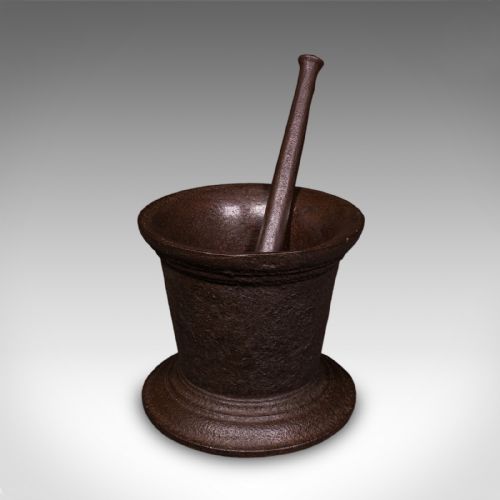


Antique Metal Pestle Mortar
These heavy cast vessels form the core of any serious kitchen or apothecary collection.
Antique Metal Pestle Mortar
An antique metal pestle mortar serves as a heavy grinding vessel for domestic kitchens, apothecary shops, and dye makers. When searching for an antique metal pestle mortar, buyers encounter domestic and professional tools designed for crushing dry ingredients.
The selection ranges from small kitchen helpers to massive industrial workshop pieces. English Georgian and seventeenth-century examples dominate the offerings, alongside Spanish Baroque and Victorian apothecary pieces.
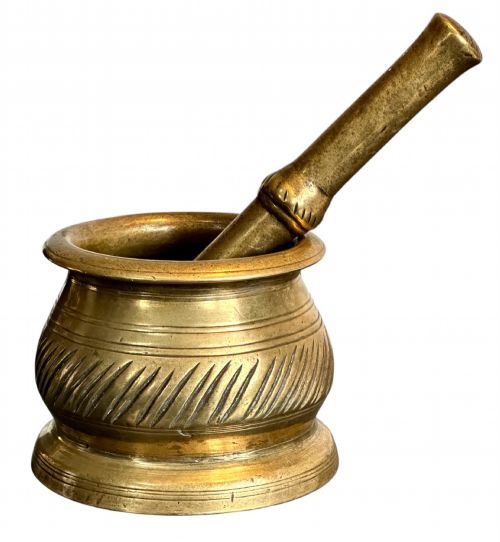
Most items appear in durable cast bronze or brass, accompanied by their matching pestle. Collectors find standard domestic sets and heavy industrial dye makers' mortars in equal measure.
How they were made
Foundries produced these objects by pouring molten metal into sand or loam moulds. Bronze and brass provided the necessary tensile strength and density to withstand heavy daily grinding.
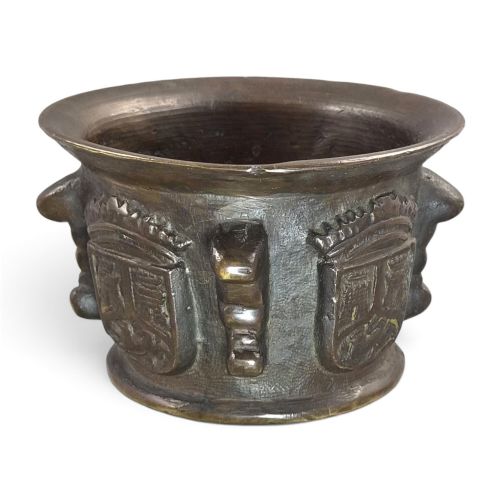
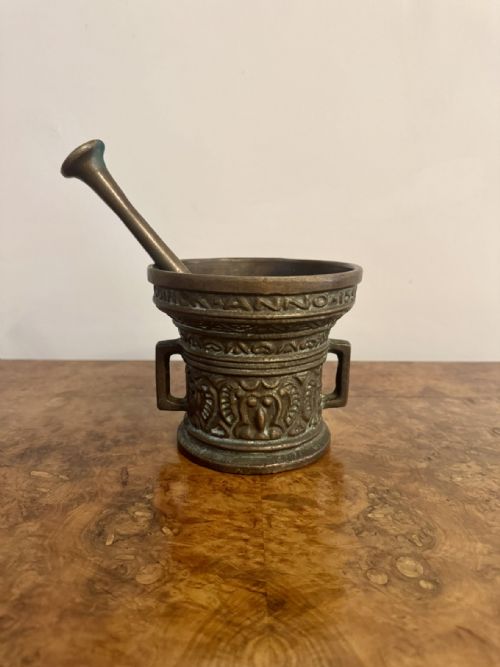
Makers often cast decorative ribs, heraldic coats of arms, or Tudor rose motifs directly into the exterior walls. Workers then finished the surfaces with hand-turning on a lathe or left the cast texture intact.
Listings feature durable materials including bronze, brass, cast iron, and bell metal across multiple centuries.
What varies in quality
Quality rests in the crispness of the cast decoration and the integrity of the metal walls. Pieces bearing heraldic arms or specific period motifs command greater attention than plain utility vessels.
The presence of the original matching pestle elevates the desirability of any set. Weight and proportion also separate standard domestic items from industrial or ceremonial examples.
The Antique Metal Pestle Mortar Glossary
- Mortar
- The heavy bowl in which substances are crushed or ground with a pestle. These vessels feature thick walls designed to absorb the impact of heavy ingredients.
- Pestle
- The heavy, club-shaped tool used for pounding and grinding materials inside the mortar. Matching period examples share the same metal alloy as their companion bowl.
- Bell metal
- A hard alloy containing copper and tin used for casting bells and high-grade mortars. This material produces a resonant tone when struck.
- Apothecary
- A historical practitioner who prepared and sold medicines and drugs. Their mortars often display distinctive decorative bands or chemist marks.
- Georgian
- The period spanning the reigns of the first four Georges from seventeen fourteen to eighteen thirty. Pieces from this era often exhibit balanced proportions and classical decorative details.
Antique Metal Pestle Mortar: Frequently Asked Questions
How do I date an old mortar?
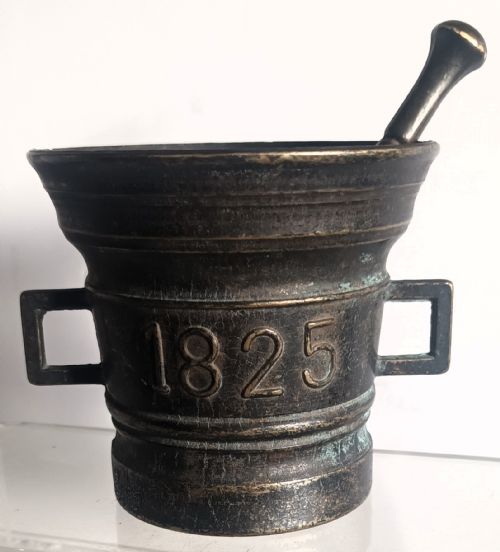
Dating relies on stylistic clues such as decorative ribbing, heraldic crests, and exterior shape. Seventeenth-century vessels often display rougher casting textures compared to later Georgian or Victorian examples.
Material composition also helps narrow the age. Early pieces frequently utilise high-tin bronze, while later nineteenth-century versions lean towards bright brass or cast iron.
Were these used for cooking?
Many of these vessels served practical roles in domestic kitchens for grinding spices, herbs, and seeds. Kitchen variants typically show wear patterns inside the bowl from centuries of pestle use.
Others originated in apothecary shops or dye workshops for industrial preparation. Examining the scale and interior residue usually reveals the original workspace function.
Why do some have coats of arms?
Foundries cast heraldic arms, such as the Tudor rose or specific noble houses, to denote ownership or civic pride. Spanish and English pieces frequently incorporate these badges into the exterior design.
Such decoration indicates a higher status workshop product rather than a plain utility tool. These ornamented vessels often belonged to wealthy households or official apothecaries.
How do I clean a metal mortar?
Gentle dusting and occasional dry brushing preserve the historical surface patina. Avoid harsh chemical cleaners or abrasive polishes that strip away age-related coloration.
Natural oxidation protects the metal and highlights early casting details. Maintaining this surface layer ensures the piece retains its historical integrity and character.