
Antique Metal Log Tub
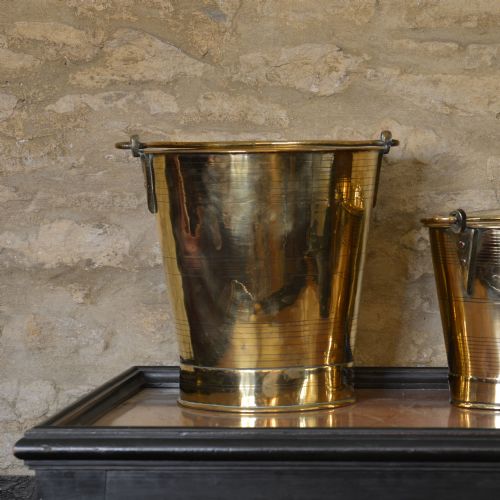
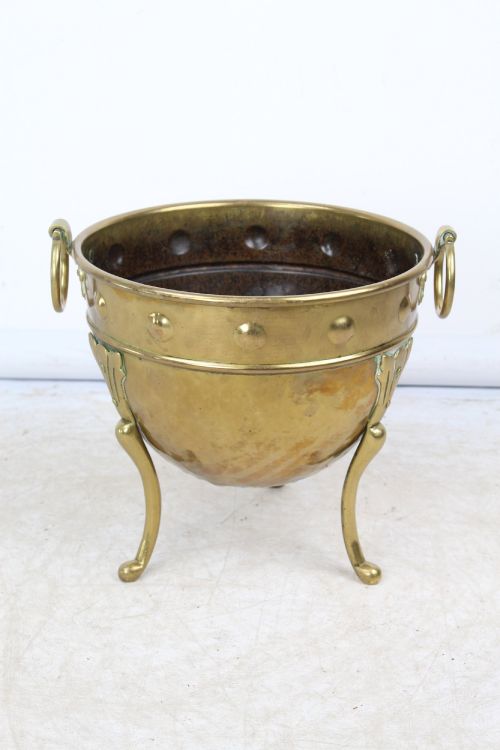
These heavy copper and brass vessels serve practical purposes beside the hearth while holding logs and fuel.
Antique Metal Log Tub
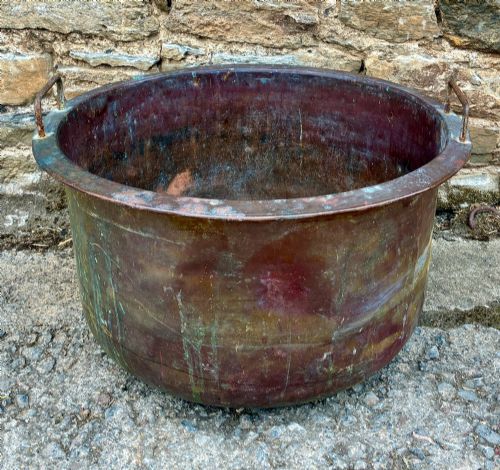
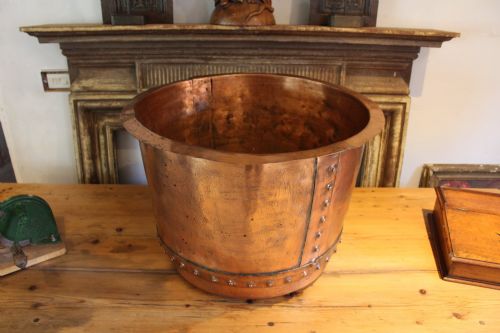
When you search for an antique metal log tub, you find heavy utilitarian vessels originally made for industrial, agricultural or domestic use that now hold firewood beside the fireplace. The inventory includes large copper pots, riveted boilers, brass buckets and cast iron containers spanning the Georgian, Victorian and Edwardian periods. Many examples originate from English country houses, French farmhouses and Scandinavian workshops.
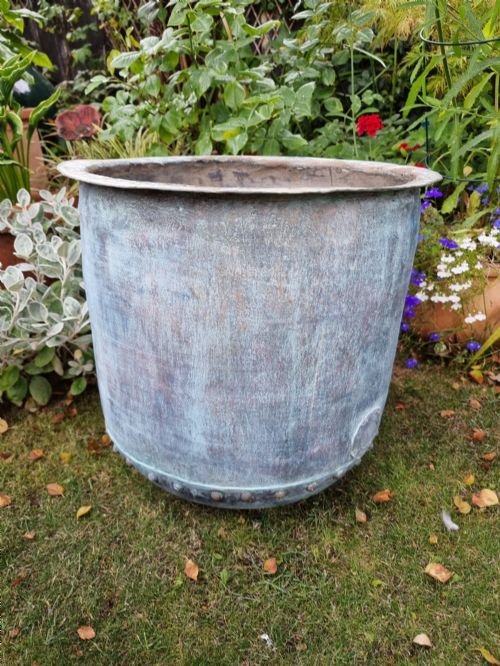
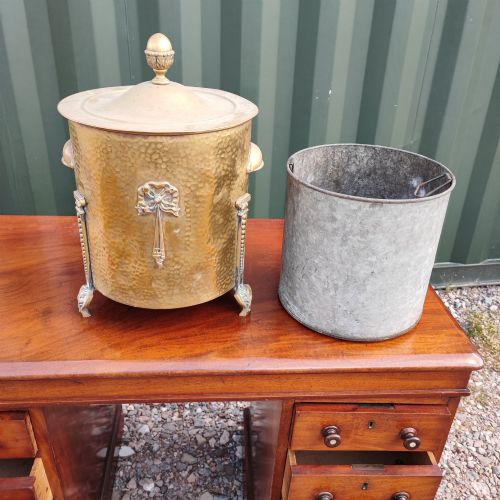
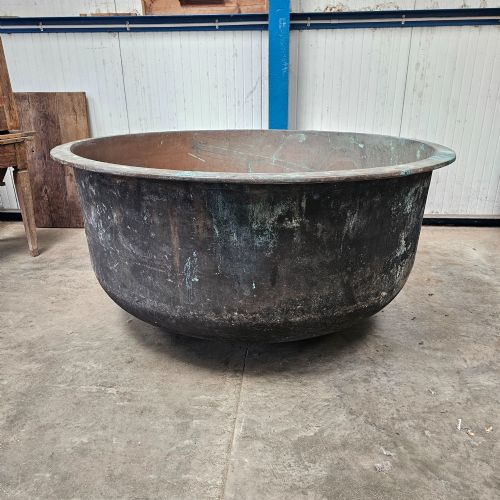
The most common pieces on this page are nineteenth-century copper and brass bins adapted from agricultural vessels, cheese vats, water barrels and wash tubs. These items bring warmth to a hearth through beaten metal surfaces and deep patinas developed over generations of use. They function equally well as fireside fuel baskets and large indoor planters for trees and shrubs.
Construction and Materials
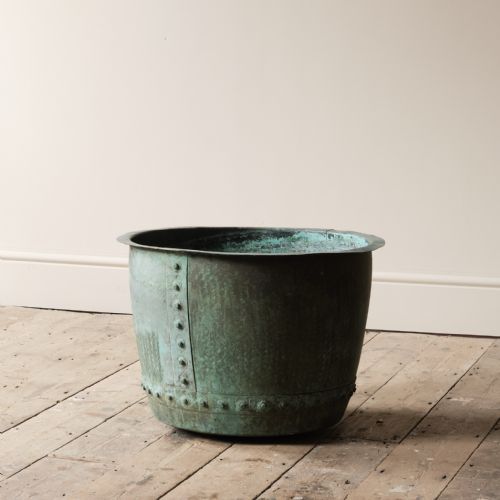
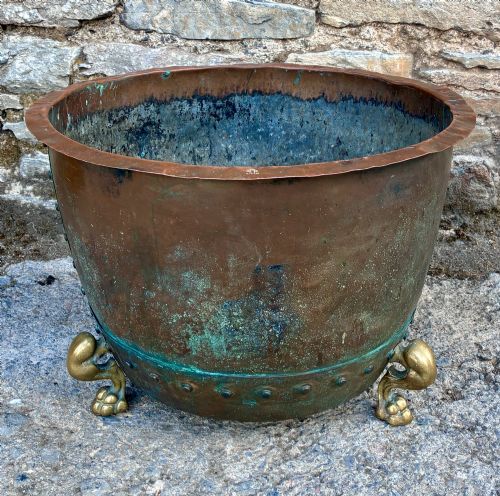
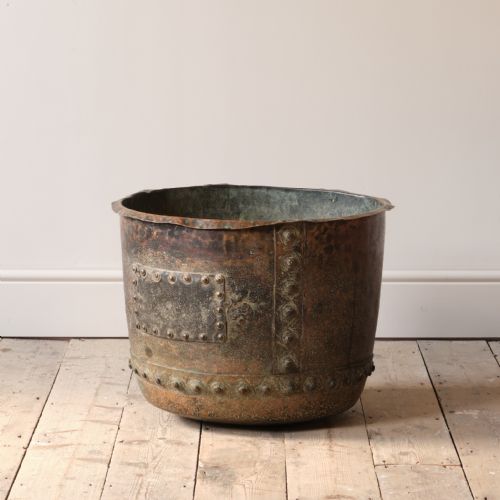
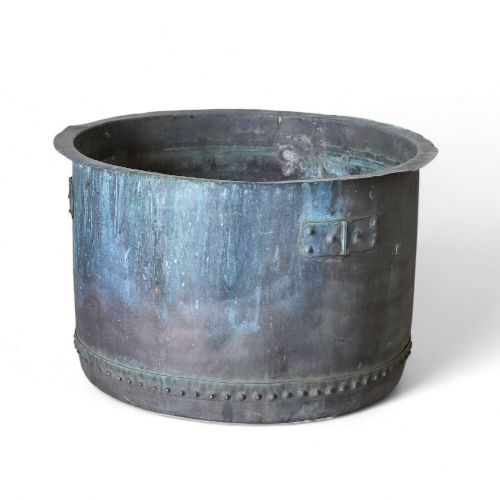
Makers shaped these containers primarily from heavy sheet copper, brass and iron, joining plates with hand-driven rivets to ensure watertight seams for boiling and washing. Wrought iron swing handles and brass drop rings were attached securely to bear the weight of heavy fuel or water.
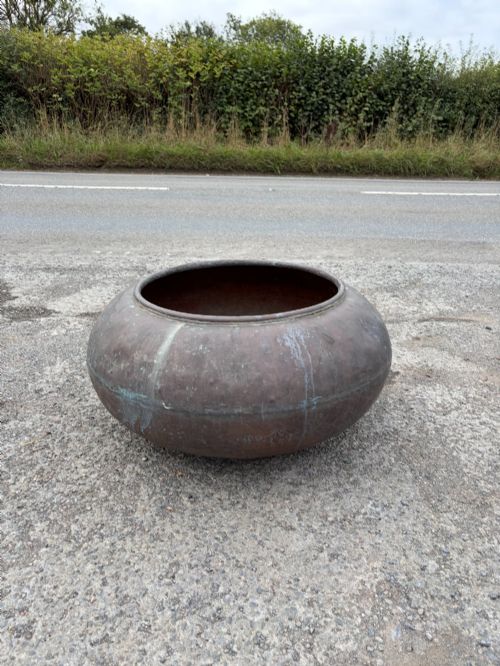
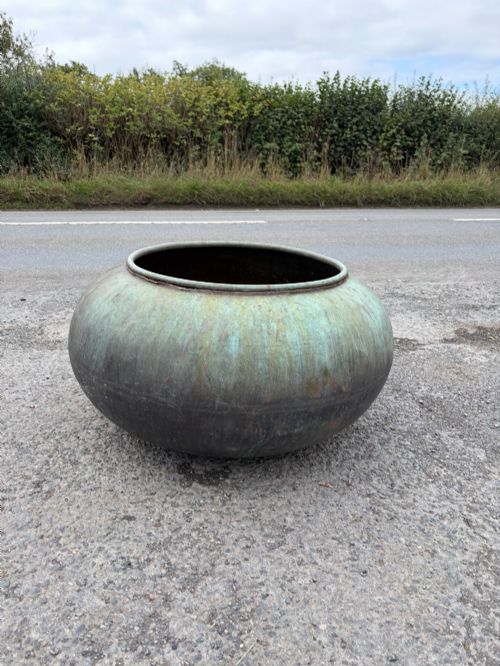
Surfaces often show the distinct marks of the hammer from when artisans beat the metal sheets into rounded cauldrons, cheese vats and grain measures. Natural patinas, verdigris finishes and occasionally painted or scrumbled surfaces developed on these metals through decades of exposure to moisture and hearth fires.
Some vessels began life boiling cheese in French alpine dairies before retiring to quiet English hearths as dignified log holders.
Evaluating Construction and Character
The distinction between ordinary utility vessels and finer pieces lies in the weight of the metal and the regularity of the hand-riveting along the seams. Heavier gauge copper and brass retain their structural integrity better and support deeper, more pleasing patinas.
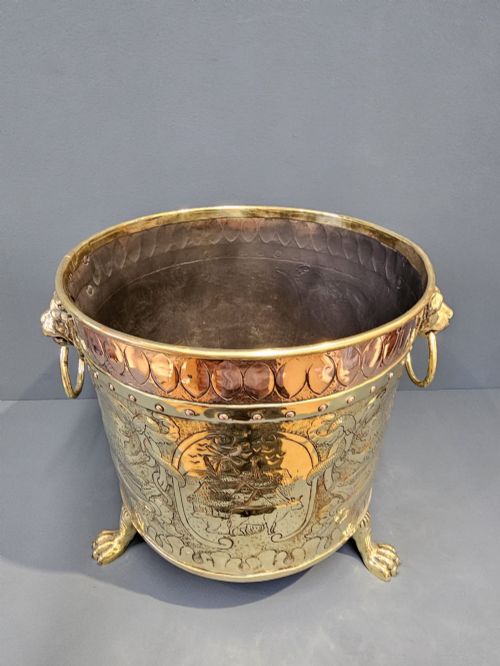
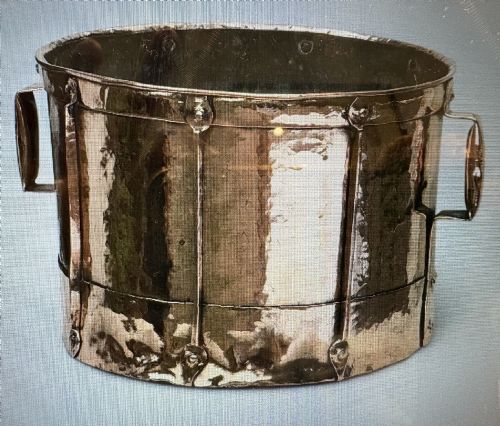
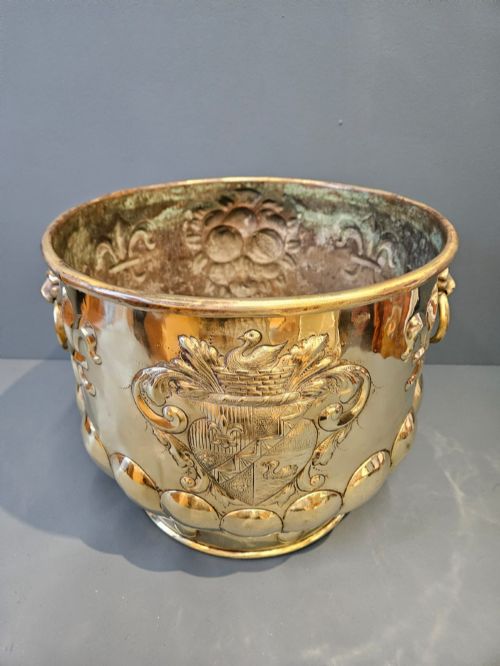
Detailing such as embossed brass bands, armorial crests to the front, and contrasting copper and brass construction elevate certain pieces from simple farm equipment to decorative Arts and Crafts or Victorian hearth furniture.
Henry Loveridge·Petrus Ramus
The Antique Metal Log Tub Glossary
- Patina
- The surface sheen and colour acquired by metal through age, handling and environmental exposure over many decades.
- Verdigris
- The green patina that forms naturally on copper, brass and bronze when exposed to moisture and air.
- Riveted
- Joined together using metal bolts hammered flat at the ends, common in heavy nineteenth-century metalwork before modern welding.
- Jardiniere
- An ornamental pot or stand for holding plants and flowers indoors, often matching the scale of large fuel bins.
- Scrumbled
- Painted with a translucent glaze over a lighter base colour to simulate the grain of wood or mottled surface texture.
Antique Metal Log Tub: Frequently Asked Questions
How do I clean an antique metal log tub?
Wash the surface gently with warm soapy water and a soft cloth to remove dust and loose soot without disturbing the aged patina. Avoid harsh metal polishes that strip away the historical character and verdigris accumulated over centuries.
Dry the metal thoroughly after cleaning to prevent spotting, particularly on iron fittings and wrought iron swing handles that may be prone to surface rust.
Can these tubs hold logs safely?
These vessels were originally built for heavy agricultural and domestic duties like boiling water and storing grain, making them exceptionally sturdy for holding firewood. Their robust riveted construction easily supports the weight of logs and coal beside a hearth.
Place a protective barrier inside if the bottom has worn thin over time, or rest logs gently to protect the aged interior surfaces from new dents.
Are these tubs waterproof for plants?
Many nineteenth-century copper pots and brass buckets were made to hold liquids for brewing, washing or cheese making, so they hold water effectively. This makes them well suited for use as large indoor planters for trees and shrubs.
Check individual vessels for drainage holes or historical repair patches before filling them directly with damp soil to protect indoor flooring.
How do I tell Victorian pieces apart from Georgian ones?
Georgian pieces often display simpler, heavier utility forms like cream setting pans and plain copper pans with hand-forged iron handles. Victorian examples frequently introduce decorative brass bands, embossed crests, and aesthetic influences from the Arts and Crafts movement.
Examine the construction of handles and the style of the hand-driven rivets, as manufacturing techniques shifted toward more ornamental designs through the nineteenth century.